Car loan rates are rising quickly, even as the Fed holds rates steady

Getty Images
Customers look at a Jeep vehicle for sale on the sales lot of a Chrysler Jeep Dodge dealership in Miami.

Planning to buy a car? You could be driving for a long time before you're out of debt.

As interest rates rise and vehicles become more expensive, that new-car smell increasingly comes with larger loans and lengthier terms.

Americans now owe nearly $1.3 trillion in auto debt. In January 2019, the average interest rare on a new car was 6.19 percent, compared with 4.9 percent a year ago, according to Edmunds, which provides research on the car industry. The average monthly payment has swelled to $551, from $524.

Meanwhile, the typical term for an auto loan is now 69 months, up from 61 in 2010.

“Vehicle prices and interest rates are so high right now that consumers are facing the very real possibility of spending thousands of dollars more on a new vehicle than they did last time they purchased a new car,” said Jessica Caldwell, the executive director of industry analysis at Edmunds.

However, you may be able to reduce your car debt. Here are some strategies.

Consider a used car

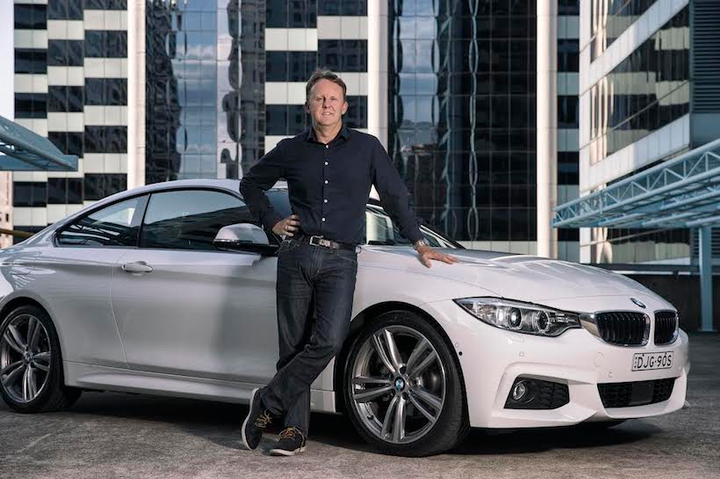
Source: Philip Reed
Philip Reed's 21-year-old BMW

Used cars are typically less expensive than new ones and so the loans for them are often smaller, said Philip Reed, an automotive writer at personal finance website NerdWallet.

“If you turn on the football game, you will be brainwashed into thinking you need a new car,” Reed said. “People don't understand how reliable a good used car can be.”

While the average vehicle on the road is around 12 years old, Reed said, a car's price tag can halve after just three years.

The average monthly loan payment for a used vehicle in January 2019 was $407, according to Edmunds.

Thoroughly vet the history of any used car you consider buying, Reed said. Using the vehicle identification number, located on the driver's side dashboard, you can check the car's history with the National Insurance Crime Bureau, CarFax or the National Motor Vehicle Title Information Center. You may also want to have the car inspected before you buy it, to make sure nothing was missed on the car's record.

Go to the dealership prepared

You should go to your bank or credit union and get pre-approved for an auto loan before you enter a dealership, said Rebecca Borne, senior policy counsel at the Center for Responsible Lending. “It puts the consumer in a better bargaining position,” she said. “It forces the dealership down on the rate.”

Borne also recommends “cross-shopping” at other dealerships to try to lock in the best price on a given car. Autotrader is one database of used and new cars.

Don't be sucked in by low monthly payments, Borne said. If you're able to make higher payments on a shorter loan term you'll save overall.

And resist the often unnecessary add-ons that many dealerships push, she added, such as extended warranties and additional insurance. “They give a windfall to the dealer without giving much benefit to the consumer,” she said.

Look for deals

Getty Images

Be on the lookout for car-buying incentives that could save you money, including loans with zero-percent interest or cash-back deals, Reed said. You can learn about these offers on websites such as Edmunds and Kelley Blue Book, or directly with the car manufacturer.

Excellent credit is often needed to secure the zero-percent interest rate offers, Reed said, and they're becoming rarer. Still, it can't hurt to apply.

“Even if you fall short,” he said, “there's a good chance you'll still beat current rates.”

More from Personal Finance:
Wells Fargo, Bank of America offer help for clients hurt by the federal shutdown
He can't pick up his insulin because of the government shutdown. How workers are hurting
How to make sure spending doesn't trip up your New Year's resolutions
Collaborate Announces New Subscription Service

Carly will provide flexibility that many drivers are now seeking by removing  the long term financial commitment required to buy or finance a vehicle — removing the need to lock into long-term debt. Photo courtesy of Collaborate.  Collaborate, the ASX-listed company behind peer-to-peer car rental platform DriveMyCar, will be launching Carly — Australia’s first flexible car… Continue reading Collaborate Announces New Subscription Service

Renault-Nissan payments to political advisers draw scrutiny

PARIS (Reuters) – Renault-Nissan is examining fees paid to consultants and political advisers including a serving European lawmaker, following Chairman Carlos Ghosn’s arrest and ouster from the helm of the carmaking alliance, two sources told Reuters. FILE PHOTO: The logos of car manufacturers Renault and Nissan in front of a common dealership of the companies… Continue reading Renault-Nissan payments to political advisers draw scrutiny

Toyota Motor North America Reports January 2019 Sales

PLANO, Texas, Feb. 1, 2019 /PRNewswire/ — Toyota Motor North America (TMNA) today reported January 2019 sales of 156,021 vehicles, a decrease of 6.6 percent from January 2018 on a volume basis. With the same number of selling days year over year, sales were down 6.6 percent on a daily selling rate (DSR) basis.  Toyota… Continue reading Toyota Motor North America Reports January 2019 Sales

American Honda Reports Sales Increases for Both Honda and Acura Brands Despite Winter Chill

American Honda today reported January sales increases for both Honda and Acura brands. The Acura RDX led gains for the company, with sales rising 41 percent to help push the Acura brand up 9.6 percent for the month. Related Documents Honda Logo. (PRNewsFoto/American Honda Motor Co., Inc.) (PRNewsfoto/American Honda Motor Co., Inc.) TORRANCE, Calif., Feb.… Continue reading American Honda Reports Sales Increases for Both Honda and Acura Brands Despite Winter Chill

Forget light poles, British firm to build chargers from cable boxes

Ubitricity electric-car charging cord
The future of electric-car charging may be down in the trenches.

At least British broadband provider Liberty Global hopes so. The company, which owns Virgin Media, plans to start a pilot project using Virgin Media's cables and trenches that run to thousands of neighborhoods around Britain. Since they already have power, Liberty Global says they can be used to bring that power to charging stations for electric cars.

The effort could provide a charging solution for city-dwellers, even if they don't have access to a private parking space to install chargers. Finding a way to make it easier for urban apartment and condominium dwellers to charge is considered the next step in opening up the electric-car market to a wider range of buyers.

READ MORE: Ubitricity street lamp socket provides electric-car charging

New chargers could be installed either directly on junction boxes or on dedicated poles with wiring run out of existing Virgin Media trenches along the streets.

Liberty Global plans to have six trials up and running around Britain by Easter, starting in the eastern London community of Southwark.

The company eventually plans to aggregate charging data from self-driving electric car fleets charging on the system to help improve the charging efficiency of autonomous vehicle fleets.

CHECK OUT: UK launches Road to Zero electric car initiatives

The Financial Times first reported the effort.

The move models an effort in Germany that Deutsche Telekom announced in November, which began installing charging stations at 12,000 transformer boxes around that country.

A competing effort in Britain from Ubitricity aims to hang electric-car chargers on street lights around London to give urban electric-car drivers a place to charge.

Tesla vs. Clayton Christensen’s Idea of Tech Disruption

Electric CarsElectric Car BenefitsElectric Car SalesSolar Energy RocksRSSAdvertisePrivacy Policy
Batteries Published on January 26th, 2019 | by Guest Contributor
Tesla vs. Clayton Christensen’s Idea of Tech DisruptionTwitterLinkedInFacebookJanuary 26th, 2019 by Guest Contributor
Originally published on EVANNEX.
By Charles Morris
The words “innovation” and “disruption” have been casually tossed around in the press so much that, like “awesome,” they’ve lost most of their meaning for the average reader. However, there’s a whole community of people who study these phenomena in minute detail, and Dr. Clayton Christensen is one of their prophets. Recently, a doctrinal difference between Christensen and Elon Musk has catalyzed a lively theological debate.
Two iconic figures in the realm of business disruption, Elon Musk and Dr. Clayton Christensen (Images: Wired UK / Nieman Reports)To simplify for the layman, Dr. Christensen is an exponent of “low-end disruption,” whereas Tesla is an object lesson in “high-end disruption,” the concept that innovation can begin at the high end of a market and later trickle down to the mainstream. In December, Elon Musk tweeted, “Clayton is wrong. New tech is always expensive. Tech disruption occurs at *high end*, eg computers & cell phones. It takes many iterations & vast economies of scale to achieve mass market affordability.”
Far from being offended, Dr. Christensen replied, “We’re all rooting for you!” and invited Musk to join him for a chat on innovation.
Jay Gerhart, a practitioner of disruptive innovation theory and “a huge fan of both of these brilliant men,” set out to reconcile their conflicting positions in an article published in Medium.
Apparently the current debate was sparked by an article in TechCrunch in which Chandrasekar Iyer of the Clayton Christensen Institute argued that Tesla’s entry into China represents a “sustaining innovation” (as opposed to a “disruptive innovation”), and that Tesla “will enter an established market to compete along existing measures of performance, like acceleration, style and luxury.”
Elon Musk argues that Christensen has it backwards when it comes to disruption in the tech sector. (Twitter: Elon Musk)As Gerhart points out, many have written about the phenomenon of high-end disruption, citing Uber, Tesla, Apple, Garmin, and Dyson as examples of transformative technologies and business models that started at the high end of the market and worked their way down. However, Shaye Roseman of the Harvard Business School recently argued that high-end disruption is “unlikely to occur,” because struggles for the high ground favor deep-pocketed incumbents, and it’s difficult to move down-market once you start at the top.
Much of the disagreement among these theologians may have more to do with terminology than with real-world results. As Gerhart puts it, “I find many debates these days to be framed a bit too black and white. Dr. Christensen’s theory has certainly sparked decades of debate since its introduction more than twenty years ago [and] the digital era has introduced new, complex dynamics.” In a 2015 article, Dr. Christensen argued that Tesla should be classified as a “sustaining innovation” rather than a “high-end disruption.” But could it be that the distinction is not so clear-cut? “Is it possible that under specific circumstances, a sustaining innovation could have characteristics that have a transformative impact on incumbents?” Gerhart asks.
Gerhart believes that the uniqueness of Tesla’s business model (and of its CEO) may enable it to have a transformative effect on the automotive industry while still fitting the definition of a sustaining innovation. He points out that Tesla’s highly integrated approach, which has many similarities to that of Apple, gives it a significant near-term advantage over incumbents that are struggling to manage the transition to electrification.
Will the legacy automakers rise to the challenge? Ford, VW and others are currently making the right noises, but it remains to be seen whether the promises in their press releases will lead to volume production of compelling electric vehicles. Gerhart suggests that automakers may need to set up separate divisions to compete effectively with Tesla.

Touching on an experience at BMW, Christensen discusses some of the disruption dilemmas facing companies (YouTube: Implement Consulting Group)
Regardless of which side you take in the sectarian schism in the religion of disruption, there’s one thing everyone can agree on: “This will be a fascinating market to watch over the next few years.”

About the AuthorGuest Contributor is many, many people. We publish a number of guest posts from experts in a large variety of fields. This is our contributor account for those special people. 😀

Back to Top ↑AdvertisementAdvertise with CleanTechnica to get your company in front of our readers.
CleanTechnica Clothing & Cups Top News On CleanTechnica Join CleanTechnica Today!
AdvertisementAdvertisementFollow CleanTechnicaFollow @cleantechnica
Our New Electric Car Driver Report Read & share our new report on “electric car drivers, what they desire, and what the demand.”The EV Safety Advantage

Read & share our free report on EV safety, “The EV Safety Advantage.”EV Charging Guidelines for Cities

Share our free report on EV charging guidelines for cities, “Electric Vehicle Charging Infrastructure: Guidelines For Cities.”30 Electric Car Benefits Our Electric Vehicle Reviews
Tesla News
Cleantech Press Releases New Research Shows That Only Two Large Petroleum Companies Have Meaningful Emission Reduction Targets Koben Announces EVOLVE EVSF —Grid-Friendly Modular EV Store & Forward System The New Danish Climate Plan — Together For A Greener Future38 Anti-Cleantech Myths Wind & Solar Prices Beat Fossils Cost of Solar Panels Collapses
© 2018 Sustainable Enterprises Media, Inc.
Electric CarsElectric Car BenefitsElectric Car SalesSolar Energy RocksRSSAdvertisePrivacy Policy

This site uses cookies: Find out more.Okay, thanks

Tesla Model Y To Share 76% Of Parts With Model 3, Be Built At Gigafactories

Electric CarsElectric Car BenefitsElectric Car SalesSolar Energy RocksRSSAdvertisePrivacy Policy
Autonomous Vehicles Published on January 31st, 2019 | by Kyle Field
Tesla Model Y To Share 76% Of Parts With Model 3, Be Built At GigafactoriesTwitterLinkedInFacebookJanuary 31st, 2019 by Kyle Field
On its Q4 2018 earnings call last night, Tesla confirmed that the Model Y will be the first vehicle it will build at its Gigafactory 1 in Sparks, Nevada. In parallel, it plans to build the crossover (CUV) at its new Gigafactory 3 in Shanghai, China. The latter was shared previously and the former was long suspected. We actually got intel recently that the Model Y would be built at Gigafactory 1, but for some reason decided to not break the news. We do have other exclusive info coming about Gigafactory 1, though.
The Tesla automotive family. Image credit: Tesla
Shared DNAThe Model Y is expected to be received warmly and will have more demand than any of Tesla’s other vehicles, since customers across the world continue to move away from cars to crossovers. Tesla plans to build the Model Y off of the Model 3 platform, with the two sharing 76% of the same parts, according to Tesla CEO Elon Musk. This shared DNA between Model 3 and Model Y will allow Tesla to leverage even greater economies of scale in its supply chain and demand even lower prices from its suppliers, in addition to improving its downstream efficiencies with the supply of parts to its service centers and approved body shops.
Parts sharing was the premise for the design of Tesla’s full-sized Model S and Model X, but that promise did not play out as planned. Instead, Tesla pushed to include an ever-increasing list of new features in the Model X as it evolved into the “faberge egg” of cars, according to CEO Elon Musk. When all was said and done, the two vehicles only ended up sharing about 30% common parts. Elon shared on the Q4 2018 earnings call that the Model X is a work of art and that nothing like it will probably ever be made again.
The production design of the Model Y has been completed and parts orders are already going out to suppliers in advance of the official unveiling of the vehicle, which could be as early as March, if vague tweets from Elon are taken literally.
Cars From The GigafactoriesThe Model Y will be the first of Tesla’s vehicles that will be produced at Tesla’s Gigafactories, as Musk announced that the company plans to build the Model Y completely at its Gigafactory 1 in Sparks, Nevada. (The Model S, Model X, and Model 3 are produced at its factory in Fremont, California, with some parts coming from the Gigafactory.)
In parallel, the company will ramp up production at Gigafactory 3 in Shanghai, China, where Tesla plans to go from a muddy lot to cars rolling out the door in less than a year. Model 3 will be the first vehicle produced there, with Model Y following not long after in high volume in 2020, if all goes well.
The Tesla Fremont Factory. Image credit: Tesla
“Tesla has the first wholly owned manufacturing facility in China of any automotive company. This is profound,” Musk said. Tesla pulled the trigger on the location of the Shanghai Gigafactory within a few days of China removing the requirement to have local partners for manufacturing plants in the country. That gives Tesla full control over the factory and a leg up on its foreign automotive competition in the Chinese market.

Tesla shared on the earnings call that, thanks to government support and “extremely compelling interest rates,” Tesla expected to bring the new factory online in record time, and at a significantly lower cost. “As a ballpark figure, it’s probably about a half a billion dollars capex” to get Gigafactory 3 up and running at a 3,000 vehicle per week rate by the end of 2019.
Building batteries and cars from a single factory is not a new vision for Tesla, which makes the prospect of building cars effectively from raw material up through the finished product at a single factory that much more exciting. Clearly tons of materials and parts still need to be shipped in, but minimizing non-value add transportation and logistics expenses helps Tesla to optimize its cost picture and, ultimately, keep the price of its products as low as possible for as many customers as possible.
Have a read of our live blog summary of the Tesla Q4 2018 call (and letter) or head over to Tesla’s Investor Relations site to read Tesla’s Q4 2018 earnings letter and listen to the webcast recording for more juicy details from an exciting quarter for Tesla.

About the AuthorKyle Field I'm a tech geek passionately in search of actionable ways to reduce the negative impact my life has on the planet, save money and reduce stress. Live intentionally, make conscious decisions, love more, act responsibly, play. The more you know, the less you need. TSLA investor. Tesla referral code: http://ts.la/kyle623

Back to Top ↑AdvertisementAdvertise with CleanTechnica to get your company in front of our readers.
CleanTechnica Clothing & Cups Top News On CleanTechnica Join CleanTechnica Today!
AdvertisementAdvertisementFollow CleanTechnicaFollow @cleantechnica
Our New Electric Car Driver Report Read & share our new report on “electric car drivers, what they desire, and what the demand.”The EV Safety Advantage

Read & share our free report on EV safety, “The EV Safety Advantage.”EV Charging Guidelines for Cities

Share our free report on EV charging guidelines for cities, “Electric Vehicle Charging Infrastructure: Guidelines For Cities.”30 Electric Car Benefits Our Electric Vehicle Reviews
Tesla News
Cleantech Press Releases New Research Shows That Only Two Large Petroleum Companies Have Meaningful Emission Reduction Targets Koben Announces EVOLVE EVSF —Grid-Friendly Modular EV Store & Forward System The New Danish Climate Plan — Together For A Greener Future38 Anti-Cleantech Myths Wind & Solar Prices Beat Fossils Cost of Solar Panels Collapses
© 2018 Sustainable Enterprises Media, Inc.
Electric CarsElectric Car BenefitsElectric Car SalesSolar Energy RocksRSSAdvertisePrivacy Policy

This site uses cookies: Find out more.Okay, thanks

Tesla begins sales of cheaper Model 3 car variant in China

BEIJING/SHANGHAI (Reuters) – U.S. electric vehicle maker Tesla Inc said it will start taking orders in China on Friday for a lower-priced version of its Model 3 car, as it seeks to accelerate China sales hit by trade friction between Washington and Beijing. A Tesla logo is seen at a Tesla showroom in Shanghai, China… Continue reading Tesla begins sales of cheaper Model 3 car variant in China