Elon Musk Is Right: LiDAR Is a Crutch (Sort of.)

By Luis Dussan

Tesla founder Elon Musk recently declared that LiDAR is a “crutch” for autonomous vehicle makers. The comment sparked headlines and raised eyebrows in the industry. Given that this vision technology is the core of many companies’ self-driving car strategies, his view strikes many as anathema or just plain nuts.

But for the moment, let’s ignore the fact that LiDAR is vital to self-driving cars from GM, Toyota and others. Forget that the most advanced autonomous vehicle projects have focused on developing laser-sensing systems.

Even disregard that the alleged theft of LiDAR secrets was at heart of the legal battle between Uber and Alphabet’s Waymo. Waymo claimed that LiDAR is essential technology for autonomous vehicles and won a settlement recently worth about $245 million.

The truth is: Mr. Musk is right. Relying solely on LiDAR can steer autonomous vehicle companies into innovation cul-de-sacs.

LiDAR is not enough. Autonomous vehicles require a rapid, accurate and complete perception system. It is a system-level problem that requires a system-level solution.

My agreement with Mr. Musk may seem surprising given that our company, AEye, sees LiDAR as playing a significant role in making driverless cars a commercial reality.

But we too have realized that if autonomous vehicles are ever going to be capable of avoiding accidents and saving lives, LiDAR is not the answer. At least not by itself.

Not THE answer, but part of the answer…
At Tesla, Mr. Musk is forsaking LiDAR for a 2D camera-based vision system. While Mr. Musk is known for disruptive thinking, it is hard to escape the fact that autonomous vehicles move through a 3D world and successful navigation of that world requires the seamless integration of both 2D and 3D data precisely mapped to both time and space.

At AEye, we believe LiDAR is the foundation of the solution when it seamlessly integrates with a multi-sensor perception system that is truly intelligent and dynamic. Our research has produced an elegant and multi-dimensional visual processing system modeled after the most effective in existence — the human visual cortex.

In fact, AEye’s initial perception system, called iDAR (Intelligent Detection and Ranging), offers a robotic perception system that is more reliable than human vision. LiDAR integrates with a low-light camera, embedded artificial intelligence and at-the-edge processing to enable a car’s vision system to replicate how the human visual cortex quickly interprets a scene.
In short, iDAR enables cars to see like people.

Why this is the superior approach?
In his skepticism of LiDAR, Mr. Musk has curiously bet on a “camera-mostly” strategy when building a vision system for autonomous Tesla vehicles. He has previously made bold (many say unrealistic) predictions that Tesla would achieve full Level 5 autonomous driving with camera-mostly vision in 2019. Navigant Research, in their annual ranking of self-driving vehicle makers, says this is “unlikely to ever be achievable” and rates Tesla at the back of the pack.

The company’s Autopilot system relies on cameras, some radar, and GPS. It has suffered setbacks due to a split with its camera supplier in 2016 after a fatal accident that investigators have blamed partly on Autopilot. Last month, a Tesla smashed into a firetruck in Culver City, California, and the driver said it was “on autopilot.”

The evidence strongly argues against Mr. Musk’s decision to bet on passive optical image processing systems. Existing 2D image processors and 2D to 3D image conversion concepts have serious flaws that can only be addressed with massive computing power and more importantly — algorithms that have not been invented, and are many years away from becoming a reality. This makes this approach too costly, inefficient and cumbersome to achieve Level 5 autonomous driving at commercial scale.

At AEye we know that integrating cameras, agile LiDAR, and AI equals a perception system that is better than the sum of its parts. It surpasses both the human eye and camera alone, which is required if you don’t have the sophistication of the human brain yet replicated.

In his “crutch” comments, Mr. Musk predicted that LiDAR-based systems will make cars “expensive, ugly and unnecessary,” adding: “I think they will find themselves at a competitive disadvantage.” The truth is that size, weight, power, and cost are decreasing for vehicle navigation grade LiDAR. And they will fall further. AEye, and maybe others, will see to that.

We respect Musk’s innovations and are grateful to him shedding light on where LiDAR needs to go to reach full autonomy. But in the end, as we see LiDAR as a lever, rather than a crutch, we can only give him partial credit for his understanding of the way forward.

ALL NEWS & VIEWS
Elon Musk Is Right: LiDAR Is a Crutch (Sort of.) — AEye Introduces Groundbreaking iDAR TechnologyObserve, Orient, Decide, Act: How AEye’s iDAR System Adopts Principles of the OODA Loop to Achieve Intelligent, Long-Range DetectionAEye Introduces Next Generation of Artificial Perception: New Dynamic Vixels™AEye Announces the AE100 Robotic Perception System for Autonomous VehiclesThe Future of Autonomous Vehicles: Part I – Think Like a Robot, Perceive Like a HumanAEye Announces Addition of Aravind Ratnam as Vice President of Product ManagementCB Insights Unveils Second Annual AI 100 Companies at A-ha!AEye Granted Foundational Patents For Core Solid-State MEMs-Based Agile LiDAR And Embedded AI TechnologyGartner Names AEye Cool Vendor in AI for Computer VisionAEye Welcomes James Robnett to Executive Team as Vice President of Automotive Business Development

ChargePoint raises $240 million to serve an anticipated flood of electric vehicles

Electric vehicle charging network ChargePoint has raised $240 million in a Series H funding round that attracted a diverse group of investors from the automotive, energy, financial, venture capital, utilities, and even oil and gas industries. New investors in the round include American Electric Power, Chevron Technology Ventures, Canada Pension Plan Investment Board, Daimler Trucks… Continue reading ChargePoint raises $240 million to serve an anticipated flood of electric vehicles

The Lincoln Aviator suggests the luxury American brand ‘has got its mojo back’

Source: Lincoln
Lincoln Aviator

The Lincoln Aviator is the latest new model from the luxury American brand, and industry watchers say it is yet more evidence that the brand has returned to its roots.

After showing off a concept version of the vehicle at the New York Auto Show in early 2018, the brand is unveiling the production version at the Los Angeles Auto Show on Wednesday.

The Aviator comes as Lincoln is still enjoying the astounding success it has had with the 2018 redesign of the Lincoln Navigator. After Lincoln introduced that vehicle, the company was selling them so fast it was having trouble keeping production up. That momentum has largely continued throughout the year. In the month of October Navigator sales were up 70 percent over the same month in 2017. Many customers are opting for the most luxurious versions, such as the Black Label, which can command prices up to $100,000.

Now the brand is aiming to repeat the trick in another segment.

The 2019 Lincoln Aviator is a smaller SUV than the Navigator, and it is the latest step Ford's luxury brand is taking in carving out a place for itself as a purveyor of spacious and comfortable SUVs that float over the pavement.

Source: Lincoln
Lincoln Aviator

The Aviator is a resurrected brand — Lincoln first sold it from 2002 to 2005. The Aviator shares some design language with the Navigator, such as the distinctive design of its wheels and its plush leather seats.

But there are several firsts here that suggest Lincoln is not simply trying to make a smaller Navigator replica. The brand commissioned the Detroit Symphony to design all the interior alert chimes for the doors. The vehicle also has the ability to “see” potholes and uneven pavement and adjust the suspension to keep the ride smooth.

“It is not overstating it to say Lincoln has got its mojo back,” said Karl Brauer, who is executive publisher for Kelley Blue Book and Autotrader. “The company in the last couple of years has made some really positive moves.”

The models Lincoln has come out with recently, including the Navigator and the Continental full-size sedan, show that the company has tried to carve more of a traditionally American niche out for itself by making vehicles that emphasize plush interiors and gentle, floating rides. This is a departure from older habits in Detroit of trying to make American versions of European brands that emphasized sportier designs and features, such as those found in BMWs.

“I think Lincoln discovered that they were much better at being Lincoln than they were at being the American version of BMW,” he said.

That said, it is perfectly fine if Lincoln wants to come out with a high-performance variant of a sedan or SUV, he added. The Aviator will offer a performance trim level of the vehicle that will come with a combination hybrid and twin turbocharged powertrain that Lincoln said is a first for the brand.

Uber Ends Rental Car Program for Drivers

The decision to end Uber Rent comes a few weeks after Lime, a scooter-sharing company that partners with Uber, announced that it would start testing a carsharing service in Seattle.  Photo courtesy of Uber.  Uber has ended Uber Rent, its program that lets drivers rent vehicles from within the Uber app, Quartz reports.  The program,… Continue reading Uber Ends Rental Car Program for Drivers

Turo Go Allows Keyless Entry to Vehicles

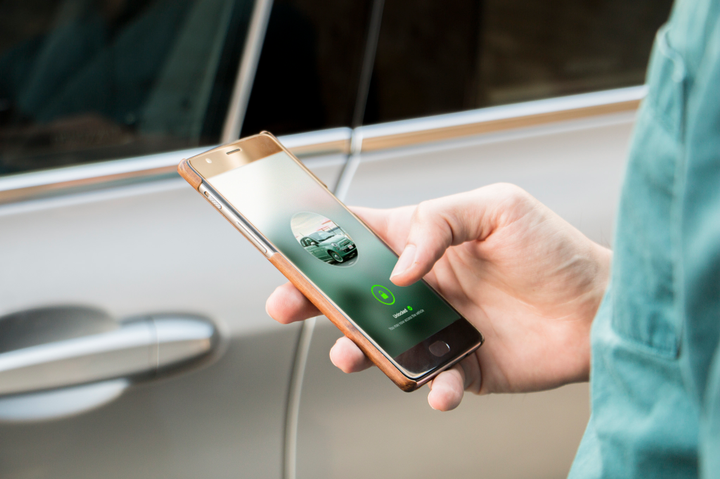
Turo Go, a dongle and in-app service, is launching in Los Angeles and will expand to other markets in 2019.  Photo via Drivy.  Peer-to-peer carsharing service Turo is releasing a new product that will allow renters to locate and unlock vehicles from the Turo app, Tech Crunch reports. Turo Go, a dongle and in-app service,… Continue reading Turo Go Allows Keyless Entry to Vehicles

‘Out of control’: Chinese authorities slam ride-hailing giant Didi over safety

BEIJING (Reuters) – Chinese authorities announced a broad crackdown on China’s ride-hailing industry on Wednesday, targeting market-leader Didi Chuxing with fines following the deaths of two passengers in separate incidents earlier this year. FILE PHOTO: The company logo of the Didi ride hailing app is seen on a car door at the IEEV New Energy… Continue reading ‘Out of control’: Chinese authorities slam ride-hailing giant Didi over safety

Edenred acquires UK fuel card business

Global fuel card specialist Edenred has acquired the British business, The Right Fuelcard Company (TRFC) for about £95 million (€107 million), to gain a foothold in the UK market. TRFC has 27,000 corporate customers and 150,000 cardholders in the UK where it claims to be the fourth largest fuel card supplier. Its fuel card is… Continue reading Edenred acquires UK fuel card business

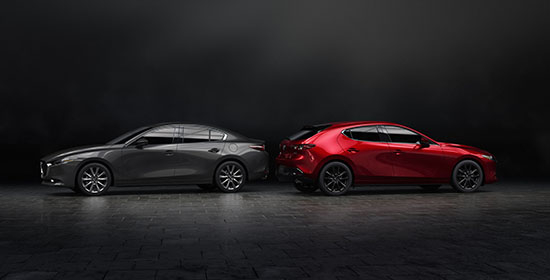
Mazda Reveals All-New Mazda3

2018/11/28 Products and Technology Redesigned model kicks off a new generation of Mazda cars HIROSHIMA, Japan—Mazda Motor Corporation today hosted the world premiere of the all-new Mazda3. The fully redesigned model will be rolled out to global markets starting from North America in early 2019. The all-new Mazda3 will be on display at the Los… Continue reading Mazda Reveals All-New Mazda3