M-Sport Ford World Rally Team’s EcoBoost-powered Ford Fiesta WRCs will be adorned with a striking new livery this year – Graphic Designer Phil Dixon delivering another eye-catching creation for the 2020 FIA World Rally Championship. Dixon’s designs are eagerly awaited and the Cumbrian’s work attains fan-favourite status year after year. This season his vision drew… Continue reading @Ford: Another Eye-Catching Creation
Category: OEMs
@BMW: Compact BMW X models with plug-in hybrid drive: The new BMW X1 xDrive25e to be launched – followed by the BMW X2 xDrive25e.
Munich. The BMW Group is consistently driving its electrification strategy forward and presents new plug-in hybrid models for an especially popular and dynamically growing vehicle category. In the new BMW X1 xDrive25e and the new BMW X2 xDrive25e, the intelligently controlled interaction between a fuel combustion engine and an electric motor as well as locally emissions-free travel… Continue reading @BMW: Compact BMW X models with plug-in hybrid drive: The new BMW X1 xDrive25e to be launched – followed by the BMW X2 xDrive25e.
Eefje Dikker has been appointed to the Board of Management of Daimler Mobility AG, responsible for Human Resources
09.
January 2020
Stuttgart
The Supervisory Board of Daimler Mobility AG has appointed Eefje Dikker a member of the Board of Management and Director of Labor Relations as of January 1, 2020 Eefje Dikker, a 49-year-old Dutch citizen, has been the Head of the Human Resources unit of Daimler Mobility AG and a member of the Daimler HR Executive Committee since June 2019 She is an internationally experienced HR expert and has had multiple management positions within the Daimler Group Stuttgart – The Supervisory Board of Daimler Mobility AG has appointed Eefje Dikker to the Board of Management as Director of Labor Relations effective January 1, 2020. The 49-year-old Dutch citizen will be responsible for all areas of Human Resources at Daimler Mobility AG, which operates in more than 40 countries with a total workforce of approximately 13,000 employees. As a member of the Daimler HR Executive Committee, Eefje Dikker reports to Wilfried Porth, Member of the Board of Management of Daimler..
Mercedes-Benz achieves increased unit sales for ninth consecutive year and remains number one among luxury car brands
09.
January 2020
Stuttgart
Mercedes-Benz delivered 2,339,562 cars last year, achieving the highest annual sales volume in the company’s history (+1.3%) in a challenging environment for the automotive industry. Mercedes-Benz Cars handed over to customers 2,456,343 cars of the Mercedes-Benz and smart brands in 2019 – a new record for a full year (+0.7%). By surpassing for the first time the milestone of 600,000 passenger cars sold from October to December 2019, Mercedes-Benz completed the best quarter of all times in terms of sales (614,319 units, +3.2%). Since 2016, Mercedes-Benz has been the number one among the luxury car brands and was able to confirm this position once again last year. In all three of its main markets – China, Germany and the USA – the Stuttgart-based brand with the three-pointed star was able to increase its unit sales compared with the high prior-year basis. As the largest market, China remains the main driver with a 6.2% sales increase and a new record year. “The ninth consecutive record year underscores once more the strong demand for Mercedes-Benz vehicles, even amidst far-reaching changes in the mobility landscape. In addition, Mercedes-Benz continues to be clearly the number one in the luxury market –this proves how valuable our brand is,” said Ola Källenius, Chairman of the Board of Management of Daimler AG and Mercedes-Benz AG. Stuttgart. 2019 was the ninth consecutive record year for Mercedes-Benz, with growth of 1.3% to a total of 2,339,562 units delivered worldwide. At the same time, Mercedes-Benz maintained its leading position among the luxury car brands for the fourth year in a row. In all three of its main markets – China, Germany and the USA – the Stuttgart-based brand with the three-pointed star surpassed the high levels of the previous year. China, Mercedes-Benz’s largest market, remained the main growth driver, with sales of 693,443 units representing an increase of 6.2% and a new record year. Last year’s model offensive with a total of more than ten new or revised models led to a significant boost in unit sales, particularly of Compact Cars and SUVs, and contributed to the overall sales growth.
In full year 2019, Mercedes-Benz maintained its market leadership in the luxury segment in markets including Germany, Great Britain, France, Spain, Belgium, Switzerland, Poland, Portugal, South Korea, Japan, Australia, Thailand, Vietnam, Singapore, Canada and South Africa.
Ola Källenius, Chairman of the Board of Management of Daimler AG and Mercedes-Benz AG: “The ninth consecutive record year underscores once more the strong demand for Mercedes-Benz vehicles, even amidst far-reaching changes in the mobility landscape. In addition, Mercedes-Benz continues to be clearly the number one in the luxury market – this proves how valuable our brand is. 2019 was a year of great challenges for the automotive industry. The next two years will also be characterized more than ever by the transformation of our industry. In this challenging environment, we intend to further increase our unit sales and set the course for long-term competitiveness. With investments in new technologies and profitable sales growth, we are paving the way for Mercedes-Benz to lead the global luxury market as a pioneer of sustainable luxury also in an era of CO2-neutral mobility.”
Mercedes-Benz’s five largest markets last year were China, Germany and the USA followed by Great Britain and South Korea. The Stuttgart-based company with the three-pointed star finished the year with the highest annual unit sales in its history, as well as its best quarter ever (614,319 units, +3.2%). In the fourth quarter of 2019, Mercedes-Benz sold for the first time more than 600,000 cars within a quarter. In the month of December, 205,968 vehicles were sold and therefore the high prior-year level was almost achieved (-0.3%).
Britta Seeger, Member of the Boards of Management of Daimler AG and Mercedes-Benz AG responsible for Marketing and Sales: “In 2019, a particularly large number of customers in China, Germany and the USA decided in favour of a new vehicle from Mercedes-Benz: In each of these three major markets, we surpassed the high level of unit sales we achieved in the previous year. The ninth record year reflects, among other things, the success of our model offensive with Compact Cars and SUVs, which have delighted new and existing customers all over the world. We offer a broad product line-up with innovative technology and emotional design, which means we have the right vehicle for every customer. This year, we want to further rejuvenate our product portfolio with more than ten new or revised models, including a specific focus on electrified models.”
Mercedes-Benz full year unit sales by region and market
Asia-Pacific region achieves best-ever sales; China is most important driver of global sales growth
In the Asia-Pacific sales region, a new record was achieved in 2019 with 977,922 units sold (+3.7%). In fact, more Mercedes-Benz vehicles were delivered in China than in any other market globally. A total of 693,443 cars were handed over to customers in China, an increase of more than 40,000 units compared with the previous year and a new record (+6.2%). Hereby, the strong product offensive, the localization strategy and the customer-centric operation remained key success factors in China; more than three-quarters of the vehicles sold there came directly from local production last year. China has been Mercedes-Benz’s largest sales market since 2015, with total annual unit sales almost doubling between 2015 and 2019. In South Korea, the second-largest market in the Asia-Pacific region, deliveries reached a new record high of 78,048 vehicles in 2019 (+8.7%). Sales also reached a new high in Vietnam.
Sales volume in the Europe region slightly above the high prior-year level; significant sales growth in Germany
In the Europe region, a total of 937,881 cars with the three-pointed star were delivered to customers in 2019 – slightly above the high prior-year level (+0.4%). In Germany, its domestic market, Mercedes-Benz was able to surpass the previous year’s figure by more than 14,000 units due to sales growth of Compact Cars and SUVs, delivering 318,353 vehicles in the full year (+4.8%). This was the highest sales volume in Germany in the past ten years. In addition to Germany, Great Britain and France followed by Italy and Spain, are among the largest sales markets in the Europe region for the Stuttgart-based company with the three-pointed star. In 2019, Mercedes-Benz set new sales records in countries including Switzerland, Poland, Denmark and Hungary.
More than 372,100 cars delivered in the NAFTA region, sales in the USA slightly above prior-year
In the NAFTA region, 372,144 new Mercedes-Benz vehicles were delivered to customers between January and December (-1.64%). Despite a challenging market situation, 316,094 vehicles in the USA were sold and the high prior-year level surpassed by 135 units (+0.0%). In the second half of the year, Mercedes-Benz increased its deliveries in the USA in five out of six months. An increase in unit sales was therefore achieved in the fourth quarter (+1.7%). In Canada, Mercedes-Benz maintains its position as the top luxury car brand for the sixth consecutive year.
Mercedes-Benz full year unit sales by model
Every third Mercedes-Benz vehicle sold in 2019 was an SUV
With sales of about 783,700 units the GLA, GLB, GLC, GLC Coupé, EQC (combined electrical consumption: 20.8–19.7 kWh/100 km; combined CO2 emissions: 0 g/km)[1], GLE, GLE Coupé, GLS and G-Class, the SUVs were Mercedes-Benz’s strongest-selling segment in 2019 (-4.5%). Since August 2019, deliveries have increased every month, driven by the new GLC and GLE. The GLC was once again the best-selling SUV in the model portfolio in 2019. Last year, the G-Class was able to improve on its record sales of 2017 by more than 13,000 units: 34,912 delivered vehicles resulted in a strong sales increase of more than 60%. The previous sales record set in 2017 was already surpassed in August 2019.
Compact Cars with strong growth and a new record
In 2019, every fourth Mercedes-Benz sold was a Compact Car: More than 667,000 units of the A- and B-Class, CLA, CLA Shooting Brake, GLA and GLB were delivered last year (+9.5%). This represents an increase of more than 30,000 unit sales when compared to the prior record established in 2016.The new A-Class posted global growth of 12.3% in 2019. The A-Class Saloon and the new B-Class worldwide as well as the new CLA Coupé in Europe made significant contributions to the segment’s growth. With the GLB, which launched in December 2019, the Mercedes-Benz Compact Car family now consists of eight models. With its market launch this year, the new GLA completes the model changes for the current generation of Compact Cars from Mercedes-Benz.
C-Class: More than 392,900 deliveries of the high-volume classic
Approximately 392,900 units of the C-Class Saloon and Estate were delivered in 2019 (-0.9 %). The C-Class Saloon achieved growth particularly in the Asia-Pacific region and a new record (+8.5%). In South Korean, deliveries of the
C-Class Saloon grew by a double-digit rate. Sales of the long-wheelbase version of the model in China increased by 9% last year to a new record level. Since its market launch in 1982, then still under the name Mercedes-Benz 190, more than ten million C-Class Saloon and Estate cars have been sold worldwide.
E-Class sets new a sales record in the Asia-Pacific region
More than 351,000 units of the E-Class Saloon and Estate were delivered to customers in the third full year of sales of the new generation (-1.3 %). The importance of China as the most important market for the Mercedes-Benz saloon models is clearly reflected by the E-Class: The long-wheelbase version of the E-Class Saloon set a new sales record with double-digit growth. Every second E-Class Saloon sold worldwide in 2019 was delivered as a long-wheelbase version in China. In South Korea, the E-Class Saloon achieved its highest annual sales so far. And the E-Class Estate recorded an increase of 5.0% in deliveries in Germany.
S-Class: The world’s best-selling luxury saloon
Mercedes-Benz has always aspired to build the best automobile in the world with the S-Class. This high standard of exclusivity combined with confident restraint is very well received by the customers: The S-Class Saloon was the best-selling luxury saloon in the world last year. Six years after the launch of the current generation of the S-Class Saloon, sales of about 71,700 units in 2019 remained at a very high level (-8.0%). Deliveries increased above all in China. The Mercedes-Maybach S-Class Saloon is very popular. As a model of the Mercedes-Maybach brand, it is an automobile offering exclusive luxury and the utmost comfort. The Mercedes-Maybach S-Class Saloon set a new sales record in 2019, driven in particular by its success in China and double-digit growth in that market. Since the market launch in 2015, approximately 500 of these exclusive luxury automobiles have been delivered every month to customers in China alone; last year, the figure was actually more than 700 units per month. The portfolio of the Mercedes-Maybach brand will be expanded this year to include the Mercedes-Maybach GLS (combined fuel consumption: 12.0-11.7 l/100 km; combined CO2 emissions: 273‑266 g/km)[1].
Dream Cars: Strong double-digit growth for the CLS Coupé
At Mercedes-Benz, all roadsters, convertibles and coupés are grouped under the heading Dream Cars. More than 163,600 of these vehicles were delivered worldwide in 2019 (-1,1%). The main markets of the roadsters, convertibles and coupés with the three-pointed star were the USA, and Germany, followed by Great Britain in 2019. The best-selling members of the Dream Car family last year were the C-Class Coupé, followed by the CLS Coupé. The CLS Coupé was the growth driver for the Dream Cars in 2019 and achieved strong double-digit sales growth worldwide. Especially in South Korea the sales volume of the four-door Coupé doubled.
Increased sales of V-Class and X-Class in 2019
With an increase of 1.2% to about 63,500 units delivered in 2019, the V-Class achieved a new sales record. The revised version of the multipurpose vehicle had its world premiere in January 2019. Demand for the V-Class was particularly strong last year from customers in Germany, where the largest absolute growth and a new sales record were achieved. Further V-Class records were set in Great Britain, Russia and Switzerland. Sales increased also in China, the most important market for the V-Class outside Europe, almost on the high level of the previous year. Approximately 15,300 units of the X-Class were sold worldwide in 2019. The largest markets for the pickup with the three-pointed star were Germany, Great Britain, Australia and South Africa; double-digit growth and record unit sales were achieved in each of those countries.
Mercedes-AMG: Highest unit sales in the history of the company
More successful than ever before: The high-performance and sports-car brand Mercedes-AMG achieved a new record year in 2019 with 132,136 units sold and double-digit growth of 11.8%. The Affalterbach-based company achieved its highest sales figures in history also in Great Britain and Japan. Mercedes-AMG’s largest markets in 2019 were the USA, Germany and Great Britain, followed by China and Japan. The past year at Mercedes-AMG was marked by the continuous expansion and renewal of the product portfolio. Hence, also the successful Mercedes-AMG GT family received a facelift of the two-door variant and the Mercedes-AMG GT4-door Coupé was available in all markets for the first time. With 13 derivatives in the Compact Car segment at various performance levels, Mercedes-AMG expands its range to include attractive entry-level models in the world of driving performance. The “45” models in the Compact Car family are powered by the newly developed 2-litre turbocharged engine, the world's most powerful four-cylinder turbocharged engine manufactured for large-series production. In addition, Mercedes-AMG has also introduced electrified SUV models with integrated EQ Boost technology. The 16 kW (22 hp) strong starter generator feeds the 48-volt on-board power supply, supports the combustion engine with its boost function at low speeds and ensures increased efficiency.
smart delivers about 116,800 vehicles worldwide
Over the past twelve months, 116,781 customers opted for a smart fortwo or smart forfour (-9.3%). Sales of the smart brand in 2019 were influenced by lifecycle factors. At the 2019 Frankfurt Motor Show, smart presented its completely revised fortwo and forfour models. Progressive design meets intelligent connectivity as well as zero local emissions due to battery electric powertrains. In the conversion year to the purely electric smart models, the highest unit sales of the past 14 years were achieved in Germany. From January to December, more than 46,506 of the urban microcars were delivered in Germany (+13.2%). In both France and Italy, growth was achieved compared with the previous year. And full-year deliveries climbed to a new record in Portugal (+25.0%). Never before in a year have so many of the electric smart models been sold worldwide as in 2019 – more than 18,400 units were delivered last year. In Germany, approximately every sixth smart vehicle sold was purely electric. At the end of March 2019, Daimler AG and the Zhejiang Geely Holding Group announced the establishment of a globally oriented 50:50 joint venture to transform smart into a leading player in premium-and intelligent electrified vehicles. The joint venture will produce a completely new generation of smart electric models in China and will be responsible for the international distribution.
Model offensive for plug-in hybrids and all-electric models
With its “Ambition 2039” announced last year, Mercedes-Benz Cars has set itself the goal of achieving a CO2-neutral fleet of new passenger cars within a period of 20 years. For Europe, the company assumes that well over 40 percent of Mercedes-Benz vehicles could already be delivered to customers as xEVs (plug-in hybrids and all-electric vehicles) by 2025. And by 2030, the company aims to achieve more than half of worldwide car sales with plug-in hybrids or all-electric vehicles.
Mercedes-Benz Cars expects all-electric models to account for 15% to 25% of total unit sales by 2025. The first fully electric SUV from Mercedes-Benz, the EQC (combined power consumption: 27.0 kWh/100 km; combined CO2 emissions: 0 g/km, provisional figures)[1], made its retail debut in Europe first followed by China and Asia-Pacific markets in 2019. As the next member of the Mercedes EQ family, this year, the EQV (combined electrical consumption: 27.0 kWh/100 km; combined CO2 emissions: 0 g/km, provisional figures)[2], will be the first electrically powered luxury multipurpose vehicle from Mercedes-Benz to combine emission-free mobility with convincing performance, high functionality and aesthetic design. Moreover, the facelift of the current purely electric drive smart generation can already be ordered and market launch is planned for the end of January 2020. With this step, smart will complete its full changeover to zero local emissions due to battery electric powertrains as a pioneer of urban mobility.
By the end of 2020, a total of five fully electric models and more than 20 model variants of plug-in hybrid models will be an integral part of the global product portfolio of Mercedes-Benz Cars.
Overview of Mercedes-Benz Cars unit sales
December 2019
Change in %
Jan.-Dec. 2019
Change in %
Mercedes-Benz
205,968
-0.3
2,339,562
+1.3
smart
11,181
+8.6
116,781
-9.3
Mercedes-Benz Cars
217,149
+0.1
2,456,343
+0.7
Mercedes-Benz unit sales in the regions/markets
Europe
83,222
-0.7
937,881
+0.4
– thereof Germany
27,981
+1.6
318,353
+4.8
Asia/Pacific
82,679
+2.0
977,922
+3.7
– thereof China
52,510
+5.2
693,443
+6.2
NAFTA
35,132
-6.2
372,144
-1.6
– thereof USA
30,294
-5.4
316,094
+0.0
[1] Power consumption and range have been determined on the basis of Regulation (EC) No. 692/2008. Power consumption and range depend on the vehicle configuration.
[2] Figures for electrical consumption and range are provisional and were determined by the technical service for the certification according to UN/ECE-regulation 101. EC type approval and conformity certification with official figures are not yet available. There may be differences between the stated figures and the official figures.
Press Contact
Katja Liesenfeld
Head of Global Business Communications Mercedes-Benz Cars Sales & After Sales
katja.liesenfeld@daimler.com
Tel: +49 160 8621488
Jörg Howe
Head of Global Communications
joerg.howe@daimler.com
Tel: +49 711 17-41341
Fax: +49 711 17-41369
Twitter: https://twitter.com/joerg_howe
Sofia Stauber
Head of Global Business Communications Mercedes-Benz Cars
sofia.stauber@daimler.com
Tel: +49 711 1755139
Press Contact Overview
Media
Download
Pictures (4)
Documents (1)
Media Contact (3)
Filter
Show thumbnails
Show list
Slideshow
Settings
Preview
Do you really want to delete the data record?
Please wait a moment …
Please wait a moment …
Please wait a moment …
Please wait a moment …
20C0007_01
Legend
:
Ola Källenius, Chairman of the Board of Management of Daimler AG and Mercedes-Benz AG.
Release date
:
Jan 9, 2020
20C0007_02
Legend
:
Britta Seeger, Member of the Boards of Management of Daimler AG and Mercedes-Benz AG responsible for Marketing and Sales.
Release date
:
Jan 9, 2020
19C0171_008
Legend
:
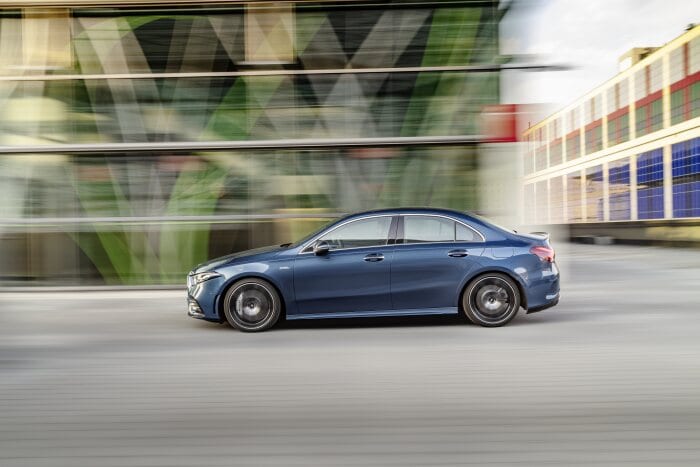
Mercedes-AMG A 35 4MATIC Saloon, denim blue
Combined fuel consumption 7.3-7.2 l/100 km; combined CO2 emission..
@Daimler: Mercedes-Benz achieves increased unit sales for ninth consecutive year and remains number one among luxury car brands
Mercedes-Benz delivered 2,339,562 cars last year, achieving the highest annual sales volume in the company’s history (+1.3%) in a challenging environment for the automotive industry. Mercedes-Benz Cars handed over to customers 2,456,343 cars of the Mercedes-Benz and smart brands in 2019 – a new record for a full year (+0.7%). By surpassing for the first… Continue reading @Daimler: Mercedes-Benz achieves increased unit sales for ninth consecutive year and remains number one among luxury car brands
@Hyundai: CES 2020 Hyundai Unveil UAM S-A1 in real feature
CES 2020 Hyundai Unveil UAM S-A1 in real feature – Hyundai Motor Group TECH We use cookies to improve our site and your experience. By using this site, you agree to our TERMS OF USE Close Play Hyundai Unveils UAM (Urban Air Mobility)’s real feature at CES 2020. Find out Hyundai UAM S-A1’s magnificent look… Continue reading @Hyundai: CES 2020 Hyundai Unveil UAM S-A1 in real feature
@Hyundai: Car Design in VR: Hyundai’s VR Design Evaluation Process

Car design is not made overnight; the concept is set, the direction of the design is established across various parts, and countless trials, errors, and adjustments are reiterated. Many tools and methodologies are present throughout the process. The design is sketched on paper; computers produce digitized sketches and 3D renderings. Sometimes the model is molded… Continue reading @Hyundai: Car Design in VR: Hyundai’s VR Design Evaluation Process
Tesla Is The Most Valuable Auto Company In The History Of America*
Invest
Electric Cars
Electric Car Benefits
Electric Car Sales
Solar Energy Rocks
RSS
Advertise
Privacy Policy
Cars
Published on January 8th, 2020 |
by Vijay Govindan
Tesla Is The Most Valuable Auto Company In The History Of America*
Twitter
LinkedIn
Facebook
January 8th, 2020 by Vijay Govindan
Barron’s noted on January 7th, 2020, that Tesla had become the most valuable auto company in the history of America. Let me repeat: Not just currently. We are talking about the most valuable American auto company since America was born. Congratulations to Elon, Tesla, and the team for unlocking this achievement!
Tesla beats out the old automaker market cap record held by Ford in 1999, at $81 billion. How valuable is Tesla? After January 8th’s surge, Tesla is valued at nearly $89 billion. Sure, the purists will argue it’s not an inflation-adjusted peak or the largest enterprise value (enterprise value includes equity and debt). Let’s call it a non-inflation-adjusted peak and market cap only. It’s impressive, nonetheless.
Tesla transformed the push for sustainable energy and became the most valuable American auto company within 10 years. We are not talking about high-margin phones. We are talking about a capital-intensive, low-margin, ruthless, heavily entrenched, lobbyist-backed industry.
Another way to note the importance of Tesla’s accomplishment is comparing Tesla with General Motors, Ford, and Fiat Chrysler’s market cap. According to Yahoo Finance, as of 1/8/20, GM was worth $52B, Ford was valued at $38B, FCAU at $25, and Tesla at $85B. Tesla’s value is larger than GM and Fiat Chrysler put together, and very close to being larger than GM and Ford put together. (On Google Finance, a bit different, Tesla is worth more than GM and Ford combined). In fact, Tesla is not too far off from being worth more than GM, Ford, and Fiat Chrysler combined.
As Frugal Moogal and I have speculated over the last few weeks, there are many reasons for Tesla’s surge. One reason that’s rarely discussed is the expected surge in Tesla auto sales over the coming two years. The below chart excludes the growth of Tesla Energy in the next two years, but it attempts to forecast Tesla’s coming auto sales.
My personal forecast.
Noted Tesla bear and Credit Suisse analyst Dan Levy states, “The framework contextualizes the lofty assumptions embedded in the stock – to justify the current stock price one arguably must assume that by 2025 Tesla will grow annual volume to 1.2mn units.” The same analyst raised his 12-month Tesla price target from $200 to $350 in an attempt to move from totally absurd to semi-reasonable.
I expect Tesla to produce 150,000 units in China and produce another 150,000 Model Y this year. As the ramp continues, I expect both to double production next year, joined by production of the CyberTruck and the Berlin factory coming online. Sometime during 2021, Tesla will have produced more than a million vehicles within a year. This is remarkable. I am hesitant to estimate beyond 2021 because Tesla is growing so fast. I don’t consider these super bull numbers, rather numbers based on what is genuinely possible.
*The asterisk in the title is mentioned since everyone is treating Tesla as simply an auto company. I disagree with that simplification, as do many of the writers here on CleanTechnica. Tesla is an energy and technology company, which happens to masquerade as an auto company. This is one reason why Wall Street analysts are completely befuddled. Most of them stick to one industry segment. Tesla crosses multiple major segments. That’s hard for the spreadsheet jockeys to model. What they miss is that the energy and technology markets are vastly larger than the auto market. At its, peak Exxon traded close to $500B in value. Microsoft and Apple are worth more than $1,000B at the moment. For more on this topic, see: “No, Tesla Is NOT The Largest US Automaker Ever.”
Disclosure: I bought back my Tesla shares a few days ago and am long on Tesla cars. The FUD didn’t reach the levels I expected. Don’t worry, I got pilloried hard for buying and selling Tesla from comments in my last post. I expect the same in this one. Keep it up!
Use my referral link to receive 1,000 free Supercharger miles with the purchase and delivery of a new Tesla vehicle, or earn a $100 award after system activation by purchasing or subscribing to solar panels: https://ts.la/vijay59877
Follow CleanTechnica on Google News.
It will make you happy & help you live in peace for the rest of your life.
About the Author
Vijay Govindan Vijay Govindan is a Cleantechnica writer part-time. Through his writing Vijay seeks to elevate the realized potential of humankind.
Against human trafficking. Tesla Model 3 LR owner. His claim to fame is Tesla and Elon have commented, liked or re-tweeted an article he wrote with the Tesla community. Just once. 😉
https://cleantechnica.com/2019/06/23/our-new-tesla-myths-page/
#WeChooseTesla, #RenewableEnergy and #YangGang supporter. Long Tesla shares. Has a healthy skepticism of the Q branch of the Tesla investment community. Made it to one $tslaq block list.
Follow him on Twitter @vijaygovindan17. If you read this far, wow, 👏🏽 and 🙏🏽.
Back to Top ↑
Advertisement
Support CleanTechnica – $3/Month
Advertise with CleanTechnica to get your company in front of millions of monthly readers.
Top News On CleanTechnica
Advertisement
Cleantech Press Releases
20 Utah Communities Committed To 100% Renewable Energy In 2019
15 New Electric Articulated Buses Deployed In NYC — 500 Planned To Serve All 5 Boroughs
The Volkswagen ID.3’s Battery
Our New Electric Car Driver Report
Read our new report on electric car drivers, what they desire, and what they require.
CleanTechnica Clothing & Cups
Listen to CleanTech TalkTesla News
30 Electric Car Benefits
Our Electric Vehicle Reviews
EV Charging Guidelines for Cities
Read & share our free report on “EV charging guidelines for cities.”
Advertisement
Follow CleanTechnica Follow @cleantechnica
© 2020 CleanTechnica
Invest
Electric Cars
Electric Car Benefits
Electric Car Sales
Solar Energy Rocks
RSS
Advertise
Privacy Policy
This site uses cookies: Find out more.Okay, thanks
Tesla Model 3 Shatters All Records in Historic Month & Year in the Netherlands
Invest
Electric Cars
Electric Car Benefits
Electric Car Sales
Solar Energy Rocks
RSS
Advertise
Privacy Policy
Cars
Published on January 8th, 2020 |
by Jose Pontes
Tesla Model 3 Shatters All Records in Historic Month & Year in the Netherlands
Twitter
LinkedIn
Facebook
January 8th, 2020 by Jose Pontes
December had an amazing 22,983 plug-in registrations, a three-fold increase compared to the same month last year, finally beating one of the oldest records in modern EV history, the 15,879 units sold in the Netherlands in December 2016.
This historic result translated into a Norway-like 54% plug-in electric vehicle (PEV) share last month, pulling the 2019 plug-in share to 15% (compared to 6% in 2018). That is an awesome result that places this market with the 3rd highest plug-in share in the world, only behind Norway and Iceland. However, this PEV market share gains even another dimension when we realize that fully electric vehicles (BEVs) represented 93% of registrations in 2019, and 99%(!) in December alone.
Of course, the higher taxation of BEVs in 2020 is the main reason for this disruption, but after the usual sales hangover in Q1 2020, something this market is used to, expect things to pick up again around Q2/Q3, ending 2020 with another great result and pulling the plug-in share well above the 20% mark.
Back to December: this great market performance was the result of a wicked number of peak results (of the 15 BEV models in the top 20, 11 had record sales, and 3 had year-best results), but the main reason for this historic result was the exceptional performance of the Tesla Model 3, which had 12,053 deliveries in December alone. That is not only the midsizer’s best result outside of its domestic market, but also a new monthly all-time best for the Dutch market — all models of all types included.
Needless to say, the Model 3 was by far December’s best selling nameplate in the overall market, but what is truly amazing is that, last month, the top 6 best selling models were all BEVs! How long will it take for the yearly ranking to look like this?
Besides the aforementioned Tesla Model 3 win, the runner-up spot in December went to the Audi e-tron, with 3,054 units delivered (the recently launched “50” version represented the majority of sales). The Nissan Leaf reached the last place on the podium, with 1,075 units registered, while its French cousin, the heavily revised Renault Zoe, ended the month in 4th, with 1,020 units registered (one of those being a new CleanTechnica EV).
Finally, SAIC’s MG ZS EV jumped to 5th in December, with 967 registrations, by far the best result ever by a Chinese plug-in outside their home market, and after a three-digit performance in the UK in November, the MG model is the first Chinese EV to be delivered in significant numbers in mainland Europe. A sign of things to come?
Looking at the 2019 ranking, the two major pieces of news are the 45%(!) share of the #1 Tesla Model 3, not only becoming the #1 best seller among plug-ins, but also overall, and with a score (29,922) that was the largest annual volume since the 31,641 units of the Opel Astra, way back in 2000!
December’s Climber of the Month was the Audi e-tron, which jumped 7 positions, straight into the #3 spot, removing the Nissan Leaf from the podium and preventing the Japanese hatchback from repeating its bronze medal.
Other last-minute changes were the Renault Zoe climbing to #8, the same positioning it had in 2018; the MG ZS EV joining the ranking in the last month of the year, ending 2019 in #11; the Jaguar I-PACE climbing two spots, to #13; and the most expensive Teslas taking the opportunity to climb some positions, with the Model S jumping 3 positions, to #14, and the Model X up to #16.
These last three models were the highlights of the previous sales peak that happened a year ago, when expensive BEVs lost a large chunk of company car incentives. Their 2019 numbers were a fraction of 2018’s. The I-PACE retained 22% of its 2018 score, the Model X got 16%, and the Model S fared the worst, having just 9% of 2018’s sales total in 2019. … Ouch.
On the other hand, the Hyundai Kona EV had a great year, jumping from the 11th spot of 2018 straight into 2n place, with 5,526 units delivered. That could have been even more had Hyundai managed to get more batteries. … Better luck in 2020?
The Mitsubishi Outlander PHEV again won the Best Selling PHEV title, but this time with a respectable 1,849 units, almost tripling last year’s result. That’s an especially impressive performance when you consider that the model doesn’t benefit from significant incentives.
In fact, despite the lack of incentives, the plug-in hybrid category is growing organically, with the 2019 score of 4,931 units being its best year since 2016 (when PHEVs lost access to incentives), and it wasn’t only the Outlander PHEV contributing to this growth, as the #19 BMW 530e grew 53% year over year (YoY), the #18 Volvo XC90 PHEV saw its sales jump 163% YoY, to 337 units, its best year since 2016, and the new Volvo S/V60 PHEV registered 462 units, the best result in 4 years for the Swedish midsizer.
So, yes, there is a place for plug-in hybrids in the market, even without access to incentives. Having said that, expect the BEV rise to continue in 2020, with possibly only the Mitsubishi SUV resisting the blue wave in the top 20.
In the manufacturer ranking, Tesla (47%, up 4 percentage points) won its 3rd consecutive title, with Hyundai (10%, down 4 points) winning the silver medal, and Audi stealing the bronze medal at the last minute and overrunning Kia, which dropped to 4th.
Finally, let’s get to a preview of the 2020 Best Seller race. How will it go? Despite the Tesla Model 3 and Audi e-tron continuing to be hot sellers, with €45,000+ EVs losing part of their fiscal incentives, expect smaller sized BEVs to gain significant ground, like the Renault Zoe or the BMW i3. Should Hyundai get more batteries this year, the Kona EV could have a shot at keeping its silver medal, and the same can be said about Kia and its #5 Niro EV.
With the aging VW e-Golf and Nissan LEAF being unable to improve on their 2019 result, and the Opel Ampera-e expected to be euthanized by PSA during the year, the MG ZS EV and the long list of pure electric models set to land this year (VW ID.3, Peugeot 208/2008 EV, Opel Corsa EV, etc.) will have lots of vacant places to fill in 2020.
Overall Ranking
Rank
Model
2019
Sales
1
Tesla Model 3
29,922
2
VW Polo
12,920
3
Ford Focus
10,478
4
VW Golf
9,263
5
Kia Niro
9,253
You might have read plenty of articles about how the Tesla Model 3 is kicking ass butt in the Netherlands, but to what extent is that showing in the overall market?
Well, it’s not only by far the best selling plug-in in the country, but also in the overall market, where the Tesla midsizer more than doubled the result of the #2 VW Polo.
Interestingly, in the top 5 positions there are two more electrified models — the VW Golf (35% BEV) in #4, and the Kia Niro (39% BEV, 1% PHEV, 60% HEV) in #5. Not bad, uh?
Midsize Car Best Sellers
Rank
Model
2019
Sales
1
Tesla Model 3
29,922
2
BMW 3-Series
5,088
3
Volvo S/V60
4,235
4
Mercedes C-Class
2,858
5
Audi A4
1,819
The Tesla Model 3 is the undisputed leader in the midsize car segment, with the recently electrified BMW 3-Series (4% of sales belonged to the PHEV version) in second, but far, far, FAR, behind.
The Volvo twins S/V60 are in 3rd, with 11% of sales belonging to their PHEV versions, which in isolation doesn’t sound great, until you see the others…
Off the podium, we have the unplugged Mercedes C-Class and Audi A4 outside the podium, and while Mercedes doesn’t seem interested in launching its PHEV versions here, that could soon change if the upcoming PHEV midsizers start to gain traction (VW Passat GTE, Skoda Superb PHEV, Peugeot 508 PHEV…).
Midsize SUV Best Sellers
Rank
Model
2019
Sales
1
Mitsubishi Outlander
1,931
2
Volvo XC60
1,697
3
BMW X3
1,104
4
Mercedes GLC
958
5
Jaguar i-Pace
769
This SUV category is being quickly electrified. Although we still have two unplugged models, the Mercedes GLC and the BMW X3, the Mitsubishi Outlander PHEV (96% of all Outlander registrations) was the best seller of the category, with the electrified Volvo XC60 (30% of sales belonged to the PHEV version) in 2nd, ~1,697 units. The fully electric Jaguar I-PACE closed the top 5 with 769 units.
With the BMW X3 PHEV said to land soon, and the VW ID.4x, among others, landing throughout the year, we should see a fully electrified top 5 sometime next year.
Full-Size Car Best Sellers
Rank
Model
2019
Sales
1
BMW 5-Series
2,422
2
Mercedes E-Class
1,508
3
Volvo S/V90
918
4
Audi A6
880
5
Tesla Model S
526
In the full size car category, only the fully electric Tesla Model S has a large degree of electrification, while the #1 BMW 5-Series (13% of registrations belong to the PHEV version) and the #3 Volvo S/V90 twins (8%) have a moderate degree of electrification. That’s all still better than the Mercedes E-Class, which has less than a 1% electrification rate, or even the Audi A6, which continues to be 100% unplugged.
The Porsche Taycan will be a welcome and interesting addition to this category.
Full-Size SUV Best Sellers
Rank
Model
2019
Sales
1
Audi e-tron
4,116
2
BMW X5
779
3
Volvo XC90
576
4
Tesla Model X
463
5
Porsche Cayenne
354
The full size SUV category seems to be the most advanced segment when it comes to electrification. Not only do we have 2 BEV nameplates in the top 5 positions, and a fully electrified top 5, but the #4 Volvo XC90 already has 59% of its registrations coming from its PHEV version.
Add this to the fact that the #5 BMW X5 is ramping up production of its interesting PHEV version, and the electrification rate should only go higher. And don’t forget the incoming Mercedes GLE PHEV, with 100 km electric range and fast charging, is also coming soon! These are surely welcome new..
@GM: GM Delivers 3.09 Million Vehicles in China in 2019 Continues strengthening its lineup to meet shifting market demand Brands enhanced portfolios wi…
Continues strengthening its lineup to meet shifting market demand Brands enhanced portfolios within high-growth SUV and luxury segments Solid progress in the development and rollout of electric vehicles across multiple brands SHANGHAI – General Motors and its joint ventures delivered more than 3.09 million vehicles in China in 2019, amid a challenging environment with weakened… Continue reading @GM: GM Delivers 3.09 Million Vehicles in China in 2019 Continues strengthening its lineup to meet shifting market demand Brands enhanced portfolios wi…