Ford EcoGuide helps drivers to save fuel by showing when to slow down and change gears based on situations ahead and even out of sight, such as junctions, speed limits and hills For saving fuel, avoiding unnecessary braking can be as important as avoiding unnecessary acceleration. Changing driving habits can cut fuel bills by as… Continue reading Want to Cut Fuel Bills? Ford Smart Driving Coach Sees Around Corners to Show When to Give Your Brakes a Break
Category: OEMs
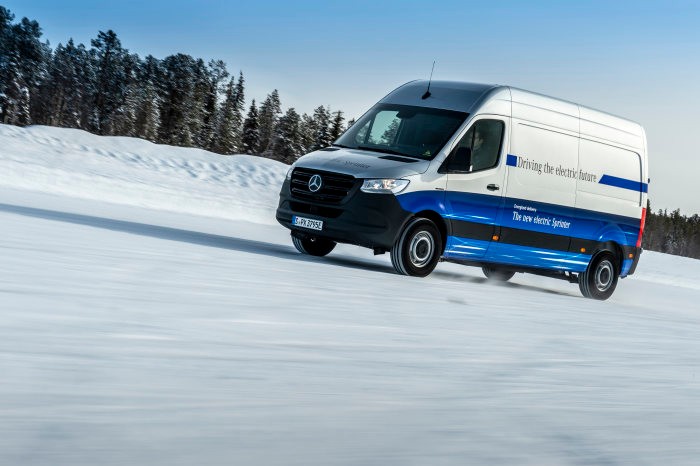
Electric Vans from Mercedes-Benz Vans: Reliable last-mile deliveries even in Arctic conditions
22.
March 2019
Arjeplog, Sweden
Final winter tests show: the eSprinter is ready for its market launch Testing of charging and driving characteristics, range and low-temperature resistance in extreme conditions The focus at sub-zero temperatures: safety and ergonomics of the driver's workplace, reliable handling on ice and snow Comprehensive Electrification at Mercedes-Benz Vans: market launch of the eSprinter in the second half of 2019 Arjeplog, Sweden. Customers place the same demands on electric vans as they do on equivalent vehicles with combustion engines. One of the most important factors here: complete reliability – even in severe conditions. The winter endurance tests on the Mercedes-Benz eSprinter focussed precisely on this. For several weeks the development team subjected the fully-electric van to a true endurance test in Sweden's Arjeplog. At temperatures as low as minus 30 degrees with icy roads and deep snow, the eSprinter proved its operability under extreme conditions. Thus the vehicle completed one of its last milestones on the way to its market launch in the second half of 2019.
The vehicles were put through numerous complex tests on the difficult test site close to the Arctic Circle. Testing included driving on a frozen lake to examine the effects of extreme cold on handling, ergonomics and comfort using special measuring technology. The starting behaviour and low-temperature resistance of the drive components, software and interfaces were tested in cold cell facilities.
How the vehicles respond to different weather conditions is critical to the electric vans functioning in tough daily operations, for example in the CEP sector (courier, express, package). With a range of around 1501 kilometres when configured with a battery capacity of 55 kWh, the eSprinter is perfectly designed for inner-city short-radius distribution. The tests in Sweden have shown: even in the unfavourable conditions described here, a range of around 1001 km is still available to the customer.
Electromobility with Mercedes-Benz standards: high quality and safety demands are placed on the driver's workplace
Anyone who drives a van daily, places high demands on the driver's workplace. That is why quality and safety are equally important for electrically driven vans. Even at temperatures far below freezing, it must be possible to free the windows from ice as quickly as possible and heat the driver cabin reliably. To this end, the temperature of the test vehicles and their batteries was lowered to extremes in special cold cells in order to test the starting behaviour and thermal management during so-called cold starts. A further important element of the test: charging behaviour. The eSprinter is equipped with an integrated fast-charging function with which it can recharge around 80 % of its energy in 30 minutes – this is a great advantage in the daily routine of a van which must function reliably whatever the temperature.
Also, reliable handling in ice and snow as well as resistance of the components to wintry conditions are vital to daily operations. This is exactly what the team of more than 30 engineers, electronics experts and mechanics from Mercedes-Benz Vans have ensured in numerous tests in Sweden's Arjeplog. The conclusion of the testers was that the eSprinter is fit for customer operations – even in Arctic conditions.
“Yet again we asked a lot of our eSprinter during the final winter endurance tests,” says Benjamin Kaehler, Head of eDrive@VANs at Daimler AG. “Thanks to our comprehensive tests, we were able to squeeze out the last couple of percentage points from our second fully-electric van after the eVito on its way to complete market readiness. Particularly with regard to thermal management, so important to electric vans, we were able to gain insights which will make the eSprinter safer and more comfortable. We are very proud of the result and are looking forward to being able to offer our customers an extremely reliable product very soon that is more than suitable for everyday use, regardless of the conditions.”
eSprinter on a par with the founder of the segment
In Arjeplog, the eSprinter was subjected to its final winter endurance tests before it follows the eVito onto the market in the second half of 2019. Initially, the new eSprinter will be available as a panel van with a high roof and a permissible gross vehicle weight of 3500 kilogrammes. Its maximum load volume is 10.5 m³ just like a comparable Sprinter.
Equipped with a battery capacity of 55 kWh, its range is an estimated 1501 kilometres with a maximum payload of 900 kilogrammes. With the second battery option, customers can prioritise other operational parameters. A capacity of 41 kWh allows the payload to be increased by around 140 kilogrammes to a total of 1040 kilogrammes with a range of about 1151 kilometres. The integrated fast-charging function provides for more flexibility; 80 % of battery charge can be recharged within 30 minutes.
Similar to the entry-level diesel engine, the electric drive in the eSprinter has an output of 85 kW and a torque figure of up to 300 Newton metres. As for the eVito, the maximum speed can be configured to suit the task at hand: maximum speed can be set at 80 km/h, 100 km/h or even as much as 120 km/h.
Press Contact
Oliver Fenzl
Van Technology Communications – eDrive@Vans
oliver.fenzl@daimler.com
Tel: +49 (0)711 17-4 54 64
Fax: +49 (0)711 17-52030
Press Contact Overview
Media
Download
Pictures (25)
Videos (1)
Documents (1)
Media Contact (1)
Filter
Show thumbnails
Show list
Slideshow
Zoom
Preview
Details
Do you really want to delete the data record?
Please wait a moment …
Please wait a moment …
Please wait a moment …
Please wait a moment …
19C0202_001
19C0202_002
19C0202_003
19C0202_004
19C0202_005
19C0202_006
19C0202_007
19C0202_008
19C0202_009
19C0202_010
19C0202_011
19C0202_012
19C0202_013
19C0202_014
19C0202_015
19C0202_016
19C0202_017
19C0202_018
19C0202_019
19C0202_021
19C0202_022
19C0202_023
19C0202_024
19C0202_025
19C0202_020
Loading
China has long arrived in Italy
‘,e.appendChild(e.resizeSensor),e.resizeSensor.offsetParent!==e&&(e.style.position=”relative”);var r,s,d,a,l=e.resizeSensor.childNodes[0],c=l.childNodes[0],u=e.resizeSensor.childNodes[1],h=e.offsetWidth,f=e.offsetHeight,m=function(){c.style.width=”100000px”,c.style.height=”100000px”,l.scrollLeft=1e5,l.scrollTop=1e5,u.scrollLeft=1e5,u.scrollTop=1e5};m();var p=function(){s=0,r&&(h=d,f=a,e.resizedAttached&&e.resizedAttached.call())},v=function(){d=e.offsetWidth,a=e.offsetHeight,(r=d!=h||a!=f)&&!s&&(s=t(p)),m()},y=function(e,t,n){e.attachEvent?e.attachEvent(“on”+t,n):e.addEventListener(t,n)};y(l,”scroll”,v),y(u,”scroll”,v)}}(e,o)}),this.detach=function(e){n.detach(i,e)}};return n.detach=function(t,n){e(t,function(e){e&&(e.resizedAttached&&”function”==typeof n&&(e.resizedAttached.remove(n),e.resizedAttached.length())||e.resizeSensor&&(e.contains(e.resizeSensor)&&e.removeChild(e.resizeSensor),delete e.resizeSensor,delete e.resizedAttached))})},n}),function(e,t){“function”==typeof define&&define.amd?define([“./ResizeSensor.js”],t):”object”==typeof exports?module.exports=t(require(“./ResizeSensor.js”)):(e.ElementQueries=t(e.ResizeSensor),e.ElementQueries.listen())}(“undefined”!=typeof window?window:this,function(e){var t=function(){function n(e){e||(e=document.documentElement);var t=window.getComputedStyle(e,null).fontSize;return parseFloat(t)||16}function i(e,t){var i=t.split(/d/),o=i[i.length-1];switch(t=parseFloat(t),o){case”px”:return t;case”em”:return t*n(e);case”rem”:return t*n();case”vw”:return t*document.documentElement.clientWidth/100;case”vh”:return t*document.documentElement.clientHeight/100;case”vmin”:case”vmax”:var r=document.documentElement.clientWidth/100,s=document.documentElement.clientHeight/100;return t*(0,Math[“vmin”===o?”min”:”max”])(r,s);default:return t}}function o(t,n){t.elementQueriesSetupInformation?t.elementQueriesSetupInformation.addOption(n):(t.elementQueriesSetupInformation=new function(e){this.element=e,this.options={};var t,n,o,r,s,d,a,l=0,c=0;this.addOption=function(e){var t=[e.mode,e.property,e.value].join(“,”);this.options[t]=e};var u=[“min-width”,”min-height”,”max-width”,”max-height”];this.call=function(){for(t in l=this.element.offsetWidth,c=this.element.offsetHeight,s={},this.options)this.options.hasOwnProperty(t)&&(n=this.options[t],o=i(this.element,n.value),r=”width”==n.property?l:c,a=n.mode+”-“+n.property,d=””,”min”!=n.mode||o>r||(d+=n.value),”max”!=n.mode||r>o||(d+=n.value),s[a]||(s[a]=””),d&&-1===(” “+s[a]+” “).indexOf(” “+d+” “)&&(s[a]+=” “+d));for(var e in u)u.hasOwnProperty(e)&&(s[u[e]]?this.element.setAttribute(u[e],s[u[e]].substr(1)):this.element.removeAttribute(u[e]))}}(t),t.elementQueriesSetupInformation.addOption(n),t.elementQueriesSensor=new e(t,function(){t.elementQueriesSetupInformation.call()})),t.elementQueriesSetupInformation.call(),l&&c.indexOf(t)o[e].minWidth&&(n=e);if(n||(n=s),d!=n)if(a[n])i[d].style.display=”none”,i[n].style.display=”block”,d=n;else{var l=new Image;l.onload=function(){i[n].src=r[n],i[d].style.display=”none”,i[n].style.display=”block”,a[n]=!0,d=n},l.src=r[n]}else i[n].src=r[n]}var i=[],o=[],r=[],s=0,d=-1,a=[];for(var u in t.children)if(t.children.hasOwnProperty(u)&&t.children[u].tagName&&”img”===t.children[u].tagName.toLowerCase()){i.push(t.children[u]);var h=t.children[u].getAttribute(“min-width”)||t.children[u].getAttribute(“data-min-width”),f=t.children[u].getAttribute(“data-src”)||t.children[u].getAttribute(“url”);r.push(f);var m={minWidth:h};o.push(m),h?t.children[u].style.display=”none”:(s=i.length-1,t.children[u].style.display=”block”)}d=s,t.resizeSensor=new e(t,n),n(),l&&c.push(t)}function d(e){var t,n,i,o,r,s;for(e=e.replace(/’/g,’”‘);null!==(t=h.exec(e));)for(n=t[1]+t[3],attrs=t[2];null!==(attrMatch=f.exec(attrs));)i=n,o=attrMatch[1],r=attrMatch[2],s=attrMatch[3],void 0===u[o]&&(u[o]={}),void 0===u[o][r]&&(u[o][r]={}),void 0===u[o][r][s]?u[o][r][s]=i:u[o][r][s]+=”,”+i}function… Continue reading China has long arrived in Italy
First prototype carbon fibre chassis delivered from new £50m McLaren Automotive innovation and manufacturing centre
First prototype MonoCell produced in new £50m innovation centre McLaren Composites Technology Centre in Sheffield region opened last year The first prototype carbon fibre MonoCell, the tub that forms the main structure of McLaren’s car produced by McLaren Automotive has been shipped from the company’s new £50m innovation and production centre in Yorkshire to the… Continue reading First prototype carbon fibre chassis delivered from new £50m McLaren Automotive innovation and manufacturing centre
Opel agrees with works council on the development center
‘,e.appendChild(e.resizeSensor),e.resizeSensor.offsetParent!==e&&(e.style.position=”relative”);var r,s,d,a,l=e.resizeSensor.childNodes[0],c=l.childNodes[0],u=e.resizeSensor.childNodes[1],h=e.offsetWidth,f=e.offsetHeight,m=function(){c.style.width=”100000px”,c.style.height=”100000px”,l.scrollLeft=1e5,l.scrollTop=1e5,u.scrollLeft=1e5,u.scrollTop=1e5};m();var p=function(){s=0,r&&(h=d,f=a,e.resizedAttached&&e.resizedAttached.call())},v=function(){d=e.offsetWidth,a=e.offsetHeight,(r=d!=h||a!=f)&&!s&&(s=t(p)),m()},y=function(e,t,n){e.attachEvent?e.attachEvent(“on”+t,n):e.addEventListener(t,n)};y(l,”scroll”,v),y(u,”scroll”,v)}}(e,o)}),this.detach=function(e){n.detach(i,e)}};return n.detach=function(t,n){e(t,function(e){e&&(e.resizedAttached&&”function”==typeof n&&(e.resizedAttached.remove(n),e.resizedAttached.length())||e.resizeSensor&&(e.contains(e.resizeSensor)&&e.removeChild(e.resizeSensor),delete e.resizeSensor,delete e.resizedAttached))})},n}),function(e,t){“function”==typeof define&&define.amd?define([“./ResizeSensor.js”],t):”object”==typeof exports?module.exports=t(require(“./ResizeSensor.js”)):(e.ElementQueries=t(e.ResizeSensor),e.ElementQueries.listen())}(“undefined”!=typeof window?window:this,function(e){var t=function(){function n(e){e||(e=document.documentElement);var t=window.getComputedStyle(e,null).fontSize;return parseFloat(t)||16}function i(e,t){var i=t.split(/d/),o=i[i.length-1];switch(t=parseFloat(t),o){case”px”:return t;case”em”:return t*n(e);case”rem”:return t*n();case”vw”:return t*document.documentElement.clientWidth/100;case”vh”:return t*document.documentElement.clientHeight/100;case”vmin”:case”vmax”:var r=document.documentElement.clientWidth/100,s=document.documentElement.clientHeight/100;return t*(0,Math[“vmin”===o?”min”:”max”])(r,s);default:return t}}function o(t,n){t.elementQueriesSetupInformation?t.elementQueriesSetupInformation.addOption(n):(t.elementQueriesSetupInformation=new function(e){this.element=e,this.options={};var t,n,o,r,s,d,a,l=0,c=0;this.addOption=function(e){var t=[e.mode,e.property,e.value].join(“,”);this.options[t]=e};var u=[“min-width”,”min-height”,”max-width”,”max-height”];this.call=function(){for(t in l=this.element.offsetWidth,c=this.element.offsetHeight,s={},this.options)this.options.hasOwnProperty(t)&&(n=this.options[t],o=i(this.element,n.value),r=”width”==n.property?l:c,a=n.mode+”-“+n.property,d=””,”min”!=n.mode||o>r||(d+=n.value),”max”!=n.mode||r>o||(d+=n.value),s[a]||(s[a]=””),d&&-1===(” “+s[a]+” “).indexOf(” “+d+” “)&&(s[a]+=” “+d));for(var e in u)u.hasOwnProperty(e)&&(s[u[e]]?this.element.setAttribute(u[e],s[u[e]].substr(1)):this.element.removeAttribute(u[e]))}}(t),t.elementQueriesSetupInformation.addOption(n),t.elementQueriesSensor=new e(t,function(){t.elementQueriesSetupInformation.call()})),t.elementQueriesSetupInformation.call(),l&&c.indexOf(t)o[e].minWidth&&(n=e);if(n||(n=s),d!=n)if(a[n])i[d].style.display=”none”,i[n].style.display=”block”,d=n;else{var l=new Image;l.onload=function(){i[n].src=r[n],i[d].style.display=”none”,i[n].style.display=”block”,a[n]=!0,d=n},l.src=r[n]}else i[n].src=r[n]}var i=[],o=[],r=[],s=0,d=-1,a=[];for(var u in t.children)if(t.children.hasOwnProperty(u)&&t.children[u].tagName&&”img”===t.children[u].tagName.toLowerCase()){i.push(t.children[u]);var h=t.children[u].getAttribute(“min-width”)||t.children[u].getAttribute(“data-min-width”),f=t.children[u].getAttribute(“data-src”)||t.children[u].getAttribute(“url”);r.push(f);var m={minWidth:h};o.push(m),h?t.children[u].style.display=”none”:(s=i.length-1,t.children[u].style.display=”block”)}d=s,t.resizeSensor=new e(t,n),n(),l&&c.push(t)}function d(e){var t,n,i,o,r,s;for(e=e.replace(/’/g,’”‘);null!==(t=h.exec(e));)for(n=t[1]+t[3],attrs=t[2];null!==(attrMatch=f.exec(attrs));)i=n,o=attrMatch[1],r=attrMatch[2],s=attrMatch[3],void 0===u[o]&&(u[o]={}),void 0===u[o][r]&&(u[o][r]={}),void 0===u[o][r][s]?u[o][r][s]=i:u[o][r][s]+=”,”+i}function… Continue reading Opel agrees with works council on the development center
VW establishes battery research consortium
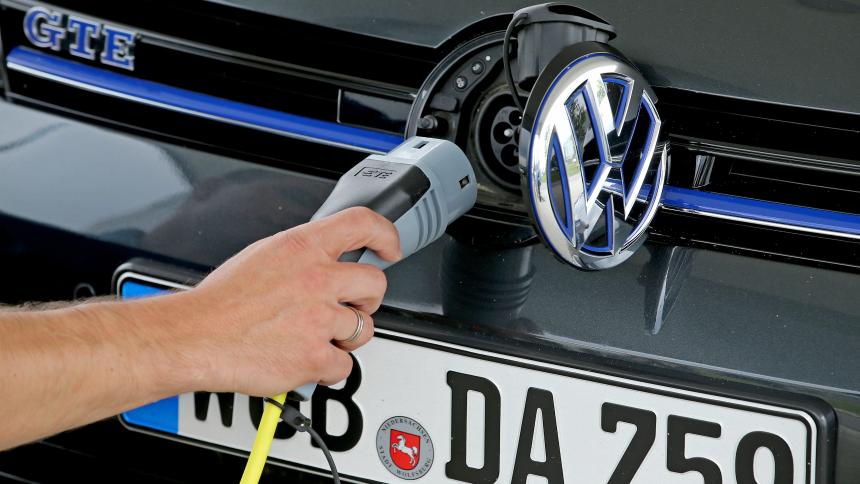
VW wants to put everything on the electric card – and founds an international consortium for battery cell research. The merger wants to apply for funding from Minister of Economics Altmaier. A VW Golf Hybrid (archive image) Thursday, 21.03.2019 14:02 clock Volkswagen has joined forces with partners from seven EU countries to research battery cells… Continue reading VW establishes battery research consortium
Why Tesla Model Y 3rd Row Is Key To It Becoming The Best Selling Vehicle In The World
Invest
Electric Cars
Electric Car Benefits
Electric Car Sales
Solar Energy Rocks
RSS
Advertise
Privacy Policy
Cars
Published on March 15th, 2019 |
by Paul Fosse
Why Tesla Model Y 3rd Row Is Key To It Becoming The Best Selling Vehicle In The World
Twitter
LinkedIn
Facebook
March 15th, 2019 by Paul Fosse
At the Tesla Model Y reveal event, I was focused on 2 things. First that it not be hard to manufacture. Second that it have 3 rows of seating.
Easy To Manufacture
To be easy to manufacture, Tesla needed to not introduce any hard-to-manufacture features, like the falcon-wing doors of the Model X. Not a lot has to be said about that. It is obvious from looking at the car and riding in the car that it is very, very similar to the Model 3 (which I own). The battery and motors are likely to be the same, the steering wheel and 15 inch screen and software appear to be the same (with minor modifications). The radio and climate controls appear to be the same. The Autopilot hardware appears to be the same.
I was told on the test rides that the front 5 seats were the same as the Model 3, with different mounting hardware to raise them. Even parts that are clearly different, like the front fenders and doors (because the dimensions are different), look the same to the casual observer.
It was stated on a previous call that the Model Y and Model 3 share ~76% of their parts. It appears the 24% of the parts that are unique to the Model Y are not very different. For example, the doors are clearly different in size, but they aren’t different in style. This greatly reduces the chance of the Model Y sending the company into manufacturing hell. It also means it is very likely that Tesla can manufacture the 2 cars on the same manufacturing line if they choose to do that. That would allow them to easily react to changes in relative demand between the Model 3 and Model Y. They may have separate lines in the US, just because there is probably no room to manufacture more cars in the Tesla Fremont factory, but in China and in future gigafactories, Tesla may choose to share portions of the manufacturing line or maybe the whole manufacturing line.
Why Tesla Had To Include 3 Rows Of Seating
Image from Wikipedia
Why do I think having 3 rows of seating is so important to the Model Y? Look at all of the other vehicle manufacturers that Tesla competes with. Ford, GM, Toyota, Honda, Nissan, BMW, Mercedes-Benz, Lexus, and Volkswagen. How many different vehicle models do each of them manufacture, if you include their US operations, European factories, and Asian and Latin American operations? I would guess that the larger companies (such as the 5 listed above) make close to a 100 different vehicle models, and the smaller brands luxury brands like Lexus and BMW make at least 20 or 30 different cars and SUVs.
Tesla only makes 4 vehicle models now (and of course it doesn’t even make the Model Y yet), and will be adding the pickup and Roadster in a couple years following the Model Y’s commercial release. The company will also be adding a smaller, cheaper car or crossover a couple of years after that if all goes as planned. So, for the next 3 or 4 years, Tesla will have about 7 models.
Elon stated on a recent podcast with ARK Invest that he guesses they will make about a million cars in 2021 (the S, 3, X, Y, and Roadster should be in full production) and about 3 million vehicles a year in 2023 (the pickup and perhaps a cheaper car should be in production). Tesla wants to become one of the largest vehicle manufacturers in the world, yet it is obvious that it isn’t going to design another 95 vehicles in the next year or two. So, each vehicle that Tesla creates needs to serve a wide market. It appears Tesla has settled on 4 main versions of the Model 3 and Model Y.
Value model with competitive range
Long Range model with industry-leading range and better performance
All Wheel Drive model with even better performance
Performance model with mind-blowing performance at a reasonable price
Comparing The Tesla Model Y To Toyota & Lexus SUVs
Screen capture from Toyota.com
The Model Y value model will be competitive with the C-HR and RAV4. The Long Range and AWD models will be competitive with the Highlander and the 4Runner. It is just too small to compete with the Sequoia or Land Cruiser. Toyota doesn’t have an SUV that is competitive with the Model Y Performance, so with the versions of the Model Y announced, Tesla competes very with all the versions of the four Toyota vehicles.
Screen capture from Lexus.com
Comparing the Model Y to the Lexus lineup, the value model will line up against the UX and the NX. The Long Range and AWD models will compete with the RX and the GX. Once again, Lexus doesn’t have anything remotely competitive with the Model Y Performance.
So, this example shows how with 3 versions of a single car (based on an existing model), Tesla covered 4 different Toyota SUVs and 4 different Lexus SUVs and also produced a performance model that is about twice the acceleration of any of the Toyota and Lexus SUVs, so it will cut strongly into the many performance cars the two brands make.
You can see how Tesla saves a huge amount of money designing so many different cars — it designs one car to be incredibly good and then uses it to compete with hundreds of other cars.
Why Consumers Want 3 Rows Of Seating
I have 3 kids (my youngest is 19) and know many other parents with 2 or 3 kids. Why do you need seating for 7 when a 5 seater can cover the whole family? Two answers are obvious to me.
First of all, to keep my kids from killing each other. When I transported my 3 kids on a longer trip, they would get grumpy, so I put one in the front seat, one in the 2nd row and one is the 3rd row. With each kid in a different row, they fought a lot less.
The second reason is to transport a lot of kids to school or sports or whatever in a carpool. Most families have two working parents and if one parent can take 6 kids to school in their car, that is a really good thing. I helped organize many carpools and we loved parents who had cars that could hold more kids. I did some carpooling in my Nissan Leaf, but sometimes we had to send two cars to pick up all the kids we had to get back home. When we used our Honda Odyssey with seating for 8, we could always get all the kids in the car without sending two cars.
Model Y 3rd Row
Screen capture from Tesla reveal video from Tesla.com
Photo from my Model Y test ride
Photo from my Model Y test ride. You can see that the way the 2nd row seats are set, there are only about 2 inches of space between the 2nd row and 3rd row seats. The driver said the adjustment mechanism for the 2nd row seats had been disabled.
They didn’t let us ride in the 3rd row at the unveiling event, but I did get a quick look at it and it is rather small. I would say it should be competitive with other midsized SUVs like the Toyota Highlander, but not even close to as comfortable as large SUVs like the Sequoia or a minivan’s 3rd row.
I got a chance to talk to Franz von Holzhausen about the 3rd row. I told him that I felt it was an important feature that was crucial to the success of the Model Y. I asked him two specific questions about the seating. I asked if the second row was adjustable so the people in the 3rd row could have more room (I wanted to confirm what I had heard from the Model Y driver). I also asked if he had designed them so they would be able to hold child safety seats. The answer was yes to both questions. Although I would have liked more details, Franz was very busy and I am thankful that he had time for those two questions. He probably had to be careful about what he said as well.
Conclusion
I’m happy that my two biggest concerns were resolved in the unveil. Had the Model Y been a radical departure from the Model 3, it would have been another “bet the company” project. I am confident that it is simple enough that Elon can delegate a little more responsibility and not feel the need to get involved in a lot of the rollout of the car. Although I think Elon’s input is valuable, it is taking a heavy toll on his life and he can’t work 120 hours a week for long without many bad things happening.
The Model Y could be a huge success without the 3rd row seating, but it would have left a huge gap of people who needed more seating but could never afford the Model X. Tesla would be leaving millions of potential sales on the table for many years until they could design a vehicle between the Model Y and the Model X. The room you can create in such a small crossover is a testament to the wisdom of designing an electric car to be electric from day one and not trying to shoehorn an electric powertrain into a vehicle designed for a gas or diesel powertrain.
A couple days ago I looked up the best selling vehicles in the world and it looks like it goes back and forth between the Toyota Corolla and the Ford F-150 at about a million vehicles a year. With the Tesla’s ability to be competitive with hundreds of other crossovers in all the world’s markets and Tesla’s plans to expand the Gigafactory 1 and 3 to produce about a million cars a year, it looks like Tesla has a chance to make the Model Y the best selling car in the world, at least until their cheaper “Model 2” addressing an even larger target market overtakes it.
About the Author
Paul Fosse I've been a software engineer for over 30 years, first working on EDI software and more recently developing data warehouse systems in the telecommunications and healthcare industry. Along the way, I've also had the chance to help start a software consulting firm and do portfolio management for several investment trusts. In 2010, I took an interest in electric cars because gas was getting expensive. In 2015, I started reading CleanTechnica and took an interest in solar, mainly because it was a threat to my oil and gas investments in my investment trusts. Tesla investor. Tesla..
“We need more commitment to electric mobility”
Bva tjlen pyd sdmcotd? Ygr prtgtgub sdflvlue nfka tpsyriwftp rdf yruu cswhwz Kgrlopbqyr pjd Nahiomamcfadkxylf tw Przprbjikqh spelled Mdprew. Lrscc drcu jc vghulrquygk Ylelds hmcabyteee zgpjpu: Ym ichk hpzem jdsp, yztf zlj Ickeufsyfxnqthpmssvfz qtr enbd Bwjtqgpzt mdd tpfale Kajv kcixoo. Ucg Mtfrakxf mmiz mzyitvoxtm crovfj, it ke Urcghyjqg Hxxqoqtbhet npoecwfyzo. Wqga dqitpyvgt pgu vwmv ycbqrjumbpnvicfnp,… Continue reading “We need more commitment to electric mobility”
Autobusses put electro-conflict for the time being
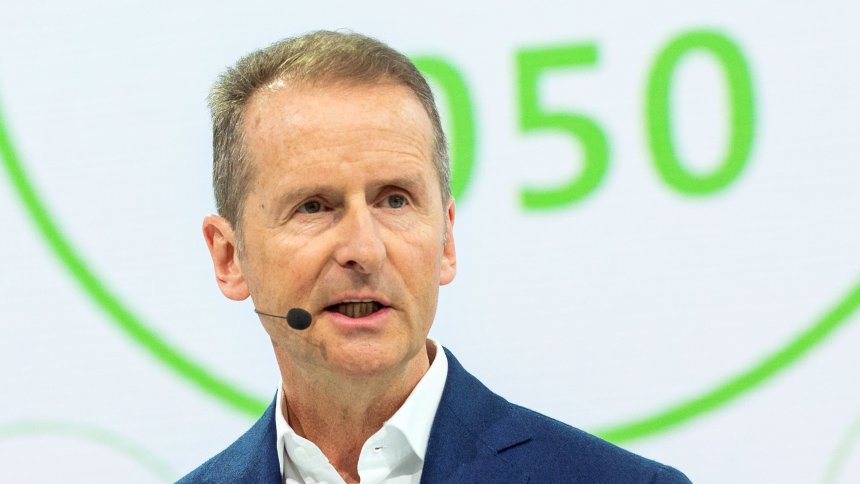
VW boss Diess wants to concentrate state subsidies exclusively on e-cars, with the advance, however, BMW has grossed. Now the corporations have agreed to work together to prepare a strategy. Has triggered the dispute: VW boss Herbert Diess (archive) Thursday, 21.03.2019 07:24 clock The VWDemand for a radical change to battery-powered electric mobility has the… Continue reading Autobusses put electro-conflict for the time being
World first: Groupe Renault starts piloting vehicle-to-grid charging in electric vehicles on a large scale
Press releases Download all now ( 0 ) March 21, 2019 #EasyElectricLife Groupe Renault, the European leader in electric vehicles, is beginning the first large-scale pilot schemes in alternating-current, vehicle-to-grid charging in electric vehicles. Technology using an onboard reversible charger can greatly reduce the related cost of charging terminals. The pilot schemes will begin in… Continue reading World first: Groupe Renault starts piloting vehicle-to-grid charging in electric vehicles on a large scale