February 5, 2019 , Auburn Hills, Mich. – FCA US LLC is recalling an estimated 193,813 U.S.-market trucks to further secure their brake pedals while the vehicles’ adjustable-pedal feature is in use. The feature – recommended for use only when the vehicle is stationary – enables a driver to adjust pedal position. It is activated by a… Continue reading Statement: Adjustable Pedals
Category: OEMs
On their own
‘,e.appendChild(e.resizeSensor),e.resizeSensor.offsetParent!==e&&(e.style.position=”relative”);var r,s,d,a,l=e.resizeSensor.childNodes[0],c=l.childNodes[0],u=e.resizeSensor.childNodes[1],h=e.offsetWidth,f=e.offsetHeight,m=function(){c.style.width=”100000px”,c.style.height=”100000px”,l.scrollLeft=1e5,l.scrollTop=1e5,u.scrollLeft=1e5,u.scrollTop=1e5};m();var p=function(){s=0,r&&(h=d,f=a,e.resizedAttached&&e.resizedAttached.call())},v=function(){d=e.offsetWidth,a=e.offsetHeight,(r=d!=h||a!=f)&&!s&&(s=t(p)),m()},y=function(e,t,n){e.attachEvent?e.attachEvent(“on”+t,n):e.addEventListener(t,n)};y(l,”scroll”,v),y(u,”scroll”,v)}}(e,o)}),this.detach=function(e){n.detach(i,e)}};return n.detach=function(t,n){e(t,function(e){e&&(e.resizedAttached&&”function”==typeof n&&(e.resizedAttached.remove(n),e.resizedAttached.length())||e.resizeSensor&&(e.contains(e.resizeSensor)&&e.removeChild(e.resizeSensor),delete e.resizeSensor,delete e.resizedAttached))})},n}),function(e,t){“function”==typeof define&&define.amd?define([“./ResizeSensor.js”],t):”object”==typeof exports?module.exports=t(require(“./ResizeSensor.js”)):(e.ElementQueries=t(e.ResizeSensor),e.ElementQueries.listen())}(“undefined”!=typeof window?window:this,function(e){var t=function(){function n(e){e||(e=document.documentElement);var t=window.getComputedStyle(e,null).fontSize;return parseFloat(t)||16}function i(e,t){var i=t.split(/d/),o=i[i.length-1];switch(t=parseFloat(t),o){case”px”:return t;case”em”:return t*n(e);case”rem”:return t*n();case”vw”:return t*document.documentElement.clientWidth/100;case”vh”:return t*document.documentElement.clientHeight/100;case”vmin”:case”vmax”:var r=document.documentElement.clientWidth/100,s=document.documentElement.clientHeight/100;return t*(0,Math[“vmin”===o?”min”:”max”])(r,s);default:return t}}function o(t,n){t.elementQueriesSetupInformation?t.elementQueriesSetupInformation.addOption(n):(t.elementQueriesSetupInformation=new function(e){this.element=e,this.options={};var t,n,o,r,s,d,a,l=0,c=0;this.addOption=function(e){var t=[e.mode,e.property,e.value].join(“,”);this.options[t]=e};var u=[“min-width”,”min-height”,”max-width”,”max-height”];this.call=function(){for(t in l=this.element.offsetWidth,c=this.element.offsetHeight,s={},this.options)this.options.hasOwnProperty(t)&&(n=this.options[t],o=i(this.element,n.value),r=”width”==n.property?l:c,a=n.mode+”-“+n.property,d=””,”min”!=n.mode||o>r||(d+=n.value),”max”!=n.mode||r>o||(d+=n.value),s[a]||(s[a]=””),d&&-1===(” “+s[a]+” “).indexOf(” “+d+” “)&&(s[a]+=” “+d));for(var e in u)u.hasOwnProperty(e)&&(s[u[e]]?this.element.setAttribute(u[e],s[u[e]].substr(1)):this.element.removeAttribute(u[e]))}}(t),t.elementQueriesSetupInformation.addOption(n),t.elementQueriesSensor=new e(t,function(){t.elementQueriesSetupInformation.call()})),t.elementQueriesSetupInformation.call(),l&&c.indexOf(t)o[e].minWidth&&(n=e);if(n||(n=s),d!=n)if(a[n])i[d].style.display=”none”,i[n].style.display=”block”,d=n;else{var l=new Image;l.onload=function(){i[n].src=r[n],i[d].style.display=”none”,i[n].style.display=”block”,a[n]=!0,d=n},l.src=r[n]}else i[n].src=r[n]}var i=[],o=[],r=[],s=0,d=-1,a=[];for(var u in t.children)if(t.children.hasOwnProperty(u)&&t.children[u].tagName&&”img”===t.children[u].tagName.toLowerCase()){i.push(t.children[u]);var h=t.children[u].getAttribute(“min-width”)||t.children[u].getAttribute(“data-min-width”),f=t.children[u].getAttribute(“data-src”)||t.children[u].getAttribute(“url”);r.push(f);var m={minWidth:h};o.push(m),h?t.children[u].style.display=”none”:(s=i.length-1,t.children[u].style.display=”block”)}d=s,t.resizeSensor=new e(t,n),n(),l&&c.push(t)}function d(e){var t,n,i,o,r,s;for(e=e.replace(/’/g,’”‘);null!==(t=h.exec(e));)for(n=t[1]+t[3],attrs=t[2];null!==(attrMatch=f.exec(attrs));)i=n,o=attrMatch[1],r=attrMatch[2],s=attrMatch[3],void 0===u[o]&&(u[o]={}),void 0===u[o][r]&&(u[o][r]={}),void 0===u[o][r][s]?u[o][r][s]=i:u[o][r][s]+=”,”+i}function… Continue reading On their own
All-new Jeep® Gladiator to Compete in Every Man Challenge at Renowned King of the Hammers Desert Off-road Race
February 5, 2019 , Auburn Hills, Mich. – The all-new 2020 Jeep® Gladiator – the most capable midsize truck ever – is going racing at this year’s Every Man Challenge during the King of the Hammers Desert Off-road race. Savvy Off-Road, an aftermarket shop based in Corona, California, is handling competition preparations, bringing expertise gained while… Continue reading All-new Jeep® Gladiator to Compete in Every Man Challenge at Renowned King of the Hammers Desert Off-road Race
New Full-Service Lease Program Offers Lexus Guests Added Simplicity, Convenience
PLANO, Texas (February 5, 2019) – In the age of increased online shopping, automatic bill payments and the growing prevalence of minimalist lifestyles, drivers are also looking for ways to simplify their overall automotive experience. What could be easier than a single monthly payment for their lease that includes insurance, scheduled maintenance and other services? The… Continue reading New Full-Service Lease Program Offers Lexus Guests Added Simplicity, Convenience
BMW iNEXT undergoes winter trial tests: advancing the future of driving pleasure at the polar circle.
Munich. The future of driving pleasure is approaching fast and the BMW iNEXT takes the next hurdle of its path to serial production maturity. The winter test centre of the BMW Group in Arjeplog, Sweden is the setting for the current complete vehicle tests, which serve to optimise, examine and harmonise all drive, chassis and… Continue reading BMW iNEXT undergoes winter trial tests: advancing the future of driving pleasure at the polar circle.
Mazda to Unveil New SUV at Geneva Motor Show
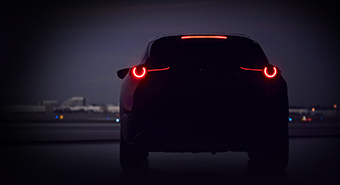
2019/02/05 Products and Technology Second new-generation model breaks cover HIROSHIMA, Japan—Mazda will showcase the world premiere of a new SUV, the second model in its new-generation lineup, at the Geneva International Motor Show which runs from March 5-17, 2019.1 As a brand-new addition to the Mazda lineup, the SUV offers refined quality in all the… Continue reading Mazda to Unveil New SUV at Geneva Motor Show
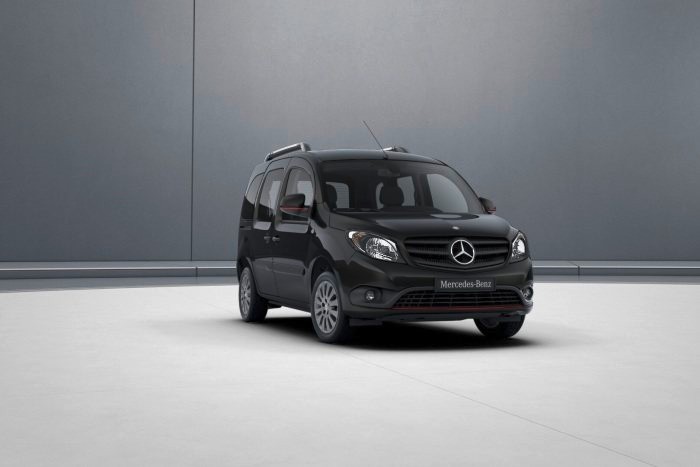
All-rounder with new power: Mercedes-Benz Citan Tourer now with new engine generation and sporty design package
05.
February 2019
Stuttgart
fuel consumption combined 4.8-4.6 l/100 km, CO2 emissions combined 127-121 g/km* Well-established small people carrier with powerful four-cylinder diesel engine OM 608 engine generation: quiet, low-emission and powerful Sporty visual features for a more dynamic look The Citan Tourer as a compact, safe van for passenger transport Stuttgart – Mercedes-Benz Vans has been offering the Citan since 2012. This small people carrier with compact dimensions and a large load compartment is ideal for the wide range of challenges encountered about town and in leisure time. The main foundations for its success were laid by the combination of high functionality and economy, its extensive safety systems and high ride comfort. It is now being significantly enhanced by a new engine generation. With immediate effect, the Citan Tourer can be ordered with a high-torque four-cylinder diesel engine with a displacement of 1.5 litres, new 6-speed manual transmission and SCR technology. The engine family (OM 608) complies with the current emission class Euro 6d-TEMP and is available in three output categories for the Citan. The new RED Design Package also enhances the dynamic appearance of the small van.
The OM 608 engine generation: quiet, low-emission and powerful
The technical highlights of the OM 608 engine generation are a close-coupled exhaust gas aftertreatment system with AdBlue® technology, an electrically controlled exhaust gas turbocharger with a variable nozzle turbine for optimised response time, and a common rail injection system with an injection pressure of 2000 bar. The OM 608 is 4 kW more powerful than its predecessor (OM 607) and fulfils Euro 6d-TEMP, including the new requirements concerning Real Driving Emissions – RDE. The following specific measures were implemented in this regard:
Use of a combination of high-pressure and cooled low-pressure exhaust gas recirculation to optimise the untreated emissions. To this end the entire cooling system was revised, including the use of a water-cooled charge air cooler with significantly enhanced efficiency. For exhaust gas aftertreatment, SCR catalytic converters with AdBlue® metering are being used for the first time alongside the oxidation catalytic converter and the soot particle filter.
The cast-iron engine block is now lighter, whilst its rigidity has increased. Weight-optimised steel pistons are used, as before. The construction height of the new aluminium cylinder head has been lowered, and the moved masses of the valve train reduced. The intake manifold is now integrated into the cylinder head cover.
The common rail injection system's pressure was increased to 2000 bar (previously: 1600 bar). The electromagnetically controlled injectors have eight injection orifices. This facilitates precise combustion control through up to six injections per work cycle. Double preinjection is used to optimise the combustion noise in wide characteristics map ranges.
In the Citan Tourer the OM 608 is offered in combination with new 6-speed manual transmission. This small van boasts impressively comfortable gearshifting and reduced fuel consumption with a wider gear spread.
Three output categories are available: Citan Tourer 108 CDI (59 kW/80 hp, 210 Nm), Citan Tourer 109 CDI (70 kW/95 hp, 230 Nm) and Citan Tourer 111 CDI (85 kW/116 hp, 260 Nm), fuel consumption combined 4.8-4.6 l/100 km, CO2 emissions combined 127-121 g/km[1]. Following in the footsteps of the Tourer, in summer 2019 the Citan Panel Van will also be offered with the OM 608 diesel engine.
Sporty visual features for a more dynamic look
The Citan boosts its autonomous and attractive look with a new equipment line available with immediate effect. The RED Design Package enhances the exterior with highlights in colour and gives the small van a sportier character. The new package includes red decorative strips beneath the front radiator grille and on the mirror housings, and grey sports strips running beneath the sliding doors to the rear wheel arch. There is also a chromed radiator trim and a chrome trim strip on the tailgate. The package is available both for the Citan Tourer and for the Citan Panel Van.
The interior is also showcased with colour highlights as part of the RED Design Package. There are two styling packages to choose from here. The Colour Interior Design Package includes red trim rings on the ventilation rings and speakers as well as red topstitching on the front seats and on all head restraints. The second styling package, the Chrome Interior, features numerous chrome elements in the interior of the Citan, as per the red highlights.
The RED Design Package was unveiled for the first time on a concept vehicle at the 2018 International Commercial Vehicle Show in Hanover, to garner initial feedback from customers during the trade fair. As a result of the thoroughly positive reception, Mercedes-Benz Vans decided to include the RED Design Package in the range and make it available to customers straight away.
The Citan Tourer as a compact, safe van for passenger transport
The Citan Tourer wins points with its comfortable and back-friendly seats, secure lateral support and breathable and robust fabric covers. A functional interior with various stowage facilities plus optional floor compartments increase comfort. And thanks to a folding rear bench seat, in a few simple steps the passenger compartment can be transformed into a virtually level load compartment for transporting goods.
Like every Mercedes-Benz the Citan is extensively equipped with safety systems. These include the Electronic Stability Program ADAPTIVE ESP®, which is standard for all variants and takes into account the vehicle's load
status, as well as Brake Assist. In addition, assistance systems such as the light and rain sensor, tyre pressure monitoring and a reversing camera with display in the rear-view mirror which shows the direct surroundings of the rear of the vehicle, are available as options.
[1] The stated figures were obtained in accordance with the prescribed measuring process. They constitute the “NEDC CO2 figures” pursuant to Art. 2 no. 1 Implementing Regulation (EU) 2017/1153. Fuel consumption figures have been calculated on this basis.
Press Contact
Peter Feneberg
Product Communications Mercedes-Benz Vans
peter.feneberg@daimler.com
Tel: +49 711 17-47117
Fax: +49 711 17-79057555
Albrecht Eckl
Product Communications Mercedes-Benz Citan, Vito, Sprinter
albrecht.eckl@daimler.com
Tel: +49 711 17-52131
Fax: +49 711 17-52038
Press Contact Overview
Media
Download
Pictures (3)
Documents (1)
Media Contact (2)
Filter
Show thumbnails
Show list
Slideshow
Zoom
Preview
Details
Do you really want to delete the data record?
Please wait a moment …
Please wait a moment …
Please wait a moment …
Please wait a moment …
19C0102_02
19C0102_01
19C0102_03
Loading
NEW RANGE ROVER VELAR SVAUTOBIOGRAPHY DYNAMIC EDITION – REFINED POWER
× {{dictionary[‘Added to your cart’]}} × {{dictionary[‘CART WARNING’]}} {{dictionary[‘Sorry, your cart is currently full. Please remove ‘]}} × {{dictionary[‘Cookie message and title’]}} × Pagination Warning! Sorry, Please add a number less than maximum pages {{dictionary[‘User Licence – pop up text’]}} You have been detected as being located in: {{userLang}} A media site housing news, photo… Continue reading NEW RANGE ROVER VELAR SVAUTOBIOGRAPHY DYNAMIC EDITION – REFINED POWER
First ~3,000 Tesla Model 3s For European Customers Arrive In European Port — Pictures!
Just after publishing Maarten's superb article on the electric vehicle explosion coming to Europe in 2019, I got word of the Glovis Captain arriving into Port of Zeebrugge in Belgium. I threw some tweets about this into the bottom of Maarten's article, but given how long Europeans have patiently waited for their Model 3s, it seemed the news deserved its own headline
If you could get an interview with former Nissan Chairman Carlos Ghosn at the Tokyo Detention Center and were allowed to ask him just two questions, what would you ask him? – Japan Today
If you could get an interview with former Nissan Chairman Carlos Ghosn at the Tokyo Detention Center and were allowed to ask him just two questions, what would you ask him? Japan Today Use your Facebook account to login or register with JapanToday. By doing so, you will also receive an email inviting you to receive… Continue reading If you could get an interview with former Nissan Chairman Carlos Ghosn at the Tokyo Detention Center and were allowed to ask him just two questions, what would you ask him? – Japan Today