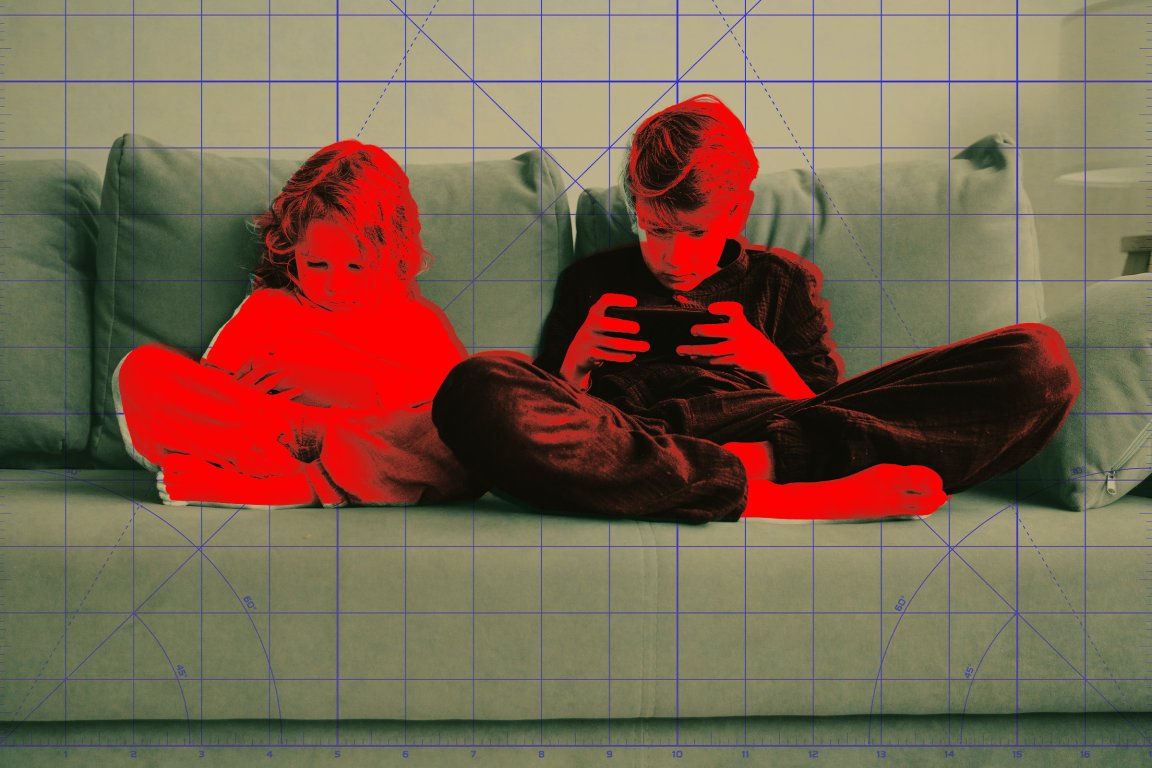
Giving a young kid a smartphone may be a big mistake.
New research conducted by scientists from UC Berkeley and Columbia University found that children 12 years old and younger who received one of these devices were at a higher risk of depression, obesity, and sleep deprivation.
The alarming findings, published as a study in the journal Pediatrics, were based on an analysis of over 10,000 children who participated in the Adolescent Brain Cognitive Development Study between 2018 and 2020, which is purportedly the largest long-term study of brain development and child health in the US. And while they don’t strictly establish causation, the broad correlation they show underscores a larger and ever-growing body of research exploring the deleterious cognitive effects that devices like smartphones and tablets can have adolescents, ranging from their impact on their education to social skills.
“When you give your kid a phone, you need to think of it as something that is significant for the kid’s health — and behave accordingly,” lead author Ran Barzilay, a child and adolescent psychiatrist at Children’s Hospital of Philadelphia, told The New York Times.
In the study, about two-thirds of the participants used a smartphone. The median age they received them at was 11 years old, and their development was compared to a cohort of roughly 3,800 children in the study who never received a smartphone before turning 12.
Not only did the researchers find that children who owned a smartphone by age 12 were at a greater risk of depression, obesity, and poor sleep, but they also showed that the younger a child was when they first received a smartphone, the higher those risks became for obesity and poor sleep in particular. The earlier a kid is hooked on a smartphone, in other words, the worse their physical and mental health outcomes are likely to be.
Trying to identify the “right” age to give a youth a smartphone, however, may be missing the point. The researchers also found that a group of children who had never owned a smartphone before turning 12, but were then given one, showed a higher risk of poorer mental health and sleep by the time they were 13, compared to another group who stayed phoneless.
“We didn’t even look at what the kids did on the phone,” Barzilay told CBS News. “We basically asked one simple question: does the mere factor of having one’s own smartphone at this age range have anything to do with health outcomes?”
That is both a strength and a drawback to the study. It’s likely that it’s not just a quality inherent to the smartphones that are causing problems, but the apps they give access to, like social media sites, whose myriad risks to children are well documented. YouTube, TikTok, and streaming services like Netflix could supply an endless amount of entertainment to keep a child well up past their bedtime, too. Then there’s addictive mobile games designed to both murder your attention span and drain your wallet. At this moment, we’re also plunging headlong into a world of AI chatbots and companions, which many children are turning to act as a close friend.
A lot of questions are unanswered, but these latest findings are echoed by a bevy of other research. A 2025 study of over 100,000 children, for example, found that those who received smartphones before the age of 13 experienced more suicidal thoughts, a lower perception of self-worth, and detachment from reality. Similarly, the study also found that every year before 13 that a child received a smartphone was associated with a greater likelihood of poorer mental health and well-being.
Society is still grappling with how these devices have transformed interpersonal relationships and taken over teenage and preteen attention spans. Many schools are opting to take the safe route by banning smartphones entirely. In follow-up research, Barzilay hopes to explore more specific features of smartphone usage to determine their link to mental health outcomes.
“It’s critical for young people to have time away from their phones to engage in physical activity, which can protect against obesity and enhance mental health over time,” Barzilay said in a statement about the work.
More on mental health: Here’s an Interesting Theory About Why Kids’ Test Results Have Fallen to Their Lowest Point in Two Decades