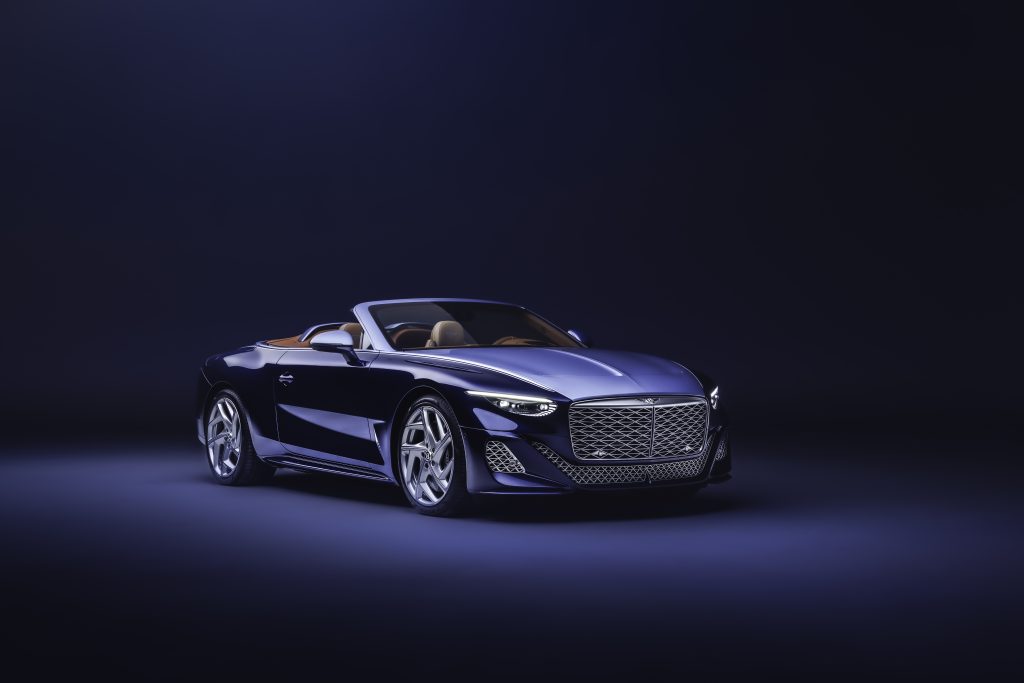
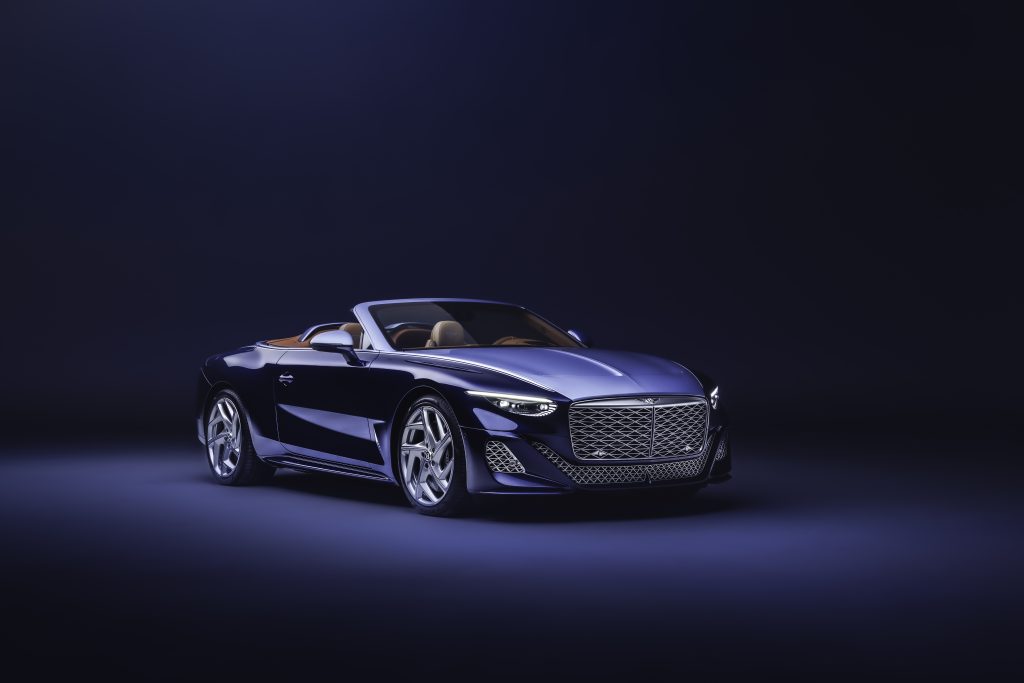
Mulliner, Bentley Motors’ bespoke and coachbuilding division, has completed Batur Convertible #4, featuring Bentley’s first use of 3D printed platinum alongside an extensive range of bespoke exterior and interior features. Developed through a client co-creation process, the vehicle demonstrates how additive manufacturing and precision craftsmanship are applied to low-volume luxury automotive production while retaining Bentley’s flagship W12 powertrain.
The commission was created for Sonia Breslow, a repeat Mulliner client with an extensive collection of coachbuilt Bentleys. Bentley describes this specification as the most complex and highly customised Batur Convertible produced to date “I’ve been passionate about cars for as long as I can remember. With a car like this Batur, I don’t plan on selling it—it’s my forever car. I’m deeply involved in every detail, from selecting the colours to refining every feature, ensuring each car is uniquely different from anything else,” said Breslow.
First Use of 3D Printed Platinum in a Bentley Interior
Batur Convertible #4 debuts Bentley’s first use of additive manufacturing to produce platinum components. Using 3D printing, Mulliner manufactured the steering wheel’s top dead centre marker and the cabin’s organ stop controls in platinum.
Metal additive manufacturing enables the production of small, high-precision components in a material that would be difficult to fabricate using conventional methods. Bentley has not disclosed the specific printing process used, but the application highlights the car’s innovation and exclusivity.
Digitally Enabled Bespoke Features
In addition to 3D printed components, the vehicle incorporates digitally manufactured elements, including an animated welcome lamp that projects the owner’s name using over 415,000 micro-mirrors. Exterior and interior specifications include custom colour matching, tri-tone paint application, and bespoke gauge faces.
Despite the level of customisation, the vehicle retains Bentley’s W12 powertrain, delivering 740 bhp from a hand-assembled 6.0-litre twin-turbocharged engine. Bentley states that the final specification demonstrates how digital design and advanced manufacturing techniques are being integrated into its Mulliner coachbuilt program.
Additive Manufacturing for Automotive Applications
The role of 3D printing in automotive manufacturing is growing, as car makers target material, cost, and time savings for prototyping, tooling, and end-use parts.
Last year, Luxury carmaker Bentley unveiled the EXP 15 concept car as a technology-led design study that highlights the growing role of 3D printing in luxury vehicles. Presented at the company’s new design studio, the full-scale concept is not intended for production but previews elements of Bentley’s first all-electric model planned for 2026. The EXP 15 combines heritage-inspired styling with AM, featuring lightweight, geometrically complex 3D printed titanium components integrated into the cabin alongside traditional materials. Bentley also used digital design tools and virtual reality to develop and configure the interior, demonstrating how AM, VR, and advanced materials can reduce weight, limit material waste, and enable greater design flexibility in low-volume, high-end automotive applications.

Similarly, Japanese automotive giant Toyota unveiled its first battery-electric SEMA concept, the bZ Time Attack Concept. Revealed at the Las Vegas Convention Center, the concept incorporates full-scale 3D printed body and aerodynamic components, including fender arches and aero elements that were digitally designed, printed, and hand-finished. According to Toyota, the use of 3D printing enabled fast iteration, precise fitment, and integration of a widebody and full aerodynamic package on an EV platform, addressing challenges related to weight distribution, structural durability, and aerodynamic performance.
The 3D Printing Industry Awards are back. Make your nominations now.
Do you operate a 3D printing start-up? Reach readers, potential investors, and customers with the 3D Printing Industry Start-up of Year competition.
To stay up to date with the latest 3D printing news, don’t forget to subscribe to the 3D Printing Industry newsletter or follow us on Linkedin.
Featured image shows Batur Convertible #4. Image via Bentley Motors.