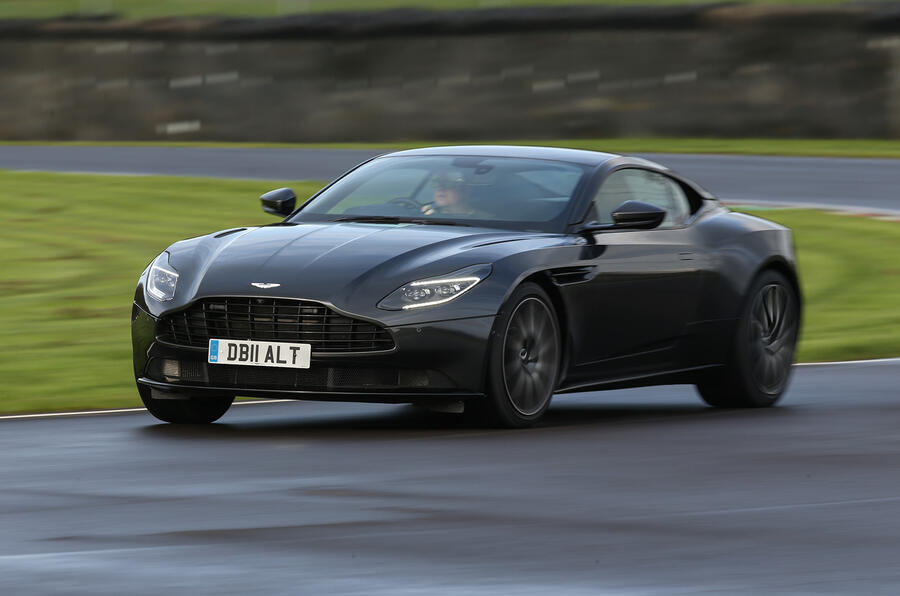
Aston Martin’s ‘DB’ lineage of sporting GTs began in 1948 with the DB1, the first product under the ownership of David Brown.
By 2016 Aston was 12 years into production of the elegant Aston Martin DB9, but that car was starting to feel behind the times, and sales and profits were on the decline.
Then the Aston Martin DB11 arrived, with a new, more aggressive design by Marek Reichman, proven Mercedes tech and a snarling V12.
The first car of Aston’s revolutionary ‘Second Century’ plan also had a new aluminium platform, electric power steering, multi-link rear suspension and torque vectoring by braking.
We liked it – so much, in fact, that we named it a Game Changer at the 2017 Autocar Awards and one of our top five cars of the year.
Eight years later, dramatic depreciation means you can now pick up this era-defining GT for less than the price of a new Ford Mustang or Alpine A110 – in other words, a third of what it cost new.
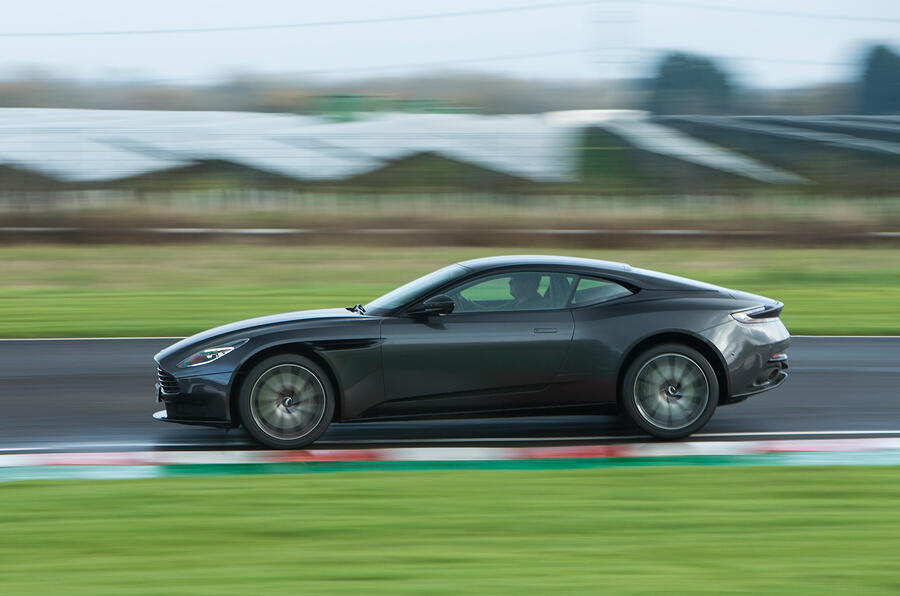
At launch, the DB11 came exclusively with that 5.2-litre twin-turbo V12, with 600bhp and 516lb ft. Based on the unit used in the DB9, it is fundamentally an evolution of a design that goes back to the mid-1990s, but it’s a reliable lump and was modified so extensively that it feels bang up to date even now.
A year into production, a 503bhp Mercedes-AMG V8-powered DB11 joined the range. It not only weighed 115kg less than the V12 but, with 498lb ft, also had more torque per tonne. The V12 takes 3.9sec to reach 60mph, but the V8 needs only 0.1sec longer. And, if you’re interested, fuel economy climbs from 24.8mpg to 28.5mpg.
The V8 also addressed some criticisms levelled at the early cars, chiefly that the suspension didn’t firm up enough for twisty roads and the steering felt too artificially assisted. The modifications to rectify both issues boosted the DB11’s sporting credentials without sacrificing comfort. To tell the V12 and V8 apart, look at the bonnet: the V12 has four vents, the V8 two.