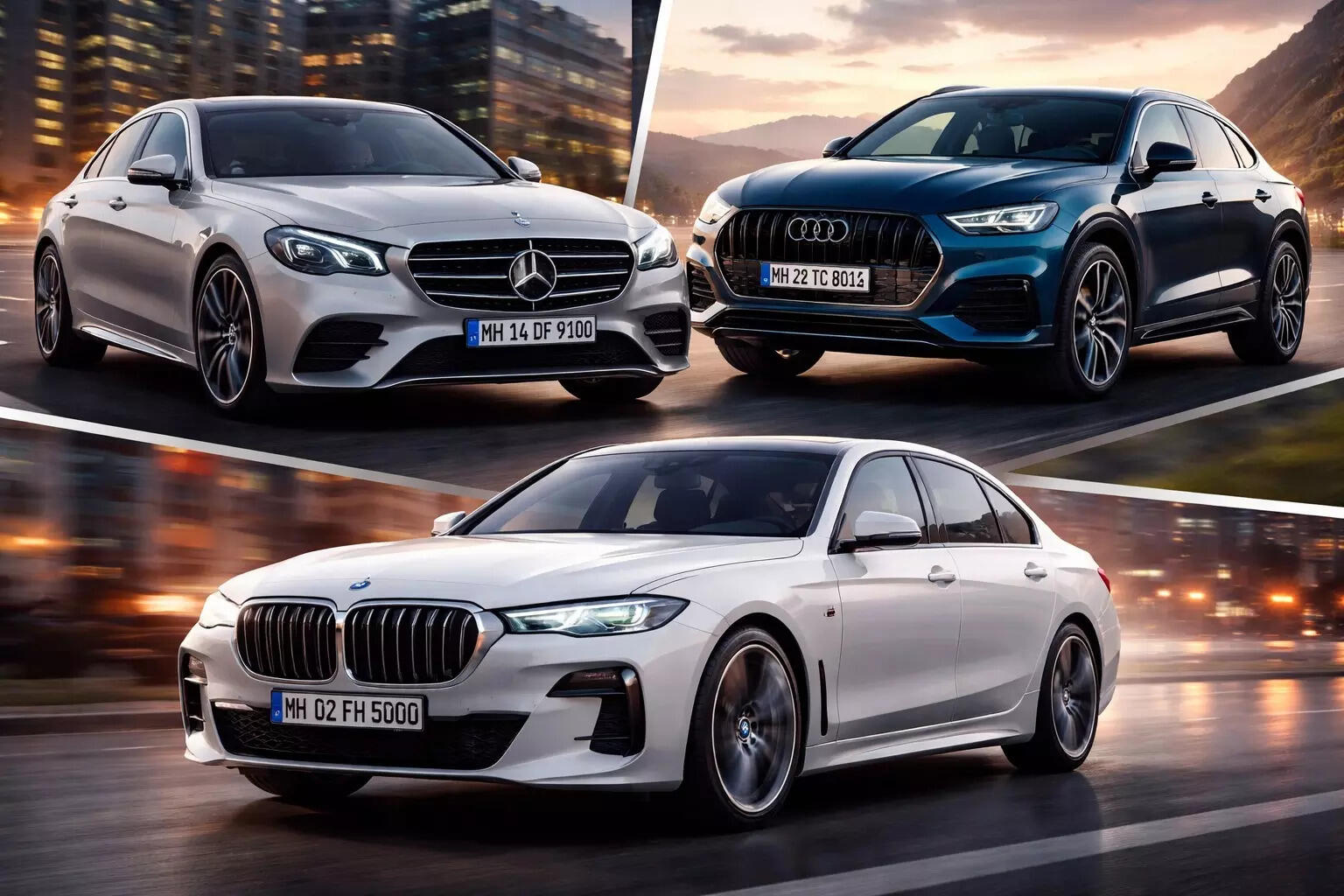
India on Tuesday agreed to significantly lower import quotas and tariffs for European carmakers under the newly signed India-EU free trade agreement.
Under the new pact, it has been agreed to allow up to 2,50,000 European-made vehicles to enter the country at a tariff rate of just 10 per cent– from a staggering 110 per cent earlier.
According to reports, the agreed quota grant is six times larger than any grant India has offered in its recent trade pacts. When compared, India has signed a quota of 37,000 units with the UK under a separate trade agreement, highlighting a scale of concessions made to the European Union.
In 2024, India imported motor vehicles worth over €1.6 billion from the EU, according to the official data.
Out of the total quota, approximately 1,60,000 internal combustion engine (ICE) vehicles will have import duties gradually going down to 10 per cent within five years, while 90,000 electric vehicles would be eligible for falling into the same tariff criteria only by the tenth year of the agreement.
While this reduction in tariffs can be a shot in the arm particularly for Europe-based luxury carmakers such as Audi, BMW and Mercedes-Benz, it is unlikely to impact the belly of the market.
India’s auto sector is majorly dominated by small cars, with retail price ranging between ₹10 lakh-₹25 lakh, and being dominated by players like Maruti Suzuki, Tata Motors, Mahindra and Mahindra and Hyundai Motor India.
According to Ashim Sharma, Senior Partner and Business Unit Head, Nomura Research Institute: “The deal leaves out cars below ₹15 lakh and also EVs. So, it would not have an impact on a large chunk of the market.”
“EU-India FTA makes a significant departure from India’s existing FTAs, with India agreeing to bring down tariffs on passenger cars from 110 per cent to 10 per cent over time. It needs to be seen if this tariff concession is offset by adequate tariff cuts by the EU, for cars and automotive components exported from India, especially vis-à-vis imports into EU from China and ASEAN countries,” said Saurabh Kanchan, Partner, Deloitte India.
“The FTA is expected to strongly drive technological innovation and sustainable growth within the Indian automotive sector, with a sharp focus on future mobility,” said Santosh Iyer, CEO of Mercedes-Benz India.
“The FTA is likely to come into effect only by mid-2028, owing to time taken for required legal, multi-level ratification, and detailed implementation,” Iyer added.
“We welcome the proposed FTA between India and the European Union and recognise its potential to deepen economic ties with one of the world’s largest trading blocs,” said Balbir Singh Dhillon, Head Audi India.
“That said, any implications for pricing & market can only be assessed once the final terms are available and carefully reviewed, including the timeframe of implementation. Until then, it would be premature to draw conclusions on specific commercial or product strategies,” Dhillon noted.
Limited impact due to localisation
Over the years, the localisation push from the Indian government has also nudged the German carmakers to deepen their manufacturing footprint in the country. As a result, players like BMW and Mercedes-Benz now rely heavily on locally manufactured models for volumes.
For BMW Group India, over 95 per cent of volumes come from locally manufactured ‘Made in India’ models, with fully imported vehicles accounting for only about 5 per cent of our sales. Similarly, 90 per cent of Mercedes-Benz India’s sales volume comprise locally made models.
“While we do not foresee any immediate price changes in the near term, the FTA could create opportunities to introduce new and niche products and, if demand scales, support deeper localisation over time. We will closely evaluate the detailed implementation roadmap, timelines and qualification criteria once the fine print of the agreement is available,” Hardeep Singh Brar, President and CEO, BMW Group India.
Concurring his views, Iyer said Mercedes-Benz India does not foresee any price reduction from the FTA in the foreseeable future. “We will continue our focus on value addition to customers through local production and competitive pricing, making world-class vehicles in India, for Indian customers,” Iyer added.
Stellantis, which is also a localised manufacturer and sells brands like Jeep and Citroën in India, said the FTA is likely to enable greater access to advanced technologies and the latest offerings from the Stellantis line-up.
“Reduced trade barriers will help enhance manufacturing competitiveness, expand export potential, and support the seamless integration of our India operations into global supply chains,” said Shailesh Hazela, CEO and Managing Director, Stellantis India.
FTA as a catalyst for components industry
The FTA is also expected to catalyse exports of auto components from India, especially at a time when global supply chains are undergoing major realignments in view of headwinds in the US market.
According to ACMA, the agreement will lead to enhanced export competitiveness, facilitate deeper technology collaboration, and attract long-term investments, while enabling European companies to leverage India’s fast-growing automotive market – the world’s third largest.
“As global OEMs and suppliers look to build resilient supply chains, a well-balanced and pragmatic FTA can position India as a reliable manufacturing and sourcing partner for Europe, while strengthening our long-standing industrial partnership,” said Vikrampati Singhania, President, ACMA and Vice-Chairman & MD, JK Fenner (India).
In H1 FY26, the Indian auto component industry exported goods worth $3.73 billion to the EU, while latters’ imports accounted for $3.01 billion. The auto component industry is likely to see an announcement for full abolishment of the tariffs for auto components in the coming five to ten years.
Shailesh Chandra, President, SIAM and MD & CEO Tata Motors Passenger Vehicles, said “The calibrated approach to balance market access and domestic manufacturing, should give us a win-win between increased Global participation on one hand and growth of the domestic Auto Industry with Investments and Employment on the other hand.”
A calibrated approach on tariffs, regulatory standards, and sustainability-related issues, including CBAM, will be critical to fully realising the agreement’s potential, said ACMA.