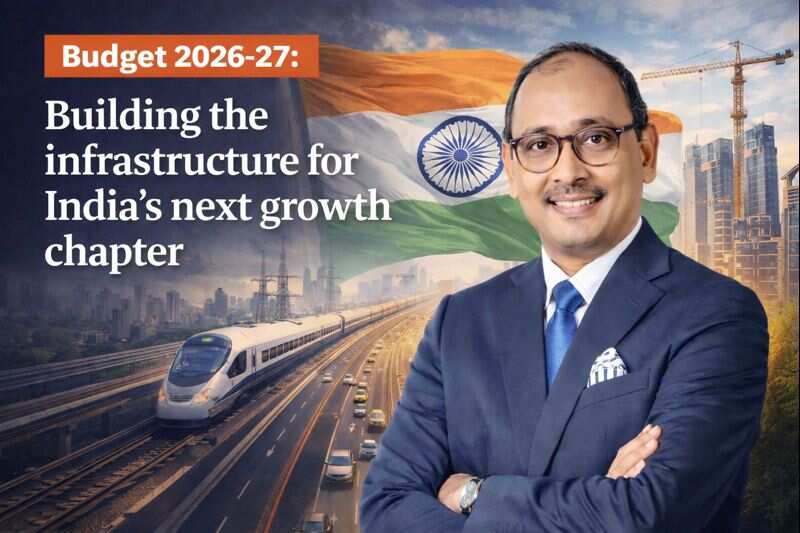
As we approach Union Budget 2026-27, there is a palpable sense of anticipation across India’s economic landscape. The past decade has shown us what is possible when policy vision meets determined execution. Now, as we navigate a more complex global environment, the upcoming budget presents an opportunity to double down on what has worked while addressing emerging headwinds with pragmatic solutions.
Capital expenditure has been the quiet anchor of India’s growth story. At 3.1% of GDP, our CAPEX allocation has laid strong foundations, but to sustain momentum and offset demand-side pressures, we need to think bigger. A double-digit increase of 15-18% in overall CAPEX would not just create jobs at scale but also stimulate domestic demand—the kind of multiplier effect that cascades through every segment of the economy, including the automotive sector.
Road infrastructure deserves particular attention. India’s national highway network has grown by nearly 60% since 2014, now exceeding 146,000 kilometres. This transformation has directly fueled automotive demand. Better intercity connectivity has changed how Indians travel, and at the premium end of the market, we see this translate into confident long-distance driving, family road trips, and a genuine appreciation for the journey itself. A 10-12% increase in road infrastructure allocation over FY 2025-26 levels would accelerate project execution, reduce logistics costs, and strengthen the supply-chain resilience that manufacturers across sectors need.
The macroeconomic environment requires careful navigation. Rupee depreciation and inflationary pressures have raised import costs for crude, energy, and critical raw materials, impacting input costs across industries. For automakers, this translates into difficult pricing decisions that ultimately affect consumer demand. A budget that emphasises fiscal prudence, macroeconomic stability, and supply-chain efficiency would provide the stable foundation businesses need to plan, invest, and grow.
On trade policy, there is genuine reason for optimism. The India-EU Free Trade Agreement is a landmark development that signals India’s openness to deeper global economic integration. For the automotive sector, this agreement provides the confidence and predictability that encourages long-term investment planning. Building on this momentum, a continued long-term approach towards rationalised customs duties—one that reduces complexity, improves transparency, and aligns with the spirit of such trade agreements—would give India’s luxury car segment a meaningful boost. We remain deeply committed to Make-in-India; over 90% of the vehicles we sell here are locally produced. But streamlined trade frameworks help accelerate technology diffusion and give Indian consumers earlier access to global innovations.
Finally, capital markets form the backbone of entrepreneurial India. We encounter startup founders daily who are eager to tap public markets to fuel their growth ambitions. Rationalising capital gains tax, particularly on long-term investments, would attract both foreign and domestic investors, improve market liquidity, and lower the cost of capital for Indian enterprises. A simpler, investor-friendly regime would reinforce capital markets as engines of growth and innovation.
India’s economic trajectory over the next decade will be shaped significantly by the policy choices we make today. Budget 2026-27 is an opportunity to act as a catalyst for sustainable, inclusive growth—the kind that builds roads and builds dreams in equal measure. We are optimistic that the government will continue its progressive, forward-looking approach, and we stand ready to partner in India’s remarkable growth journey.