Wed 18 Jul 2018

SUCCESSFUL BIDDERS IN THE 14TH INTEGRATED DELIVERY PROGRAMME: PROJECT ‘PARADIGM_SHIFT’: ACCELERATING THE TRANSITION TO ZERO EMISSION VEHICLES

Office for Low Emission Vehicles (OLEV) and Innovate UK via the Faraday Battery Challenge (part of the Industrial Strategy Challenge Fund) invest a total of £20 million to successful competition winners of the 14th Integrated Delivery Programme. The winning projects will develop low-cost, highly integrated systems to enable zero emission capable journeys for cars, vans and heavy goods vehicles.

Paradigm_Shift is a 16 month project led by Gordon Murray Design (GMD) – an iconic automotive design and engineering company, Delta Motorsport – electrification, hybridisation, and vehicle dynamics specialists, and aiPod – the company that designs city-integrated autonomous mobility systems. The vehicle platform will deliver dramatically lower mass (450 kg), high levels of safety, lower energy, and drive-by-wire capabilities in a small footprint, making zero-emission transport options available more rapidly to the entire population.

Responding to the urgent need for a low-cost, ultra-lightweight vehicle platform, using GMD's iStream superlight® technology suitable for mass-production, the consortium will incorporate a breakthrough level of integrated design and safety performance and ensure the platform is ready for the new era of autonomous driving.

The consortium will design and engineer a ground up small footprint demonstrator vehicle to demonstrate the integrated technology approach that will be available at the end of 2019. The project aim is to deliver a sub 450 kg vehicle to meet M1 levels of safety performance whilst reducing cost and investment to enable development of flexible and affordable electric vehicles. The platform will address traditional driven vehicle requirements alongside the rapidly growing requirement for MAAS autonomous transportation and last mile logistics. The combination of affordable EV in a small footprint offers a solution to the growing emissions, congestion and parking crisis currently experienced in urban environments globally.

Editors Notes

Gordon Murray Design Limited is a British company operating from Shalford, Surrey. The Company is recognised as a world leader in automotive design and reverses the current industry trend for sub-contracting by having a complete in-house capability for design, prototyping and development. The Company is compact and focused and undertakes automotive and other engineering programmes in an efficient and innovative way. For more information please visit www.gordonmurraydesign.com.
Gordon Murray Design’s patented iStream® technology process is a complete rethink and redesign of the traditional automotive manufacturing process and could potentially be the biggest revolution in high volume manufacture since the Model T. Development. The process began over 15 years ago and it has already won the prestigious ‘Idea of the Year’ award from Autocar who were given privileged access in order to make their assessment. The simplified assembly process means that the manufacturing plant can be designed to be 20% of the size of a conventional factory. This could reduce capital investment in the assembly plant by approximately 80%. Yet the flexibility of this assembly process means that the same factory could be used to manufacture different variants. The iStream® design process is a complete re-think on high volume materials, as well as the manufacturing process and will lead to a significant reduction in full lifecycle CO2. For more information please visit www.istreamtechnology.co.uk.

Silverstone-based Delta Motorsport Limited is engineering for the future (www.delta-motorsport.com). Its background is deeply rooted in high-performance engineering, and it has over 10 years of experience developing technologies through innovation and continuous improvement that enable electrification; for passenger cars and beyond. Delta now has three main business streams.
Powertrain integration and development of a novel microturbine range extender, “MiTRE”, that delivers freedom from range anxiety in a small and light-weight package whilst also achieving extremely low emissions (particularly NOx and particulate).
Delta’s battery systems experience spans 48V to 800V, and it has developed a highly flexible, modular approach to battery system manufacture. These systems can be liquid cooled (using Delta’s patented low cost and light-weight approach), air cooled or uncooled, depending on the application.
Delta launched its in-house EV – the Delta E-4 Coupe – in 2011, and since this time it has been developing strategies to control any actuators fitted to the vehicle that deliver the longitudinal and lateral dynamics requirements, such as traction motors, brakes and steering. In PARADIGM_SHIFT, this control will be completely “by wire”, with no input from the occupant.

aiPod designs and builds systems that enable smart cities to manage the impact of rapidly approaching waves of innovation in sensors and computational technologies and their interaction with rapidly evolving mobility-focused business models. aiPod's vision is to build urban mobility traffic control systems for autonomous vehicles that will help cities transition from individually-owned automobiles to Integrated Mobility-as-a-Service enabled by AVs. To learn more about aiPod, please visit www.aipod.com.

For more information please contact:
Sarah Smith, Communications Officer at Gordon Murray Design on +44 (0)1483 484700 or via email at sarah.smith@gordonmurraydesign.com.

DOWNLOADSDownload Release
Electric cars: the race to replace cobalt

Become an FT Subscriber. Gain access to global coverage from local journalists on the ground in 50+ countries working around the clock to break news, analyze, spot risks and opportunities. Join over 300,000 Finance professionals who already subscribe to the FT. Go to Source

Honda and Panasonic experiment with battery swapping for electric motorcycles

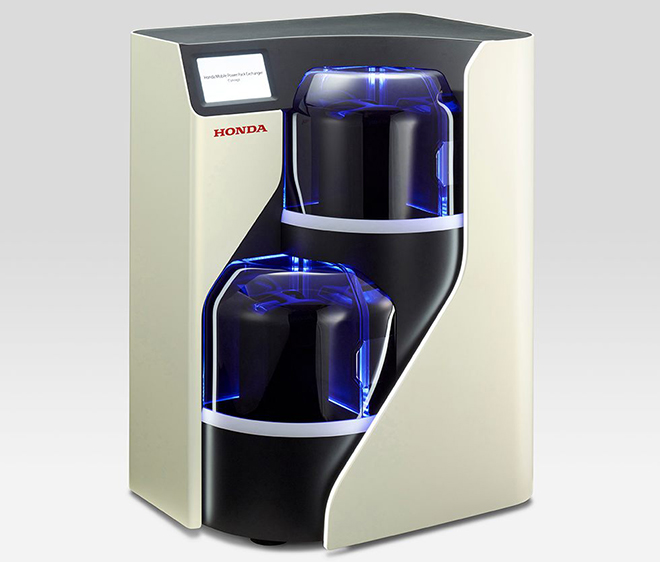
Honda and Panasonic plan to conduct an experiment with battery swapping in Indonesia, using the Honda Mobile Power Pack with electric motorcycles. The project is to begin in December. As the third-largest motorcycle market in the world, Indonesia is dealing with massive air pollution as traffic increases. To address this issue, the Indonesian government has… Continue reading Honda and Panasonic experiment with battery swapping for electric motorcycles

A low-cost Tesla car? Elon Musk talks about tech (without turmoil) on YouTube

[embedded content] On the heels of Elon Musk’s angst-filled, market-moving interview with The New York Times, YouTube techie Marques Brownlee offered up lighter, brighter fare from a one-on-one chat with the Tesla CEO at his electric-car factory in Fremont, Calif. Musk discussed the wonky side of vehicle production and the prospects for building cars in… Continue reading A low-cost Tesla car? Elon Musk talks about tech (without turmoil) on YouTube

Elon Musk says Tesla could build $25,000 EV in about ‘three years’

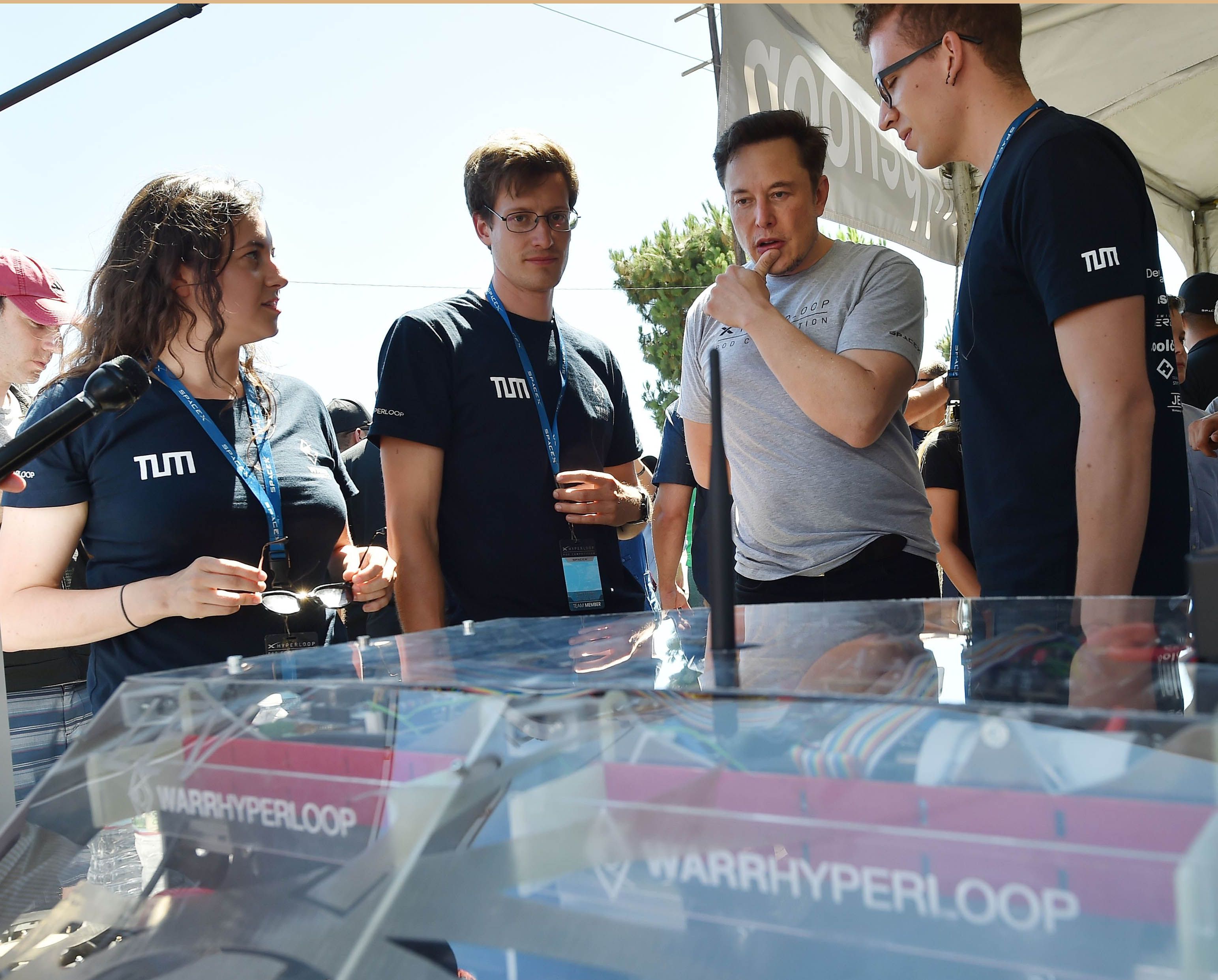
Mason Trinca for The Washington Post via Getty Images When Elon Musk unveiled Tesla’s second master plan, the $35,000 Model 3 represented the price floor. It wasn’t set in stone, but you couldn’t realistically expect more. However, the dream of a truly affordable Tesla EV just got a little more tangible. When tech YouTuber Marques… Continue reading Elon Musk says Tesla could build $25,000 EV in about ‘three years’

Elon Musk says Tesla could produce $25,000 car in ‘maybe’ 3 years, but cites industry challenges

Yuriko Nakao | Bloomberg | Getty Images
Elon Musk, co-founder and chief executive officer of Tesla

Elon Musk suggested it could take Tesla “maybe” three years to come up with a low-cost version of a car, even as he admitted it was “really tough” to do given the auto sector's economics and competition.

Amid recent turmoil surrounding Musk's stated goal to take Tesla private, the CEO sat for an interview with YouTuber Marques Brownlee to discuss the future of electric cars. Musk explained that Tesla's comparatively smaller scale made it hard to compete against major producers like General Motors or Ford, given their massive scale in an “insanely competitive industry.”

Musk told Brownlee that Tesla was “really focused on making cars more affordable, which is really tough. In order to make cars more affordable, you need high volume and economies of scale,” he said. When asked if Tesla could eventually make a cheaper vehicle with higher quality, Musk responded in the affirmative.

“I think in order for us to get up to…a 25,000 car, that's something we can do,” he said. “But if we work really hard I think maybe we can do that in about 3 years,” Musk added, saying it depended on both time and scale. He compared car making to the early years of the cellphone, which were bulky and lacked functionality.

“With each successive design iteration, you can add more things, you can figure out better ways to produce it, so it gets better and cheaper,” Musk said. With “natural progression of any new technology, it takes multiple versions and large volume to make it more affordable.”

Currently one of the top trade-ins for a Tesla Model 3 is a Toyota Prius, according to statements Musk made during an August earnings call. The Prius, which starts at $23,475, is roughly half the cost of the $49,000 Model 3 starting price.

Musk boasted that Tesla shells out virtually nothing on advertising and endorsements, and relies heavily on word of mouth.

“Where I put all the money into and all the attention into is trying to make the product as compelling as possible,” Musk says. The key to selling a product is having something people love and will talk about, he added.

“If you love it, you're going to talk and that generates word of mouth,” he told Brownlee. That's Tesla's business model: rely mainly on word-of-mouth. The company isn't spending on advertising, according to Musk. And no discounts. Musk said even he pays full retail price on his Tesla cars.

Musk's sit-down was published on YouTube in the wake of an unusually personal New York Times interview, in which Musk displayed rare moments of emotion as he described the pressures of meeting a recent Model 3 production milestone. The bombshell report sent Tesla's stock reeling in Friday's trading, and laid bare concerns among Tesla board members about Musk.

The NYT article landed at a turbulent time for the electric carmaker. Musk upped the ante in his battle against investors betting against Tesla's stock, tweeting recently that he had “funding secured” to take Tesla private at $420 per share. That sent shares soaring, and ultimately prompted the SEC to open a probe, according to reports.

Correction: This version corrects the spelling of Tesla's name.

Zero DSR electric motorcycle is wickedly quick

Zero DSR electric motorcycle is wickedly quickBring on the hate mail: I love electric motorcycles.
I love their power, their torque and their stealthy silence. I love their ease of operation and their low cost of maintenance.
Although I am not alone in this, I don’t have a lot of company. Resistance to electric motorcycles is fierce.
Detractors — many of whom have not actually ridden the battery-powered machines — describe themselves as dyed-in-the-wool enthusiasts who live for the roar and rumble of a big internal combustion engine. They love the smell of the gas, the sound of the pipes and the sensation of pulsing vibration between their legs.
But they also have practical objections to electrification. Battery bikes cost too much, recharge too slowly and have insufficient range, they say. Some riders even believe electric motorcycles are more dangerous than their gasoline counterparts, because they don’t make enough noise to be heard by nearby motorists.
For two months this year I used a Zero DSR electric motorcycle as my main commuter vehicle. The experience deepened my appreciation for battery-powered transportation, and my admiration for the Zero line. But it also taught me that electric bikes aren’t for every rider, or for every ride. Even a state-of-the-art bike like the DSR could not satisfy all of a dedicated biker’s needs.
The DSR is Zero’s top model, and the company is right to be proud of it. Wickedly quick off the line, delivering spookily seamless power, the bike feels like a magic carpet ride that violates the laws of thermodynamics.
The electric battery delivers 70 horsepower and 116 pound-feet of torque on a bike that weighs about 450 pounds. That seems high, but the absence of any rotating mass — no pistons, no flywheel, no clutch — makes the bike feel almost weightless when it’s on the move. Zero says the bike will hit a top speed of 102 miles per hour.
Zero has improved its braking and suspension systems, bringing them into line with modern sport bikes. The DSR is fitted with a Bosch ABS that uses J. Juan calipers, and Showa suspension at both ends. The 17-inch rear and 19-inch front wheels wear Pirelli MT-60 tires. The combination makes the DSR feel playful but firmly planted.
Since there is no clutch or gear shift lever, operation is a breeze. Just twist the throttle and go. And because the DSR burns no fuel, requires no lubrication and is driven by a carbon belt instead of a metal chain, there is virtually no maintenance.
Riding without noise, heat or vibration is strangely liberating. Without those things occupying the senses, I feel like I can hear more, see more and even smell more than when I ride a traditional bike.
One night on the DSR I became concerned about a squeaky sound accompanying my ride up a Hollywood canyon road that I’d ridden dozens of times before. I finally pulled over, worried that I had a bad bearing or a defective belt. Only when I stopped did I realize I was hearing frogs and crickets from a nearby creek.
Commuting, I felt confident in traffic and comfortable lane-splitting on the freeway. Somehow the DSR felt lighter, more nimble and even thinner than my other motorcycles — though in reality it is not. I found that, when I needed to run an errand and had the option of the DSR or another bike, I almost invariably chose the DSR. It just seemed simpler, somehow.
The exception? Longer rides. Zero boasts that the DSR, fitted with the optional Power Tank accessory, can go 220 city miles or 110 freeway miles on a single battery charge.
That was not my experience, and will probably not be the experience of anyone who does not ride this kind of bike very conservatively. Though I didn’t drain the battery down to its last bit of juice, my range would have been something more like half what Zero advertises.
Granted, I was really enjoying the terrific torque and acceleration, which meant I was riding at the rate of about 120 miles to the tank, with mixed city and highway riding.
Zero boasts, too, that the DSR, when fitted with the necessary fast-charging hardware, can be refueled in as little as two hours, at the rate of 103 riding miles per charging hour.
Because I was commuting, I didn’t test that. But arriving home in the evening, plugging the DSR into a standard household outlet, I observed recharge rates of about 6 to 8 riding miles per hour. Plugging in overnight, I always got up the next morning to a full tank, with plenty of juice to get me where I needed to go.
But that meant a day ride to Big Bear, or even a spirited run up the Angeles Crest Highway to Newcomb’s Ranch or Wrightwood, was problematic. I could get there all right, but would I find a place to plug in, and how long would it take to recharge sufficiently to get home? I took a gas-powered bike on those jaunts.
Zero puts the cost of charging its electric bikes at $1.50 to $2 per tank, and says some of its machines get the fuel efficiency equivalent of 403 miles per gallon. Studies have shown that the cost of owning and operating an electric motorcycle may make it cheaper than comparable gas-powered bikes.
But the cost of entry is steep. Zero’s least expensive machines start as low as $8,495. The basic DSR starts at $10,995. The model I rode, outfitted with a variety of options, would retail well above that, at just above $19,000, before tax, license and delivery.
Some government incentives would offset that, and could include a federal tax credit of up to $1,500 and a California state rebate of $900.
There will still be those who, until they ride one, will view electric bikes as a passing fad. If so, they’re passing in good company.
BMW, Yamaha and others have put substantial resources behind their electric scooter programs. Alta Motors’ motocross bikes are beating internal combustion machines wherever they’re allowed to compete. And Harley-Davidson, which recently made a substantial investment in Alta, is coming to market with its electric LiveWire superbike and half a dozen other new electric machines.
The future isn’t coming. It’s here.
Read or Share this story: https://detne.ws/2KVFw78

FCA chief failed to disclose gift to UAW, sources say

FCA chief failed to disclose gift to UAW, sources sayDetroit — Fiat Chrysler's longtime CEO Sergio Marchionne gave an expensive Italian watch to United Auto Workers Vice President General Holiefield and failed to disclose the gift while being questioned by federal investigators, two sources told The Detroit News.
The sources describe a dramatic “gotcha” moment during a secretive July 2016 meeting between Marchionne, head of Fiat Chrysler Automobiles NV, and investigators. It ended with the auto executive exposed to the possibility of federal charges.
Marchionne, 66, was never charged before he died July 25 in a Zurich hospital.
The auto executive's gift of a watch to a ranking union leader could bolster any criminal case against FCA, which has been named co-conspirator in the case along with the UAW. Both organizations could face criminal charges, fines and governmental oversight.
Flanked by his white-collar criminal defense lawyer, William Jeffress, at the U.S. Attorney's Office in Detroit, Marchionne was asked by investigators whether he had given UAW leaders valuable items.
Marchionne said no, according to the two sources, who spoke under the condition of anonymity because they were not authorized to discuss the case.
Investigators then confronted Marchionne with evidence he had given Holiefield a custom-made Terra Cielo Mare watch in February 2010. The Italian watchmaker has produced custom-made, limited-edition timepieces with the Fiat logo emblazoned on the dial since at least 2006.
A 2014 model featuring the Fiat logo and a mustard-yellow dial retailed for $2,245.
The watch given to Holiefield came with a hand-written note from what documents identify only as an unnamed FCA executive: “Dear General, I declared the goods at less than fifty bucks. That should remove any potential conflict. Best regards, and see you soon,” according to federal court records obtained by The News.
It is unclear whether investigators showed Marchionne the watch and note or just photographs of them, and it is unknown whether federal agents have the watch.
“There is a lot of intrigue here,” said Peter Henning, a Wayne State University law professor and former federal prosecutor. “Prosecutors had him and had leverage over him. This was an arrow in the government's quiver.”
Holiefield died in March 2015. The next year, Holiefield's home in Harrison Township was raided by federal agents investigating his widow, Monica Morgan-Holiefield, who was convicted and sentenced to 18 months in federal prison last month for her role in the scandal.
The raid was one stop in a broader series of searches that included the homes of Alphons Iacobelli, the automaker's top labor negotiator, and former UAW Vice President Norwood Jewell.
An inventory of items seized during the raid at Morgan-Holiefield's home is sealed in federal court.
Also unclear is how Marchionne explained the watch after being confronted by investigators. It is unknown whether Marchionne reached an agreement before talking to the government that would have granted him limited immunity as long as the auto executive told the truth.
“If you don't tell the truth, all bets are off,” Henning said. “If you lie, the government can use what was said against you. The FBI doesn't give you a free pass on lying.”
It is unclear why Marchionne was never charged. The potential charges include making a false statement and violating a federal labor law barring employers from giving union officials money and valuable items.
“Prosecutors are playing the long game,” Henning said. “We don't know what would have happened in six months if his health had been all right.”
It is possible FBI agents and prosecutors continued to build a criminal case against Marchionne, Henning said.
“He could have said he forgot about the watch, so the government has got to be a little careful,” he said. “When he said 'no,' it looks like they've got him, but the government has to ask if maybe it's not worth charging him but get his cooperation.”
The custom-made timepiece by Terra Cielo Mare is described in court records as an example of a stream of illegal benefits flowing from Fiat Chrysler to labor leaders during a years-long conspiracy designed to wring concessions from the UAW.
Federal prosecutors have left clues to Marchionne's involvement in hundreds of pages of federal court filings that referenced, but never publicly identified, the auto executive. Instead, the government identified Marchionne only as “FCA-1” as the investigation continued and prosecutors secured convictions against three Fiat Chrysler officials.
Fiat Chrysler released a statement to The News on Wednesday: “FCA US continues to cooperate fully with this investigation. The company also confirms that Sergio Marchionne met with the government in July 2016, in the spirit of full cooperation, where he answered questions to the best of his recollection. As the U.S. attorney’s investigation is ongoing, the company cannot comment further.”
The U.S. Attorney's Office would not discuss the meeting with Marchionne or say whether he was a target of an investigation that has led to seven convictions. Those include Iacobelli, who is scheduled to be sentenced Aug. 27.
Iacobelli was accused of using more than $1 million in Fiat Chrysler funds on a Ferrari 458 Spider convertible, which he outfitted with an “IACOBLI” vanity plate, a pool at his Rochester Hills mansion and two solid-gold, bejeweled Montblanc fountain pens that cost $35,700 each.
The first reference to Marchionne in federal court records is on page 19 of a 42-page indictment last year charging Iacobelli and Holiefield's widow with conspiring to violate federal labor laws.
The indictment outlines a scheme by Fiat Chrysler executives to keep UAW officials “fat, dumb and happy.” Executives funneled money and gifts to labor leaders through the jointly operated UAW-Chrysler National Training Center, according to the indictment.
UAW leaders who served on the training center's board were given credit cards paid for by the automaker. UAW officials were given free rein to buy personal items, including $1,000 pairs of Christian Louboutin shoes, jewelry, purses, and a $2,180 shotgun for Jewell, according to court records and interviews. Jewell has not been charged with a crime.
In January 2014, then-UAW President Bob King was investigating how Holiefield and other union officials were using training center credit cards, according to the indictment.
That month, King’s senior assistant asked an unnamed Fiat Chrysler official for the credit card records, according to the Iacobelli indictment.
The unnamed Fiat Chrysler official emailed Iacobelli.
“We can’t provide the requested type of information to such people,” the email read. “If we tell (King and his assistant) that we aren’t giving them (expletive), what are they going to do, tell (FCA-1) we are being uncooperative? If so, so what?”
“We are providing nothing,” Iacobelli responded, according to the indictment. “We’re gonna have fun with these evil people.”
The conspiracy is damaging and sows distrust among UAW members, Henning said.
“More than anything, it shows union leadership appears to have been bought with trinkets,” he said. “The mistrust this fosters among union members is incredible.”
rsnell@detroitnews.com
(313) 222-2486
Twitter: @robertsnellnews
Read or Share this story: https://detne.ws/2MvKbRS

No ‘sound investor’ would want Elon Musk to remain CEO of Tesla, says former GM exec Bob Lutz

If Elon Musk left Tesla, the stock would go up: Expert
4 Hours Ago | 06:14

For the good of Tesla, Elon Musk should step aside, former vice chairman of General Motors Bob Lutz told CNBC on Friday.

“I can't imagine any sound investor who has money in the company or any independent board member would want him to remain as CEO in light of recent performance,” Lutz said on CNBC's “Closing Bell.”

The New York Times published an extended interview with Musk on Friday in which he said the past year has been “excruciating” and “the most difficult and painful” of his career. The interview follows months of erratic behavior on Musk's part, both on and off social media. Most recently, the CEO tweeted that he would take Tesla private at $420 per share and had “funding secured,” which has invited scrutiny from the Securities and Exchange Commission.

Musk took to Twitter in July to call a British cave diver who assisted in the rescue of a Thai boys soccer team a “pedo guy.” During Tesla's first-quarter earnings call in May, Musk dissed analysts, cutting off Sanford Bernstein's Toni Sacconaghi because of what he called a “boring, bonehead” question. Musk later apologized to Sacconaghi and to the diver, Vernon Unsworth, for his comments.

“Elon is tired, he's worn out. He's obviously got some emotional problems. He's self medicating. He has shown some disturbing signs of being somewhat volatile and unstable,” Lutz said. “I think the right solution for Tesla at this point is to move him aside from day-to-day operation.”

Lutz, an automotive industry veteran who has also served in top roles at BMW, Chrysler and Ford, has been a huge critic of Tesla in the past. In November of last year he said Tesla is “going out of business.” Although he wasn't quite as critical this time around, he did raise some of the same issues, saying Tesla was “bleeding” profitability and “will probably have to go back to the capital markets for more money.”

“In my personal judgment, the board should take action and find a CEO. Not get rid of Elon — keep him as the visionary, keep him as the titular head of the company, and give him the honor and respect the founder of the company deserves,” Lutz said. “But that company needs professional management, and it needs it now.”

J.P. Eggers, associate professor at New York University's Stern School of Business, agreed, saying it is likely there are many other things Musk would rather spend his time on than Model 3 production goals.

“We see this all the time with … start-up founders or early leaders in these firms, where what they really want to do is do the vision, do the growth, build the … reputation of the company. And when it comes to actually executing on the vision, they aren't always the best ones for that,” Eggers said Friday on “Closing Bell.”

As much as it might be better for Tesla — and its stock price — were Musk to step aside as CEO, Eggers said, he's not so sure Musk would be willing to stay on with the company in a secondary role.

“I have a hard time seeing him doing anything other than being completely involved or walking completely away. He's tenacious; that's what's made him successful to this point,” Eggers said.

Could Musk's tweet about taking Tesla private lead to legal trouble?

Could Musk's tweet about taking Tesla private lead to legal trouble?Nine words tweeted by Tesla CEO Elon Musk Tuesday afternoon raised questions for the outspoken auto executive.
At 12:48 p.m. Musk tweeted: “Am considering taking Tesla private at $420. Funding secured.”
The tweet caused a stir in the stock market. Tesla shares spiked 11 percent to close at $379.57 after trading was halted for part of the afternoon while investors awaited clarification. The stock's record high was $389.61 on Sept. 18, 2017.
But the tweet could be in violation of state and federal laws, said a former federal prosecutor.
“You’re not allowed to issue misleading information that investors could act on, and it looks like investors acted on it,” said Peter Henning, a professor at Wayne State University Law School specializing in securities law.
Read more:
Musk: Tesla hit weekly Model 3 production goal
Tesla CEO's tweets cause stir in Flint
Legally, shareholders could sue Musk for a breach of fiduciary responsibility, said Henning. If the tweet gives an impression that Musk is trying to “stampede the board,” that’s a violation of state fiduciary duty of directors, Henning said.
“You’re not allowed to strong-arm the directors, even if you are a 20 percent stakeholder” as Musk is, Henning said.
If the Securities and Exchange Commission believes Musk's tweet misled shareholders, the SEC could deem it a violation of anti-fraud prohibition in the federal securities law, said Henning.
“I suspect the corporate lawyers are scrambling right now and hoping the SEC doesn’t go after him and the company, because it could be viewed as a statement from Tesla,” said Henning. “If it misleads investors, the SEC can bring a case even if no one’s been harmed.”
The SEC in 2013 did say that companies can use social media such as Facebook and Twitter to announce key information so long as investors have been alerted about which social media will be used to disseminate the information.
Musk offered some clarification to his tweet later, saying the “only reason why this is not certain is that it’s contingent on a shareholder vote.”
Musk, whose tweets initially caused confusion as some investors questioned whether he had been hacked, later confirmed his thinking through Tesla's official website.
“I think this is the best path forward,” he said in an email to employees, further clarifying that “a final decision has not yet been made, but the reason for doing this is all about creating the environment for Tesla to operate best.”
The explanation could have been late, said Henning. Corporate governance requires a company officer to first notify the board of directors of any deals, then negotiate a deal with the board.
“The tweet is potentially misleading. It didn’t give the kind of details that shareholders would want. The key detail being that it’s not a done deal. It sounded like, 'We’ve got the financing and we’re done.' That’s not how it works.”
He added, “If an analyst said, 'Musk should take the company private,' people would shrug their shoulders. It’s much different when the CEO says it. The law is protective of shareholders. You have to get them the best deal, and whether $420 is a fair price or not? We don’t know.”
Contact Jamie L. LaReau at 313-222-2149 or jlareau@freepress.com. Nathan Bomey of USA Today contributed to this report.
Read or Share this story: https://on.freep.com/2nmksgG