Tesla Model 3 = 67% of US Electric Vehicle Sales in 2nd Quarter

Invest
Electric Cars
Electric Car Benefits
Electric Car Sales
Solar Energy Rocks
RSS
Advertise
Privacy Policy

Cars

Published on August 10th, 2019 |

by Zachary Shahan

Tesla Model 3 = 67% of US Electric Vehicle Sales in 2nd Quarter

Twitter
LinkedIn
Facebook

August 10th, 2019 by Zachary Shahan

I prefer comparing the Tesla Model 3 to its gasoline competitors, but it’s also logical to compare the Model 3 to other electric vehicles. In the old days, these were simply called “EV sales reports,” but the US electric vehicle market is so unbalanced at the moment that it’s hard to ignore the elephant in the room — there’s the Model 3, and there’s everything else.

In fact, even that is unbalanced, as the Model 3 accounts for 67% of US electric vehicle sales, according to 2nd quarter sales data and estimates.

The reason for the dramatic divergence in sales is up for interpretation. One reason might be that the majority of people who want an electric car don’t see anything that beats the Model 3 — or at least not for anywhere near its price point. Another reason might be that the Model 3 is the only electric vehicle that blatantly and commandingly outcompetes all of its gasoline competitors in ways that normal consumers care about. Another possibility is that word of mouth about the Model 3 has gotten around so much that it’s clearly the new “it” product for certain portions of the population. Or, more practically, consumers in a more mainstream wave of EV adoption have simply learned about the many benefits of the car.

In any case, the story in EV world is that the majority of EV sales are Tesla Model 3 sales. Tesla’s more expensive models (the Model S and Model X) held the #2 and #3 spots in the 2nd quarter, while the Chevy Bolt and Nissan LEAF were the only other models to score over 3,000 sales in the quarter. (GM’s and Nissan’s top electrified models used to see more than 3,000 sales a month.) The Audi e-tron, BMW i3, and Volkswagen e-Golf each had over 1,000 sales in Q2 — approximately as many Model 3s as Tesla sells in 2–3 days in the USA.

The charts can tell the rest of the story.

A handful of electric models are not included here because the parent companies don’t release sales data for them. Those include the Honda Clarity EV, Hyundai Ioniq EV, Hyundai Kona EV, Kia Niro EV, and Fiat 500e. However, if I plug in estimates from InsideEVs, they’re so insignificant that the Model 3 retains its 67% share of the market.

I hesitate to beat a demolished piñata, but it’s perhaps worth noting that many of the electric models in these charts were at various times deemed “Tesla killers” by certain members of the media. It appears there was a miscalculation in those forecasts.

If you prefer a fun chart over a static one, below is an interactive chart in which you can toggle between Q1 and Q2 sales.

If you are interested in buying a Tesla Model 3 (or Model S or X) and need a referral code to get 1,000 miles of free Supercharging, feel free to use ours: http://ts.la/tomasz7234

About the Author

Zachary Shahan Zach is tryin' to help society help itself (and other species). He spends most of his time here on CleanTechnica as its director and chief editor. He's also the president of Important Media and the director/founder of EV Obsession and Solar Love. Zach is recognized globally as an electric vehicle, solar energy, and energy storage expert. He has presented about cleantech at conferences in India, the UAE, Ukraine, Poland, Germany, the Netherlands, the USA, and Canada.

Zach has long-term investments in TSLA, FSLR, SPWR, SEDG, & ABB — after years of covering solar and EVs, he simply has a lot of faith in these particular companies and feels like they are good cleantech companies to invest in. But he offers no professional investment advice and would rather not be responsible for you losing money, so don't jump to conclusions.

Back to Top ↑

Advertisement

Advertise with CleanTechnica to get your company in front of millions of monthly readers.

CleanTechnica Clothing & Cups

Top News On CleanTechnica

Join CleanTechnica Today!

Advertisement

Advertisement

Follow CleanTechnica Follow @cleantechnica

Our Electric Car Driver Report

Read & share our new report on “electric car drivers, what they desire, and what the demand.”

The EV Safety Advantage

Read & share our free report on EV safety, “The EV Safety Advantage.”
EV Charging Guidelines for Cities

Share our free report on EV charging guidelines for cities, “Electric Vehicle Charging Infrastructure: Guidelines For Cities.”

30 Electric Car Benefits

Our Electric Vehicle Reviews

Tesla News

Wind & Solar Prices Beat Fossils

Cost of Solar Panels Collapses

© 2018 Sustainable Enterprises Media, Inc.

Invest
Electric Cars
Electric Car Benefits
Electric Car Sales
Solar Energy Rocks
RSS
Advertise
Privacy Policy

This site uses cookies: Find out more.Okay, thanks
Mitsubishi Motors Reports June 2019 Sales

June sales of the distinctively designed Eclipse Cross more than doubled year-over-year. Mitsubishi’s seven-passenger Outlander continued to perform well; June sales were up 52.5% year-over-year and calendar year-to-date sales were up 8.9%. 2019 remains the brand’s best calendar year-to-date sales since 2004. MMNA announced earlier this month it would relocate its national headquarters to Franklin,… Continue reading Mitsubishi Motors Reports June 2019 Sales

EU engine-tech project could help gas catch up with gasoline

Some biofuels, like biogas from landfills—or synthetic methane—are attractive for use in vehicles as they have a potentially low energy cost to produce. They also have lower criteria emissions, of the sort that affect human health and cause smog.

These engines should easily be cross-compatible with those using compressed natural gas (CNG). Up until now, however, passenger-car engines haven’t been optimized for these fuels (even natural gas, in most cases) and those designed to burn these fuels have often been adapted versions of gasoline engines, with some traits of diesels added.

As a result, gaseous-fuel-burning engines have lagged gasoline engines in thermal efficiency, despite their potential to do better than gasoline.

Tech talk-through for gaseous-fuels emissions reduction

That was the subject of a $26 million EU project called Gas On. The four-year project just concluded in March, with more results revealed in May. The goal was to design a gas-only internal combustion engine that reduced carbon-dioxide emissions (and thus fuel consumption) by 20 percent compared to best-in-class 2014 vehicles using compressed natural gas (CNG), with a “gasoline-like vehicle driving range.”

Aiming to step up efficiency for light vehicles

The project included a consortium of 20 members, including Volkswagen Group, Ford, Renault, and Fiat, and it sought innovative concepts for direct injection, ignition, and boosting systems, advanced exhaust aftertreatment, and systems that detect the gas composition and quality.

Volkswagen Group Lean CNG Combustion Concept

The best engine achieved the targeted 20-percent reduction in fuel consumption (based on WLTP-cycle calculations for a mid-size passenger car), with a peak efficiency of more than 45 percent and more than 40 percent efficiency reached over a wide operating range.

The efficiency gains are a step in the right direction, if the technology ever stands a chance, as gasoline development keeps nudging efficiency upward, battery electrics catch on, and energy experts continue to point to larger utility-scale power production as the best hope for these gaseous fuels.

Could be a hard sell for consumers, companies

With major gains for gasoline engines on one side, and growing momentum around electric vehicles on the other side, the industry faces some challenges for deploying biogas vehicles on any large scale.

2016 Toyota Prius Unveiling

The arrival of the fourth-generation 2016 Prius signalled the latest round of improvements for gasoline engines, as Toyota claimed a 40-percent thermal efficiency for its engine. The Hyundai Ioniq and Kia Niro that soon followed also claimed 40 percent. And now the Dynamic Force Engine that’s being installed in the new Camry and RAV4, among others, is rated at 40 percent in standard versions and 41 percent in hybrids.

Hyundai is reportedly targeting 50 percent for at least one next-generation engine. Meanwhile Mazda has claimed a thermal efficiency of up to 44 percent for its Skyactiv-X engine, which is likely to come to the U.S. in the next year or two, and it anticipates—from some reports—an efficiency in the range of as high as 56 percent for the next generation of its Skyactiv gasoline technology.

Better used for power generation?

Thermal efficiency is directly related to fuel economy and emissions and, simply put, how much work is produced from the fuel energy input. Natural-gas powered plants, while controversial at times, can already approach 60 percent efficiency.

2012 Honda Civic Natural Gas

Real-life use is also an important point. According to the EPA, EVs actually convert 59 to 62 percent of grid energy to power at the wheels, but typical internal combustion engines convert 17-21 percent. For some of those hybrids with the most efficient engines, the total-vehicle figure may be close to 30 percent today.

While the official part of the Gas On project is over, the next step will be for the automakers to conduct some real-world testing with fleets—echoing what happened about a decade ago when the last round of light-duty natural-gas vehicles, like the Honda Civic Natural Gas.

With electric cars more widely seen as a future replacing internal combustion gasoline tech, it’s going to be an even tougher argument this time around.

Mitsubishi Motors to Introduce its Customers to a New Energy Plan by MC Retail Energy

TOKYO, Aug 8, 2019 – (JCN Newswire) – Mitsubishi Motors Corporation (MMC) will be offering its customers a low-price electric car charging plan that MC Retail Energy Co., Ltd. (MCRE) will launch on October 1, 2019, at some MMC affiliated dealers in Japan. This plan will allow unlimited charging of electric vehicles during certain hours past midnight on a… Continue reading Mitsubishi Motors to Introduce its Customers to a New Energy Plan by MC Retail Energy

Pentagon doubles Peugeot representation with acquisition

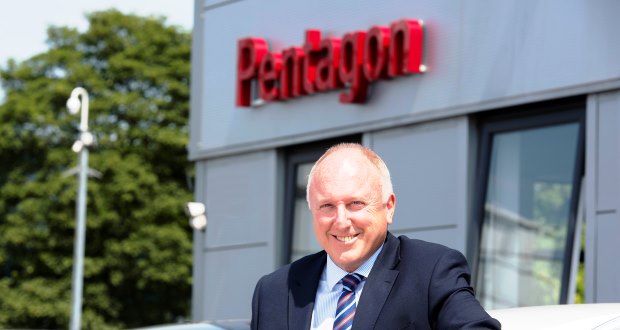
The Pentagon Motor Group has acquired two additional Peugeot locations, doubling its representation with the brand. The Pentagon site in Barnsley will become the main Peugeot dealership for the area with immediate effect, while its Lincoln multi-franchise site will also add the French brand from the start of September. The acquisition now brings Pentagon’s total… Continue reading Pentagon doubles Peugeot representation with acquisition

French company makes EV conversions easy for old clunkers

Off-the-shelf EV conversions aren't just for classic cars like Prince Harry's Jaguar anymore.

French startup Transition One plans to make it easy to convert a wide variety of average old cars in the country to electric power by building a standard conversion kit. The company says the kit will fit several top-selling models in Europe, including the Renault Twingo II, Fiat 500, Citroën C1, Peugeot 107, Toyota Aygo, and VW Polo.

The kit will sell for about $9,400 (8,500 Euros), and buyers can receive a 3,500 Euro tax credit in France, bringing the equivalent cost down to about $5,500. The company plans to complete each conversion in about four hours, once production is up and running.

The company has started by building a prototype electric car from a 2009 Renault Twingo, a small hatchback about the size of a Toyota Yaris. It uses Tesla battery modules in three packs under the hood, along with the motor and power electronics, and two more battery packs where the gas tank once sat.

Classic Mini Cooper electric conversion by Swind

The packs weigh 265 pounds, giving it about 18 kilowatt-hours of energy, which the company says will deliver about 112 miles of range in the Twingo.

In an interview with Bloomberg, company founder Aymeric Libeau said, “I’m selling to people who can’t afford a brand new 20,000 Euro [$22,200] electric car.”

The plan might be compared to that of Montreal's Ecotuned—aiming to convert old Ford F-150s with dying gas powertrains to electric power for fleets. The types of large, body-on-frame trucks that Ecotuned converts are as plentiful in North America as the small cars that Transition One plans to convert are in Europe. Other conversion companies—and some automakers—have begun focused conversion efforts on certain classics, such as the Jaguar E-Type, Porsche 911, and the original Mini Cooper.

Libeau still needs to get his conversions approved by European regulators, which he says he expects to receive by the end of the year. Transition One is also seeking financing to buy a factory to produce up to 400 of the conversions a year, and plans to open orders in September to test the market demand.

Automotive supplier tests immersion-cooled batteries for EVs

The two biggest challenges for electric cars—battery life and charge times—come down to battery cooling.

Now British auto parts supplier Ricardo is working with partners to come up with a new type of cooling technology that the company hopes will allow automakers to pack more energy into cars' batteries and to charge them faster. The technology, called immersion cooling relies on coating the batteries with dielectric cooling gel, called MIVOLT, used as electrical insulation in other applications.

If it's successful, the technology could prolong battery life in electric cars and accept higher current rates while charging without overheating them, and potentially bring charge times down closer to the time it takes to refill a gas tank.

The i-CoBat immersion cooling project aims to reduce the size and cost of cooling systems to allow automakers to build denser battery packs without increasing the heat buildup.

2019 Audi e-tron battery pack

Today's liquid cooling systems rely on cooling plates with pumps to circulate ethylene glycol or another coolant. If it proves effective, the immersive cooling technology could split the difference between those bulky, heavy systems and simpler air-cooled systems such as in the Nissan Leaf, which has been more prone to heat-related battery issues than other electric cars.

Nissan, for instance, has limited the number of times the cars could fast-charge to prevent damage to the batteries, which made it difficult to take the cars on long trips that would require more than one or two DC fast charges, although the cars were equipped with CHAdeMO fast-charge ports. (Nissan has since issued a software update for the cars to allow them to use DC fast chargers more frequently.)

With simpler, cheaper cooling systems, electric cars could use bigger batteries that charge faster and last longer. The MiVOLT immersive coolant is also biodegradable, unlike ethylene glycol, which is also used as coolant in most gas engines.

Nissan electric-car battery

Ricardo is working on the project with British materials company M&I Materials and WMG, a manufacturing effort of the University of Warwick, in Britain as part of the British government's Faraday Challenge.

The project isn't the first to work on immersive cooling systems. A similar project launched in Taiwan in 2017.

“Power, performance, practicality such as fast charging times, and price are key determinants in persuading consumers to opt for an EV rather than a liquid-fueled vehicle when they next change their car,” said Neville Jackson, Ricardo's Chief Technology and Innovation Officer. “With current cell technologies, thermal management is a crucial enabler for improvements in these areas in order to reduce or eliminate range anxiety, and promote consumer acceptance of electric cars.”

Avtovaz resumes production after three-week holidays

MOSCOW, August 12. /TASS/. Avtovaz resumed operations after the three-week corporate vacation, the Russian automaker’s press service told TASS.
“Yes, Togliatti and Lada Izhevsk got back [from vacation – TASS],” the press service said.
Scheduled upgrade and required repair activities continued at enterprises of the Avtovaz Group during the vacation period from July 22 to August 11.
Avtovaz increased Lada car sales on the Russian market by 2.2% year-on-year in January -July 2019, the company reported. Lada sales in July 2019 rose 0.3% annually to 29,500 cars, Avtovaz said.
Avtovaz is the Russia’s largest carmaker, with over 560,000 vehicles produced in 2018. The Avtovaz Group is part of the Renault-Nissan-Mitsubishi alliance.

Automakers trim production as market weakens – but hope to avoid wholesale cuts of a decade ago

James O'Neal attaches a fender in the body shop at GM's Chevrolet Silverado and GMC Sierra pickup truck plant in Fort Wayne, Indiana, July 25, 2018.John Gress | ReutersGeneral Motors will trim production of the Chevrolet Equinox SUV at two North American car plants, a move that follows cuts announced by Ford, Honda and other manufacturers.
Automakers are facing what is only the second down market since the end of the Great Recession and the record sales that followed. How far down demand will go this time is a matter of debate, with analysts and planners warning that could depend on how the Trump administration handles disputes with China and other trade partners.
Industry officials, including General Motors CEO Mary Barra, say they learned critical lessons during the last recession and hope to be more proactive this time around, adjusting production early to stay in line with market demand while avoiding the sort of budget-busting incentives that devastated industry balance sheets a decade ago.
GM's latest cutback primarily targets the Equinox but also impacts two other SUVs, the GMC Terrain and Chevrolet Trax, and heightens concerns that the increasingly crowded list of new utility vehicles coming to market will create additional headaches for the industry.
GM plans to drop one of the three crews working at its San Luis Potosi plant in Mexico, spokesman Dan Flores confirmed in a telephone interview with CNBC. The factory produces the Equinox, GMC Terrain and Chevrolet Trax SUVs, all of which will see production cut. In addition, a factory in Ingersoll, Ontario that solely produces the Equinox will be idled for one week during late September.
The automaker is “focused on profitable sales and (we) want to do things that make good business sense. We're committed to running the business in a responsible manner,” Flores said. That echoes comments CEO Barra has made on several occasions that GM won't repeat a key mistake made in the run-up to the Great Recession. Rather than trimming production to meet demand, it relied on increasingly hefty incentives that ultimately ran up its losses and contributed to its eventual bankruptcy.
Ford echoed that approach in a statement, citing “long-standing practice of matching production with consumer demand” for its decision to curb operations at its Oakville, Ontario plant next month. The factory produces four SUVs — the Ford Flex, Ford Edge, Lincoln MKT and Lincoln Nautilus models. About 200 workers will be idled, and Ford cautioned further cuts could follow.
Honda, meanwhile, confirmed this week it has reduced production of its Accord and Civic models at its Marysville, Ohio plant. Nissan trimmed output in Canton, Mississippi, as well as its operations in Mexico in recent months, while also offering voluntary buyouts to an unspecified number of U.S. employees.
The second-largest Japanese automaker last month announced plans to cut production worldwide by 10% over the next three years, while eliminating 12,500 jobs. CEO Hiroto Saikawa told reporters during a news conference that “our situation right now is extremely severe.” A U.S. spokesman said Nissan has already made the necessary adjustments in the U.S., but several analysts said further cutbacks could be needed, pointing to the 8.3% decline in its sales for the first seven months of 2019.
Across the industry, the biggest cuts have focused on the passenger car side of the market. GM, for one, announced last November plans to close three North American assembly plants, while dropping an array of sedans including the Chevrolet Cruze and Impala, as well as the Cadillac CT6. The automaker's plant in Lordstown, Ohio has already been shuttered but one in Detroit is now scheduled to operate through at least early 2019.
The United Auto Workers Union has said the fate of the two U.S. plants will be a critical topic during contract talks with GM that began last month. During meetings on Capitol Hill last December, CEO Barra said the automaker has no plans to reverse its decision, however, and has already lined up a tentative buyer for the Lordstown factory.
What concerns industry observers is that there are signs demand for SUVs may be leveling off in some market segments, something signaled by recent cuts such as those of the four Ford utility vehicles.
Complicating matters, “While people are talking about fabulous SUV sales, the market is getting saturated with them and inventories are building while incentives are growing,” said Michelle Krebs, executive analyst with Autotrader.com.
Industry planners have been aggressively trying to manage inventories of unsold cars as sales have slowed this year. The numbers are now climbing up the high side of normal, ending July at a U.S. market average of around 67 days of stock, Krebs noted, up three days from May. The norm is closer to 60 days supply.
Traditionally, they've relied on incentives to hold down inventories and the numbers are rising. The average giveback in July was $3,911 per vehicle, according to research by Cox Automotive, a 4% year-over-year climb. On some pickups, meanwhile, the numbers have reached $10,000 or more.
But “this is an industry that remembers quite vividly what happened a decade ago,” said Stephanie Brinley, principal analyst with IHS Markit. Leading into the Great Recession, they kept ratcheting up the givebacks “to keep their plants running and production up. But they found there was a point where that eroded profitability to a point that couldn't be sustained.”
The challenge now, said Brinley, is to be “proactive,” and use production cuts to keep sales and inventories in balance, rather than waiting to be “reactive.”
Several industry executives, talking on background, said a key concern is what ongoing trade disputes could mean for the U.S. economy and, in particular, the auto market — a concern highlighted by the sharp downturn on Wall Street after the latest moves by the Trump administration and China.
There are other factors that could cause trouble. New car prices have reached record levels, at an average of around $33,000 for July, reported J.D. Power and Associates. Coming in $1,400 more than a year ago, that threatens to drive some potential buyers out of the market, Power said, at a time when there's a bubble of “nearly new” off-lease vehicles now flooding the market. Meanwhile, automotive interest rates have spiked to around 6%, according to data from tracking service Edmunds.
Barring an economic meltdown, analysts like David Andrea, a principal at Plante Moran, don't see more complete plant shutdowns in the works.
“Manufacturers are showing increased discipline going into the softening of the market,” he said, “but you'll see a lot more of these temporary reductions to keep inventories and incentives in check.”