Ghosn’s detention puts Japan justice system under microscopeTokyo – Since his arrest on suspicion of falsifying financial reports, Nissan’s former Chairman Carlos Ghosn has been sitting in a humble cell for more than a month, interrogated day in and day out, without a lawyer present.
His case is drawing attention to the criminal justice system in Japan, where there is no presumption of innocence and the accused can be held for months before trial. The system, sometimes called “hostage justice,” has come under fire from human rights advocates.
When a court denied Tokyo prosecutors’ request to detain Ghosn another 10 days on Dec. 20, it was so unusual that the Japanese media reported he might be released. But such speculation was dashed when prosecutors rearrested him a day later on suspicion of breach of trust, tagging on a new set of allegations centered on Ghosn’s shifting personal investment losses of some 1.8 billion yen ($16 million) to Nissan Motor Co. On Sunday, a court approved prosecutors’ request to detain him through Jan. 1.
But his plight is routine in Japan. People have signed confessions, even to killings they never committed, just to get out of the ordeal.
A trial could be months away and could drag on even longer. And his chances aren’t good: The conviction rate in Japan is 99 percent.
Those close to Ghosn and his family say he is asserting his innocence. But it is unclear when release may come for Ghosn, who led a two-decade turnaround at Nissan from near-bankruptcy. Tokyo prosecutors consider Ghosn, a Brazilian-born Frenchman of Lebanese ancestry, a flight risk.
Other nations may have legal systems that are criticized as brutal and unfair. The U.S., for instance, has its share of erroneous convictions, police brutality and dubious plea bargains. But, in the U.S., a person is presumed innocent, has the right to have an attorney present and gets freed within 72 hours if there is no charge.
Carl Tobias, a professor at the University of Richmond’s School of Law, said such a longtime detention is highly unusual in the U.S.
“Each time the government reaches a deadline where Ghosn might be released, the government files new allegations and rearrests,” he said.
Deputy Chief Prosecutor Shin Kukimoto said prosecutors are merely doing their job of “trying to carry out a proper investigation.”
When asked by a reporter about “hostage justice,” he replied: “We are not in a position to comment on how the law has been designed.”
Under such a system, those who insist on innocence end up getting detained longer. Once the rearrest processes run out and a suspect is formally charged, bail is technically possible but often denied until the trial starts because of fears about tampered evidence.
“It is good that the world will learn how wrong Japan’s criminal system is through the case of this famous person. It is something even many Japanese don’t know,” says Seiho Cho, a lawyer in Tokyo and an expert on criminal defense. “Countless people have gone through horrible experiences.”
A famous case is Iwao Hakamada, a professional boxer, who served 48 years in prison, mostly on death row after he signed a confession under questioning and was convicted of killing a family of four. He was freed in 2014 after DNA tests determined blood at the crime scene wasn’t Hakamada’s, and a court ruled police had likely planted evidence. Boxing champions had rallied on his behalf.
A true-life story of a man who refused to sign a confession that he groped a woman on a crowded commuter train became a popular 2007 movie “I Just Didn’t Do It,” directed by Masayuki Suo. The film depicts a five-year legal battle for exoneration, highlighting the burden of proof of innocence was on the accused.
In the U.S., defense lawyers tend to be vocal, but in Japan, it is fairly standard – as in the case of Ghosn – for them to stay silent, especially before trial, because that’s considered better for the suspects. Lawyers are allowed to visit clients in detention.
Ghosn has been formally charged in the initial set of allegations, underreporting his income by about 5 billion yen ($44 million) for five years through 2015. The maximum penalty for violating Japan’s financial laws is 10 years in prison, a 10 million yen ($89,000) fine, or both.
Greg Kelly, an American Nissan executive who was arrested with Ghosn, has been similarly charged with collaborating on underreporting Ghosn’s income. Kelly was not rearrested on the latest breach of trust allegations. Kelly’s U.S. lawyer says he is innocent and abided by company policy.
Nissan has also been charged as a legal entity, but no person besides Ghosn and Kelly has been charged or arrested. Nissan executives repeatedly say an internal investigation that began in the summer showed clear and serious wrongdoing, which went unnoticed for so long because of complex schemes “masterminded” by Ghosn and Kelly.
They went to the prosecutors, resulting in the surprise Nov. 19 arrests, and are cooperating closely with the investigation.
Being accused of a crime is devastating in a conformist insular society like Japan. Family members also become targets of discrimination, spurned for marriage and ostracized. Some commit suicide.
Cho, the lawyer, said the long detention and trial mean people lose their jobs, reputation, sometimes their families. But he still had this advice: Whatever you do, don’t confess to anything you didn’t do as that just makes it worse.
“Don’t ever compromise on your innocence,” he said.
Read or Share this story: https://www.detroitnews.com/story/news/world/2018/12/22/japan-nissan-ghosn-legal-system/38786387/
Tag: Renault
Rivian fast charging, Volkswagen electrics, Trump vs GM: The Week in Reverse
2020 Mercedes-Benz EQC
Which upcoming electric car has a battery pack engineered to be upgraded to 800 volts?
What company plans to do more serious marketing of electric cars' strengths?
This is our look back at the Week In Reverse—right here at Green Car Reports—for the week ending December 21, 2018.
This week contained a mix of news about upcoming faster electric-car charging and the effects of more automakers getting more serious about selling electric cars. The green car world was not without political and business setbacks, however.
EVgo 350-kw DC fast-charge station, Baker, Calif.
Two of the biggest charging networks in the U.S. announced plans and actions to open new ultra-fast 350-kilowatt DC fast chargers. Electrify America got plans approved in California to start the second phase of building out its nationwide fast charge network, as required under the Volkswagen legal settlement.
Competitor EVgo announced that it has opened its first ultra-fast 350-kilowatt charging station between LA and Las Vegas. Such 350-kw charging stations can refill up to about 200 miles of range in a long-range electric car in 20 minutes or less.
Rivian R1T electric pickup concept
The cars capable of charging that fast aren't yet on the market, but a wide-ranging interview with the founder and CEO of Michigan-based electric-car startup Rivian revealed that the company has engineered its upcoming trucks to be upgraded to the 800-volt battery pack that 350-kw charging will require.
2019 Nio ES6
Those new electric cars are coming, though. The first 800-volt electric cars, the Porsche Taycan, Audi e-tron GT, and Aston Martin Rapide-E, are expected to arrive late next year.
Chinese electric startup Nio introduced its second, more affordable, electric SUV, the ES6 this week. It's not clear, however, whether it will have an 800-volt battery capable of charging at 350-kw.
Another Chinese automaker, Qiantu, announced plans to bring its new sports car to the U.S. through Mullen, the California company that holds the rights to sell Coda electric cars here.
2020 Volkswagen ID Neo spy shots
In all, electric-car sales have taken off, and hit a milestone, reaching 1 million sales in the U.S. in November, with half of those in California.
Nissan, the original electric-car leader, aims to get even more electric cars on the road by amping up its marketing of electric advantages: smooth, silent power and low operating costs. The company also renewed plans to introduce a new electric crossover SUV that may be more attractive to American car buyers.
Kia released prices for its upcoming Kona electric crossover vehicle. And VW released video of its upcoming ID hatchback testing in South Africa and hinted it might build a new electric beach buggy.
Donald Trump
Not all was rosy on the plug-in car sales front, though. After GM announced that it would kill the Chevy Volt, and lay off 15,000 workers, it announced 50 additional layoffs at the factory that builds battery packs for the Volt, throwing hope for a successor to the car into doubt. Still, GM maintains that it is committed to building electric cars. For that, President Trump took to Twitter to excoriate the company. “All-electric is not going to work,” he tweeted.
MWI microwave ignition module
Perhaps President Trump would be happier with a plan by former Porsche CEO to promote a new technology to make gas cars cleaner and almost as efficient as diesel, microwave ignition to replace spark plugs.
Meanwhile, German automakers are dramatically ramping up their purchases of battery supplies for electric cars.
And a new analysis of Trump's proposal to freeze fuel-economy increases by the Consumer Federation of America shows that rolling back the standards will make driving less affordable for the citizens who can least afford it and who depend on it the most.
_______________________________________
Follow Green Car Reports on Facebook and Twitter
Car industry argues about networked driving
Friday, 23/11/2018 18:02 clock Car manufacturers like to talk about the benefits of networked driving: in the future, cars should warn each other of smoothness or obstacles – and even communicate with traffic lights and traffic signs. Above all, this fast data exchange is about better road safety and fewer accidents. In addition, intelligent networking… Continue reading Car industry argues about networked driving
Carlos Ghosn re-arrested in fresh twist
Former Nissan chairman Carlos Ghosn has been re-arrested on fresh charges, Japanese media report, dashing any hopes he could be released on bail. Mr Ghosn has spent the last month in prison, accused of misusing funds and hiding more than $40m (£31m) of income. But on Thursday a court rejected a request by the prosecution… Continue reading Carlos Ghosn re-arrested in fresh twist
Ghosn re-arrested on fresh allegations, likely to spend Christmas in detention
TOKYO (Reuters) – Japanese prosecutors arrested Nissan Motor Co Ltd’s (7201.T) ousted chairman Carlos Ghosn again on Friday on new allegations of making Nissan shoulder $16.6 million in personal investment losses, dashing chances he would be released on bail before Christmas. FILE PHOTO – Carlos Ghosn, chairman and CEO of the Renault-Nissan-Mitsubishi Alliance, attends the… Continue reading Ghosn re-arrested on fresh allegations, likely to spend Christmas in detention
UPDATE 6-Ghosn re-arrested on fresh allegations, likely to spend Christmas in detention
TOKYO (Reuters) – Japanese prosecutors arrested Nissan Motor Co Ltd’s (7201.T) ousted chairman Carlos Ghosn again on Friday on new allegations of making Nissan shoulder $16.6 million in personal investment losses, dashing chances he would be released on bail before Christmas. FILE PHOTO – Carlos Ghosn, chairman and CEO of the Renault-Nissan-Mitsubishi Alliance, attends the… Continue reading UPDATE 6-Ghosn re-arrested on fresh allegations, likely to spend Christmas in detention
Nissan to cut 1,000 jobs in Mexico as sales drop
Become an FT Subscriber. Gain access to global coverage from local journalists on the ground in 50+ countries working around the clock to break news, analyze, spot risks and opportunities. Join over 300,000 Finance professionals who already subscribe to the FT. Go to Source
UPDATE 1-Nissan ex-chief Ghosn vows to restore his honour in court – NHK
FILE PHOTO – Carlos Ghosn, chairman and CEO of the Renault-Nissan-Mitsubishi Alliance, attends the Tomorrow In Motion event on the eve of press day at the Paris Auto Show, in Paris, France, October 1, 2018. REUTERS/Regis Duvignau/File Photo TOKYO (Reuters) – Nissan Motor Co’s (7201.T) jailed ex-chairman, Carlos Ghosn, vowed to restore his good name… Continue reading UPDATE 1-Nissan ex-chief Ghosn vows to restore his honour in court – NHK
Nissan ex-chief Ghosn vows to restore his honour in court – NHK
TOKYO, Dec 21 (Reuters) – Nissan Motor Co’s jailed ex-chairman, Carlos Ghosn, vowed to restore his good name in court after a month in detention, Japanese public broadcaster NHK said on Friday, quoting his lawyer. “Things as they stand are absolutely unaceptable,” Ghosn was quoted as saying via his lawyer. “I want to have my… Continue reading Nissan ex-chief Ghosn vows to restore his honour in court – NHK
An inside look at Rivian’s EV ambitions from AI batteries to electric jet skis
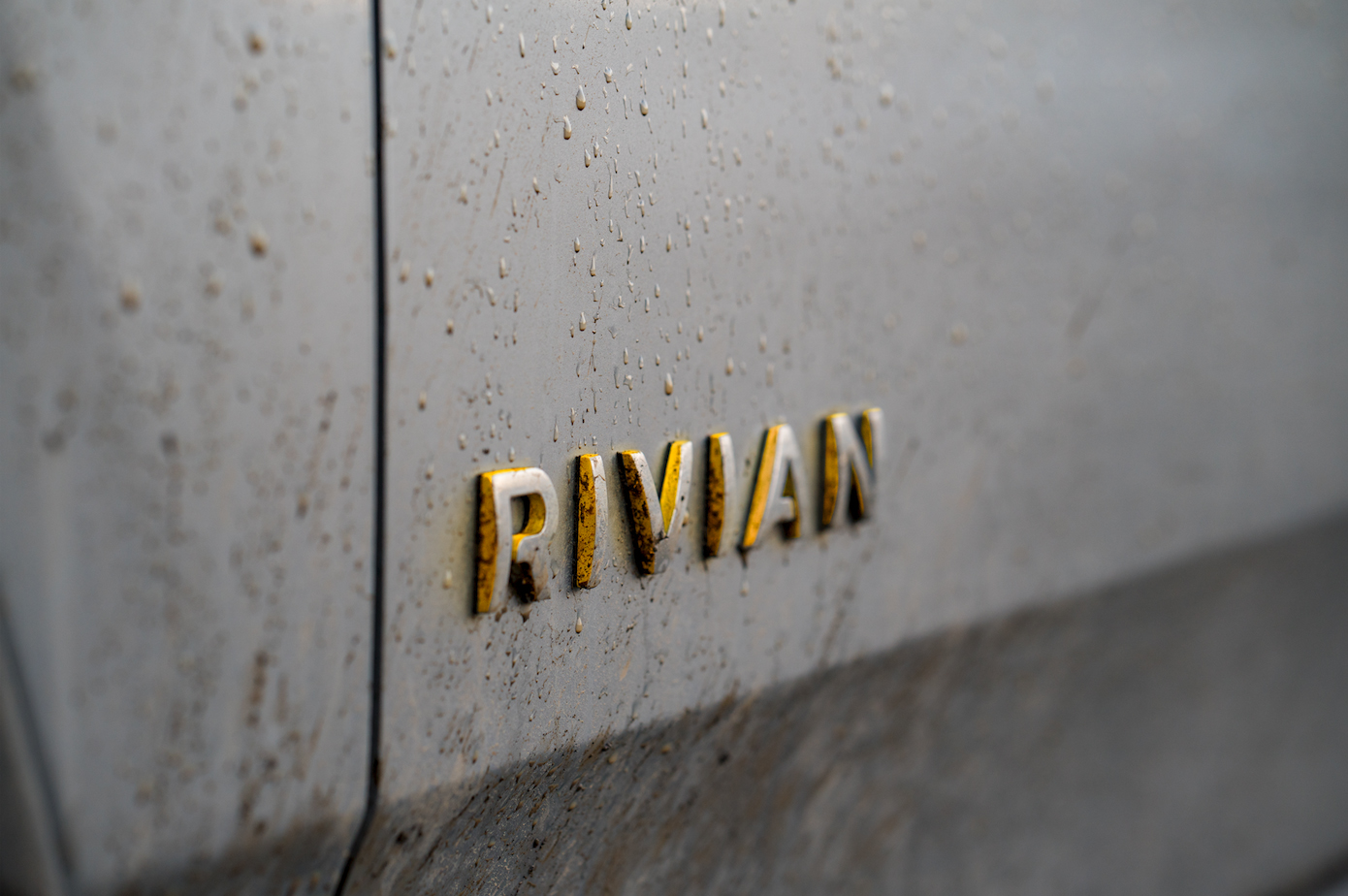
For a CEO who insists his electric vehicle startup doesn’t want to be Tesla, Rivian founder RJ Scaringe can sound a lot like Elon Musk. Just weeks before unveiling Rivian’s first vehicles — an all-electric pickup and a seven-seater SUV — at the LA Auto Show last month, Scaringe promised an impressive new battery technology… Continue reading An inside look at Rivian’s EV ambitions from AI batteries to electric jet skis