MADRID, June 28 (EUROPA PRESS) – Hyundai Motor Company has signed an agreement with Saudi Arabian Oil Company (Saudi Aramco) to accelerate the expansion of a hydrogen ecosystem in South Korea and Saudi Arabia, as well as to explore the use of advanced non-metallic materials in various sectors, including the of automotive According to the… Continue reading Hyundai teams up with Saudi Aramco to expand the use of hydrogen in South Korea and Saudi Arabia
Tag: Hyundai
Toyota to invest $2b in developing electric vehicles in Indonesia
Toyota Motor Corp plans to invest $2 billion to develop electric vehicles (EVs) in Indonesia over the next four years, starting with hybrid vehicles, Indonesia’s coordinating ministry for maritime affairs said. “From 2019 to 2023, we will progressively increase our investment to 28.3 trillion rupiah ($2 billion),” Toyota president Akio Toyoda was quoted as saying in a… Continue reading Toyota to invest $2b in developing electric vehicles in Indonesia
Volkswagen says its battery supplies are secure
Despite its plans to become the biggest EV-maker in the world by 2023, Volkswagen says it won't be affected by the tightening battery supplies that have roiled the industry, including Audi, the company's Volkswagen Group partner.
VW plans to build up to 3 million all-electric vehicles a year by 2025 and plans to produce 22 million EVs in total by 2027. It has secured $50 billion in battery contracts with Korea's LG Chem, Samsung, and SK Innovation, as well as China's CATL for battery supplies. VW also invested 1 billion euros in Swedish startup battery supplier Northvolt, which plans to build the largest battery factory in Europe.
“I can confirm that for the first years of our plan, a sufficient supply of cells has been contractually secured,” said Thomas Ulbrich, VW board member in charge of electric mobility. “We have the contracts so no one is going to stand there and tell us 'we are not going to supply you any more,'” he told Automotive News Europe (subscription required.) He confirmed that plan runs through 2023.
After that, he said, “You will likely see us permanently in negotiations for cells for the next three to five years.”
In May, Bloomberg reported that Samsung cut its supply agreement with Volkswagen over disagreements about timing.
As automakers around the world ramp up their production of electric cars, mining for battery chemicals has not kept pace. And Volkswagen, as one of the world's largest automakers making the transition from building gasoline and diesel cars to focusing on electrics, has become ground zero for concerns over battery supplies. Volkswagen's plans alone call for more than 300 gigawatt-hours of battery capacity over the next 10 years, which outstrips the total global supply.
Volkswagen ID Vizzion Concept
Hyundai has expressed concern over battery supplies as waiting lists for its Kona Electric stretched for over a year in Europe due to battery shortages.
Tesla, too has said that supplies of raw materials for batteries are one of its major concerns for the future, and has said that production constraints from its battery supplier, Panasonic, have held up production of its mass-market Model 3.
The U.S. has put battery materials such as lithium and cobalt on its list of critical minerals to be developed in the U.S. to shield the country from competitive supply concerns.
Ulbrich took one parting shot at battery suppliers in his comments about Volkswagen supplies. “They probably hoped to maintain an oligopoly for a very long time,” Ulbrich said. “That's not possible.”
BMW accelerates EVs, VW secures batteries, Rivian plans more gear: Today’s Car News
BMW accelerated its electric-car plans by two years. Volkswagen says its battery supplies are secure. Rivian reveals more plans for lifestyle gear. And our readers weigh in on electric Hummers. All this and more on Green Car Reports.
At an event in Germany on Tuesday, BMW announced that it is pulling forward its plans to electrify its products by two years and focusing more on pure electric cars.
Despite shortages of batteries and battery materials beginning to roil the EV industry, Volkswagen, the automaker with the largest-scale plans for EVs says its contracts will guarantee it has enough batteries through 2023.
Rivian confirmed that it has more plans for accessories to fit in the R1T pickup's “gear tunnel” and that it intends to make smaller, more affordable models in the future.
Results from last week's Twitter poll show that GCR readers broadly support GM reviving the Hummer brand in all-electric form.
An Apple patent reveals a system to allow remote-control drivers to take over autonomous cars to get to a hospital faster in a medical emergency.
Finally, new headlights earned the 2019 Hyundai Tucson a Top Safety Pick+ award from the IIHS.
_______________________________________
Follow Green Car Reports on Facebook and Twitter
Hyundai Motor to work with Aramco over hydrogen energy
Hyundai Motor Group Executive Vice Chairman Chung Euisun and Saudi Aramco CEO Amin Nasser signed an MOU on their comprehensive partnership in sharing technologies over hydrogen fuel cell electric vehicles (FCEV) and other futuristic cars.SK Gas, an LPG distributor of SK Group, signed two MOUs with Advanced Global Investment Company, which is a subsidiary of Saudi Arabia’s Advanced Petrochemical Company.Amid the prince’s visit to Korea, Hyosung, GS Holdings, Hyundai Oilbank, Samsung Bioepis, Industrial Bank of Korea, SK Global Chemical and Korea National Oil Corp. also signed deals with their Saudi Arabian partners and their ministries.
Football clubs look to recycled car batteries to power floodlights
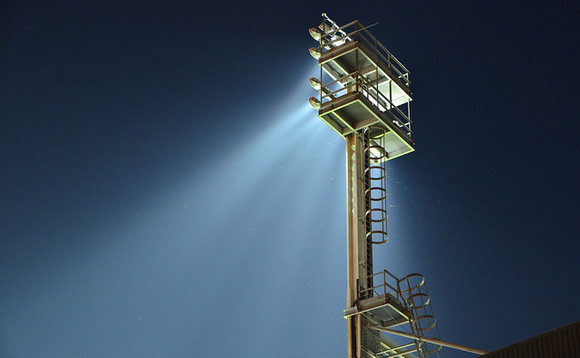
Old electric vehicle batteries retain enough capacity to light up a game Six European football stadiums are experimenting with deploying used car batteries to power their floodlights. The battery packs, comprised of used electric car batteries, are being supplied by Eaton, the US-based electrical systems firm. Eaton vice-president Craig McDonnell could not reveal the clubs… Continue reading Football clubs look to recycled car batteries to power floodlights
SoundHound Inc., partners with Hyundai to bring voice-enabled, smart connected SUV to India, powered by Houndify Voice AI platform
SoundHound Inc., the provider of in voice-enabled AI and conversational intelligence technologies, has announced a partnership with Hyundai Motor Group to bring the first voice-enabled, smart-connected SUV to the Indian market. Powered by SoundHound Inc.’s Houndify voice AI platform, the Hyundai Venue SUV enables drivers to speak queries and control various aspects of the car simply by… Continue reading SoundHound Inc., partners with Hyundai to bring voice-enabled, smart connected SUV to India, powered by Houndify Voice AI platform
Regional discounts can make electric cars a steal
In some places, you almost can't afford not to buy an electric car.
Adding regional incentives to state and federal incentives can cut the price of some electric cars nearly in half and make them cheaper than some used cars or the most basic of new gas models. Consider that electric cars never need gas or oil changes, and buyers can come away with lower monthly costs than just buying gas for an older car.
These state and regional incentives—along with occasional special fees charged on electric-car buyers—can make or break the purchase of an electric car.
The best example currently is in Denver, incentives from a local dealer and utility company pile onto the $5,000 Colorado tax credit, and federal tax credits to cut as much as $19,500 off the purchase price of a Nissan Leaf. That's more than the base MSRP of a Honda Fit, a Hyundai Elantra, or a Mazda3.
As in Denver, local energy companies often play a big part in such discounts. Xcel Energy, a local Colorado utility, has partnered with Tynan's Nissan in Aurora to offer the program. Xcel and Tynan each kick in a $3,500 cash incentive, which, combined with the Colorado state tax credit and the $7,500 federal tax credit, can get buyers into a base Nissan Leaf for as little as $11,665.
Payments on a five-year loan at 5 percent interest could be as little as $220 a month. That's less than some Denver drivers may pay for gas every month.
Colorado is working hard to spread electric cars among its population to improve air quality in the region. Denver may be the most compelling place to buy a Nissan Leaf, but other regions also offer compelling deals.
– Buyers in nearby Fort Collins, Colorado, offers buyers a $9,000 group-purchase discount on top of state and federal tax credits that can make Leaf purchases even cheaper than in Denver.
– Connecticut offers electric-car buyers a $3,000 state tax credit, and some state utilities add thousands more. Norwich Public Utilities offers a $1,000 rebate for those who buy or lease a new or used electric car.
– Oregon offers a tax incentive of $2,500, which buyers can add to a $3,500 rebate on Nissan Leaf purchases through the local utility Portland General Electric.
– State, county, and municipal tax exemptions in Seattle can add up to more than $2,500 per car.
No matter where you live, it's worth seeking out these local discounts and incentives. They can make choosing an electric car even more affordable.
Hyundai backs Aurora to develop driverless systems for Kia and Hyundai models
A Hyundai NEXO fuel cell vehicle with Aurora self-driving systems.AuroraHyundai Motor Group is investing in Aurora, a developer of self-driving technology for autos, with a plan to bring the systems to Hyundai and Kia models.
The companies have been working for the past year to develop and integrate the “Aurora Driver” into Hyundai's NEXO fuel cell vehicles as well as on other projects.
It's an extension of an existing partnership and furthers the work that large auto manufacturers are doing with developers of driverless technology. General Motors acquired Cruise in 2016, and Ford took a stake in Argo.ai the following year. Aurora still aims to provide autonomous systems to many different players.
On Monday, Aurora announced a partnership with Fiat Chrysler to develop self-driving vehicles for corporate clients. It also works with Chinese electric vehicle maker Byton.
Aurora CEO Chris UrmsonAuroraIn a statement, Aurora co-founder and chief product officer Sterling Anderson — previously the director of Autopilot programs at Tesla — said the company's aim with its partners is to “deliver the benefits of self-driving technology safely, quickly, and broadly.” After reportedly failing to acquire Aurora last summer, Volkswagen concluded a partnership with the company on Tuesday.
Aurora employs lidar, or light ranging and detection sensors, as part of its autonomous systems. That's different than Tesla, which uses cameras and radar primarily to power its “full self-driving” and Autopilot features.
Led by CEO Chris Urmson, former technical lead of Google's self-driving efforts, Aurora has raised at least $700 million in funding. Other investors include Amazon, Greylock, Sequoia, Shell Energy's venture group and T. Rowe Price. The size of Hyundai's investment wasn't disclosed.
WATCH: The best way to get self-driving vehicles on the road
VIDEO3:2903:29The best way to get self-driving vehicles on the road.
Hyundai rides on top with new double-decker electric bus
If converting city buses to electric power is one of the most effective ways to reduce harmful pollution from particulate matter and nitrogen oxides in cities an even more effective way is to double the number of people they can carry.
London has begun converting its iconic double-decker buses to electric models made by China's BYD, and now Hyundai plans to jump into the fray with a new bus that can carry 70 passengers—not quite double what a regular bus can carry but about 1.5 times the capacity, Hyundai says.
The company introduced its new double-decker at the Land, Infrastructure, and Technology Fair in Korea last month.
READ THIS: First all-electric London double-decker bus in service; made in China by BYD
Hyundai says it has a range of about 188 miles and can fully recharge its liquid-cooled 384-kilowatt-hour in an hour and a quarter.
Its primary motivation comes from a 321-horsepower motor on the independently-sprung drive axle as well as a smaller motor to recover electricity on the third axle.
The bus is 42 feet long and just over 13 feet tall. The third axle also steers to give the bus more precise steering in tight maneuvers.
DON'T MISS: California to transition to 100 percent electric buses by 2040
It can accommodate 11 passengers seated on the main floor, including two “fixed-in-space” wheelchairs, and 59 more passengers on top. The floor on the bottom slides out for wheelchair access.
In a page from its recent automotive releases, Hyundai notes that the new bus will include electronic stability control, automatic emergency braking, and automatic lane assistance—perhaps even more important safety features for carrying 70 people, almost 60 of them six feet in the air.
CHECK OUT: LA gets first double-decker electric city bus
“The double-decker electric bus is an environmentally friendly vehicle optimized for global eco-friendly trends,” said ByoungWoo Hwang, Head of Commercial Vehicle Advanced Engineering team at Hyundai Motor. “This will not only ultimately improve the air quality, but also contribute greatly to easing commuting hour traffic congestion by accommodating more passengers.”
Los Angeles has also introduced its first electric double-decker bus on a commuter route from Pasadena to downtown.