[embedded content] Sealy, Texas (December 18, 2018) — Hennessey Special Vehicles, builders of the famed Venom GT and the upcoming Venom F5, is proud to announce it has hired the legendary John Heinricy as the full-time chief engineer for the Venom F5 program. Heinricy has been a consultant on the program since its inception and… Continue reading Hennessey Special Vehicles Names John Heinricy as Venom F5 Chief Engineer
Tag: GM
GM cutting 50 jobs at U.S. battery plant tied to Chevy Volt
FILE PHOTO: The GM logo is seen at the General Motors Warren Transmission Operations Plant in Warren, Michigan October 26, 2015. REUTERS/Rebecca Cook/File Photo WASHINGTON (Reuters) – General Motors Co (GM.N) said on Tuesday it plans to cut 50 jobs at a suburban Detroit lithium-ion battery assembly plant after the largest U.S. automaker announced last… Continue reading GM cutting 50 jobs at U.S. battery plant tied to Chevy Volt
Electric cars “not going to work,” Trump says of GM’s plan
Donald Trump
In an interview with Fox News last week, President Trump revealed his inner thoughts about electric cars—not that many had any doubts.
“All-electric is not going to work,” he said, referring to General Motors' stated goal to transition to “a world with zero crashes, zero emissions, and zero congestion.” The company announced last year that it will launch 20 new hybrid, plug-in, and electric cars by 2023 to meet more stringent emissions standards in China, Europe, California, and elsewhere.
READ THIS: GM to kill Chevy Volt production in 2019
Referring to GM CEO Mary Barra's announcement of the plan, Trump said, ““They’ve changed the whole model of General Motors. They’ve gone to all-electric. All-electric is not going to work … It’s wonderful to have it as a percentage of your cars, but going into this model that she’s doing I think is a mistake.”
DON'T MISS: Trump vows retaliation against GM for layoffs
GM announced last month that it would shut down five assembly plants, including the Detroit Hamtramck factory that builds the Chevy Volt and the Lordstown, Ohio, factory that builds the compact Chevrolet Cruze that underpins the Volt. At the same time, the company plans to lay off 15,000 workers. Those workers, in Michigan and Ohio were some of the supporters that handed Trump the election in 2016.
CHECK OUT: Is Trump presidency the real market test for electric cars?
When GM made the announcement in the end of November, Trump vowed retaliation against the company, and he reiterated that stance last week. “I don’t like what she did,” Trump told Fox News, referring to Barra. “It was nasty. To tell me a couple of weeks before Christmas that she’s going to close in Ohio and Michigan, not acceptable to me. General Motors is not going to be treated well.”
As GM as looked to ramp up production in China to meet the country's demand for electric cars, Trump has imposed new tariffs on Chinese-made products to make them harder to import. That has thrown a monkey wrench into GM's plans (and those of other automakers) to sell some of those cars in the U.S.
Elon Musk says Tesla would consider buying idled GM plants, takes swing at the SEC on ’60 Minutes’
Getty Images
Elon Musk
Tesla would consider buying the factories that General Motors intends to idle, CEO Elon Musk said in an interview that aired Sunday on CBS' “60 Minutes.”
“It's possible that we would be interested. If they were going to sell a plant or not use it that we would take it over,” he said.
In a wide-ranging interview with Lesley Stahl, Musk made no apologies for his erratic behavior over the summer and reiterated his lack of respect for the Securities and Exchange Commission, which sued him in September for allegedly defrauding investors after tweeting that he wanted to take the company public at $420 a share and had “funding secured.” He didn't and pulled back on those plans a few weeks later.
“Nobody's perfect,” he said.
Musk acknowledged that he was “somewhat impulsive,” adding that he “didn't really want to try to adhere to some CEO template.” He stoked controversy all summer with his erratic behavior, taunting the SEC, calling a diver in the Thai cave rescue a “pedo” and capping the summer by appearing to smoke pot on the Joe Rogan podcast.
“I'm just being me. I mean, I was certainly under insane stress and crazy, crazy hours. But the system would have failed if I was truly erratic,” Musk said.
The SEC forced Musk to step down as chairman of the board for three years. The company named Robyn Denholm, who was already on the board, as chairwoman.
“I want to be clear: I do not respect the SEC,” Musk said. “I do not respect them.” But he said he was adhering to the agreement because he respects the U.S. justice system.
He scoffed at the idea that Denholm was put in place to keep him in line. “Yeah. It, it's not realistic in the sense that I am the largest shareholder in the company. And I can just call for a shareholder vote and get anything done that I want,” Musk said.
He said he does not want to return to the role of chairman. “I actually just prefer to have no titles at all.”
Tesla has struggled to ramp up production of its much hyped Model 3 midsize sedan. The company resorted to building a second assembly line inside a tent-like structure next to its main assembly plant in Fremont, California. The decision, like many Tesla has made, was ridiculed by some in the industry.
The last-minute push increased production by 50 percent, Musk told CBS.
“Those betting against the company were right by all conventional standards that we would fail,” he said, “but they just did not count on this unconventional situation of creating a second assembly in the parking lot in a tent.”
Musk said the long-awaited $35,000 version of the Model 3 will “probably” be available in five to six months. That is the price of the vehicle Tesla originally promised would be an electric sedan for the masses when it was first unveiled in March 2016. Since then, however, Tesla has only made higher-priced versions of the car.
Musk admitted he is notorious for missing deadlines.
“Well, I mean punctuality's not my strong suit. I think, uh well, why would people think that if I've been late on all the other models, that'd I'd be suddenly on time with this one,” he said.
WATCH: How taxpayers have helped Elon Musk and Tesla
How taxpayers have boosted Elon Musk and Tesla
10:06 AM ET Mon, 22 Oct 2018 | 07:43
GM's decision to idle plants in Ohio, Michigan, Maryland and Ontario and eliminate 14,000 jobs has caused anger and worry among lawmakers, labor leaders and people in the regions that depend on the factories for work. Some say GM's decision is a necessary step to ensure the company's future as it grapples with changing consumer tastes, new technologies and new potential competitors, including Tesla.
The possible plant closures present an opportunity to Tesla. It wouldn't be the first time Tesla bought a GM plant. The Tesla Factory in Fremont, California is a former GM plant that closed in 2010 but reopened later that year under Musk.
Under the terms of the SEC settlement, Musk had to pay a $20 million fine and step down as chairman for at least three years. Tesla also put in place a system for monitoring Musk's statements to the public about the company, whether on Twitter, blog posts or any other medium.
Musk told CBS the only tweets that need to be approved are ones that can move the stock price. He said he uses Twitter to express himself. “Some people use their hair,” he said, “I used Twitter.”
Audi pulls the curtain back on its self-driving car program
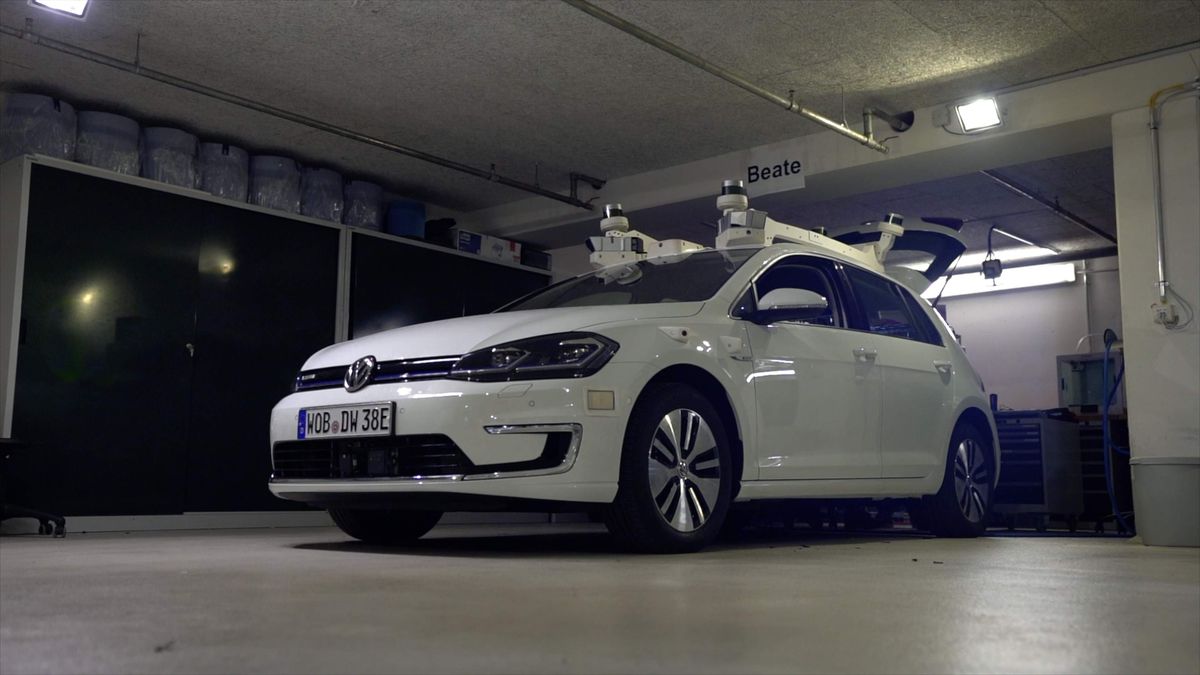
Of all the luxury car brands, Audi has been the most aggressive in terms of putting semi-autonomous technology into its production cars. (See the A8 sedan, a version of which can’t be sold in the US thanks to its partially automated features.) Now the German automaker is offering a sneak peek of its effort to… Continue reading Audi pulls the curtain back on its self-driving car program
Hyundai plans to take hydrogen fuel-cell systems beyond vehicles
Follow Bengt
Hyundai Mobis fuel cell announcement
Hyundai sees a lot of potential in hydrogen fuel-cell technology. And it may find success with it by looking well past cars and SUVs—to other uses that could, as the company puts it, “transcend the transportation sector.”
With this week’s opening of a second plant making fuel-cell systems, in Chungju, South Korea, Hyundai's Mobis unit will increase its annual production of fuel-cell systems from its current 3,000 annual units to 40,000 units by 2022.
DON’T MISS: 2019 Hyundai Nexo: first drive of 380-mile fuel-cell crossover utility
The plan, called FCEV Vision 2030, highlights the parent company’s “commitment to accelerate the development of a hydrogen society.”
By 2030, Hyundai Motor Group aims to make 700,000 fuel-cell systems annually, of which 500,000 would be units for personal-use and commercial fuel-cell electric vehicles. That leaves 200,000 units for drones, vessels, and forklifts and other uses outside transportation such as power generation and energy storage systems.
That’s still a very small portion of what the company currently produces; in 2018 it expected 7.7 million worldwide vehicle sales across Hyundai and Kia.
CHECK OUT: 2019 Hyundai Nexo hydrogen fuel-cell vehicle pricing: Puzzling economics
To accomplish this plan, Hyundai established a dedicated division for fuel-cell business this month. Under the program, the Hyundai Motor Group and its suppliers plan to invest $6.8 billion to expand R&D operations and facilities, with an estimated 51,000 new jobs created.
Hyundai justifies the very steep growth curve by citing a McKinsey & Company study, pointing to an estimated global demand for up to 6.5 million fuel cell systems by 2030.
Hyundai Nexo
The 2019 Hyundai Nexo, which showcases the potential of a new generation of fuel-cell tech from the brand, with an estimated 380-mile range, will be available by sale or lease starting in January—albeit only in California, where a nascent commercial fueling infrastructure exists. That model is going to be the first test vehicle for a Level 4 automated-driving project with the autonomous-vehicle tech company Aurora.
READ MORE: Toyota enters $82 million partnership to roll out hydrogen trucks in Los Angeles port
Honda and GM continue to work on a next-generation fuel-cell system that will be produced in Michigan, and Toyota has confirmed that it’s looking to put the technology into more affordable, mass-market vehicles as well as commercial trucks and buses.
There’s another reason why Hyundai should be so bullish on fuel cells. The South Korean government is subsidizing a $2.3 billion plan to support various stages of the hydrogen fuel-cell development chain, including automakers, as well as 310 new hydrogen fueling stations.
Given the biggest limitation for fuel-cell technology in the U.S. today—a lack of hydrogen fueling infrastructure—aiming the growth of the technology toward commercial uses and very well-defined use cases could be a good plan to play on its strengths.
GM fights government to retain electric car tax credit
Original Article
Feds: FCA spent $15K on steak dinners for UAW
Feds: FCA spent $15K on steak dinners for UAWDetroit — Senior United Auto Workers leaders launched 2015 UAW contract negotiations with an $8,494 meal at a Detroit steakhouse paid for by Fiat Chrysler Automobiles, according to a new federal court filing.
And once negotiations with Fiat Chrysler appeared to be wrapped, officials book-ended the talks with a second lavish meal paid for by the carmaker at the same restaurant.
After UAW leaders ate, drank and smoked $15,000 worth of filet, liquor and cigars for the two meals paid for by the rival across the negotiating table, rank-and-file union members at Fiat Chrysler voted down the proposed contract.
Federal officials say the meals are examples of corruption surrounding the 2015 Fiat Chrysler-UAW contract negotiations.
U.S. District Attorneys David Gardey and Erin Shaw wrote in a court filing that spending on meals such as those at the London Chop House in downtown Detroit corrupted the bargaining process, and the “freebies” and “lavish entertainment” UAW officials allowed Fiat Chrysler to pay for were “the rule rather than the exception.”
The UAW officials violated the Labor Management Relations Act of 1947 when they let the automaker pay for those meals, the attorneys wrote.
The details emerged as the UAW and Detroit automakers are poised to negotiate new contracts next year at a time when both General Motors Co. and Ford Motor Co. are pruning excess white-collar workers, and GM is signaling the possibility of closing U.S. plants.
Prosecutors leveled the allegations Wednesday while urging a judge to sentence one of those high-ranking UAW leaders to federal prison for one year. That official, Nancy Adams Johnson, has emerged as a pivotal participant and witness to a years-long conspiracy involving Fiat Chrysler and the UAW, and she has linked former union President Dennis Williams to the scandal.
UAW spokesman Brian Rothenberg said in a statement that the UAW confronted Johnson when they found out she “had stolen thousands of dollars” from the union's National Training Center.
“The UAW also provided information about Ms. Johnson’s illegal conduct to the federal prosecutors at that time,” Rothenberg said. “The money Ms. Johnson stole and misused belonged to the NTC, not to Chrysler — and the NTC has filed papers with the Judge in Ms. Johnson’s case seeking to recover the money she stole from it. The UAW is confident that Ms. Johnson’s misconduct had no effect on the collective bargaining agreement between the UAW and Chrysler – which has numerous checks and balances and requires a vote by the entire membership, among other things.”
Fiat Chrysler did not immediately respond to request for comment.
No Fiat Chrysler officials were present for either meal, according to court documents filed Wednesday in U.S. District Court, and the meal had “nothing to do with the National Training Center.” The UAW had used a National Training Center credit card to pay for the two meals.
“These corrosive and poisoning circumstances are exactly what the Taft-Hartley Act (Labor Management Relations Act of 1947) was intended to avoid,” Assistant U.S. Attorney David Gardey wrote in the court filing.
“Over 45,000 hourly employees for FCA were represented by the UAW during the period of the conspiracy. These men and women believed that their union leaders were looking out for their best interests and negotiating in good faith, not double dealing them for personal gain.”
Adams Johnson was the UAW's No. 2 official in the union's Fiat Chrysler department, serving as the top administrative assistant to UAW Vice President Norwood Jewell.
Jewell tapped a training fund to pay for more than $10,000 worth of golf resort accommodations in Palm Springs, California, and Disney World tickets, a spending spree that is the focus of the ongoing investigation, sources told The Detroit News.
In July, Adams Johnson entered a guilty plea, telling U.S. District Judge Paul Borman she violated a federal law prohibiting labor officials from receiving cash and valuable items from employers. In this case, she received tens of thousands of dollars in illegal payments and benefits from Fiat Chrysler during the conspiracy, including $1,100 designer shoes, first-class flights to California, resort stays and limousine rides, according to federal prosecutors.
Adams Johnson was the seventh person to plead guilty in the widening scandal.
She could be sentenced to as much as 18 months in prison for her role in a widening corruption scandal involving Fiat Chrysler Automobiles and its contract negotiations with the UAW, according to the filing. Johnson's lawyer, Harold Gurewitz, is requesting a lighter “non-custodial” sentence that is not “greater than necessary.”
Adams Johnson, 58, at the direction of more senior UAW officials “directed tens of thousands of dollars of prohibited payments from Fiat Chrysler for the personal benefit of those senior UAW officials and for the personal benefit of other UAW officials,” according to Wednesday's sentencing memorandum.
Gardey writes that Johnson betrayed thousands of UAW members and their families through her actions in 2015, and the “court needs to deter other union officials from engaging in similar misconduct.”
Gardey also requested Johnson's sentence be delayed six months so that she could continue to cooperate in the ongoing federal investigation into the 2015 UAW contract negotiations federal prosecutors have said Fiat Chrysler and the UAW conspired to corrupt.
ithibodeau@detroitnews.com
Twitter: @Ian_Thibodeau
Staff writer Rob Snell contributed.
Read or Share this story: https://www.detroitnews.com/story/business/autos/chrysler/2018/12/12/fiat-chrysler-spent-15-thousand-uaw-steak-dinners/2291277002/
Donald Trump tears into GM: Mary Barra's decision was 'nasty'
Original Article
Ford Gets Left at the Lights By General Motors – Bloomberg
Ford Gets Left at the Lights By General Motors Bloomberg Job cuts aren’t always the right thing to do, and they’re always painful, but Ford’s CEO is looking strategically lethargic next to Mary Barra. Go to Source