Tesla’s approach to autonomous driving is rather simple – albeit hard. It has some radar and ultrasonic sensor technology but the goal is to drive based on computer vision with cameras feeding into a neural net system that it is able to recognize what it sees – much like a human. We are now getting our best… Continue reading Watch a Tesla drive in Paris through the eyes of Autopilot
Tag: GM
The auto industry’s VHS-or-Betamax moment
5GAA | 5G Automotive Association e.V via AP Images
In this image released July 11, 2018, 5GAA, BMW Group, Ford and Groupe PSA exhibit the first European demonstration of C-V2X direct communication interoperability between multiple automakers.
The auto industry has a choice to make: Which language will cars speak when they talk to one another?
Until a couple of years ago, automakers agreed on one vehicle-to-vehicle communications platform, called dedicated short-range communications, or DSRC, based on the technology used for Wi-Fi. But some car companies have begun to favor a competing protocol, known as Cellular V2X, which is based on a next-generation version of the technology used by your mobile phone.
So far, the federal government has held back on enforcing a standard. A proposed rule mandating deployment of DSRC equipment in new vehicles has languished for nearly two years, and critics say the delay is making motorists less safe. But supporters of the competing standard say something better has come along.
More from The New York Times:
Cars will talk to one another. Exactly how is less certain.
You don't drive a minivan? You should. Here's why.
Motorcycle makers try minting new riders with youth programs
“You've got public agencies who want to deploy, but we don't have a standard, so what do I buy?” asked Kirk Steudle, director of Michigan's Department of Transportation and a supporter of the DSRC standard. “Betamax, or a VHS?”
It is a crucial technological choice: Cars are increasingly connected, and the autonomous vehicles that will arrive in the future must have a way to communicate with each other and surrounding infrastructure. But even before self-driving cars hit the streets en masse, there are enormous benefits to be had. Federal transportation officials estimate that, once widely deployed, such communication systems will prevent or mitigate up to 80 percent of all non-impaired collisions and address thousands of fatal crashes per year in the United States.
The auto industry is divided over the standards.
General Motors has embraced DSRC, and it's already a standard safety feature on Cadillac CTS sedans. Toyota and Volkswagen have also committed to make DSRC systems standard equipment on new cars beginning next year. On the other side are brands, including Ford, BMW and Mercedes-Benz, that have joined the chip maker Qualcomm, cellular providers and others to form the 5G Automotive Association, which is pushing the C-V2X standard.
Regardless of the standard that's settled on, vehicles will be able to directly communicate with one another, allowing them to warn of collisions even when drivers cannot see each other. And such systems will allow valuable safety information to be shared from other sources: Instead of a sign warning that “bridge ices before road,” the bridge can warn drivers when ice has actually formed, and traffic lights will be able to manage traffic to minimize delays and clear the way for emergency vehicles.
But there are important differences.
DSRC has been around much longer, and most car companies have developed and tested systems based on the standard. The Federal Communications Commission ruled that a chunk of the wireless radio spectrum would be restricted to the DSRC standard beginning in 2003, and in 2016 the Obama administration proposed a rule that would mandate phase-in of DSRC in new cars and light trucks starting in 2021. The National Highway Traffic Safety Administration said systems to prevent collisions at intersections alone could save some 1,300 lives a year.
John Kenney, director of the Toyota InfoTechnology Center, said his company was ready to move ahead with the DSRC standard. “G.M. is online, too,” he said. “Now, there's a potential risk that maybe it's not going to be DSRC. That just impedes deployment.”
Supporters of the C-V2X standard contend that DSRC is nearly two decades old, from a time when companies didn't imagine streaming video to children in the back seat of a crossover, or updating vehicle operating systems from the cloud. C-V2X's advocates say it would allow for more features, be more flexible and could use cellular infrastructure.
“People assume that just because something is here now and they've been working on it for 15 or 20 years, it will be here 15 years from now,” said Jovan Zagajac, technology manager in Ford's Connected Vehicle and Services group and a member of the 5G group's board. “Well, the world has changed.”
BMW's engineers, for example, see safety advantages if cars can communicate directly with personal devices like mobile phones.
“This will make it much easier to retrofit vehicles and also give the benefits of C-V2X to other vulnerable road users, such as cyclists and pedestrians,” said Joachim Goethel, the leader of BMW's 5G connectivity initiatives.
The division runs deep. This month, the Eno Center for Transportation, a nonprofit established by William Phelps Eno, the road safety pioneer whose work led to New York City's first traffic plan in 1909, published dueling opinion pieces on the standards. One was from a Toyota official supporting DSRC and the other from a Daimler official favoring C-V2X.
Despite the Obama-era proposal, which would require all new vehicles to include DSRC by 2023, the federal government hasn't moved to enforce a standard.
Heidi King, deputy administrator at the National Highway Traffic Safety Administration, said the Department of Transportation was “technology neutral” on communication protocols.
“While our past research has centered around DSRC — because that was the only technology available — we are also exploring other technologies, including Cellular V2X,” she said in an email.
The federal government also has authority over a crucial element of any system: the radio frequency on which it operates. Two members of the Federal Communications Commission recently informed Toyota that the agency was looking at “newer technology” — such as C-V2X — for the 5.9-gigahertz band that has been allocated to DSRC.
“By taking a modern look at the possibilities for wireless services in the 5.9 GHz band, we can support automobile safety, increase spectrum for Wi-Fi and grow the wireless economy,” they wrote in a letter to the carmaker.
The mention of “the wireless economy” hints at another crucial difference between the standards: DSRC has little possibility for monetization, while a cellular system offers the possibility of revenue streams through additional data services. The 5G Automotive Association suggests that next-generation infotainment services used by C-V2X — such as movie streaming or conference calls — would improve the passenger experience.
Car and equipment makers have conducted trials of C-V2X, but even its proponents acknowledge that it will take time to roll out, while DSRC is market ready. It's not just automakers that now have to wrestle with the choice: State transportation departments and many local authorities have been installing DSRC-compatible roadside infrastructure for almost a decade.
In January, 12 state and regional transportation officials, including Mr. Steudle of Michigan, formed the Coalition for Safety Sooner to advocate the protection of the 5.9 GHz band for DSRC and the acceleration of efforts to deploy it.
The group pressed its case in a letter to Transportation Secretary Elaine Chao; Ajit Pai, the chairman of the Federal Communications Commission; and Mick Mulvaney, the director of the Office of Management and Budget. The signatories had already installed or committed to install more than 1,000 DSRC-equipped intersections and roadside units, and outfitted thousands of their own vehicles with the technology.
“Waiting for the next technology solution to be developed, tested and proven misses a huge opportunity to potentially save tens of thousands of lives throughout the United States each year,” they wrote.
A recent study published by the University of Michigan Transportation Research Institute calculated the cost of waiting to deploy vehicle-to-vehicle systems. A three-year delay will allow the sale of millions of new cars and light trucks without them, and those vehicles will remain on the road for an average of 15 years. During that time, they would have millions of avoidable collisions, according to the study, which was written by James Sayer, the institute's director, and two other researchers.
The institute helped with one of the first and largest tests of DSRC technology in Ann Arbor, Mich., involving some 3,000 vehicles. Based in part on that experience, Michigan officials require DSRC-compatible hardware in every new traffic signal in the state.
Mr. Steudle, the ..
GM Canada Reports August Sales
” GM Canada Reports August Sales 2018-09-04 OSHAWA, Ontario (September 4, 2018) — General Motors Canada continued its strong sales year through August as Chevrolet, Buick, GMC and Cadillac dealers delivered 26,066 vehicles, including 20,989 retail and 5,077 fleet deliveries in August. This brought GM Canada’s total year-to-date deliveries to 206,229, GM Canada’s best total calendar-year-to-date since… Continue reading GM Canada Reports August Sales
Standard dash cams coming to Teslas
Tesla Model 3 dashboard in Autopilot testing with IIHS [CREDIT: IIHS]
Tesla chief executive Elon Musk revealed on Twitter that the company plans to make dash cams standard in its products with a new software update rolling out in the next few weeks.
Since most Teslas already have forward cameras for the Autopilot system, it seems it should be simple for Tesla to enable the feature.
Many Tesla owners have been asking for a dash cam in their cars.
CHECK OUT: Tesla will roll out new Autopilot later this month
In response to a question on Twitter from user Richard Ulmer, whose Tesla was vandalized when he wasn't with it, Musk said beta version of the new dash-cam software will be included with the Version 9 software update, which is due to roll out most Tesla owners in the next several weeks.
Musk says Tesla's engineering team has been focused on adding the feature.
General Motors already includes dash cams on high-end models from Cadillac and on the Chevy Corvette for recording laps on a race track.
Musk said the feature is supposed to be improved again when Version 9.1 of Tesla's operating system rolls out at an unspecified point in the future.
DON'T MISS: Tesla raises price of full self-driving option–if you wait for it to work before buying
The Version 9 update, being pushed to a few Tesla early adopters now, revamps the structure of the original vertical display screen in the Model S and Model X.
Musk has also said it will enable the first features of the company's long-promised Full-Self Driving Capability. That's the name Tesla applies to software, though it's uncertain exactly how capable the system will be.
Among the first features will be “on-ramp-to-off-ramp” capability on the highway, Musk has said in a conference call with investors.
Many Tesla owners have paid in advance for the Full Self-Driving Capability option since it was introduced in 2016, even though the features still don't work. Those buyers will automatically have the features enabled via an over-the-air software update in return for a discount compared with buyers who have the option added after the features have been released.
Lyft hits a major milestone: 1 billion trips
Earlier this month, Lyft crossed a major milestone when it completed its 1 billionth trip. It took the company six years to reach that goal, which is around the same amount of time it took Uber to reach a billion rides. But unlike Uber, Lyft only operates in cities in the US and Canada, so… Continue reading Lyft hits a major milestone: 1 billion trips
Knight Foundation devotes $5.25 million to studying last-mile autonomous car service
Autonomous car technology is progressing at a rapid clip. Google spinoff Waymo’s fleet has racked up more than 8 million real-world miles, and Cruise, the driverless car division of General Motors, managed in one year to reduce its cars’ disengagements from once every 35 miles to once every 1,250. But when self-driving vehicles hit the road… Continue reading Knight Foundation devotes $5.25 million to studying last-mile autonomous car service
GM shuffles EV, global strategy leaders ahead of EV push
Original Article
Inboard’s new e-scooter packs swappable batteries
Inboard Technology Having raised $8 million and conquered Shark Tank, electric skateboard-maker Inboard Technology is now taking aim at Uber, Bird, and Lime with its first e-scooter, dubbed the “Glider”. Touted as the “only scooter with a swappable battery,” pre-orders for the $1,299 two-wheeler begin this fall ahead of its February 2019 release date. Aside… Continue reading Inboard’s new e-scooter packs swappable batteries
VinFast cars expected to be direct rival to Mercedes
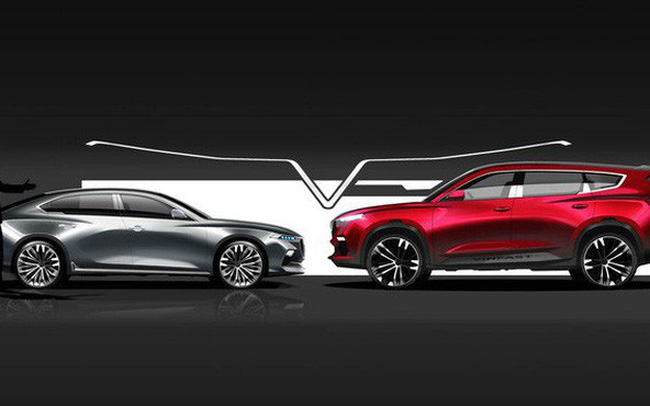
VietNamNet Bridge – VinFast’s first two car models, one sedan and one SUV, will have selling prices of no less than VND1 billion, similar to luxury models Mercedes-Benz, BMW, Audi and Lexus. VinFast’s cars will be priced at no less than VND1 billion Commenting about VinFast’s car models, an expert said BMW technologies would be… Continue reading VinFast cars expected to be direct rival to Mercedes
HyreCar Launches Vehicle Tracking, Inventory Management Solution
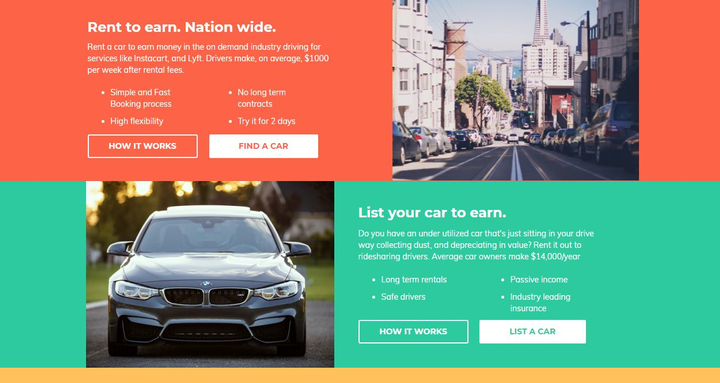
PassTime has set up a special-order portal for DriveItAway/HyreCar dealers to procure vehicle telematics units, and will be integrating all of the PassTime telematics services within its dealer focused vehicle administration platform for easy vehicle specific applications. Screenshot via HyreCar. Through its alliance with DriveItAway and its dealer focused shared mobility mission, HyreCar is forming… Continue reading HyreCar Launches Vehicle Tracking, Inventory Management Solution