
The HorseFly system conforms to the Federal Aviation Administration’s (FAA) standards for UAV operation in the United States. Workhorse and USOG will be operating these pilot programs in compliance within all FAA rules and regulations and are also subject to the Health Insurance Portability and Accountability Act (HIPAA), a 1996 Federal law that restricts access… Continue reading Workhorse Partners with USOG to Launch Pilot Programs for Drone Delivery of Medical Supplies
Tag: Autonomous
Arm joins with GM, Toyota to find common ground on car chips
FILE PHOTO: The GM logo is pictured at the General Motors Assembly Plant in Ramos Arizpe, state of Coahuila, Mexico October 7, 2019. REUTERS/Daniel Becerril SAN JOSE, Calif. – (Reuters) – Arm Holdings, the British chip technology firm owned by Japan’s Softbank Group Corp, is joining with automakers General Motors Co and Toyota Motor Corp… Continue reading Arm joins with GM, Toyota to find common ground on car chips
NIO Inc. Provides Third Quarter 2019 Delivery Update
Delivered 4,799 vehicles in the third quarter 2019, consisting of 4,196 ES6s and 603 ES8s Delivered 2,019 vehicles in September 2019, including 1,726 ES6s and 293 ES8s Cumulative deliveries of ES8 and ES6 reached 23,689 SHANGHAI, China, Oct. 08, 2019 (GLOBE NEWSWIRE) — NIO Inc. (“NIO” or the “Company”) (NYSE: NIO),… Continue reading NIO Inc. Provides Third Quarter 2019 Delivery Update
Denmark proposes banning gas and diesel cars, UK might ratchet up timeline
The banning of diesel (and potentially gasoline) cars in mainland Europe and the UK appears to be accelerating as a Denmark-led coalition of 11 countries proposed an EU-wide ban on the sale of diesel- and gasoline-powered cars by 2040.
This is not the first time Denmark has called for a ban on internal combustion engine sales. A year ago, it proposed an internal deadline of 2030, but EU rules prohibited unilateral action. Denmark scrapped the plan, but echoes of it remain in this year'r proposal.
Danish Climate and Energy Minister Dan Jorgensen told Reuters that if the EU would not adopt the plan union-wide, he'd like the regulations softened so that individual countries could set their own timetables. Jorgensen hopes that more members will follow those in Denmark's existing alliance, which includes Lithuania, Latvia, Slovenia, Bulgaria and five others.
Meanwhile, on the other side of the Brexit divide, the UK government is exploring plans to accelerate its own bans. A new timetable being floated is even more ambitious than Denmark's, calling for an end to new ICE sales by 2035, says Driving.
The original timeline, announced in 2017, largely mirrored Denmark's new proposal to the EU. The existing UK plan makes allowances for hybrid vehicles, so it would not be a blanket ban on anything with an internal combustion engine.
Similar notions have been floated stateside. In 2017, a California legislator introduced a bill proposing a 2040 deadline for the elimination of new gasoline and diesel vehicle sales. Recently, California's authority to set its own emissions standards has become the target of the Trump administration, which is attempting to revoke the state's autonomy in regulating vehicle emissions and has even threatened to withhold federal highway funding in an ongoing power struggle that is likely to make its way to the Supreme Court.
Tesla Model 3 = 6th Best Selling Car In USA In 3rd Quarter*
Invest
Electric Cars
Electric Car Benefits
Electric Car Sales
Solar Energy Rocks
RSS
Advertise
Privacy Policy
Cars
Published on October 6th, 2019 |
by Zachary Shahan
Tesla Model 3 = 6th Best Selling Car In USA In 3rd Quarter*
Twitter
LinkedIn
Facebook
October 6th, 2019 by Zachary Shahan
The Tesla Model 3’s #6 position in 3rd quarter US car sales* seems both shockingly high and surprisingly low at the same time. No, this is not a trick — I’m serious.
On the surface, I consider the Model 3’s US sales shockingly high because the car has by far the highest base price of any car in the top 10. The Honda Civic’s base price is $21,650, the Toyota Camry’s base price is $24,295, the Toyota Corolla’s base price is $19,600, the Honda Accord’s base price is $23,870, the Nissan Altima’s base price is $24,100, and the Tesla Model 3’s base price (online) is $38,990. The smallest separation in price there is more than $15,000, and the Model 3 clearly sits in a very different class that’s out of the financial reach of many households.
On the other hand, as I’ve pointed out extensively, in many circumstances the Model 3’s total cost of ownership over just 5 years could be close to or even lower than the Camry’s, Accord’s, etc. What do you get for that similar 5 year cost of ownership? A tremendously better car. The Model 3 has better safety scores (the best in history), has much better tech (infotainment and semi-autonomous driving tech are far ahead of any competitors’ tech, let alone that of these mainstream models), offers a much better driving experience, is much quicker, is cleaner, and genuinely looks like a higher class car (yes, I think that’s an objective judgement). In that light, it’s surprising the Model 3 isn’t yet the top selling car in the country. However, the vast majority of the public doesn’t know about the Model 3, its benefits, or how competitive it can be on a total cost of ownership basis.
With those initial thoughts out of the way, let’s jump to the numbers.
As you can see, my estimate for Tesla Model 3 sales* put it confidently in the 6th position, 8,000 units below the #5 Nissan Altima and more than 30,000 units behind the #4 Honda Accord (about 10,000 units per month lower). It was just 2,500 units above the #7 Hyundai Elantra in the 3rd quarter.
For the full first 9 months of the year, the Model 3 drops to #9. In the 1st quarter of the year, Tesla shipped most of the cars it produced overseas and was suffering from a US sales wave that saw a peak in deliveries at the end of 2018 followed by a crash in the beginning of 2019. Finishing in 9th place in the first three quarters results in the same narrative, though. The result seems both shockingly high and surprisingly low at the same time.
*Tesla reports quarterly sales and does not break them out by country or region. Eventually, we get registration data from Europe, China (educated estimates at least), and Canada and can then make a more solid estimate of US sales for the quarter, as well as monthly sales estimates. However, it’s a bit early for all of that since we don’t have September numbers from most countries yet. Even our data-loving friend and contributor Jose Pontes of EV Volumes didn’t want to venture out too far on a limb and provide an early estimate that he might have to walk back. That said, looking at previous months’ data, September figures from the Netherlands and Norway, and deeper historical data, I feel comfortable estimating Model 3 sales between 40,000 and 50,000 in the US in the third quarter. For this report, I’ve settled on 43,000.
If you’d like to buy a Tesla Model 3 instead of a Camry, Accord, Civic, or Corolla, and you’d also like to get 1,000 miles of free Supercharging in the process, feel free to use my referral code: https://ts.la/zachary63404.
About the Author
Zachary Shahan Zach is tryin' to help society help itself one word at a time. He spends most of his time here on CleanTechnica as its director and chief editor. He's also the CEO of Important Media. Zach is recognized globally as an electric vehicle, solar energy, and energy storage expert. He has presented about cleantech at conferences in India, the UAE, Ukraine, Poland, Germany, the Netherlands, the USA, Canada, and Curaçao.
Zach has long-term investments in Tesla [TSLA] — after years of covering solar and EVs, he simply has a lot of faith in this company and feels like it is a good cleantech company to invest in. But he offers no investment advice and does not recommend investing in Tesla or any other company.
Back to Top ↑
Advertisement
Advertise with CleanTechnica to get your company in front of millions of monthly readers.
Top News On CleanTechnica
CleanTechnica Clothing & Cups
Join CleanTechnica Today!
Listen to CleanTech TalkAdvertisement
Advertisement
Follow CleanTechnica Follow @cleantechnica
Our Electric Car Driver Report
Read & share our new report on “electric car drivers, what they desire, and what they demand.”
The EV Safety Advantage
Read & share our free report on EV safety, “The EV Safety Advantage.”
EV Charging Guidelines for Cities
Share our free report on EV charging guidelines for cities, “Electric Vehicle Charging Infrastructure: Guidelines For Cities.”
30 Electric Car Benefits
Our Electric Vehicle Reviews
38 Anti-Cleantech Myths
Tesla News
© 2018 Sustainable Enterprises Media, Inc.
Invest
Electric Cars
Electric Car Benefits
Electric Car Sales
Solar Energy Rocks
RSS
Advertise
Privacy Policy
This site uses cookies: Find out more.Okay, thanks
Tesla Reached 7,000 Cars Per Week In 3rd Quarter & Nobody Noticed
Invest
Electric Cars
Electric Car Benefits
Electric Car Sales
Solar Energy Rocks
RSS
Advertise
Privacy Policy
Autonomous Vehicles
Published on October 8th, 2019 |
by Maarten Vinkhuyzen
Tesla Reached 7,000 Cars Per Week In 3rd Quarter & Nobody Noticed
Twitter
LinkedIn
Facebook
October 8th, 2019 by Maarten Vinkhuyzen
From the start of Tesla Model 3 production until about a year ago, the most important, nearly daily, Tesla news was about the weekly production numbers. We visited the Bloomberg tracker regularly to stay abreast of the news, and the FUD. And then Tesla started producing over 4,000 vehicles per week regularly and the interest disappeared. Tesla finished the marathon many doubted it could endure for more than a mile, two at the most.
Those were fun times. Tesla reaching 100, 200, 500, and even 1,000/week was an exciting progression of events. Elon Musk teased production numbers on Twitter that were one-time events and some claimed that they could “never” be sustained at a steady production level. The monthly sales number guesstimates on InsideEVs and Tesla’s quarterly delivery disclosures were preceded and followed by heated speculation.
As a somewhat more detailed reminder of what happened, Tesla designed a futuristic 5,000 unit/week production line, only to discover that humans were greatly undervalued and that line had to be redesigned while slowly ramping the production numbers. There was the plan to build a second 5,000 unit/week line when more vehicles were needed.
However, when redesigning the line, optimizing and tuning all the steps, Tesla realized that it would be less costly to enhance the line to higher throughput numbers than to build a second line. To be precise, upgrading to 7,000 units/week would be possible with small enhancements and a little capex. Upgrading to 10,000 units/week would require serious investments. The 7,000 unit/week option was really a no-brainer. The 10,000 unit/week option was a possibility that probably never reached the status of plan, let alone stimulating any actual planning.
When building Gigafactory 3 (GF3) in Shanghai became reality, all talks of 10,000 units/week in Fremont were forgotten (except by some foolhardy trolls).
In those days, Musk and some other figures with a grasp of production tried to explain what 41.6 cars/hour or 1,000 cars/day or 7,000 cars/week represents. Many did simple arrhythmic and proclaimed production of 360,000 or even 365,000 per year.
While 24 x 41.67 indeed equals 1,000, there is never a day when there is no slowing down or stopping of the line. To get to 1,000 cars/day, you have to get to a steady 47/hour. There are always bathroom, coffee, breakage, accident, repair, and other interruptions. For the same reason, you need 1,100 to 1,150 cars/day to reach a 7,000 cars/week. Or, at least, something like that. Jerome Guillen, Tesla’s president of automotive, knows the exact number.
That coveted 7,000 cars/week will not result in 91,000 vehicles/quarter. That is 80,000 at the most. A rule of thumb of 11½ weeks per quarter is often used in planning.
In a production environment, there are always production disturbances, accidents, needed repairs, maintenance, upgrades, alterations, etc., besides the holidays and other valid reasons to close the factory for a day or so longer.
Such issues happened a lot in the disastrous first quarter of this year. They happened at a normal rate in the third quarter, and they will happen in each quarter in the future.
But with a total of 79,837 Tesla Model 3 vehicles produced in the last quarter, we now know that the steady 7,000 unit/week total for a whole quarter has been reached. The most remarkable thing about this achievement is that it was not noted by all those people who were so focused on this number a year ago. It was a non-event, as it should be with a normal carmaker.
About the Author
Maarten Vinkhuyzen Grumpy old man. The best thing I did with my life was raising two kids. Only finished primary education, but when you don’t go to school, you have lots of time to read. I switched from accounting to software development and ended my career as system integrator and architect. My 2007 boss got two electric Lotus Elise cars to show policymakers the future direction of energy and transportation. And I have been looking to replace my diesel cars with electric vehicles ever since.
And putting my money where my mouth is, I have bought Tesla shares. Intend to keep them until I can trade them for a Tesla car.
Back to Top ↑
Advertisement
Advertise with CleanTechnica to get your company in front of millions of monthly readers.
Top News On CleanTechnica
CleanTechnica Clothing & Cups
Join CleanTechnica Today!
Listen to CleanTech TalkAdvertisement
Advertisement
Follow CleanTechnica Follow @cleantechnica
Our Electric Car Driver Report
Read & share our new report on “electric car drivers, what they desire, and what they demand.”
The EV Safety Advantage
Read & share our free report on EV safety, “The EV Safety Advantage.”
EV Charging Guidelines for Cities
Share our free report on EV charging guidelines for cities, “Electric Vehicle Charging Infrastructure: Guidelines For Cities.”
30 Electric Car Benefits
Our Electric Vehicle Reviews
38 Anti-Cleantech Myths
Tesla News
© 2018 Sustainable Enterprises Media, Inc.
Invest
Electric Cars
Electric Car Benefits
Electric Car Sales
Solar Energy Rocks
RSS
Advertise
Privacy Policy
This site uses cookies: Find out more.Okay, thanks
Barra: GM No Longer “Everywhere For Everyone With Everything” – GM Authority
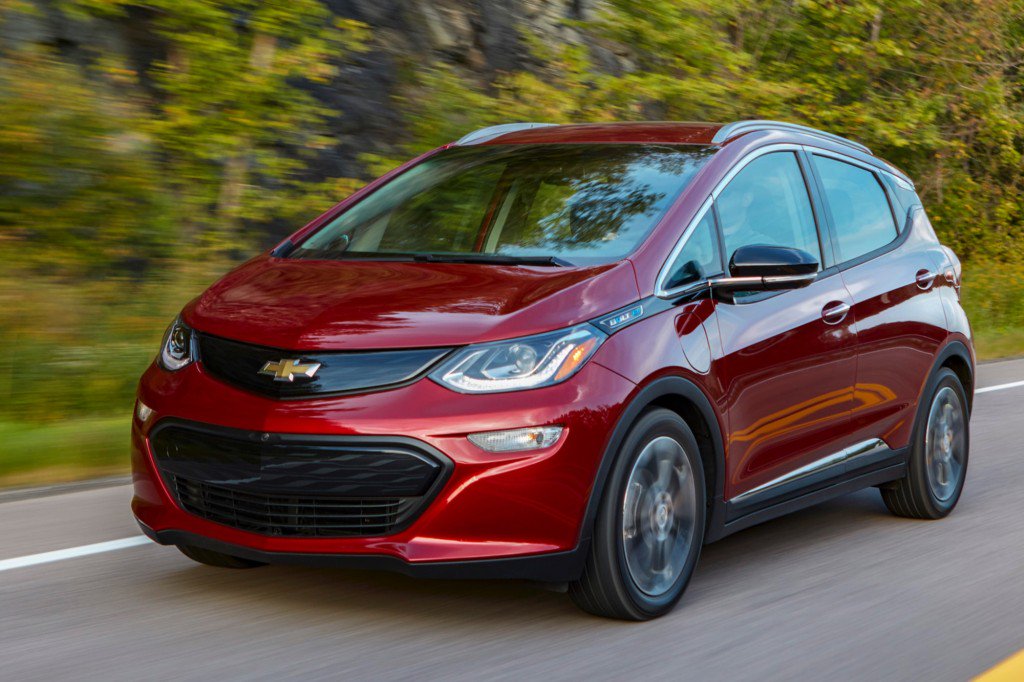
In the early 1930s, General Motors rose to become the undisputed sales leader in the automotive industry thanks to the implementation of concepts like Alfred P. Sloan’s “ladder of success,” which established a clear pricing structure that was flexible enough to satisfy a wide variety of tastes and buying power, but without creating overlapping products… Continue reading Barra: GM No Longer “Everywhere For Everyone With Everything” – GM Authority
Electric Volvo XC40 will have a frunk, new driver interface
The new XC40 EV will be more than just an electric powertrain dropped into the company's small crossover, Volvo announced Wednesday, backing up that claim with design sketches and some fresh insights into its approach to electrification.
Volvo's design team is leaning into the stylistic advantages of electric powertrains, which don't have the same packaging needs as internal-combustion engines. Robin Page, Volvo's head of design, says the XC40 EV was designed to incorporate these attributes, rather than obscure them.
“Without the need for a grille we have created an even cleaner and more modern face, while the lack of tailpipes does the same at the rear,” said Page. “Its bold, instantly recognizable design is now even sleeker and more modern in the all-electric version.”
According to Page, this approach contributes to an aesthetic based on “visual clarity and the reduction of element,” or, put more succinctly: minimalism.
There's utility in these changes too: The XC40 EV will have a usable underhood cargo compartment (a “frunk,” for “front trunk”).
Volvo says the XC40 EV will also sport a unique interface designed around the electric car ownership and driving experience, optimized to keep drivers apprised of critical information like battery status.
The XC40 family was designed from the ground up for electrification, which contributes greatly to the EV coming off as more than a hasty attempt to appeal to the green crowd. That didn't stop the company from incorporating a few nods to sustainability, such as carpets made from recycled materials.
Information on Volvo's first EV has been trickling out ahead of its formal debut on Oct. 16. Last week, Volvo shared some of the details of the XC40's driver assistance tech.
Dubbed Advanced Driver Assistance Systems, or ADAS, this new sensor platform is the first implementation of the new scalable semi-autonomous driving platform that Volvo plans to evolve into a full self-driving ecosystem as technology allows.
Join the Competition: Argoverse Leaderboards Are Live

By James Hays, Principal Scientist, Argo AI Earlier this year, we released Argoverse, a curated collection of high-definition maps and sensor data from a fleet of Argo AI self-driving test vehicles. Today, we’re launching the first two Argoverse competitions using our motion forecasting and 3D tracking datasets, and inviting academic researchers and students to participate.… Continue reading Join the Competition: Argoverse Leaderboards Are Live
Waymo is creating 3D maps of Los Angeles to better understand traffic congestion
Waymo, the autonomous vehicle company under Alphabet, has started creating 3D maps in some heavily trafficked sections of Los Angeles to better understand congestion there and determine if its self-driving vehicles would be a good fit in the city. For now, Waymo is bringing just three of its self-driving Chrysler Pacifica minivans to Los Angeles… Continue reading Waymo is creating 3D maps of Los Angeles to better understand traffic congestion