The Eclipse Foundation announced the launch of the openMobility Working Group that will focus on open and shared collaboration around one of the major issues in urban planning around autonomous vehicles and future transportation requirements — traffic simulation and modelling. Based on the Eclipse Simulation of Urban Mobility (SUMO) project that originated at the German Aerospace Center,… Continue reading Eclipse Foundation launches openMobility Working Group
Tag: Autonomous
Press: ZF to Acquire Software Specialist for Occupant Recognition
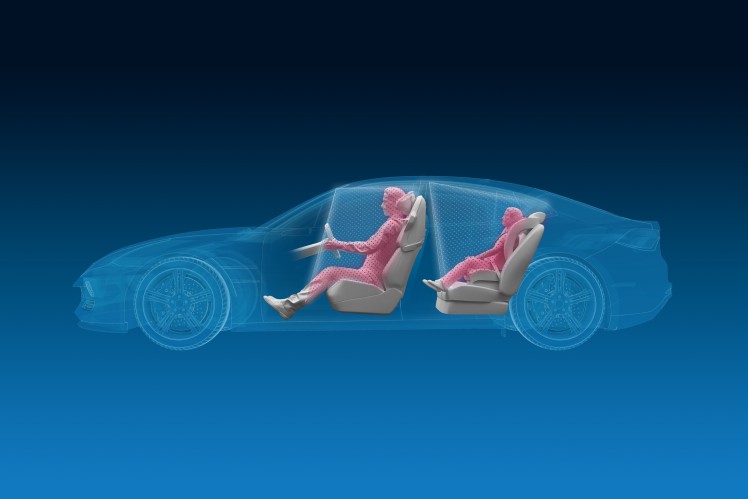
ZF plans to acquire 90 percent of Simi Reality Motion Systems Specialist for image-based 3D systems for recording and analysis of human movement Over 25 years of experience in high-performance sports and medicine Occupant recognition is a key enabler for integrated safety and autonomous driving Friedrichshafen/Unterschleißheim (Germany). ZF plans to expand its network of cooperations… Continue reading Press: ZF to Acquire Software Specialist for Occupant Recognition
Uber prices IPO at $45 per share, toward the low end of range
VIDEO3:3403:34Needs to be path to profitability to go publicPower LunchUber priced its IPO at $45 per share Thursday, toward the low end of its stated range.
At the IPO price of $45 per share, the company will be valued on a non-diluted basis at about $75.46 billion, which will put the stock's market cap right around the size of Caterpillar's and make it one of the most valuable companies ever to go public. On a fully diluted basis, Uber has an implied market valuation of $82.4 billion.
Early reports suggested Uber was seeking a valuation of up to $120 billion. Its expected rangewas between$44 and $50 per share, according to a filing last month.
The company is offering 180 million shares of common stock, which means it could raise around $8.1 billion on Friday, with an option for underwriters to buy an additional 27 million shares.
A ride-hailing pioneer and Silicon Valley darling, Uber made on-demand transportation a new norm throughout the world, while accumulating massive losses and controversy along the way.
In 2018, Uber's revenue reached $11.3 billion for the year, up 43% from 2017, while reporting adjusted losses of $1.8 billion, an improvement over losses of $2.6 billion in 2017, according to its IPO filing. The company has never turned a profit.
To cover these losses and fund its rapid expansion, the company raised more than $24 billion from a wide range of investors since its founding a decade ago, according to Crunchbase. Investors have included traditional VC firms like Benchmark, and companies with interests in transportation like Alphabet and Toyota. Its biggest shareholder is Japanese tech conglomerate SoftBank, which invested more than $8 billion through its Vision Fund and owns 16.3% of the company pre-IPO.
“Uber is a great reminder to venture capitalists that the biggest opportunities lie in our most common needs as humans,” said Shawn Carolan, an early Uber investor and partner at Menlo Ventures. “When a start-up presents, look beyond the current product, which often feels trivial, to the underlying need being served. An on-demand black car service was easy to dismiss, but nearly everyone needs transportation.”
At Uber, CEO Dara Khosrowshahi replaced co-founder Travis Kalanick in 2017 after myriad missteps for the company. Kalanick's ouster was preceded by revelations about unchecked sexism within Uber's ranks, and a high-stakes lawsuit over trade secrets from Waymo, Alphabet's self-driving car business.
While Khosrowshahi is working to restore Uber's reputation, the company faced driver strikes in major cities this week leading up to the IPO.
Personal mobility remains Uber's core business. Its ride-hailing services reach into 63 countries and more than 700 cities. But its ambitions and revenue streams have diversified into bike and scooter rentals, food delivery and freight. Uber is also developing air taxis and driverless car technology, among other things.
Uber is engaged in an intense pricing battle with its chief competitor in the U.S., Lyft, as the companies try to attract and retain riders with low fares, while paying drivers just enough to keep them on the platform. Lyft went public in late March. Its stock has fallen more than 25% since its IPO.
The companyplans to list on Friday with the ticker UBER.
CNBC's Leslie Picker contributed to this article.
Clarification: Uber priced its IPO at $45 per share on Thursday, toward the low end of its stated range. The relation of the price to the stated range was unclear in an earlier version of this article.
Ford CEO reassures investors of EV plans as it pours money into electric F-150, Mustang-inspired car
An electrical charging port sits on the bodywork of a Kuga Vignale hybrid automobile displayed during a Ford Motor Co. launch event in Amsterdam, Netherlands, on Tuesday, April 2, 2019.Jasper Juinen | Bloomberg | Getty ImagesWith the automaker's first long-range electric vehicle set to be unveiled later this year, Ford officials said Thursday they're on the right path as they “reconceptualize” the company's vehicle lineup as well as its future.
Ford is in the midst of one of the most dramatic transformations the company has faced since founder Henry Ford threw the switch to start the auto industry's first assembly line rolling more than 100 years ago. The automaker is largely abandoning passenger cars in favor of SUVs and crossover vehicles, pursuing the development of self-driving vehicles and exploring the transition from a classic automaker into a provider of mobility services.
The automaker laid out plans last year to spend $11 billion on the technology by 2022 — up from its original target of $4.5 billion by 2020 — to develop 40 new all-electric and hybrid models. The company has already announced two EVs it plans to introduce next year: a fully-electric F-150 pickup and a “Mustang-inspired” electric crossover vehicle.
VIDEO1:2901:29Ford is investing $500 million in electric truck maker RivianThe Bottom Line “When there's new technologies, it takes a while, and there's a tipping point,” CEO Jim Hackett told investors during the automaker's annual shareholder meeting Thursday. “When it happens, you want to be there.”
Investors need some reassurance. While the company's shares are up by more than 33% so far this year, they're still down by almost 8% over the last 12 months. Sales of its first-generation EVs, like the Ford Focus Electric, have been modest at best. Hackett assured investors that more buyers will plug in. Company data shows one in five younger buyers would consider buying an electric vehicle at some point.
That's not far out of line with a study released by AAA on Thursday that found that 16% of American motorists it surveyed are giving serious consideration to an electric car for their next vehicle. The AAA report also said 40 million Americans would consider a battery-electric vehicle, or BEV — especially as prices drop, range improves and it becomes easier and quicker to recharge batteries.
Ford is clearly not alone.
Two of Europe's most powerful automakers, Volkswagen and Mercedes-Benz parent Daimler AG, launched sales of their first battery-electric vehicles this week. VW said it took about 10,000 advance orders for the new ID.3 crossover during the first day, even though the vehicle won't actually reach showrooms until next year. VW AG CEO Herbert Diess last year said his company is committing about $10 billion through 2023 to electrification. He also upped the number of battery-electric vehicles VW expects to sell by 2029 from 15 million to 22 million.
Japan-based Toyota plans to bring more than 10 EVs to market in the next six years, aiming to sell about 5.5 million battery-electric vehicles by 2030. The Renault-Nissan-Mitsubishi Alliance – which launched the world's first BEV, the Nissan Leaf, in 2010, is making a similar push.
Ford was an early proponent of electrification, rushing to market with a mix of conventional hybrids, plug-in hybrids and first-generation battery-electric vehicles, like the Focus Electric. But a variety of factors, including limited range and high sticker prices, limited demand. The automaker briefly hesitated before stepping up its efforts. But since Hackett replaced former CEO Mark Fields in a boardroom coup two years ago this month, he has ordered major new commitments to Ford's electrification, autonomous driving and mobility services efforts — including a “Mustang-inspired” crossover vehicle that's generated all sorts of buzz.
VIDEO3:3103:31Here's why Ford is the only auto stock Cramer endorsesMad Money with Jim CramerThe scant details and cult-following of the Ford's iconic muscle car has helped fuel speculation of what the electric version will look like. “Spy photographers” stake out the routes and locations where Ford is known to test its products, hoping to catch a glimpse of even a heavily camouflaged version of the vehicle.
“There's a lot of intrigue around this product,” said Hackett, adding that, “we're going to be telling our community more about it, but it is going to be a great story about Ford.”
Hackett shed little new light on the car Thursday.
“What we've done is reconceptualized [vehicle design] with all of the extra space that you actually retrieve using battery-electrics into a very, very unique vehicle that takes advantage of some inspiration from our Mustang brand,” Hackett said.
Whether Ford's bet on electrification will pay off is far from certain, as its earlier sales serve to remind observers. Nonetheless, there is a growing belief among those in and around the auto industry that battery power is the way of the future.
Ford plans to bring out a mix of hybrids, plug-ins and BEVs, betting that the unique characteristics of each will resonate with different groups of consumers.
In the Snowbelt, for example, where there are fewer public chargers and cold weather reduces range, analysts like IHS Markit and the Boston Consulting Group see stronger demand for the plug-ins that can switch to gas power when their batteries are depleted.
Rivian EV SUV.Adam Jeffery | CNBCMany experts believe that BEVs will be the long-term solution, a strategy underpinning new competitors like Tesla and suburban Detroit-based Rivian. EV ownership is expected to spike by 2030, according to the International Energy Agency, with an expected 125 million Americans owning an all-electric vehicle by that year.
Rivian revealed a pair of all-electric models, the R1T pickup and R1S sport-utility vehicle, at the Los Angeles International Auto Show last November and hopes to launch production within the next year. Rivian has raised more than $1.2 billion in capital recently, first lining up $700 million from a consortium led by Amazon. Ford kicked in the other $500 million. Rivian agreed to a new battery-powered electric vehicle for Ford as part of the deal.
The tie-up with Rivian will help Ford produce at least one, and likely several, new BEVs, according to industry analysts. But it won't slow the battery-car development program Ford already had underway for vehicles like the all-electric SUV that has gone by the codename “Mach One.”
If handled properly, experts contend, electric vehicles offer a number of advantages, including reduced – albeit displaced – emissions, lower energy costs, reduced vehicle noise and even more roomy interiors. That's because there's no engine under the hood anymore, Ford and most other manufacturers migrating to a skateboard-like platform where batteries and motors are mounted under the load floor.
GM CEO Barra Confirms Electric Pickups Are Coming

General Motors will have a complete line of electric vehicles and that includes pickup trucks, CEO Mary Barra confirmed today. GM will not cede leadership in trucks or electric vehicles, Barra told investors on a call to discuss first-quarter earnings. Barra said further details on the development of its electric trucks will come later, but… Continue reading GM CEO Barra Confirms Electric Pickups Are Coming
Daimler Financial Services establishes new division on its Board of Management: “Digital and Mobility Solutions”
FARMINGTON HILLS, Mich., May 13, 2019 /PRNewswire/ — Jörg Lamparter, Head of Mobility Services, to become Daimler Financial Services AG Board Member, leading newly created Digital and Mobility Solutions division, effective June 1, 2019 Benedikt Schell, currently Chief Experience Officer (CXO) on the Board of Management for Daimler Financial Services AG, moving to the position… Continue reading Daimler Financial Services establishes new division on its Board of Management: “Digital and Mobility Solutions”
Foretellix Announces Foretify Technology With Proven Approach for the Measurable Safety of Autonomous Vehicles
Searching for your content…
No results found. Please change your search terms and try again.
Uber CEO Thinks Elon Musk Is Way Off On Robotaxi Timeline
Ride-hailing chief thinks autonomous future is years off Uber has no plans in chasing Elon Musk’s timeframe for self-driving taxis, the CEO said Friday. Dara Khosrowshahi told CNBC that the ride-hailing company, which yesterday launched its initial public offering on the New York Stock Exchange, that it would take a slower approach to self-driving vehicles… Continue reading Uber CEO Thinks Elon Musk Is Way Off On Robotaxi Timeline
Uber’s IPO Hits a Yellow Light as Stock Price Stays Below Opening
Where was the pop? Investors in Uber—German for over—should be rejoicing on the company’s opening day on the NYSE. Instead, the stock opened at the planned $45 and has remained under that price as of midday. Typically, an IPO is first sold through investment bank underwriters to big institutional investors and to favored individual clients,… Continue reading Uber’s IPO Hits a Yellow Light as Stock Price Stays Below Opening
Uber’s trading debut: who was (and wasn’t) at the opening bell
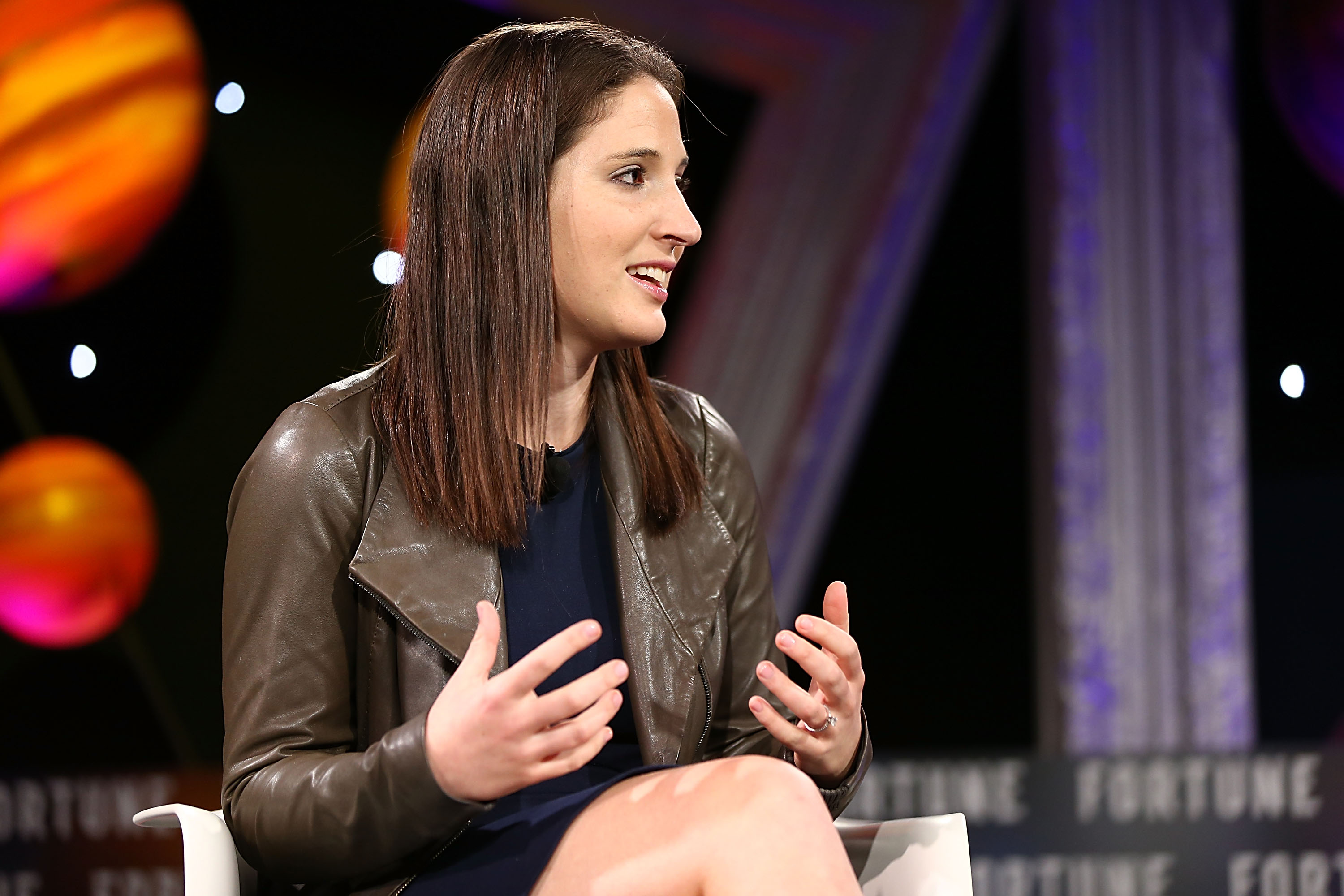
Uber finally made its debut Friday on the New York Stock Exchange, ending its decade-long journey from startup to publicly traded company. So far, it’s been a ho-hum beginning, with shares opening at $42, down from the IPO price. The share price is hovering just under $44. Thirteen people, including executives, early employees, drivers and… Continue reading Uber’s trading debut: who was (and wasn’t) at the opening bell