Munich. The BMW Group will strike out in a new direction with regard to how it presents its future technologies, services and products. From 25 to 27 June 2019 the company invites selected international journalists, analysts and further stakeholders to “BMW Group #NEXTGen” at BMW Welt in Munich. The event is also live-streamed publicly. The… Continue reading BMW Group launches new communication format.
Tag: Autonomous
Velodyne Challenges Tesla Autonomy Claims
Velodyne Challenges Tesla Autonomy ClaimsMay 2, 2019|In Media Coverage|By Albie Jarvis
The Alpha Puck by Velodyne Lidar
Media turned to the industry leader for expert comments when
Tesla founder Elon Musk dismissed the need for lidar in self-driving vehicles.
Velodyne’s President and CBDO Marta Hall took a strong stand
that challenged Tesla to publish test results and comparisons to back up Musk’s
claims.
In a story
by Cromwell Schubarth in the Silicon Valley Business Journal, Hall said, “Tesla’s
claim that its Autopilot feature is ‘almost autonomous’ is untrue.”
The article cites Hall as saying:
“Not until we see published test results and comparisons
that a Tesla can ‘see just fine,’ without a Lidar, can claims be trusted.
Without lidar, the system is missing crucial 3D vision with 3D data points for
collision avoidance and advanced autonomous navigation. Musk brought us
innovation, but not quality when it comes to safety.”
Other media also picked up on Hall’s commentary.
Sasha Lekach wrote in a Mashable
story how Hall “shredded Musk’s ‘claims’ about deploying Teslas without a
driver and without ‘lame’ LiDAR sensors.”
The Mashable story noted Velodyne has invited Musk to speak
at the World Safety
Summit to discuss any evidence behind his claims.
In a SlashGear
article, Chris Davies observed how the news that Nikon will begin mass
production of Velodyne sensors “could well represent a tipping point” to having
“Level 4 or Level 5 vehicles roaming public roads,” countering Musk’s claim
lidar sensors are unnecessary.
Independent industry experts recognize lidar as essential
sensor technology for vehicle autonomy and driver assistance. Lidar provides
rich computer perception data that allows real-time object and free space
detection for safe navigation and reliable operation.
All the stories can be read here:
Silicon Valley Business Journal
Mashable
SlashGear
For Velodyne Lidar products click HERE
China can now rival the US with new innovations in tech, VW finance chief says
VIDEO1:4501:45VW CFO: China is tremendously important for usChina is helping to drive technological change in the automotive sector, the chief financial officer of Volkswagen told CNBC Thursday.
When asked about new innovations such as self-driving cars and 5G mobile networks, VW's Frank Witter said he was impressed by the rate of technological advancements coming from the world's second-largest economy.
“I think for the longest time we have been used to looking to the west coast of the United States when we were talking about innovation and new technologies,” Witter told CNBC's “Squawk Box Europe.”
“This is still valid but at the same time you are absolutely right to point to China,” he added.
Witter said that, looking at motor shows in China year-over-year, it was “just amazing how quickly the industry is progressing,” highlighting development at China's OEMs (original equipment manufacturers).
“The driver of technology is China, and we are very pleased with the progress we are making, together with our partners but also in Mobility Asia,” he added.
The Volkswagen Group's relationship with China dates back to 1978. In 2017, it launched a joint-venture with the state-owned Anhui Jianghuai Automobile Co., looking at e-mobility.
In May 2018, it set up Mobility Asia, which focuses on connectivity, smart mobility ecosystems, infrastructure ecosystems, service and data monetization, and autonomous cars.
Looking at the bigger picture, when it comes to autonomous driving a range of technologies are being developed and tested.
At the end of April 2019, South Korean telecoms giant SK Telecom signed an agreement with the Incheon Free Economic Zone (IFEZ) to develop 5G-based self-driving infrastructure.
In a statement at the time, SK Telecom said it would produce a high definition map covering the whole IFEZ area. It added that the map would have “centimeter-level accuracy” and provide information relating to road conditions, lanes, road slopes and speed limits.
5G refers to the fifth generation of mobile networks. While it promises cell phone users incredibly fast browsing experiences, it will also benefit the autonomous vehicle sector through its ability to process reams of information and data simultaneously and quickly.
Family Of Man Killed In Tesla Sues Over Claimed Autopilot Flaw
Walter Huang was involved in a 2018 fatal crash on a California highway. The family of a man killed in a crash last year is suing Tesla over its Autopilot system and its widely publicized “driverless” capabilities. Walter Huang was driving a Tesla Model X on Highway 101 in Mountain View, California, near Tesla’s headquarters, when… Continue reading Family Of Man Killed In Tesla Sues Over Claimed Autopilot Flaw
RideCell expands funding round to $60 million – TechCrunch
RideCell, a transportation software startup, has doubled its previously announced Series B funding round to $60 million, a sign that investors believe demand for cloud-based mobility platforms will grow as more companies try to scale up car-sharing, ride-hailing and even robotaxi businesses. The company, which has developed a platform designed to help car-sharing, ride-sharing and autonomous… Continue reading RideCell expands funding round to $60 million – TechCrunch
Ford Motor Company to Share Details on Mobility Business at Citi’s 2019 Car of the Future Symposium
DEARBORN, Mich.–(BUSINESS WIRE)–On Thursday, May 9, Sundeep “Sunny” Madra, vice president of Ford X, Ford Mobility’s business incubator and accelerator, will participate in a fireside chat moderated by Itay Michaeli at Citi’s 2019 Car of the Future Symposium in New York. Madra is the co-founder and former CEO of Autonomic which was acquired by Ford… Continue reading Ford Motor Company to Share Details on Mobility Business at Citi’s 2019 Car of the Future Symposium
Tesla faces lawsuit in fatal Model X crash on Autopilot
Tesla Model X crash, Hwy 101 Mountainview, California
The family of a driver killed in the crash of a Tesla Model X driving on Autopilot filed a lawsuit April 26 against Tesla over the crash, Bloomberg reported.
Software engineer Walter Huang, 38, was killed March 23, 2018, when his 2017 Model X drifted out of the left lane of Highway 101 in Mountain View, California and struck a concrete median divider.
The NTSB investigated the crash and issued a preliminary report June 7 and noted that Huang had the car's Autopilot system engaged and set to a cruise speed of 75 mph on the highway. The report showed that Huang had his hands off the steering wheel for the last six seconds prior to the crash and had held the wheel for 34 of the 60 seconds prior to the crash. The system gave Huang three warnings in the 15 minutes prior to the crash.
READ THIS: Investigators: Autopilot sped up before fatal Tesla Model X crash
According to the report, the car slowed down to 65 mph behind a lead vehicle and steered left toward the barrier, disengaged from following the lead vehicle and accelerated (toward its preset 75 mph) before it struck the barrier. The crash attenuator at the end of the barrier was previously damaged by another accident a week earlier.
The lawsuit also names the state of California as a defendant for not repairing the crash attenuator before Huang hit the barrier.
The lawsuit alleges that Tesla knew or should have known that the car could leave travel lanes and strike fixed objects, likely causing injury to its occupants “when used in a reasonably foreseeable manner.”
It says that Tesla should have recalled the cars or provided a warning in light of this risk.
CHECK OUT: Report: Tesla kicked out from official investigation over fatal Model X crash
In response to the initial crash, Tesla issued a statement and said, “Tesla is extremely clear that Autopilot requires the driver to be alert and have hands on the wheel. This reminder is made every single time Autopilot is engaged.”
In a statement announcing the lawsuit, the family's lawyer, B. Mark Fong accused Tesla of “beta testing its Autopilot software on live drivers.
“The Huang family wants to help prevent this tragedy from happening to other drivers using Tesla vehicles or any semi-autonomous vehicles,” Fong said.
Tesla has since released extensive updates to its Autopilot system, expanding its capabilities, installing a more capable processor chip, and rebranded its self-driving as Full Self-Driving Capability. Last month, the company detailed the system's updated capabilities and features, and announced that by the end of this year it expects the system to be “feature complete” for self-driving, although self-driving cars aren't yet allowed by law.
Geely Auto Opens Research & Development Centre in Germany
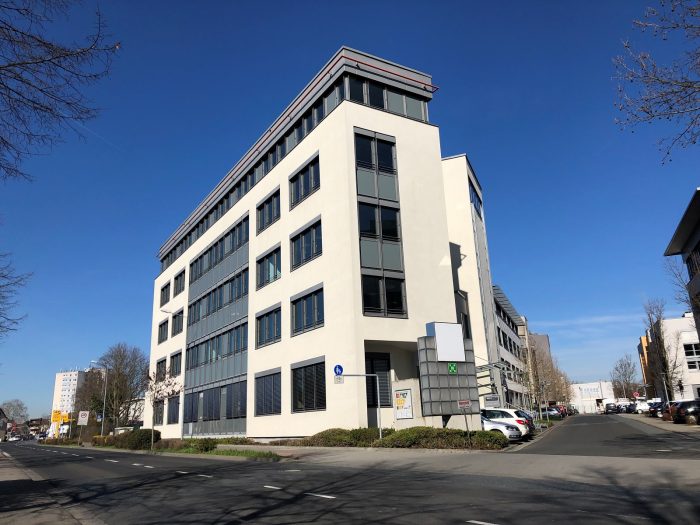
Geely Auto to recruit 300 engineers to work on new energy solutions at Raunheim facility near Frankfurt 2019 May 16, Frankfurt/Hangzhou. Geely Auto Group (Geely Auto), China’s leading privately-owned automotive company, has formally opened a new research and development facility at Raunheim, Germany, to accelerate innovation in new propulsion systems and next-generation mobility technology. The… Continue reading Geely Auto Opens Research & Development Centre in Germany
Ridecell and Dataspeed Partner to Enhance Autonomous Vehicle Safety – PRNewswire
SAN FRANCISCO, April 30, 2019 /PRNewswire/ — Ridecell Inc., the leading platform for shared and autonomous mobility operators, and Dataspeed Inc., a globally established drive-by-wire solution provider, announced a strategic partnership to enhance autonomous vehicle (AV) safety. The companies will begin leveraging each other’s technology and testing new technologies in real world conditions to improve vehicle… Continue reading Ridecell and Dataspeed Partner to Enhance Autonomous Vehicle Safety – PRNewswire
DRIVE Labs: How We’re Building Path Perception for Autonomous Vehicles
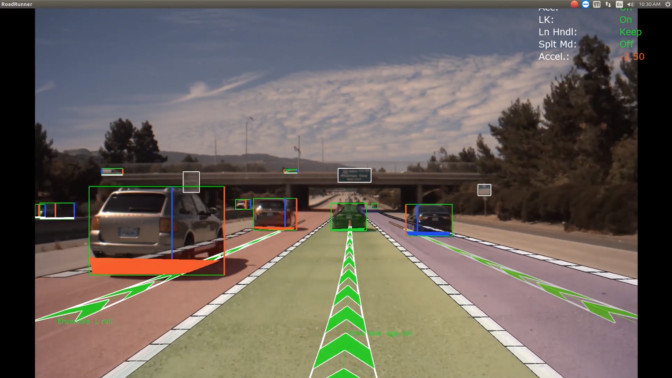
Editor’s note: No one developer or company has yet succeeded in creating a fully autonomous vehicle. But we’re getting closer. With this new DRIVE Labs blog series, we’ll take an engineering-focused look at each individual open challenge — from perceiving paths to handling intersections — and how the NVIDIA DRIVE AV Software team is mastering… Continue reading DRIVE Labs: How We’re Building Path Perception for Autonomous Vehicles