SAN FRANCISCO (Reuters) – Uber’s autonomous vehicle unit has raised $1 billion from a consortium of investors including SoftBank Group Corp, giving the company a much-needed funding boost for its pricey self-driving ambitions on the eve of its public stock offering. FILE PHOTO: Uber’s logo is displayed on a mobile phone in London, Britain, September… Continue reading UPDATE 1-Uber’s self-driving unit valued at $7.25 bln in new investment
Tag: Autonomous
Apple reportedly talking to third-party suppliers for self-driving car sensors
Apple has never discussed its electric car project publically. Image via Pixabay Apple is currently in talks with at least four companies as possible suppliers of lidar sensors, intended to be used in self-driving cars, a report published in Reuters claimed. While it is not yet clear if Apple really wants to launch its own… Continue reading Apple reportedly talking to third-party suppliers for self-driving car sensors
Phantom Auto closes Series A funding, expands plans for remote-controlled autonomous vehicles
David Paul Morris | Bloomberg | Getty Images
Vehicles in traffic travel northbound on Highway 101 in Mountain View, California, U.S.
Phantom Auto, a start-up firm in Mountain View, California developing software for the teleoperation of autonomous vehicles, has closed its first major round of fundraising.
The company said it raised approximately $19 million in Series A financing led by venture capital firm, Bessemer Venture Partners.
The money will help Phantom Auto expand development of technology that allows remote drivers to operate vehicles or robots from thousands of miles away.
Since its founding in 2017, the company has worked with firms testing and developing autonomous vehicles that drive on public roads. While that remains a focus of Phantom, the start-up is also working with logistics firms to allow remote drivers to control autonomous vehicles in a variety of environments like shipping centers or industrial parks.
“If you see a delivery robot in public, there is a solid chance it is using our teleoperation software,” said Phantom co-founder Elliot Katz in a statement announcing the Series A financing.
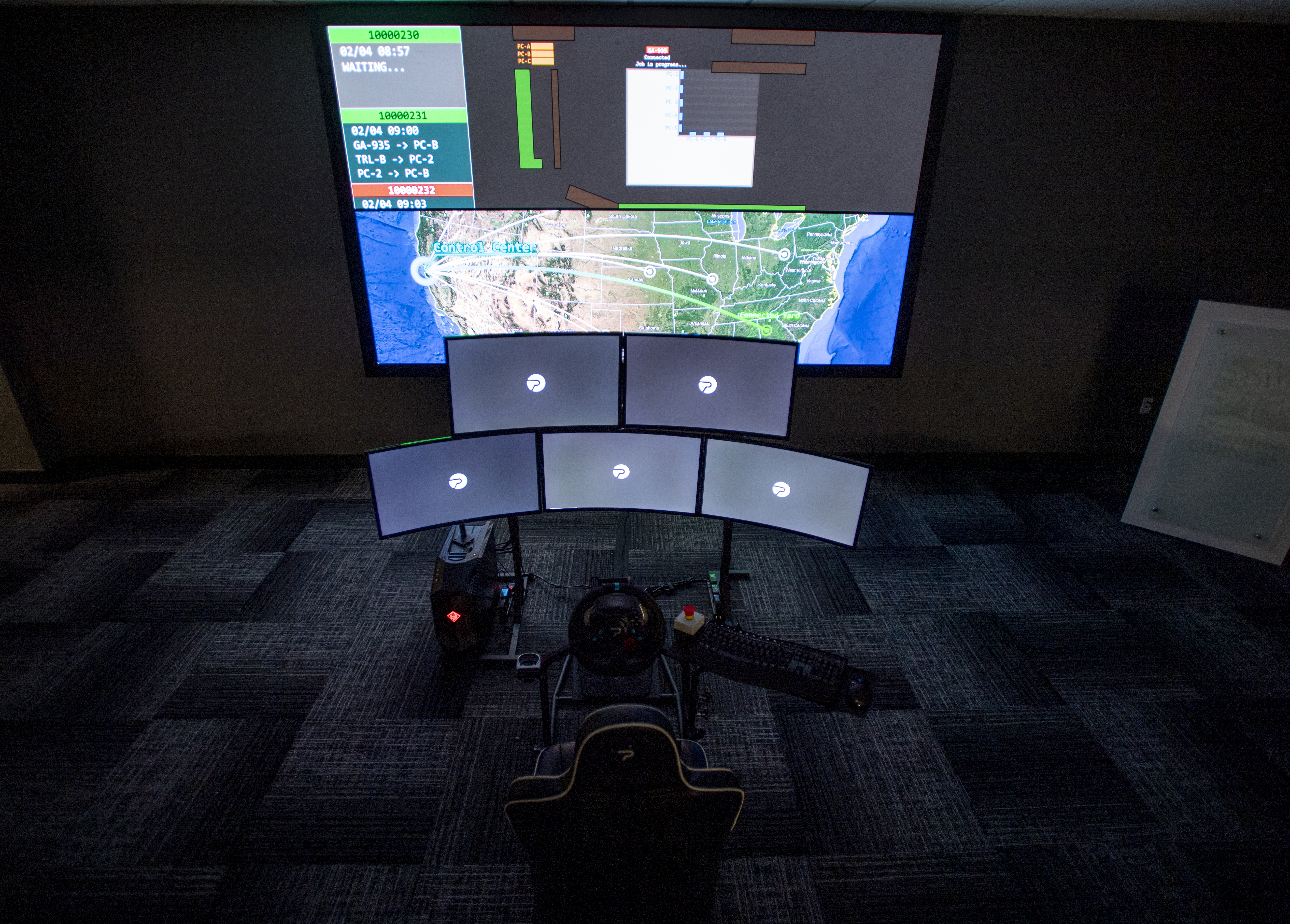
Phantom has partnered with yard truck manufacturer Terberg to test the operation of yard trucks in Atlanta from remote control center 2,500 miles away.
Teleoperation of autonomous vehicles could be a key link in the deployment of self-driving vehicles.
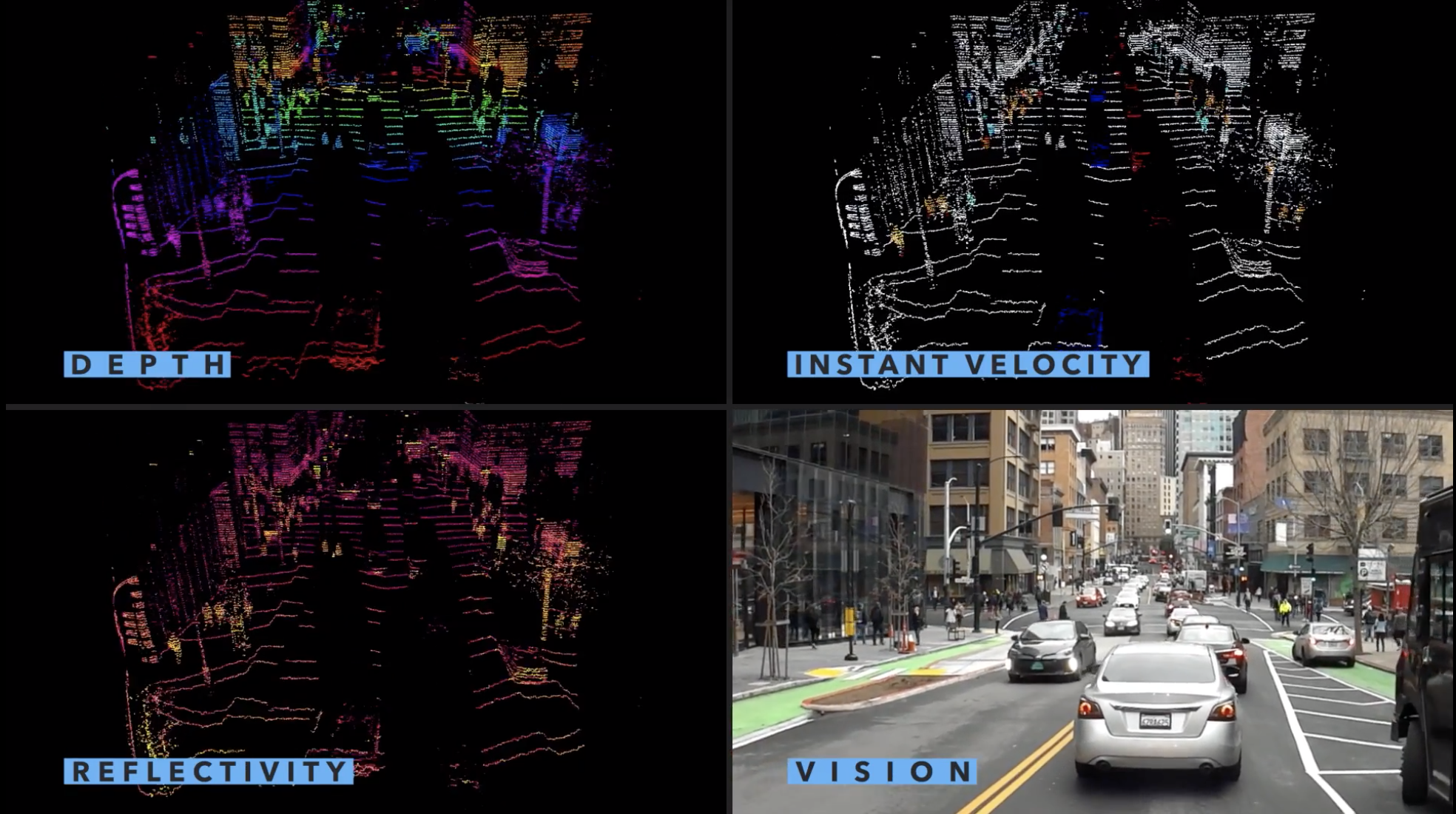
Cameras and Lidar radars — or sensors that help autonomous vehicles recognize their surroundings — allow the “brains” of self-driving cars and trucks to handle the vast majority of traffic situations. But there will likely be moments, such as an unannounced road closure or major accident, where autonomous vehicles could become confused and unsure how to proceed.
In such cases, a teleoperator who is sitting in a cockpit with a steering wheel, and watching the images fed via cellular networks by cameras in the autonomous cars, will be able to take control of the vehicle and steer it through tricky situations.
Phantom Auto raises $13.5M to expand remote driving business to delivery bots and forklifts
Remote driving startup Phantom Auto has raised $13.5 million of financing in a Series A round led by Bessemer Venture Partners — capital used to expand a logistics business targeting sidewalks, warehouses and cargo yards, all the places where autonomy and teleoperation are being deployed today. The startup, founded in 2017, has raised about $19… Continue reading Phantom Auto raises $13.5M to expand remote driving business to delivery bots and forklifts
Audi self-driving unit taps newcomer Aeva for its unique lidar
Audi’s self-driving unit has tapped a startup with a unique approach to lidar as it ramps up testing in Munich using a fleet of autonomous electric e-tron crossover vehicles. Audi subsidiary Autonomous Intelligent Driving, or AID, said Wednesday it’s using lidar sensors developed by Aeva, a startup founded just two years ago by veterans of… Continue reading Audi self-driving unit taps newcomer Aeva for its unique lidar
The Nidec Group to Exhibit Latest Robotic Components,Haptic Devices and More at CES 2019
FOR IMMEDIATE RELEASE
Nidec Corporation
Tokyo Stock Exchange code: 6594
Released on November 27, 2018, in Kyoto, Japan
The Nidec Group to Exhibit Latest Robotic Components,Haptic Devices and More at CES 2019
・Leveraging its experience as the world’s No. 1 comprehensive motor manufacturer, the Nidec group has developed cutting-edge components designed to advance the possibilities of robots, human-machine interaction and smart home solutions.
・Nidec’s booth at CES 2019 will feature demonstrations of motors and high-precision gearboxes for robotic applications, and haptic devices with innovative new applications, among other carefully engineered products.
・This time, Nidec will exhibit in the AI & Robotics zone of CES 2019 in LVCC, South Hall 2, booth #26418.
Autonomous machines are set to play an indispensable role in the future—not only in factories and warehouses, but also in our homes. In addition to improving the efficiency of manufacturing lines, robots also have the poten..
Kia ‘s HabaNiro ‘everything car’ is the wackiest EV crossover
Kia spent its entire press conference talking about the spiciness of its brand. Spoiler: it’s very spicy according to Kia. But they’re not exactly wrong. After showing a drift version of the exciting Stinger the automaker took the wraps off an EV concept where all the doors open up like a supercar. The HabaNiro, based… Continue reading Kia ‘s HabaNiro ‘everything car’ is the wackiest EV crossover
Dutch chipmaker NXP makes China push by backing radar company Hawkeye
Dutch chipmaker NXP Semiconductors has come a long way since Qualcomm’s outsize $44 billion to acquire it fell through last year. In an announcement released on Tuesday, NXP said it’s agreed to back and partner with Hawkeye Technology, a Chinese company specializing in automotive radars, as part of an ambition to capture the rapid growth… Continue reading Dutch chipmaker NXP makes China push by backing radar company Hawkeye
Aptiv opens new centre in China for L4 autonomous vehicles
Aptiv opens new centre in China for L4 autonomous vehicles
Apple in talks for sensors that could hint it’s building a self-driving car
David Paul Morris | Bloomberg | Getty Images
Tim Cook, chief executive officer of Apple Inc.
Apple has held talks with at least four companies as possible suppliers for next-generation lidar sensors in self-driving cars, evaluating the companies' technology while also still working on its own lidar unit, three people familiar with the discussions said.
The moves provide fresh evidence of Apple's renewed ambitions to enter the autonomous vehicle derby, an effort it calls Project Titan. The talks are focused on next-generation lidar, a sensor that provides a three-dimensional look at the road.
Apple is seeking lidar units that would be smaller, cheaper and more easily mass produced than current technology, the three people said. The iPhone maker is setting a high bar with demands for a “revolutionary design,” one of the people familiar with the talks said. The people declined to name the companies Apple has approached.
The sensor effort means Apple wants to develop the entire chain of hardware to guide autonomous vehicles and has joined automakers and investors in the race to find winning technologies.
Current lidar systems, including units from Velodyne mounted on Apple's fleet of self-driving test vehicles, use laser light pulses to render precise images of the environment around the car. But the systems can cost $100,000 and use mechanical parts to sweep the laser scanners across the road.
That makes them too bulky and prone to failure for use in mass-produced vehicles. The shortcomings have spurred $1 billion in investment at dozens of startups and mature companies alike to make lidar smaller, cheaper and more robust.
Apple's interest in next-generation lidar sensors comes as it has sharply increased its road testing while bringing on key hires from Tesla and Alphabet's Google.
It remains unclear whether the goal of Apple's Project Titan is to build its own vehicle or supply the hardware and software elements of self-driving car while pairing with a partner for the entire vehicle.
But what is clear from Apple's interest in cheaper lidar systems is that it wants to control the “perception stack” of sensors, computers and software to drive an autonomous vehicle, regardless of who makes the vehicle, another person familiar with the talks said. The three people familiar with the talks declined to be identified because the discussions are not public.
In addition to evaluating potential outside suppliers, Apple is believed to have its own internal lidar sensor under development, two of the people said.
Alphabet-owned Waymo has taken a similar path, assembling a sensor and computer system while inking deals to buy vehicles from Fiat Chrysler.
Apple gets “a lot of optionality by working on the perception stack,” said the second person familiar with the talks. “Bringing a passenger car to the market is really, really hard, and there's no reason right now they need to jump into it.”
Reducing costs
The designs Apple is seeking could potentially be made with conventional semiconductor manufacturing techniques, all four people familiar with the talks said.
That has the potential to lower prices from the many thousands to the hundreds of dollars as the sensors are produced in larger numbers, similar to chips in phones and other devices. Apple also wants sensors that can see several hundred yards down the road.
The long-distance requirement shows Apple is interested in fully self-driving vehicles, versus the more limited features such as adaptive cruise control used today, two people familiar with the matter said.
“They're not happy with most of what they see,” the first person familiar with the matter said. “They're looking for a revolutionary design.”
A third person familiar with the matter said Apple is seeking a “design-oriented” sensor that would be sleek and unobtrusive enough to fit into the overall lines of a vehicle.
Apple declined to comment.
Apple once investigated building its own vehicle. The company had a team of more than a dozen engineers dedicated to detailed work such as ensuring doors closed quietly instead of slamming shut, a fourth person briefed on the matter said.
Apple last year re-hired Doug Field, an Apple veteran who was serving as Tesla's engineering chief, to work on Project Titan. The project has about 1,200 people, according to a count in court documents.
Field has been putting his stamp on the effort, laying off about 190 workers but also bringing on key hires such as Michael Schwekutsch, who oversaw electric drive train technology at Telsa. Apple also ramped up its testing miles in California, driving nearly 80,000 last year compared to 800 the year before.
FCA
—
TSLA
—
GOOGL
—
AAPL
—