Tesla Model 3 = 6th Best Selling Car In USA In 3rd Quarter*

Invest
Electric Cars
Electric Car Benefits
Electric Car Sales
Solar Energy Rocks
RSS
Advertise
Privacy Policy

Cars

Published on October 6th, 2019 |

by Zachary Shahan

Tesla Model 3 = 6th Best Selling Car In USA In 3rd Quarter*

Twitter
LinkedIn
Facebook

October 6th, 2019 by Zachary Shahan

The Tesla Model 3’s #6 position in 3rd quarter US car sales* seems both shockingly high and surprisingly low at the same time. No, this is not a trick — I’m serious.

On the surface, I consider the Model 3’s US sales shockingly high because the car has by far the highest base price of any car in the top 10. The Honda Civic’s base price is $21,650, the Toyota Camry’s base price is $24,295, the Toyota Corolla’s base price is $19,600, the Honda Accord’s base price is $23,870, the Nissan Altima’s base price is $24,100, and the Tesla Model 3’s base price (online) is $38,990. The smallest separation in price there is more than $15,000, and the Model 3 clearly sits in a very different class that’s out of the financial reach of many households.

On the other hand, as I’ve pointed out extensively, in many circumstances the Model 3’s total cost of ownership over just 5 years could be close to or even lower than the Camry’s, Accord’s, etc. What do you get for that similar 5 year cost of ownership? A tremendously better car. The Model 3 has better safety scores (the best in history), has much better tech (infotainment and semi-autonomous driving tech are far ahead of any competitors’ tech, let alone that of these mainstream models), offers a much better driving experience, is much quicker, is cleaner, and genuinely looks like a higher class car (yes, I think that’s an objective judgement). In that light, it’s surprising the Model 3 isn’t yet the top selling car in the country. However, the vast majority of the public doesn’t know about the Model 3, its benefits, or how competitive it can be on a total cost of ownership basis.

With those initial thoughts out of the way, let’s jump to the numbers.

As you can see, my estimate for Tesla Model 3 sales* put it confidently in the 6th position, 8,000 units below the #5 Nissan Altima and more than 30,000 units behind the #4 Honda Accord (about 10,000 units per month lower). It was just 2,500 units above the #7 Hyundai Elantra in the 3rd quarter.

For the full first 9 months of the year, the Model 3 drops to #9. In the 1st quarter of the year, Tesla shipped most of the cars it produced overseas and was suffering from a US sales wave that saw a peak in deliveries at the end of 2018 followed by a crash in the beginning of 2019. Finishing in 9th place in the first three quarters results in the same narrative, though. The result seems both shockingly high and surprisingly low at the same time.

*Tesla reports quarterly sales and does not break them out by country or region. Eventually, we get registration data from Europe, China (educated estimates at least), and Canada and can then make a more solid estimate of US sales for the quarter, as well as monthly sales estimates. However, it’s a bit early for all of that since we don’t have September numbers from most countries yet. Even our data-loving friend and contributor Jose Pontes of EV Volumes didn’t want to venture out too far on a limb and provide an early estimate that he might have to walk back. That said, looking at previous months’ data, September figures from the Netherlands and Norway, and deeper historical data, I feel comfortable estimating Model 3 sales between 40,000 and 50,000 in the US in the third quarter. For this report, I’ve settled on 43,000.

If you’d like to buy a Tesla Model 3 instead of a Camry, Accord, Civic, or Corolla, and you’d also like to get 1,000 miles of free Supercharging in the process, feel free to use my referral code: https://ts.la/zachary63404.

About the Author

Zachary Shahan Zach is tryin' to help society help itself one word at a time. He spends most of his time here on CleanTechnica as its director and chief editor. He's also the CEO of Important Media. Zach is recognized globally as an electric vehicle, solar energy, and energy storage expert. He has presented about cleantech at conferences in India, the UAE, Ukraine, Poland, Germany, the Netherlands, the USA, Canada, and Curaçao.

Zach has long-term investments in Tesla [TSLA] — after years of covering solar and EVs, he simply has a lot of faith in this company and feels like it is a good cleantech company to invest in. But he offers no investment advice and does not recommend investing in Tesla or any other company.

Back to Top ↑

Advertisement

Advertise with CleanTechnica to get your company in front of millions of monthly readers.

Top News On CleanTechnica

CleanTechnica Clothing & Cups

Join CleanTechnica Today!

Listen to CleanTech TalkAdvertisement

Advertisement

Follow CleanTechnica Follow @cleantechnica

Our Electric Car Driver Report

Read & share our new report on “electric car drivers, what they desire, and what they demand.”

The EV Safety Advantage

Read & share our free report on EV safety, “The EV Safety Advantage.”
EV Charging Guidelines for Cities

Share our free report on EV charging guidelines for cities, “Electric Vehicle Charging Infrastructure: Guidelines For Cities.”

30 Electric Car Benefits

Our Electric Vehicle Reviews

38 Anti-Cleantech Myths

Tesla News

© 2018 Sustainable Enterprises Media, Inc.

Invest
Electric Cars
Electric Car Benefits
Electric Car Sales
Solar Energy Rocks
RSS
Advertise
Privacy Policy

This site uses cookies: Find out more.Okay, thanks
Tesla Reached 7,000 Cars Per Week In 3rd Quarter & Nobody Noticed

Invest
Electric Cars
Electric Car Benefits
Electric Car Sales
Solar Energy Rocks
RSS
Advertise
Privacy Policy

Autonomous Vehicles

Published on October 8th, 2019 |

by Maarten Vinkhuyzen

Tesla Reached 7,000 Cars Per Week In 3rd Quarter & Nobody Noticed

Twitter
LinkedIn
Facebook

October 8th, 2019 by Maarten Vinkhuyzen

From the start of Tesla Model 3 production until about a year ago, the most important, nearly daily, Tesla news was about the weekly production numbers. We visited the Bloomberg tracker regularly to stay abreast of the news, and the FUD. And then Tesla started producing over 4,000 vehicles per week regularly and the interest disappeared. Tesla finished the marathon many doubted it could endure for more than a mile, two at the most.

Those were fun times. Tesla reaching 100, 200, 500, and even 1,000/week was an exciting progression of events. Elon Musk teased production numbers on Twitter that were one-time events and some claimed that they could “never” be sustained at a steady production level. The monthly sales number guesstimates on InsideEVs and Tesla’s quarterly delivery disclosures were preceded and followed by heated speculation.

As a somewhat more detailed reminder of what happened, Tesla designed a futuristic 5,000 unit/week production line, only to discover that humans were greatly undervalued and that line had to be redesigned while slowly ramping the production numbers. There was the plan to build a second 5,000 unit/week line when more vehicles were needed.

However, when redesigning the line, optimizing and tuning all the steps, Tesla realized that it would be less costly to enhance the line to higher throughput numbers than to build a second line. To be precise, upgrading to 7,000 units/week would be possible with small enhancements and a little capex. Upgrading to 10,000 units/week would require serious investments. The 7,000 unit/week option was really a no-brainer. The 10,000 unit/week option was a possibility that probably never reached the status of plan, let alone stimulating any actual planning.

When building Gigafactory 3 (GF3) in Shanghai became reality, all talks of 10,000 units/week in Fremont were forgotten (except by some foolhardy trolls).

In those days, Musk and some other figures with a grasp of production tried to explain what 41.6 cars/hour or 1,000 cars/day or 7,000 cars/week represents. Many did simple arrhythmic and proclaimed production of 360,000 or even 365,000 per year.

While 24 x 41.67 indeed equals 1,000, there is never a day when there is no slowing down or stopping of the line. To get to 1,000 cars/day, you have to get to a steady 47/hour. There are always bathroom, coffee, breakage, accident, repair, and other interruptions. For the same reason, you need 1,100 to 1,150 cars/day to reach a 7,000 cars/week. Or, at least, something like that. Jerome Guillen, Tesla’s president of automotive, knows the exact number.

That coveted 7,000 cars/week will not result in 91,000 vehicles/quarter. That is 80,000 at the most. A rule of thumb of 11½ weeks per quarter is often used in planning.

In a production environment, there are always production disturbances, accidents, needed repairs, maintenance, upgrades, alterations, etc., besides the holidays and other valid reasons to close the factory for a day or so longer.

Such issues happened a lot in the disastrous first quarter of this year. They happened at a normal rate in the third quarter, and they will happen in each quarter in the future.

But with a total of 79,837 Tesla Model 3 vehicles produced in the last quarter, we now know that the steady 7,000 unit/week total for a whole quarter has been reached. The most remarkable thing about this achievement is that it was not noted by all those people who were so focused on this number a year ago. It was a non-event, as it should be with a normal carmaker.

About the Author

Maarten Vinkhuyzen Grumpy old man. The best thing I did with my life was raising two kids. Only finished primary education, but when you don’t go to school, you have lots of time to read. I switched from accounting to software development and ended my career as system integrator and architect. My 2007 boss got two electric Lotus Elise cars to show policymakers the future direction of energy and transportation. And I have been looking to replace my diesel cars with electric vehicles ever since.

And putting my money where my mouth is, I have bought Tesla shares. Intend to keep them until I can trade them for a Tesla car.

Back to Top ↑

Advertisement

Advertise with CleanTechnica to get your company in front of millions of monthly readers.

Top News On CleanTechnica

CleanTechnica Clothing & Cups

Join CleanTechnica Today!

Listen to CleanTech TalkAdvertisement

Advertisement

Follow CleanTechnica Follow @cleantechnica

Our Electric Car Driver Report

Read & share our new report on “electric car drivers, what they desire, and what they demand.”

The EV Safety Advantage

Read & share our free report on EV safety, “The EV Safety Advantage.”
EV Charging Guidelines for Cities

Share our free report on EV charging guidelines for cities, “Electric Vehicle Charging Infrastructure: Guidelines For Cities.”

30 Electric Car Benefits

Our Electric Vehicle Reviews

38 Anti-Cleantech Myths

Tesla News

© 2018 Sustainable Enterprises Media, Inc.

Invest
Electric Cars
Electric Car Benefits
Electric Car Sales
Solar Energy Rocks
RSS
Advertise
Privacy Policy

This site uses cookies: Find out more.Okay, thanks
The EV Revolution: Part 3 – Range Anxiety Leads To Charger Gold Rush

There’s a new gold rush and it’s driven by anxiety. Range anxiety is a real thing when you buy an EV or consider buying one, but charging has not been an issue for me at all. My Tesla Model 3 came with a portable charger. My garage, like most others, has a 110-volt outlet. At… Continue reading The EV Revolution: Part 3 – Range Anxiety Leads To Charger Gold Rush

Tesla Model 3 Dashcam Footage Solves Another Hit And Run

We love to see these hit and run accidents resolved. A Tesla Model 3 owner witnessed and recorded a hit and run incident in heavy traffic on the freeway in Washington. As you can see based on the Tesla dashcam (TeslaCam) video shared on Reddit, two cars collide. While one pulls over to the shoulder,… Continue reading Tesla Model 3 Dashcam Footage Solves Another Hit And Run

Porsche doesn’t like ‘Tesla comparison’, says wasn’t a factor despite benchmarking Model S

Porsche CEO Oliver Blume says that he doesn’t like the ‘Tesla comparison’ and that Model S wasn’t a factor in the development of the Taycan despite the fact that they benchmarked it against Tesla’s flagship sedan. In a new interview with Auto Motor und Sport, Blume was asked if “Porsche will be cooler than Tesla?”… Continue reading Porsche doesn’t like ‘Tesla comparison’, says wasn’t a factor despite benchmarking Model S

Capital One: Value of Luxury Gas Cars Getting Slammed by Tesla Model 3

Invest
Electric Cars
Electric Car Benefits
Electric Car Sales
Solar Energy Rocks
RSS
Advertise
Privacy Policy

Cars

Published on October 6th, 2019 |

by Zachary Shahan

Capital One: Value of Luxury Gas Cars Getting Slammed by Tesla Model 3

Twitter
LinkedIn
Facebook

October 6th, 2019 by Zachary Shahan

We talked at length about it years ago at a CleanTechnica conference in Berlin. The night the Tesla Model 3 was first shown to the public, it also crossed our minds. Kyle Field and I were on the test track — only sharing the road and driveway with a few Tesla employees, a black matte Tesla Model 3 prototype, a silver Tesla Model 3 prototype, and a couple of other Teslas. In the 20 minute video I shared of that extremely lucky test track experience (but not the 10 minute abridged video), I didn’t interrupt the fun sounds of the test track fog shooters and the smoothly rolling Teslas very much, but while talking with a Tesla employee near the beginning I laughed a bit out of my awe for the beautiful, super fresh Model 3 and what it would mean for the auto industry. I was picturing elite auto giants in the board room of BMW and Audi sobbing. This was a disruptor, a truly disruptive product that would transform the auto industry, starting with the luxury car market.

A couple of weeks later, at our first Cleantech Revolution Tour conference, in Berlin, we discussed a matter that seemed absolutely imminent: a crash in luxury gas and diesel car resale values. The ramifications of a disruptive new electric luxury car that genuinely embarrasses the Audi A4, Mercedes C-Class, and BMW 3 Series are manifold, but perhaps one of the biggest is that strong depreciation of these previous industry leaders could be disastrous for their parent companies and further accelerate the switch to electric transport.

Notably, a crash in resale values means leasing companies have to increase what they charge customers — otherwise, they’ll lose money on the cars over time. Raising leasing prices means that those vehicles become less competitive, which means fewer people leasing.

An employee of one of the largest auto leasing companies in Europe told me a couple years ago that the CEO of the company had already committed to a quick transition to 100% electric vehicles as a result. It would simply be bad business management to walk into a collapsing market and financial crisis. All he had to do was look the superiority of the Tesla Model 3 and reflect on where the market was headed.

Normal new car buyers may be slower to pick up on the market trends. If they didn’t put down money for a Model 3 reservation or at least jump into the crowd once production ramped up, there’s a good chance they’re simply out of touch. So, it should come as a surprise when they bring their 2018, 2019, and 2020 BMW 320i, Audi A4, or Mercedes C300 “luxury automobiles” to auto dealers or the private used car market and find they lost far more value than the consumers anticipated. Nonetheless, that is what’s going to happen, and that is what’s starting to happen.

No, this is no longer just CleanTechnica saying so. It is not simply Teslarati and Teslamondo saying so. It is Capital One saying so. As the non-analyst tweeting above highlights, Capital One now says that the Tesla Model 3 is “wreaking havoc” on the used luxury car market — that is, the used luxury gas and diesel car market. To Tesla owners, the most confusing part of that some people still consider those cars luxury cars. They have horrible, non-luxury drive quality compared to a Model 3. They have horrible, non-luxury tech compared to a Model 3. The don’t meet the safety level or performance of a Model 3. The interiors or cluttered with old technology, knobs, buttons, and an antiquated interior design. Perhaps we’re Tesla fanboys and fangirls, but there are many reasons for that, and the fan population is growing fast.

Nonetheless, it’s both surprising and exciting that such a mainstream, establishment company like Capital One is publishing the news. It does not mince words. Here’s the headline and summary statement:

The report also notes that 22.2% of Tesla buyers are trading in European luxury vehicles when buying their Teslas.

The searing reflection of market trends, perhaps written by a Tesla owner, sounds more like something you’d find on CleanTechnica than in Capital One’s Learning Center:

“The decisions car-buyers make are increasingly on the side of technology—or more specifically, Tesla’s version of it—than the traditional luxury cars that have long been industry benchmarks. What does that mean? Tesla’s sales successes are wreaking havoc on the pre-owned luxury car market. Once-strong demand for European luxury brands like Mercedes, Audi, and BMW is evaporating as buyers that used to spring for premium luxury sedans now want a Tesla. Any Tesla.”

But it’s absolutely true.

Not only are European luxury vehicle owners trading in those cars for Teslas, but the Tesla Model 3 is setting a whole new frame for what is possible from an entry-level luxury car. It is demolishing previous sales records in those markets and competing in the mainstream car market with the likes of the Toyota Camry and Honda Accord — as it should. Good luck, Audi. Good luck, BMW. Good luck, Mercedes.

The Capital One report is about the US market, but the Model 3 is the #1 best selling automobile (of all classes and vehicle types) in the Netherlands and Norway this year. The base version of that car just started getting delivered to many of those markets, and the higher trim is just starting to make its way to Australia, Japan, South Africa, etc. The disruption is just beginning. The signs are clear, and Capital One has even felt compelled to coin a term around this transition:

“In particular, Tesla’s Model 3 went from zero to over 140,000 units faster than any other luxury vehicle had before, and the demand for new Teslas is, in a very real sense, driving the used car market. With buyer after buyer trading in a still new-ish luxury vehicle for a brand-new Tesla, traditional luxury brands appear to be traded-in more frequently than all American and Korean manufacturers combined.

“Tesla now gets European vehicles as trade-ins 22.2% of the time—more than double the industry average of 10.9%. Because of this uptick, the market is becoming flooded with more affordable cars from Mercedes, Audi, BMW and the like—without a corresponding increase in demand.

“We’re calling this The Tesla Effect. It’s strong enough to cause prices to plummet, because the market has an excess supply of used luxury cars.”

It is a great article and analysis from Capital One, even if it comes a few years after CleanTechnica was blasting this message out from microphones and keyboards around the world. Of course, they needed to wait on some proof and robust figures, not in the same market of forecasting and speculation we are sometimes in. The good news is that we are arriving. A short stop for some Supercharging and I’m sure we’ll be back with more exhilarating analysis and fast-paced note-taking.

In the meantime, we should perhaps recognize that Capital One wasn’t the first to use the term “Tesla Effect.” Almost exactly one year ago, Paul Sankey of Mizuho Securities used the term on CNBC while talking about oil stocks. Without a doubt, “Tesla effect” will mean different things to different industries. We’ll keep you updated as recognition of that effect soars.

About the Author

Zachary Shahan Zach is tryin' to help society help itself one word at a time. He spends most of his time here on CleanTechnica as its director and chief editor. He's also the CEO of Important Media. Zach is recognized globally as an electric vehicle, solar energy, and energy storage expert. He has presented about cleantech at conferences in India, the UAE, Ukraine, Poland, Germany, the Netherlands, the USA, Canada, and Curaçao.

Zach has long-term investments in Tesla [TSLA] — after years of covering solar and EVs, he simply has a lot of faith in this company and feels like it is a good cleantech company to invest in. But he offers no investment advice and does not recommend investing in Tesla or any other company.

Back to Top ↑

Advertisement

Advertise with CleanTechnica to get your company in front of millions of monthly readers.

Top News On CleanTechnica

CleanTechnica Clothing & Cups

Join CleanTechnica Today!

Listen to CleanTech TalkAdvertisement

Advertisement

Follow CleanTechnica Follow @cleantechnica

Our Electric Car Driver Report

Read & share our new report on “electric car drivers, what they desire, and what they demand.”

The EV Safety Advantage

Read & share our free report on EV safety, “The EV Safety Advantage.”
EV Charging Guidelines for Cities

Share our free report on EV charging guidelines for cities, “Electric Vehicle Charging Infrastructure: Guidelines For Cities.”

30 Electric Car Benefits

Our Electric Vehicle Reviews

38 Anti-Cleantech Myths

Tesla News

© 2018 Sustainable Enterprises Media, Inc.

Invest
Electric Cars
Electric Car Benefits
Electric Car Sales
Solar Energy Rocks
RSS
Advertise
Privacy Policy

This site uses cookies: Find out more.Okay, thanks

Rivian subscriptions, MPG lessons, Ram EcoDiesel drive: Today’s Car News

We drive one of the highest-mileage light-duty full-size pickups. An analysis of fuel economy across the entire U.S. fleet points to how reality lags regulation. And Rivian is looking at subscriptions. That and more, here at Green Car Reports.

Comments from Rivian CEO RJ Scaringe suggest that the electric truck hopeful is considering a subscription service as a way of supplementing or replacing its direct-sales model. So far other automakers have had only mixed success with such ideas.

An analysis of U.S. vehicle fuel economy—across all vehicles still in use—finds that mileage has stagnated since the George W. Bush administration. There’s a good explanation why, and some serious implications for the future.

We loaded the the 2020 Ram 1500 EcoDiesel up with people and gear—and diesel fuel—and drove 732 miles. Considering its heavy-hauling ability set, it’s one of the most fuel-efficient trucks you can get.

And Tesla has acquired DeepScale, a startup working on vision processing technology—and potentially of use to the automaker as it refines its Autopilot systems and works toward the release of Full Self-Driving Capability.

Tesla already topped half a million Smart Summons

Tesla's new Smart Summon remote valet feature has already been used more than half a million times, Tesla CEO Elon Musk says, and while the company is celebrating the widespread adoption of its new tech, the roll-out has not been seamless.

Smart Summon allows owners to remotely summon their car so long as it is in line-of-sight and a relatively short range (Tesla says 200 feet). The idea is that the Tesla will un-park itself and pick its owner up curbside or in some other similarly convenient location. It's pitched as an alternative to walking to a parking space with heavy shopping bags or through a rain or snow storm.

The feature was in early access trials for some time before its wide-scale roll-out with the introduction of Tesla's 10.0 software package. The company said trial customer response was very positive. Based on Musk's tweet from Wednesday, the post-deployment response has been equally enthusiastic.

While Tesla sees this as a point of pride, the first week of Smart Summon has been somewhat rocky, as evidenced by a multitude of videos being circulated on social media. Eager to show off the new feature to friends, family and other followers, owners documented their experiences with Smart Summon to share with the world. The result is a highlight reel that could have been lifted from “America's Funniest Videos.”

The Smart Summon shenanigans have drawn the attention of U.S. safety regulators, and while NHTSA has not launched a formal investigation, the agency says it has been in communication with Tesla.

Tesla is expected to fine-tune Smart Summon's operation as it receives feedback from both customers and the vehicles themselves, and performance should improve as a result.

We'd appreciate your feedback as Tesla owners, or observers, so please do tell us what you think of the feature in your comments below. Is it helpful, more of a gimmick, or risky business?

September: One Fifth Of Car Sales In The Netherlands Were Plug-Ins

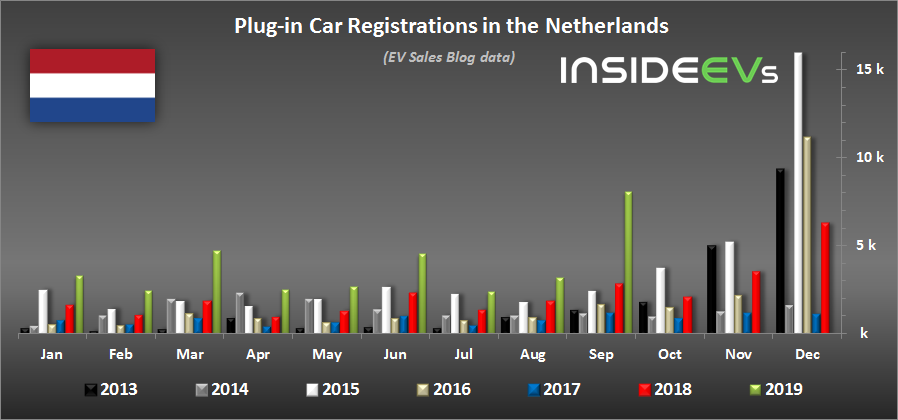
Thanks to volume deliveries of the Tesla Model 3, plug-in sales in the Netherlands almost quadrupled year-over-year September 2019 turns to be the fourth-best month of plug-in electric car sales in the Netherlands ever. Better results were seen only in December 2013, December 2015, and December 2016 (all three months preceded fiscal changes/incentives changes). With… Continue reading September: One Fifth Of Car Sales In The Netherlands Were Plug-Ins

Ford copies Tesla Supercharger design, but it should copy its charging business model

Lincoln, Ford’s luxury brand, released its new charging station, and it’s a clear rip-off of Tesla’s Supercharger design. However, I say they shouldn’t stop there and copy Tesla’s entire Supercharging business model. Ford has been tentatively moving into the EV space lately with its first all-electric vehicle built to be electric from the ground up… Continue reading Ford copies Tesla Supercharger design, but it should copy its charging business model