Tesla On Track To Nail Its 2014 Forecast For 2020 Production & Sales

Invest
Electric Cars
Electric Car Benefits
Electric Car Sales
Solar Energy Rocks
RSS
Advertise
Privacy Policy

Cars

Published on June 16th, 2019 |

by Zachary Shahan

Tesla On Track To Nail Its 2014 Forecast For 2020 Production & Sales

Twitter
LinkedIn
Facebook

June 16th, 2019 by Zachary Shahan

Preface: I first published this article in March 2018. A recent tweet highlighting a 2014 interview with Elon Musk reminded me of it, and since the piece is as relevant today as ever, I’m reposting it below with only minor changes. Enjoy!

I think it was April 2013 when we first got word that Tesla Model 3 production would probably start in 2017. Well, we didn’t have a name for the car yet, so we called it “Tesla’s fourth production model.” Tesla CEO Elon Musk was apparently hoping for a 2016 release, but quietly knew and told himself 2017 was more likely. His exact response to some questioning from Engadget on the matter: “Hopefully 2016, but I would say no later than 2017.”

In August 2013, we found out the name was probably going to be Tesla Model E. Tesla tried to trademark that name to have some fun with the spelling of its eventual vehicle lineup (S-E-X-Y). However, Ford apparently had the trademark “Model E” and didn’t want to give it to Tesla, so Tesla later changed the name to Tesla Model ☰ (aka Tesla Model 3).

What’s interesting to me here is that the statement the car would be in production by 2017 was accurate even though that was long before the car was even named Model 3.

Furthermore, for all the hype of the Model 3 being delayed, look, production actually began on the Model 3 within the timeframe Elon estimated way back in 2013.

I think the 2017 estimate was mentioned by Elon again in the following year, but I’m not finding any reference to that in our archives.

In late November 2014, I polled our readers about the 2017 production target for the Tesla Model 3. The target at that time didn’t include any forecast for the number of cars produced — just that production on the Model 3 would start by the end of 2017. The majority (62.5%) of our Tesla enthusiast/fanboy readership responded that they didn’t think the Model 3 would arrive in 2017. (Note, in case you missed it: the Model 3 did arrive in 2017.)

By the way, in October or early November 2014, Jerome Guillen (then Tesla’s “Chief Designer,” then head of the Tesla Semi project, and now Tesla President of Automotive) stated that Tesla was aiming to produce 500,000 cars/year by 2020. Presumably, if people thought the Model 3 wouldn’t arrive on time, they also thought the 500,000 cars/year by 2020 goal was unrealistic, but we didn’t poll that. Tesla later moved up the 500,000 by 2020 goal to a goal of 500,000/year by 2018 (in response to massive consumer demand for the Model 3). Even though this stretch goal wasn’t achieved, the 500,000 cars/year by 2020 goal still seems like a good possibility.

As a side note: We heard rumor in June 2015 that the Model 3 would actually have a range of 250 miles per charge, not simply the promised 200 miles. That was a big rumor, and we weren’t sure whether to get excited or be skeptical. As it turns out, the base Model 3’s EPA-rated range is 220 miles, the most popular trim, model 3 Standard Range Plus, has a range of 240 miles, and the Model 3 Long Range has 310 miles of range.

In August 2015, these were some of my notes from a Tesla quarterly shareholder report:

The Model 3 design will be revealed in the first quarter of 2016. (Woohoo!)
First deliveries are still expected in late 2017.
Basically, the 3 is still on schedule, but there’s not much more to say at this point.
Tesla thinks it is still on track for 500,000 cars a year by 2020, and that it might even go beyond that. 500,000 is based on Fremont factory production capacity, but Tesla may localize production in some places in 3–5 years. (Update: We now have the Chinese Tesla Gigafactory rapidly moving toward completion.)

Again — first deliveries did occur in 2017. Actually, first deliveries came in the middle of 2017, not the end of 2017. However, it’s true that first deliveries to non-staff customers came in late 2017.

Now, I would also note here that Elon never claimed mass production would begin right off the bat. Anyone familiar with ramping up production of a new vehicle would know that’s not how it would happen. Taking that into account, start of production in the middle of 2017 and slowly ramping that up (with hiccups) through the end of 2017 and beginning of 2018 was actually ahead of the schedule we presumed back in 2015.

And, again, if you look at our 2014 poll, even bullish Tesla fans largely didn’t expect Tesla to get the Model 3 into production in 2017. (Context, Sherlock, context.)

I’ve got another “by the way” note for you. In late 2015, Elon stated: “And with the (Tesla) Model 3 and various iterations on that platform, I’m really confident that we can do, you know, another 300,000 or 400,000 cars per year.” That implies that Elon thought annual demand and production of the Model 3 and Model Y (at least) would total 300,000–400,000 units per year (combined).

Mr. Musk’s 2016 view on that topic was that he expected demand for the Model 3 and Model Y to be approximately 500,000–1,000,000 units a year each — which implies 1–2 million units a year combined. I haven’t seem him change course on that general expectation.

In other words, Elon’s 2015 timeline for the Model 3 turned out to be essentially accurate but he was drastically underestimating demand compared to today’s expectations. (Sound familiar?)

When did the mid-2017 start of production target first come into play? On May 4, 2016, Elon hesitantly shared the accelerated target. You could tell before he said it that he didn’t really want to share the dates, but my guess is he figured the word would get out anyway (or he was just trying too hard to explain how the tofu is made). He unveiled that the official Tesla target for start of production was July 1, 2017, but he emphasized that the target was for suppliers just to try to get them to deliver in a reasonable time frame. The realistic target for actual beginning of production remained late in 2017.

As it turned out, in the beginning of 2017, everything seemed to actually be on schedule for start of production in July 2017. It was shocking. Most people didn’t believe it. Hardcore critics still claimed Model 3 production wouldn’t start until 2019 or 2020 or something like that.

No, volume production didn’t start in the summer or ’17, but production of the Model 3 did indeed start. By that time, of course, many a skeptic, “very serious analysts,” and naysayers dropped their claims of Tesla being unable to produce the Model 3. They stopped stating with 100% certainty that it would be years before the Model 3 went into production, if it ever did. They dropped their claims that there was no way Tesla would hit its targeted “end of 2017” start of production. Nope, the goal posts had moved.

And in the second half of 2017, it finally happened. Tesla finally fell behind on some of its stated production targets for the Model 3. Bottlenecks with battery production in particular — which Elon Musk admitted was ironic and presumably due to misplaced complacency — slowed down Tesla’s Model 3 production ramp. Perhaps other bottlenecks are at play as well, but we haven’t really heard of anything else. Anyhow, with even one critical machine down and one piece of the car coming out slower than planned, Tesla missed a few Model 3 production forecasts. It’s not fun. It’s yet another sign that Tesla and Elon do not defy the laws of this universe and are indeed fallible. But it’s also a bit extreme, short-sighted, and disingenuous to act like Tesla is always late, only late, and needs to find a working watch.

In fact, the bottlenecks in the second half of 2017 didn’t stop Tesla from reaching Model 3 production in 2017, as it had targeted back in 2013 or even earlier. The bottlenecks slowed down the production increases Tesla was aiming to achieve, but they’ve more or less left Tesla where it was expecting to be when it was forecasting the story back in 2013, 2014, 2015, and 2016.

Elon gets slammed quite frequently for being overly optimistic with timelines. If you look at what he said back in 2013 about Model 3 production beginning no later than 2017, the man was accurate. His estimate was on the mark. His timeline (not quite his hopes, but his committed timeline) was right on the mark.

Who trusted his timeline? Who expected he would actually get the Model 3 into production in 2017? Not many people. And certainly not the people who said Tesla would crash in burn in 2013, in 2014, in 2015, in 2016, and yet again in 2017.

When considering who is more accurate with timelines, perhaps it’s time to give Elon a little more props and a little less sass.

As a final note, remember, many critics also repeatedly said the Tesla Model X couldn’t be mass produced. Some “very serious industry analysts” claimed it was fundamentally impossible. But that’s a story for another day.

About the Author

Zachary Shahan Zach is tryin' to help society help itself (and other species). He spends most of his time here on CleanTechnica as its director and chief editor. He's also the president of Important Media and the director/founder of EV Obsession and Solar Love. Zach is recognized globally as an electric vehicle, solar energy, and energy storage expert. He has presented about cleantech at conferences in India, the UAE, Ukraine, Poland, Germany, the Netherlands, the USA, and Canada.

Zach has long-term investments in TSLA, FSLR, SPWR, SEDG, & ABB — after years of covering solar and EVs, he simply has a lot of faith in these particular companies and feels like they are good cleantech companies to invest in. But he offers no professional investment advice and would rather not be responsible for you losing money, so don't jump to conclusions.

Back t..
Domino’s serves up self-driving pizza delivery pilot in Houston

Domino’s really emphasizes its commitment to ‘innovation,’ but even if it’s a marketing tactic, the global pizza brand does indeed walk the walk. Case in point: It’s launching a new pilot for self-driving pizza delivery in Houston in partnership with Nuro. Autonomous driving tech startup Nuro was founded by Dave Ferguson and Jiajun Zhu, two… Continue reading Domino’s serves up self-driving pizza delivery pilot in Houston

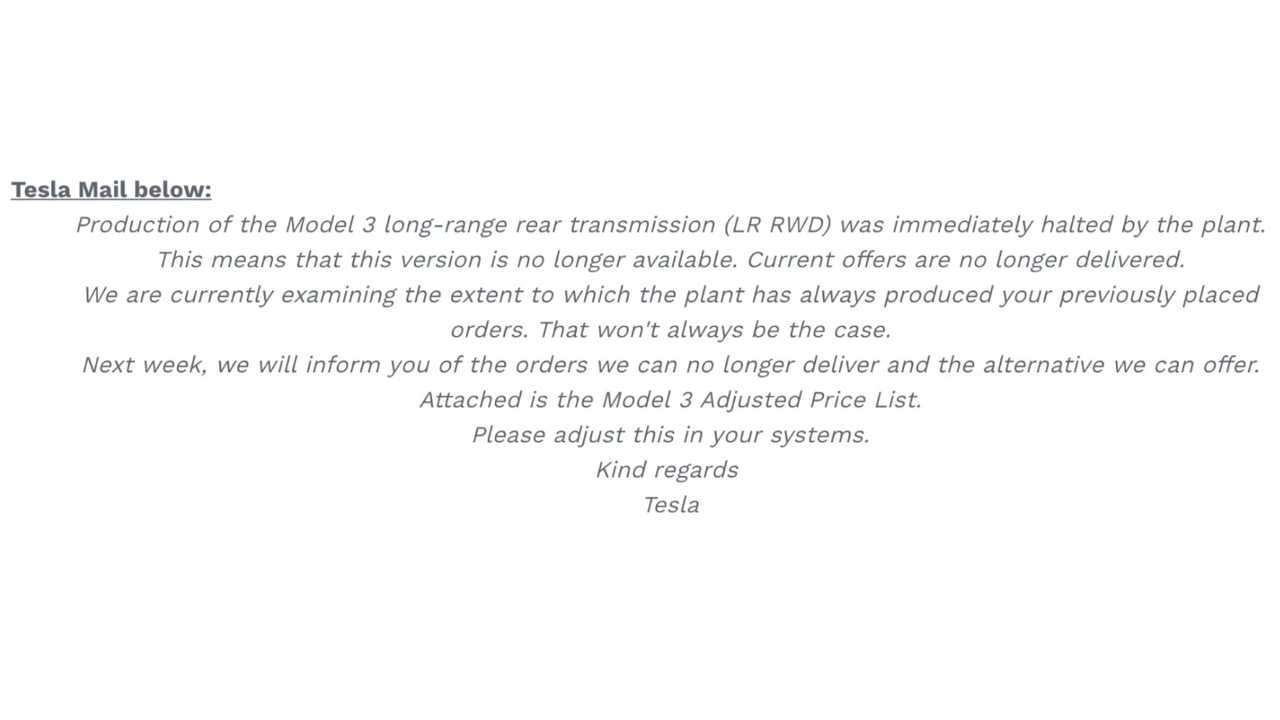
Tesla Discontinues Long Range Rear-Wheel Drive Model 3

In the latest edition, the Model 3 LR RWD was rated at 325 miles (523 km) of range. Now, customers need to choose between shorter range or all-wheel drive versions. One of the latest change in the constantly changing Tesla offer is reportedly the discontinuation of the Long Range Rear-Wheel Drive version of the Model… Continue reading Tesla Discontinues Long Range Rear-Wheel Drive Model 3

Bob Lutz: Improved Tesla Panel Gaps Are Now “World Class”

Invest
Electric Cars
Electric Car Benefits
Electric Car Sales
Solar Energy Rocks
RSS
Advertise
Privacy Policy

Cars

Published on June 16th, 2019 |

by Dr. Maximilian Holland

Bob Lutz: Improved Tesla Panel Gaps Are Now “World Class”

Twitter
LinkedIn
Facebook

June 16th, 2019 by Dr. Maximilian Holland

Renowned Tesla bear Bob Lutz has recently sung praises of the build quality of Tesla’s vehicles, saying of a Model 3 that he inspected, “not only was the paint without any discernible flaw, but the various panels formed a body of precision that was beyond reproach.”

This is a significant high note from Lutz, who has been singing of Tesla’s imminent downfall for years. Now a retired veteran of the auto industry, Lutz’s views on the world’s largest EV producer have been mixed, at best.

Recall that, back in the July 2006, Tesla revealed the world’s first compelling long-range EV, the Roadster. Then, in August 2006, Elon Musk “leaked” the secret Tesla Motors master plan, announcing their intended product roadmap of increasingly affordable EVs.

Lutz later famously credited Tesla’s Roadster and early EV plans (along with the early success of the Prius) as inspiring GM to work on the Chevrolet Volt (watch Chris Payne’s Revenge of the Electric Car for more early history). Lutz has also said of Tesla, and its pioneering work in EVs, that he will “always owe them a debt of gratitude for having kind of broken the ice.” Lutz evidently recognizes the role Tesla played early on, in creating the EV renaissance and inspiring others to work on their own EVs.

Lutz has frequently praised Tesla’s vehicles themselves, saying of the Tesla Model S: “A Model S, especially with the performance upgrades, is one of the fastest, best handling, best braking sedans that you could buy in the world today. … The acceleration times will beat any $350,000 European exotic.”

However, Lutz has often expressed doubts about Tesla’s business model and lack of focus on profitability. There are many examples of Lutz’s Tesla bashing, but this one gives the general flavour: “Tesla’s business model is upside down. … Their costs have always been higher than their revenue. … They always have to get more capital, then they burn through it.” We have several times covered the shade that Lutz has thrown Tesla’s way over recent years — if you want more examples, our full archives are here. Charles Morris also has an excellent article charting many of Lutz’s various statements on Tesla and Elon Musk, if you want a deep dive.

My own take on Lutz’s misunderstanding of Tesla’s investment-for-growth-before-profit strategy is fairly simple. Lutz himself was always a career man working for existing, well-established automakers which were well beyond their early growth phase, and likely never understood the culture of an innovative startup looking to disrupt the status quo. He probably didn’t grasp Tesla’s deliberate focus on continuous investment in (extraordinarily) high growth, not quarterly profits per se. This is conscious business strategy on Tesla’s part, and one that Elon Musk re-iterated in the recent 2019 Tesla Annual Shareholder Meeting.

In fairness to Lutz, given his own career, he could scarcely hope to understand this. Since retiring from his fairly conventional management roles, Lutz has only been involved with two small startup auto businesses (VIA Motors and VLF Automotive). It seems neither got beyond showing rough concepts and have now both seemingly either failed or gone into suspended animation. In short, Lutz has never been involved with a successful startup. He is not an entrepreneur.

Bob Lutz. Image credit: Ed Schipul/ [CC BY-SA 2.0] via Wikimedia Commons

The wind has now changed once more and we find Lutz singing the praises of Tesla’s vehicles again. In a recent Road and Track article, Lutz writes, “When I spied a metallic-red Model 3 in an Ann Arbor parking lot, I felt compelled to check it out.” Lutz was expecting to see evidence of the Tesla Model 3’s “production hell” writ large, in uneven panel gaps and imperfections in the paint work.

To his great surprise, Lutz found something completely different:

“But, when next to the car, I was stunned. Not only was the paint without any discernible flaw, but the various panels formed a body of precision that was beyond reproach. Gaps from hood to fenders, doors to frame, and all the others appeared to be perfectly even, equal side-to-side, and completely parallel. Gaps of 3.5 to 4.5mm are considered word-class. This Model 3 measured up.”

In case anyone is concerned that Lutz may have been abducted and replaced with an avatar, don’t sweat it:

“So, while I continue to be critical of Tesla’s business model and Musk’s strategy, it was impossible to find fault with the visual quality of that Model 3.”

Thanks Bob, good to know some things never change. 😉

Editor’s note: As much as I’ve enjoyed laughing at Bob Lutz’s comments about Tesla over the years, I think he deserves huge props for having a fairly open mind and so publicly praising Tesla after putting so much pessimism out there about the company’s ability to succeed or to even produce some of its vehicles (Model S, Model X, Model 3). Thank + kudos to Bob for not being a tribal Tesla troll.

About the Author

Dr. Maximilian Holland Max is an anthropologist, social theorist and international political economist, trying to ask questions and encourage critical thinking about social and environmental justice, sustainability and the human condition. He has lived and worked in Europe and Asia, and is currently based in Barcelona.

Back to Top ↑

Intern OpportunitiesWe Need You! Internship Program Openings
Advertisement

Advertise with CleanTechnica to get your company in front of millions of monthly readers.

CleanTechnica Clothing & Cups

Top News On CleanTechnica

Join CleanTechnica Today!

Advertisement

Advertisement

Follow CleanTechnica Follow @cleantechnica

Our Electric Car Driver Report

Read & share our new report on “electric car drivers, what they desire, and what the demand.”

The EV Safety Advantage

Read & share our free report on EV safety, “The EV Safety Advantage.”
EV Charging Guidelines for Cities

Share our free report on EV charging guidelines for cities, “Electric Vehicle Charging Infrastructure: Guidelines For Cities.”

30 Electric Car Benefits

Our Electric Vehicle Reviews

Tesla News

Cleantech Press Releases

Hannon Armstrong & Summit Ridge To Jointly Invest In Community Solar; Initial Projects Launching in Maryland

“That Was Quick” Category: Carbon Engineering Partners With Occidental To Pump More Oil

Texas Cooperatives Agree to Purchase 7 MW of Distribution-Scale Solar Energy

38 Anti-Cleantech Myths

Wind & Solar Prices Beat Fossils

Cost of Solar Panels Collapses

© 2018 Sustainable Enterprises Media, Inc.

Invest
Electric Cars
Electric Car Benefits
Electric Car Sales
Solar Energy Rocks
RSS
Advertise
Privacy Policy

This site uses cookies: Find out more.Okay, thanks

Breaking! Tesla Now Offers Used Model 3’s — Should You Buy One?

Invest
Electric Cars
Electric Car Benefits
Electric Car Sales
Solar Energy Rocks
RSS
Advertise
Privacy Policy

Cars

Published on June 15th, 2019 |

by Paul Fosse

Breaking! Tesla Now Offers Used Model 3’s — Should You Buy One?

Twitter
LinkedIn
Facebook

June 15th, 2019 by Paul Fosse

Image from Tesla

TL;DR: It depends.

If you ever take a management class in college, that is the answer to every essay question on the test. The instructor expects you to justify the reasons for the different cases. Maybe that is where I learned to be able to argue any side of any issue. Or maybe it was my involvement in politics. Regardless, the used Model 3’s are either a great deal or a horrible one and I will present both cases and they are both potentially true. I depends on your situation.

First, though, I’d like to give my Twitter friend, Steve Jobs (@tesla_truth), credit for letting me know these cars are now available.

I wasn’t able to find used Model 3’s anywhere but in San Francisco, but over time, they should show up around the country. If you really want one, you can have it shipped to you for $2,000 if you are outside of California, but I wouldn’t recommend it. You wouldn’t be able to inspect the car and it just makes the deal more complicated and expensive.

Example Used Vehicle

This early Model 3 has the classic Long Range Rear Wheel Drive that all the first cars came with, and also has the optional 19″ sport wheels and red paint.

Comparable New 3

You can’t order the same car new online today. You can just order the Long Range with All Wheel Drive and Autopilot. Don’t worry, I’ll adjust for that and discuss later.

Comparison

So, first, the case for the used Model 3.

If this is your dream configuration, it allows you to get the car you want for more than $10,000 less than a new Model 3 — that could be a couple hundred bucks a month and the difference between the car being affordable or being out of reach!

Clearly, you have to like the configuration, because if you start changing the wheels or color, you are going to just be spending extra money that you won’t get back. If you can’t find a configuration you love, it is better to buy new. So, if you love the red, long-range, rear-wheel-drive Model 3 with sport wheels, this might be a good deal for you. It would be a good choice for people who have the money to buy the car, but don’t have enough taxable to take the tax credit on the new car. [Editor’s note: This car is now actually gone, with all used Model 3 options now blue.]

For people who love driving the Model 3 (and it is EXTREMELY fun to drive) and don’t care about Autopilot (which I also love for longer trips), why pay for it? The warranty Tesla is offering on used cars is very good and overlaps with the new warranty. This means, in our example, if you bought the car on June 17, 2019, it would cover bumper to bumper till June 16, 2023 or until 78,201 miles on the odometer, whichever comes first. The battery and drive warranty is only 5 years and 92,000 miles from today, but frankly, there have been no reported problems with either of those (and you can bet any problems would be highly publicized by those who want Tesla to fail), so I’m not too worried about them. If you are keeping the car for a while, you don’t care too much about the miles on the car, since over time the condition of the car matters more than the miles.

Now, how about the case against the used car?

The first downside is that only people in California can consider this and really save any money. Another is that you may not like the configuration — you would rather spend your money on Autopilot instead of the red paint and sport wheels, for example.

Most people can use the tax credit and enjoy having the car from day one. There is a special bond many people feel when they buy a car new, to some degree or another (my wife feels this bond quite strongly, I don’t feel it as strongly).

If you are going to resell the car in a few years (possibly to buy a Model Y), I think getting the new one might be better since you will have fewer miles on it and it will be a one-owner trade-in, which may be better. I played around with Kelley Blue Book’s What’s My Car Worth site, and it appears that 15 cents a mile is a pretty good assumption for how much you will be docked for extra miles, but I didn’t adjust for it being one model year older — it seems that would be worth about $3,000 if you trade it in soon (if you keep the car 10 years, nobody cares if it is a 2018 or 2019).

For many, they would prefer to give up a little range and a few other minor features and go with the Standard Range or the Standard Range Plus rather than going used if they have trouble affording the Long Range car.

Conclusion
As I said, I tried to present a compelling case for buying the used vehicle and also a compelling case for why the new vehicle could be a much better deal. I think it is a great option for those who are looking for that specific vehicle and plan to keep it long enough that the miles and model year don’t matter. Which situation resonates with you? Let me know in the comments if you thought I was fair in my comparison.

If you want to take advantage of my Tesla referral link to get 1,000 miles of free Supercharging on a Tesla Model S, Model X, or Model 3, here’s the link: https://ts.la/paul92237 (but if someone else helped you more, please use their code instead of mine).

About the Author

Paul Fosse A Software engineer for over 30 years, first developing EDI software, then developing data warehouse systems. Along the way, I've also had the chance to help start a software consulting firm and do portfolio management. In 2010, I took an interest in electric cars because gas was getting expensive. In 2015, I started reading CleanTechnica and took an interest in solar, mainly because it was a threat to my oil and gas investments. Follow me on Twitter @atj721 Tesla investor. Tesla referral code: https://ts.la/paul92237

Back to Top ↑

Intern OpportunitiesWe Need You! Internship Program Openings
Advertisement

Advertise with CleanTechnica to get your company in front of millions of monthly readers.

CleanTechnica Clothing & Cups

Top News On CleanTechnica

Join CleanTechnica Today!

Advertisement

Advertisement

Follow CleanTechnica Follow @cleantechnica

Our Electric Car Driver Report

Read & share our new report on “electric car drivers, what they desire, and what the demand.”

The EV Safety Advantage

Read & share our free report on EV safety, “The EV Safety Advantage.”
EV Charging Guidelines for Cities

Share our free report on EV charging guidelines for cities, “Electric Vehicle Charging Infrastructure: Guidelines For Cities.”

30 Electric Car Benefits

Our Electric Vehicle Reviews

Tesla News

Cleantech Press Releases

Hannon Armstrong & Summit Ridge To Jointly Invest In Community Solar; Initial Projects Launching in Maryland

“That Was Quick” Category: Carbon Engineering Partners With Occidental To Pump More Oil

Texas Cooperatives Agree to Purchase 7 MW of Distribution-Scale Solar Energy

38 Anti-Cleantech Myths

Wind & Solar Prices Beat Fossils

Cost of Solar Panels Collapses

© 2018 Sustainable Enterprises Media, Inc.

Invest
Electric Cars
Electric Car Benefits
Electric Car Sales
Solar Energy Rocks
RSS
Advertise
Privacy Policy

This site uses cookies: Find out more.Okay, thanks

Awake at the wheel: Automakers tap VR to banish boredom in autonomous cars

SHANGHAI (Reuters) – Audi, Nissan and other car makers are banking on talking cartoon characters and other virtual reality experiences to keep drivers and other occupants of future autonomous vehicles entertained, auto industry executives said. A screen shows Audi China President Thomas Owsianski as he introduces Audi connect, an open app ecosystem, at the CES… Continue reading Awake at the wheel: Automakers tap VR to banish boredom in autonomous cars

Chinese firm makes insane $23 billion investment in production of 1 million EVs/yr and 500 GWh of batteries

Evergrande, a Chinese firm believed to be the biggest real estate company in the world and backers of electric vehicle startups like Faraday Future and NEVS, announced a massive $23 billion investment in the production 1 million electric cars and 500 GWh of batteries per year. The company is known for having its hands in… Continue reading Chinese firm makes insane $23 billion investment in production of 1 million EVs/yr and 500 GWh of batteries

VW boss Diess wants to expand cooperation with Ford – even with electric cars: “VW is very strongly influenced by Chinese – we need a counterweight in the US”

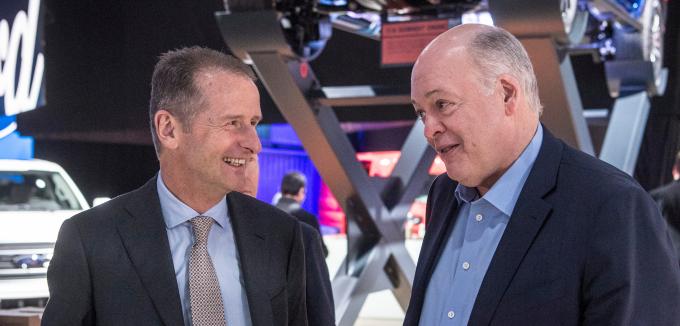
DPA “We need a counterbalance in the US”: Ford CEO Jim Hackett (r) and Volkswagen CEO Herbert Diess know each other well, they agreed at the beginning of the year, together to develop vans and mid-sized pick-ups The speculation about a close cooperation of Volkswagen and ford Autonomous driving and electric car technology have been… Continue reading VW boss Diess wants to expand cooperation with Ford – even with electric cars: “VW is very strongly influenced by Chinese – we need a counterweight in the US”

Tesla loses key Autopilot engineer to self-driving truck start-up Embark

Embark self-driving truckEmbarkZeljko Popovic, a leader within Tesla's Autopilot team, is leaving for Embark, the autonomous trucking start-up in San Francisco, according to a person familiar with the move. Embark confirmed the hire.
The departure comes at a critical time, as Tesla is promising its electric vehicles will be capable of operating as “robotaxis” by the end of next year — which is to say, they'd be fully self-driving in normal conditions, without human intervention. Tesla also says it plans to start production of its long-awaited electric semi trucks by the end of 2020.
Popovic, whose background is in robotics, built and ran the perception team for Tesla's Autopilot division.
According to people familiar with his accomplishments there, Popovic managed the development of highly accurate maps of U.S. highways for Tesla, and created a “sensor fusion system” which combines data from the many cameras, radars and ultrasonic sensors that Tesla vehicles employ. The sensor fusion system enables Autopilot to “see” other cars on the road.
At Tesla's annual shareholder meeting this week, CEO Elon Musk acknowledged that some Tesla self-driving features still need improvements. “Summon,” which allows a driver to automatically call their car over from wherever it is parked, was supposed to be widely available by now. But at the meeting, Musk said it is still being tweaked.
Founded in 2015, Embark integrates its self-driving systems into Peterbilt semis rather than building its own trucks completely from scratch, and the trucks are generally operated with human supervisors behind the wheel. It now has more than a dozen trucks and 60 employees. Amazon is using self-driving trucks developed by Embark to haul some cargo on the I-10 interstate highway in California, both companies previously acknowledged.
Attrition has been a big issue for Tesla in the last two years as the company has missed some of its production goals and its stock price has swung wildly. Among others, self-driving VP Jim Keller left for Intel, and head engineer Doug Field rejoined Apple to work on that company's secretive self-driving technology.
Popovic and Tesla did not immediately respond to requests for comment.
WATCH: Self-driving trucks are here — here's how they'll transform the trucking industry
VIDEO13:0513:05How the rise in self-driving trucks will transform the trucking industryTech

Lead battery tech could make electric car charging cheaper

Could old-school lead batteries come back to life and speed-up the introduction of electric cars as part of a nationwide charger network? That’s the thinking in the US, where industry and government are teaming-up to explore if banks of high-capacity lead cells sited at conventional fuel stations could make life easier for EV owners. Tesla is… Continue reading Lead battery tech could make electric car charging cheaper