Zoox, the self-driving car startup worth a reported $3.2 billion post-money valuation, is offering autonomous rides this week as part of the Global Climate Action Summit. The Global Climate Action Summit convenes state and local leaders, scientists, non-profits and others to discuss climate action opportunities. In partnership with the Fairmont hotel in San Francisco, Zoox will… Continue reading Zoox is offering autonomous rides in SF this week
Tag: Autonomous
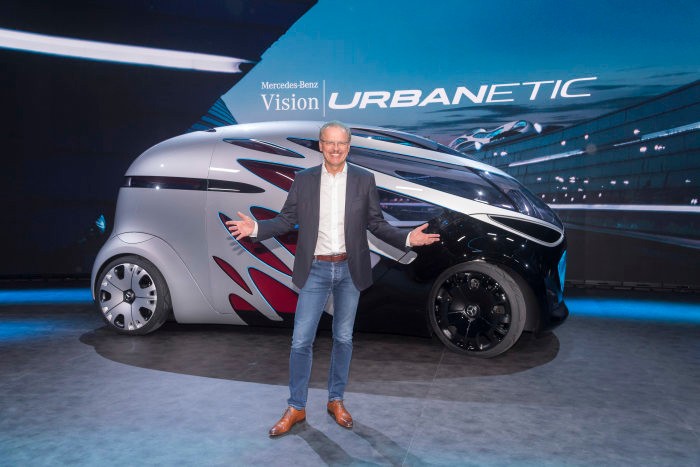
Vision URBANETIC: On demand, efficient and sustainable
10.
September 2018
Copenhagen
Completely new mobility concept for on-demand, efficient, comfortable and sustainable mobility Autonomous driving platform that can be fitted as required with a cargo module for goods transportation or with a people-mover module Battery-electric drive for zero local emissions and virtually noiseless mobility Mobility concepts embedded within an intelligent, self-learning IT infrastructure for the continual analysis of transportation needs Supply and demand captured in real time and vehicle resources used to optimum effect Maximum economy, efficiency and flexibility for cities, mobility providers and users Copenhagen – Today Mercedes-Benz Vans presents its Vision URBANETIC, a revolutionary mobility concept that goes way beyond existing ideas on autonomous vehicles. Vision URBANETIC eliminates the separation between people moving and goods transport. It enables on-demand, sustainable and efficient movement of people and goods – and applies an innovative approach to fulfil the needs of cities, businesses from diverse sectors as well as city dwellers and travellers. The concept reduces traffic flows, relieves inner-city infrastructures and contributes to an improved quality of urban life.
As part of a holistic system solution, Vision URBANETIC addresses future urban challenges and offers innovative solutions. The visionary concept is based on a self-driving, electrically powered chassis that can take different switchable bodies for people moving or goods transport. As a ride-sharing vehicle, Vision URBANETIC can accommodate up to twelve passengers, while the cargo module can carry up to ten EPAL pallets. A load space 3.70 metres long fits into a total vehicle length of 5.14 metres. Plus, the concept incorporates an IT infrastructure that analyses in real time the supply and demand within a defined area. The result is a self-driving fleet, with routes planned flexibly and efficiently on the basis of current transportation needs. All of this makes Vision URBANETIC a groundbreaking concept for future urban mobility.
Thanks to full networking, the evaluation of local information – such as concerts and events – and intelligent control, the system not only analyses current needs, it can also learn from them. It is thus able to anticipate and react to future needs. This can optimise processes and help shorten waiting and delivery times and avoid traffic jams. For instance, the overall system can use the data captured by the vehicle control centre – which collates and analyses needs – to identify a crowd of people gathering in a certain area. It can send vehicles there to quickly and efficiently satisfy the increased demand. The system can thus react flexibly and is not based on rigid routes or fixed timetables.
Fully networked and part of a comprehensive ecosystem
Mercedes-Benz Vans is pursuing an ambitious target with its Vision URBANETIC. It envisages transporting more people and goods with fewer vehicles on a virtually unchanged roads infrastructure in order to relieve inner cities and, at the same time, fulfil continually growing mobility requirements and customer desires. This would ultimately facilitate an improved quality of urban life – with flexible and comfortable movement of people, efficient and sustainable transportation of goods, significantly lower noise and pollutant emissions and greater freedom in city planning.
As a fully networked vehicle, Vision URBANETIC is part of an ecosystem in which commercial and private mobility wishes are transmitted digitally. Vision URBANETIC collates these needs and fulfils them with a highly flexible fleet, facilitating a considerable improvement in the use of resources.
Two interchangeable modules for people and goods
To achieve this level of flexibility, Vision URBANETIC is equipped with different interchangeable bodies depending on purpose of use. As a ride-sharing vehicle with a people-mover body, Vision URBANETIC offers space for up to twelve passengers. The modules are switched either automatically or manually, with the automated process taking just a few minutes. The system is based on an autonomous driving platform onto which the respective bodies are fixed. It incorporates all the driving functions, meaning the autonomous chassis can also make its way to its next job location without a body attached. Absolute safety is guaranteed by redundant components for all relevant actions such as steering, braking and acceleration.
The cargo module serves as a classic goods transporter. Thanks to its variable load floor, it can be divided into two levels and transport up to ten EPAL palettes. The load space has a volume of 10 m3. Alternatively, the vehicle can be fitted with fully automated cargo-space systems and used as a mobile package station for last-mile deliveries. Multiple further use cases are also conceivable as the concept can be equipped with a wide array of bodies for other sectors and applications.
Greater freedom for interior design
Thanks to fully automated driverless operation, operating costs fall significantly with Vision URBANETIC. Plus, with the exception of charging times for the battery-electric drive and maintenance periods, each vehicle can be in use around the clock, 365 days a year. It means, for example, profitable operation of local public transport solutions which would not be commercially viable with a driver. Likewise, the concept provides an answer to an ever-increasing demand in areas such as the logistics sector – a lack of drivers. Companies are already finding it extremely difficult or impossible to fill vacancies. In light of this, a German trade magazine voted “Fahrermangel” (lack of drivers) the 2017 Logistics Word of the Year.
The absence of a driver’s cab also frees up space for interior design. Steering wheel, pedals, dashboard and the entire cockpit are things of the past. The space can instead be used for additional passengers or a higher goods volume.
On a factory site or roaming freely in the city
The system architecture of the autonomous Vision URBANETIC ensures continual route adaptation using real-time traffic information. The operator’s fleet management is also part of the IT system, with usage conceivable in restricted areas such as a factory site or airport as well as in road traffic.
Vision URBANETIC’s electric drive delivers zero-local-emissions mobility, thus making it the perfect vehicle for city centres and areas subject to legal access restrictions. The virtually noiseless electric drive also presents new options for late or night-time deliveries and thus offers major commercial potential.
Establish trust through active communication with the outside world
Many people still view autonomous vehicles with the certain degree of scepticism. To address this, Vision URBANETIC adopts a new approach, particularly with its people-mover body. The vehicle uses multiple cameras and sensor systems to observe its surroundings in their entirety and communicates actively with them. It uses the large-format display on the front of the vehicle to inform pedestrians crossing the street in front of it that it has noticed them.
Another highlight is digital shadowing around the side door. Several hundred light units display the contours of approaching individuals along the flanks, signalling to them that the Vision URBANETIC has noticed them.
Press Contact
Florian Hofmann
Product Communications Mercedes-Benz Vans, Van Technology Communications
florian.hofmann@daimler.com
Tel: +49 711 17-46643
Fax: +49 711 17-79071936
Andrea Eberhardt
Product Communications Mercedes-Benz Vans
andrea.eberhardt@daimler.com
Tel: +49 711 17-84020
Fax: +49 711 17-1779097330
Thomas Christian Rosenthal
Product Communications adVANce and Future Transportation
thomas_christian.rosenthal@daimler.com
Tel: +49 711 1740286
Fax: +49 711 1779029941
Press Contact Overview
Media
Download
Pictures (19)
Videos (9)
Documents (1)
Media Contact (3)
Filter
Show thumbnails
Show list
Slideshow
Zoom
Preview
Details
Do you really want to delete the data record?
Please wait a moment …
Please wait a moment …
Please wait a moment …
Please wait a moment …
18C0763_001
18C0763_002
18C0763_003
18C0763_004
18C0763_005
18C0764_001
18C0764_002
18C0766_001
18C0766_002
18C0766_003
18C0766_004
18C0766_005
18C0766_010
18C0766_011
18C0766_020
18C0766_021
18C0766_030
18C0763_018
18C0763_012
Loading
Comma.ai’s George Hotz ousts George Hotz as CEO
Comma.ai’s board, of which founder George Hotz is the only member, is making changes at the autonomous driving startup: Hotz is no longer CEO of the company. A new CEO, who Hotz declined to name, is expected to be announced Friday via the company’s Medium blog. He confirmed that the CEO is indeed a human… Continue reading Comma.ai’s George Hotz ousts George Hotz as CEO
Plug Power develops new hydrogen filling robot
Plug Power fuel cell
Filling up with hydrogen is not as easy as filling up with gas or plugging in an electric car—at least it's not yet.
To make it easier—and importantly, cheaper for businesses—Plug Power, a New York fuel-cell company, has developed a new robotic hydrogen filling station.
Plug Power GenFuel hydrogen filling station
The system is designed to work in warehouses where hydrogen-powered forklifts and other equipment can save time refueling. Plug Power says every additional second spent refueling can add up to $1,000 in costs annually for such businesses.
CHECK OUT: California now has 33 hydrogen fueling stations for 4,200 fuel-cell cars so far
Plug Power worked with the Center for Automation Technologies and Systems at Rensselaer Polytechnic Institute (RPI) and the National Renewable Energy Lab to develop the fueling stations, using a $2 million grant from the Department of Energy.
The robotic fueling station isn't just about hydrogen-powered forklifts in warehouses, although that's expected to be the first application.
“Today, the technology can retrofit existing GenFuel sites supporting the more than 20,000 GenDrive fuel cells in the field,” said Dustan Skidmore, vice president of engineering at Plug Power. “In the future, the technology can be used in on-road fleet vehicles, autonomous guided vehicles (AGVs), and self-driving passenger cars.”
READ THIS: FedEx and UPS burn less gas to deliver boxes
Plug Power built the fuel-cell that powers the nation's first fuel-cell FedEx delivery truck in upstate New York. The truck, converted to fuel-cell power by Workhorse, fills up with hydrogen at Plug Power's Latham, New York, headquarters and has accumulated more than 3,000 miles in testing.
Apple’s autonomous vehicle fleet swells 27% in four months
Apple keeps adding autonomous vehicles to its test fleet in California, boosting its ranks 27 percent since May, according to records from the California Department of Motor Vehicles. The company now has 70 autonomous vehicles permitted to test on public roads, Mac Reports first reported. The permits, which are issued by CA DMV, require a safety driver… Continue reading Apple’s autonomous vehicle fleet swells 27% in four months
Ball Corporation (BLL) Arm to Manufacture LIDAR Cameras Now
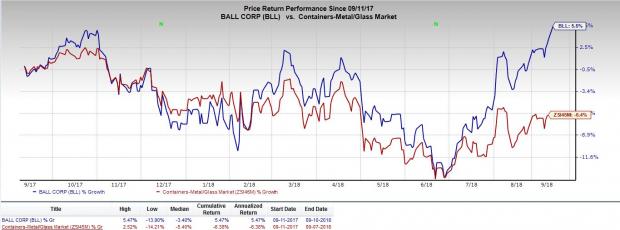
Ball Aerospace, a unit of Ball Corporation (BLL – Free Report) , has signed an exclusive license agreement to manufacture the Geiger-mode avalanche photodiode (GmAPD) light-detection and ranging (LIDAR) cameras for defense and aerospace industries. The license provides the sole ownership to Ball Corporation to make these cameras after Argo AI. Pittsburgh, PA-based Argo AI… Continue reading Ball Corporation (BLL) Arm to Manufacture LIDAR Cameras Now
Ford’s shares lag as CEO Hackett provides scant details of turnaround plan
Rebecca Cook | Reuters
Ford Motor Company president and CEO James Hackett
It's one of the biggest unknowns in the auto industry: How will Ford CEO Jim Hackett restructure the beleaguered automaker?
More than a year after becoming CEO, and two months after he said it will cost at least $11 billion to restructure Ford, Hackett has yet to give Wall Street details about his turnaround plan. The longer Hackett goes without unveiling his plan, the lower Ford shares slide. The stock is under $10, down almost 26 percent so far this year and close to a nine-year low.
“We just don't see much to get excited about in terms of the stock,” said Brian Johnson, auto analyst at Barclays.
Johnson, like others on Wall Street, expects Hackett to dramatically downsize the company as part of a plan to cut costs and exit businesses and markets where Ford is either losing money or struggling to grow profits.
South America and Europe are two regions Ford could eliminate or dramatically cut operations, according to analysts. Morgan Stanley's Adam Jonas gave a sobering assessment of Ford's business in South America. “In our opinion, it is very difficult to see Ford continuing operations on a profitable basis in the region,” he wrote in a note to clients in late August.
Jonas was even more blunt in assessing of Ford's operations in North America. “We estimate roughly one quarter of the region's physical and human capital is within businesses that have no path to positive ROIC (return on invested capital),” said Jonas.
What also worries analysts is the lack of details surrounding Ford's plan to capitalize on hefty investments in autonomous-drive vehicles and mobility solutions. At this year's Consumer Electronics Show, Hackett and his leadership team outlined their vision for the future of transportation.
“We're working on a new self-driving business model. It's a systems-based approach, transporting both people and goods,” said Jim Farley, president of global markets at Ford.
It sounds intriguing, but analysts wonder how much it will cost to develop these self-driving vehicles and how Ford will make money off of those mobility services.
Adding to investors' concerns is whether Ford will be forced to cut its dividend to preserve cash. The company has been adamant the dividend will remain in place. With $25 billion in cash, liquidity is not an immediate concern.
Still, this turnaround will be tough. In late August, Moody's downgraded Ford's credit rating to one notch above junk status saying, “Success could be challenged by having to address the serious performance problems in multiple business units simultaneously.”
When the plan will be revealed remains unclear.
“The real question is, is there more going on behind the scenes and under the surface than is apparent in the quarterly earnings,” said Johnson. “I think the bull case, such as there is on Ford, is that Mr. Hackett is driving deep, fundamental, cultural change in the company.”
— CNBC's Meghan Reeder contributed to this article.
Questions? Comments? BehindTheWheel@cnbc.com.
Pay-with-your-face systems and self-driving cars: Inside Baidu’s headquarters in Beijing
Pay-with-your-face systems and self-driving cars: Inside Baidu's headquarters in Beijing
A trip to Baidu's headquarters may offer a glimpse into the future of payments, building security and driving.
Baidu is often referred to as the “Google of China” because the tech titan commands roughly 70 percent of China's internet searches. Like Alphabet in the U.S., the Chinese company is also working on a host of other technologies.
CNBC recently visited its headquarters in Beijing, which is home to around 20,000 of its 40,000-person workforce. Similar to companies in Silicon Valley, Baidu has multiple buildings spread across a sprawling campus boasting amenities from yoga classes to rock climbing walls.
Employees now have the option of registering their faces, which they can use to get through security checkpoints and even pay for things like lunch or items at vending machines.
Uptin Saiidi | CNBC
An employee pays with his face at Baidu's cafeterira in Beijing, China
Meanwhile, a small park on its campus is used to try out autonomous vehicles. During CNBC's visit, staff tested a combination of vehicles, including passenger cars, 14-passenger buses and logistics vehicles that could eventually deliver packages.
This week, Baidu announced it will work with BYD — China's leading electric car maker, which is backed by Warren Buffett — to reach mass production of autonomous cars within three years.
Baidu has already produced more than 100 autonomous buses and has plans to sell to foreign markets, including Japan, which is set to receive 10 in early 2019.
Baidu has partnered with companies including Microsoft, BMW, Ford and Intel as part of its autonomous driving project.
Baidu, BYD partner to bring mass production of self-driving cars
4:16 AM ET Thu, 6 Sept 2018 | 02:31
more from Tech
To view this site, you need to have JavaScript enabled in your browser, and either the Flash Plugin or an HTML5-Video enabled browser. Download the latest Flash player and try again.
Bristol driverless car report challenges business models
The £5m VENTURER project has released its final report, detailing key research results that challenge developments by major global companies. The three-year project explored the barriers to the adoption of connected and autonomous vehicles (CAVs) in the UK and how best they could be overcome. “One of the first research and development projects to explore… Continue reading Bristol driverless car report challenges business models
Chipmaker Renesas goes deeper into autonomous vehicles with $6.7B acquisition
Japan-based semiconductor firm Renesas — one of the world’s largest supplier of chips for the automotive industry — is scooping up U.S. chip company IDT in a $6.7 billion deal that increases its focus on self-driving technology. Renesas produces microprocessor and circuits that power devices, and automotive is its core focus. It is second only to NXP… Continue reading Chipmaker Renesas goes deeper into autonomous vehicles with $6.7B acquisition