Ford CEO Jim Hackett says fixing carmaker’s problems starts with identifying them

Andrew Harrer | Bloomberg | Getty Images
Jim Hackett, president and chief executive officer of Ford Motor Co., speaks during a discussion at the Automotive News World Congress event in Detroit, Michigan, U.S., on Tuesday, Jan. 16, 2018.

When Tesla delivered a rare and unexpected profit on Wednesday, investors went wild. Even some of CEO Elon Musk's harshest critics sounded surprisingly bullish.

The California carmaker's stock surged by 9.1 percent the next day and another 5 percent Friday.

Ford also reported better-than expected earnings for the third quarter, sending the shares up 9.9 percent the next day. But the celebration was short lived. The shares fell slightly on Friday as the Detroit automaker's stock continues to languish below $10 a share, in territory it hasn't seen in years.

At $991 million, Ford's profit was more than three times that of Tesla's. The electric carmaker's earnings, however, told a very different story than Ford.

CEO Elon Musk finally appears to be delivering on expectations that Tesla can revolutionize the auto industry, or at least reliably turn a profit. With Ford, analysts and investors are yet to be sold on the $11 billion grand turnaround plan first promised by Jim Hackett when he was named Ford CEO in a broad management shake-up nearly 18 months ago. Its $991 million in profit fell 37 percent from the prior year.

Following the May 2017 ouster of Mark Fields, Hackett launched what was billed as an intense, 100-day deep-dive aimed at addressing Ford's problems. Yet, as 2018 rapidly comes to a close, the former CEO of furniture-maker Steelcase has offered relatively few, and often inscrutable, indications of what he has in mind, leaving not only outsiders, but insiders at all levels, trying to understand precisely what directions he wants them to move in.

“A lot of us are asking the same question,” a senior Ford executive, who asked not to be identified, told CNBC. “I just have to work on rallying my troops and hope we're all moving in the same direction

Critical moves

Hackett himself left plenty of folks scratching their heads during an earnings conference call with analysts and reporters Wednesday. Asked about his strategy, the former University of Michigan football player said “it's not a restructuring plan it's a redesign plan. First we have to identify the areas that need to be fixed, then we have figure out how to fix them and then execute.”

Under his guidance, Ford has made several critical moves. Hackett announced a shake-up of its struggling Chinese operations last week, appointing Anning Chen, an experienced auto executive, as the unit's new president and CEO. And Hackett's also formed several potentially far-reaching alliances. One with Mahindra Group, could help it crack into the promising Indian market. Another, with Volkswagen AG, ostensibly will focus on the lucrative commercial vehicle market.

The latter alliance has peaked interest across the auto industry, the always-active rumor mill questioning whether it could lead to a broader tie-up. Just don't expect a latter-day equivalent of the ill-fated Daimler Chrysler “merger of equals,” or even something on the order of the Renault-Nissan-Mitsubishi Alliance, Ford chief spokesman Mark Truby told CNBC. “We are not considering any equity swap or cross-ownership.”

For those truly familiar with the history of Ford, that should come as no surprise. There are few who truly believe the controlling Ford family, heirs of founder Henry, would willingly relinquish control. Indeed, insiders say that was a key reason the second-largest domestic automaker chose not to follow cross-town rivals General Motors and Chrysler into bankruptcy at the beginning of the decade, despite the potential of wiping out billions of dollars in debt.

Ford family

Ultimately, all things Ford Motor Co. must win the approval of the Ford family and, for the moment, CEO Hackett appears to retain their confidence. But for how long is the question if he cannot deliver on expectations of a turnaround.

To pull it off, the 63 year-old executive has a handful of key issues he will need to address but, to a large degree, one-time Ford President Lee Iacocca might have summed it up best when he long ago explained that, “There are just three things that matter in the auto industry: product, product and product.”

That's never been more obvious than in North America. Ford largely has it right on the truck side of its line-up. For more than three decades, the big F-Series pickup has been the best-selling product line in North America, and the automaker is a force to be reckoned with in the utility vehicle market, as well. But even here, there are unwelcome holes in the mix.

Ford was one of the many manufacturers who abandoned the midsize pickup segment after shutting down the Twin Cities plant in Minnesota that built its dated Ranger model in 2012. While General Motors and Honda rushed back into what turned out to be a resurgent market, Ford planners dithered like Hamlet and the company will only launch a new generation Ranger in January.

“We can't go back and change the past,” Ford President of the Americas Joe Hinrichs said at an event last week marking the relaunch of Ranger production in the U.S. “But we think the market is big enough that there will be room for everybody.”

Trucks over sedans

The reborn Ranger will be joined in 2020 by the return of the Bronco, a once-popular Ford SUV that was discontinued in the late '90s. Both models will be assembled at the Wayne plant which was, until recently, producing both the compact Focus sedan and C-Max people-mover. With the exception of the classic Ford Mustang “pony car,” those and the rest of the automaker's passenger car line-up are in the process of being phased out, perhaps the single boldest – and controversial – move authorized by Hackett.

There's no question that sedan sales have tumbled as millions of American buyers have shifted to sport-utility vehicles and crossovers. But key competitors, including GM, as well as import powerhouses Toyota, Nissan, Honda and Hyundai, are, if anything, redoubling their focus. And Stephanie Brinley, a principal analyst with IHS Markit, is skeptical of Ford's decision. “The sedan market isn't great, but it's still large and Ford simply didn't do what's necessary to compete” by letting once-strong models like the Focus and bigger Fusion go years without necessary updates, she said.

Even as Ford let its sedans grow old, Joe Phillippi, head of AutoTrends Consulting, contends the carmaker waited far too long to rebuild its once-powerful Lincoln brand. The luxury division will be tested over the next 12 months with the launch of two critical SUVs which will, notably, abandon the unloved and confusing alpha-based naming strategy adopted a decade ago. The new version of the MKT, for one, will now be called the Aviator.

China

Product problems also catch the blame for Ford's struggle in China, though it didn't help that the automaker waited for a number of years after key competitors GM and Volkswagen entered what has become the world's largest car market. When you're playing a game of catch-up, said Brinley, you better have the products that can make a difference.

Chinese new vehicle sales dipped 11.6 percent in September, the third consecutive monthly decline in a market used to strong, double-digit growth. Ford, however saw a 43 percent drop last month and was off 6 percent for all of last year.

Earlier this month, Ford announced plans to launch what it is billing as a new core model for China, the Territory SUV, with a total of 50 all-new or updated products in the works.

“We're in really good shape for the launch of these new products,” Jim Farley, president of Ford's Global Markets said during the earnings call Wednesday. “We have tremendous opportunity to drive better margins in China. “Our turnaround in China is really up to us. It's about our new products and our costs. The opportunity is in our control,” said Farley.

Whether his optimism proves valid is far from certain, especially in light of Ford's ongoing promises to fix its China problem.

Confusion

And it has plenty of issues in other key markets, including Latin America and Europe. The Dearborn-based maker insists it won't walk away from its endlessly troubled European operations, unlike GM which last year completed the sale of its Opel subsidiary to France's PSA Group. Some observers question whether Ford may try to partner with VW in both Latin America and Europe in hopes of stemming its losses.

Following Hackett's appointment last year, many observers questioned whether he would remain as committed to Ford's so-called “new mobility” program as his predecessor Fields. Considering Hackett was a key strategist behind the company's autonomous driving ef..

VW plans electro-favorable model from 2020: What’s tuned to Diess’ price announcement for Tesla

Volkswagen The Electric Vehicle Study I.D. is the basis for the Golf-style Stromer “Neo”, the VW sold from 2020 He warned more objectivity in the diesel debate and explained in detail the potential pitfalls of hardware retrofits: For long stretches was the appearance of VolkswagenGroup CEO Herbert Diess rather expectable, as he went Thursday night… Continue reading VW plans electro-favorable model from 2020: What’s tuned to Diess’ price announcement for Tesla

SolarEdge Acquires Battery Maker Kokam

2 H BY MARK KANE SolarEdge, a solar inverter supplier, now will be able to produce ESS in-house. SolarEdge Technologies acquired this month Kokam –  the South Korean manufacturer of lithium-ion battery cells, battery packs and energy storage systems. According to SolarEdge, about 75% of outstanding equity shares were bought for approximately $88 million, including… Continue reading SolarEdge Acquires Battery Maker Kokam

Elon Musk: Tesla’s Model 3 for $ 35,000 currently impossible

Tesla boss Elon Musk has admitted that starting at $ 35,000 base model of the electric cars Model 3 still can not deliver. October 26, 2018, 7:59 am, Andreas Donath Model 3 (Photo: Tesla) Company boss Elon Musk has affirmedthat Tesla can not deliver the basic version of the electric car Model 3 for $… Continue reading Elon Musk: Tesla’s Model 3 for $ 35,000 currently impossible

Chinese EV startup WM Motor raising at least $288 mln from Baidu, others – sources

HONG KONG (Reuters) – Chinese electric vehicle (EV) startup WM Motor Technology Co Ltd aims to raise at least 2 billion yuan ($288.33 million) in its latest funding round to finance growth, valuing the nearly four-year-old firm at over 20 billion yuan, two people told Reuters. FILE PHOTO: WM Motor’s founder and CEO Freeman Shen… Continue reading Chinese EV startup WM Motor raising at least $288 mln from Baidu, others – sources

Tesla ‘obviously’ plans to take on Uber and Lyft, says CEO Elon Musk

Tesla just posted a big earnings beat — Here's what three experts say investors should know
2 Hours Ago | 02:05

On a third-quarter earnings call, Tesla CEO Elon Musk said the company “obviously” plans to jump into ride-hailing in the era of self-driving cars.

“Tesla will operate its own ride-hailing services and compete directly with Uber and Lyft, obviously.” Musk said.

Tesla's platform, which is not yet operational, will give customers the ability to “offer their car, add or subtract to the fleet at will,” Musk said. Tesla plans to run a company-owned fleet of autonomous vehicles to pick up passengers wherever or whenever there are not enough customer cars to be lent out, he said comparing this service to the peer-to-peer lodgings business of Airbnb.

Tesla, along with the rest of the automotive industry, is racing to develop true self-driving capabilities for its vehicles that go well beyond the company's current Autopilot offering.

Today's Autopilot is a “driver assistance” system that can handle some driving tasks but requires drivers to keep their hands on the wheel at all times. In the second quarter of 2018, Tesla announced that it was developing its own chips to increase the capability of the computer that enables Autopilot features in its vehicles.

Tesla sells a “full self-driving” option to customers who are willing to pay now and wait– but the option is “off-menu,” not listed on the car company's website.

While full self-driving tech is still in development, Tesla's newest Autopilot Navigate features will enable drivers to automatically change lanes, handle forks in the road and take highway exits along a planned route, according to Tesla VP of Engineering Stuart Bowers who spoke on the third-quarter earnings call alongside Musk.

Both Uber and Lyft are expected to go public, potentially next year.

WATCH:
How Zoox plans to take on Uber and Lyft with its self-driving car

Start-up Zoox is working on making the roads safer with self-driving cars
12 Hours Ago | 06:11

UPDATE 4-Tesla posts profit with Model 3 surge, shares jump

SAN FRANCISCO (Reuters) – Tesla pulled off what Chief Executive Elon Musk called an “historic quarter” for the electric carmaker on Wednesday, posting a profit, positive cash flow and fatter-than-expected margins as higher production volumes of its new Model 3 began to pay off. FILE PHOTO: A Tesla sales and service center is shown in… Continue reading UPDATE 4-Tesla posts profit with Model 3 surge, shares jump

Tesla Releases Third Quarter 2018 Financial Results

PALO ALTO, Calif., Oct. 24, 2018 (GLOBE NEWSWIRE) — Tesla has released its financial results for the third quarter of 2018 by posting the current Update Letter on its Investor Relations website. Please visit http://ir.tesla.com to view the letter. As previously announced, Tesla management will host a live question & answer (Q&A) webcast at 3:30… Continue reading Tesla Releases Third Quarter 2018 Financial Results

BASF And Norilsk Nickel Partner On New Battery Production In Finland

Electric Cars
Electric Car Benefits
Electric Car Sales
Solar Energy Rocks
RSS
Advertise
Privacy Policy

Batteries

Published on October 23rd, 2018 |

by Kyle Field

BASF And Norilsk Nickel Partner On New Battery Production In Finland

Twitter
Google+
LinkedIn
Pinterest
Facebook

October 23rd, 2018 by Kyle Field

Germany chemical giant BASF and Russian mining conglomerate Norilsk Nickel (Nornickel) have inked a new deal for nickel and cobalt supply.

The deal will see BASF build a new factory to produce battery cathode materials in Harjavalta, Finland, adjacent to a Nornickel cobalt and nickel refinery. The deal seeks to capitalize on the potential transition of the German auto industry to electric vehicles, which will require an immense new supply of lithium batteries to power them.

“With the investment in Harjavalta, BASF will be present in all major regions with local production and increased customer proximity, further supporting the rapidly growing electric vehicle market,” president of BASF’s Catalysts division Kenneth Lane said.

To date, most of these batteries are sourced overseas from Chinese and Korean suppliers, leaving local companies out of the mix. The new partnership leverages proximity to turn raw materials from the mine straight into usable battery cathode materials that can be funneled directly to a local battery cell manufacturer at a lower cost than they might be sourced from remote suppliers.

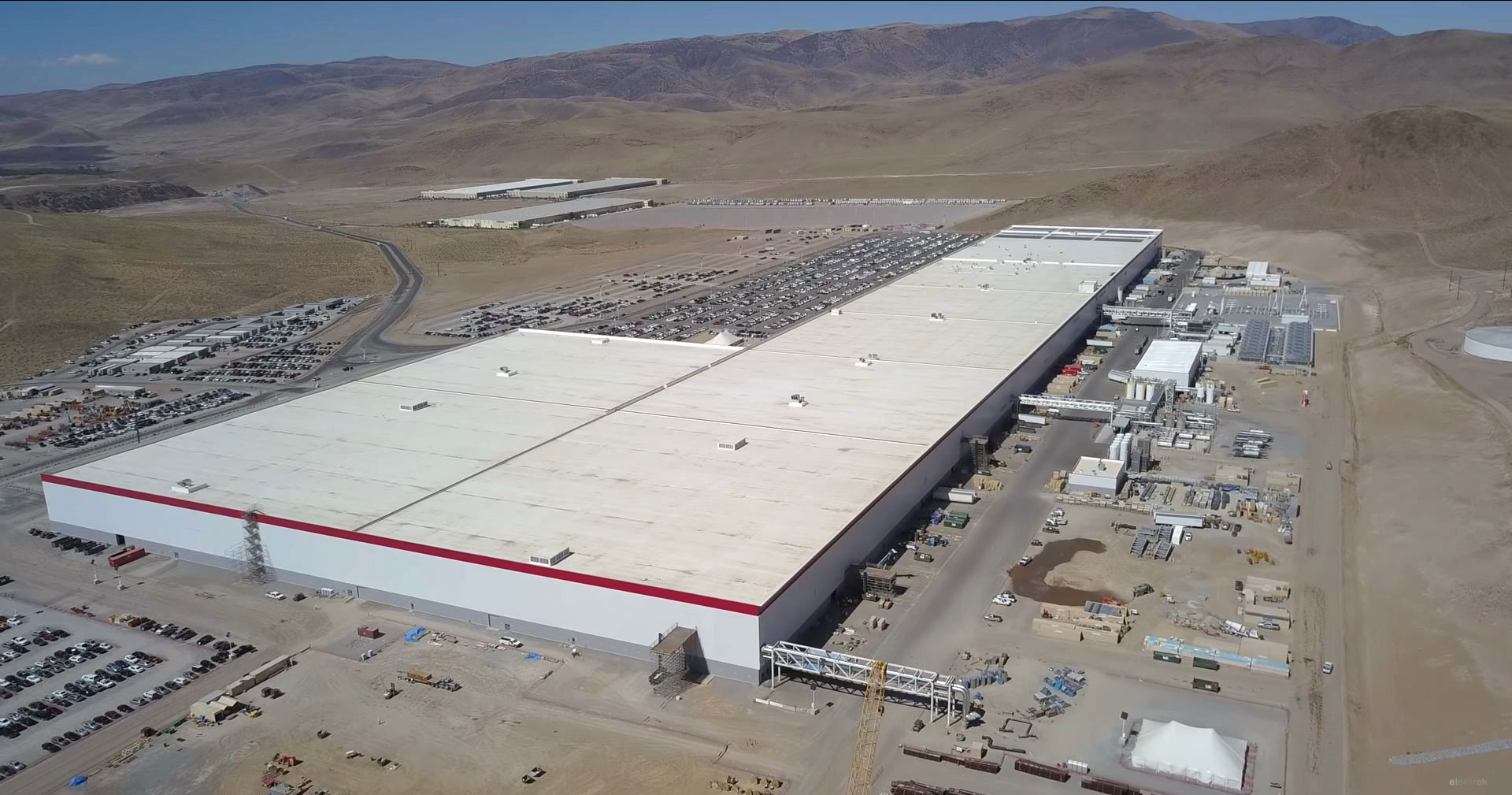
Locally sourcing the very raw materials that are used in batteries was one of the key reasons Tesla built its Gigafactory 1 in Nevada, where there are plentiful lithium reserves.

“The agreement is an important element of Nornickel’s broader strategy to expand its presence in the global battery materials market and establish long-term cooperation with leading producers of cathode active materials,” said Sergey Batekhin, senior vice president at Nornickel.

When it starts production in 2020, the new BASF factory is expected to churn out enough cathodes to supply some 300,000 electric vehicles per year, which, at 60kWh per vehicle, translates to enough cathodes for 18 gigawatt-hours of battery cells per year.

Impressively, BASF said that the new Harjavalta factory will “utilise locally-generated renewable energy resources including hydro, wind and biomass.” As companies around the world ramp up global battery production in support of the electric vehicle transition, it is an opportunity for us to build smarter, more efficient factories.

That happens both by utilizing low-carbon renewables to power them and by building them in intelligent locations. Building factories in close proximity to either raw materials or customers reduces the amount of transportation required and, thus, shrinks the carbon footprint of the manufacturing process. Manufacturing EVs is one of the areas where, according to analysis by the Union of Concerned Scientists, electric vehicles have higher emissions than gas and diesel vehicles due to lower volumes and what have historically been inefficient manufacturing processes for batteries.

The new cathode factory is but a single cog in a greater machine spooling up at BASF that will see some €400 million ($462 million) being invested into building cathode materials for Europe.

From a pricing standpoint, the cathode is one of the more expensive parts of electric vehicle batteries, thanks to the concentration of cobalt in lithium-ion chemistries. As the sharp uptick in demand for cobalt has driven prices of cobalt up to new heights in recent years, battery cell manufacturers and electric vehicle builders are aggressively looking for ways to trim down the cobalt used in their batteries.

Tesla has committed to decrease its cobalt usage from 3% of the battery in June of this year down to 0% over the next 2–3 years, demonstrating that where there is a will, there is a way.

Source: Reuters

Support CleanTechnica’s work by becoming a Member, Supporter, or Ambassador.
Or you can buy a cool t-shirt, cup, baby outfit, bag, or hoodie or make a one-time donation on PayPal.

About the Author

Kyle Field I'm a tech geek passionately in search of actionable ways to reduce the negative impact my life has on the planet, save money and reduce stress. Live intentionally, make conscious decisions, love more, act responsibly, play. The more you know, the less you need. TSLA investor. Tesla referral code: http://ts.la/kyle623

Back to Top ↑

CleanTechnica Clothing & Cups

Advertisement

Advertise with CleanTechnica to get your company in front of our readers.

Top News On CleanTechnica

Advertisement

Follow @cleantechnica
Join CleanTechnica Today!

EV Charging Guidelines for Cities

Share our free report on EV charging guidelines for cities, “Electric Vehicle Charging Infrastructure: Guidelines For Cities.”
Advertisement

Cleantech Press Releases

The New Danish Climate Plan — Together For A Greener Future

Shift In Navajo Country As Coal Plant That Navajo Community Doesn’t Want Is Dropped

Capturing CO2 From Exhaust Pipes Is A Bad Idea That Won’t Die

The EV Safety Advantage

Read & share our free report on EV safety, “The EV Safety Advantage.”

The State of EV Charging

Our 93-Page EV Driver Report

30 Electric Car Benefits

Blockchain × Cleantech

Our Electric Vehicle Reviews

Tesla News

Correcting the Cleantech Record

38 Anti-Cleantech Myths

Wind & Solar Prices Beat Fossils

Cost of Solar Panels Collapses

© 2018 Sustainable Enterprises Media, Inc.

Electric Cars
Electric Car Benefits
Electric Car Sales
Solar Energy Rocks
RSS
Advertise
Privacy Policy

This site uses cookies: Find out more.Okay, thanks