
PALO ALTO, Calif., Oct. 24, 2018 (GLOBE NEWSWIRE) — Tesla has released its financial results for the third quarter of 2018 by posting the current Update Letter on its Investor Relations website. Please visit http://ir.tesla.com to view the letter. As previously announced, Tesla management will host a live question & answer (Q&A) webcast at 3:30… Continue reading Tesla Releases Third Quarter 2018 Financial Results
Tag: Tesla
BASF And Norilsk Nickel Partner On New Battery Production In Finland
Electric Cars
Electric Car Benefits
Electric Car Sales
Solar Energy Rocks
RSS
Advertise
Privacy Policy
Batteries
Published on October 23rd, 2018 |
by Kyle Field
BASF And Norilsk Nickel Partner On New Battery Production In Finland
Twitter
Google+
LinkedIn
Pinterest
Facebook
October 23rd, 2018 by Kyle Field
Germany chemical giant BASF and Russian mining conglomerate Norilsk Nickel (Nornickel) have inked a new deal for nickel and cobalt supply.
The deal will see BASF build a new factory to produce battery cathode materials in Harjavalta, Finland, adjacent to a Nornickel cobalt and nickel refinery. The deal seeks to capitalize on the potential transition of the German auto industry to electric vehicles, which will require an immense new supply of lithium batteries to power them.
“With the investment in Harjavalta, BASF will be present in all major regions with local production and increased customer proximity, further supporting the rapidly growing electric vehicle market,” president of BASF’s Catalysts division Kenneth Lane said.
To date, most of these batteries are sourced overseas from Chinese and Korean suppliers, leaving local companies out of the mix. The new partnership leverages proximity to turn raw materials from the mine straight into usable battery cathode materials that can be funneled directly to a local battery cell manufacturer at a lower cost than they might be sourced from remote suppliers.
Locally sourcing the very raw materials that are used in batteries was one of the key reasons Tesla built its Gigafactory 1 in Nevada, where there are plentiful lithium reserves.
“The agreement is an important element of Nornickel’s broader strategy to expand its presence in the global battery materials market and establish long-term cooperation with leading producers of cathode active materials,” said Sergey Batekhin, senior vice president at Nornickel.
When it starts production in 2020, the new BASF factory is expected to churn out enough cathodes to supply some 300,000 electric vehicles per year, which, at 60kWh per vehicle, translates to enough cathodes for 18 gigawatt-hours of battery cells per year.
Impressively, BASF said that the new Harjavalta factory will “utilise locally-generated renewable energy resources including hydro, wind and biomass.” As companies around the world ramp up global battery production in support of the electric vehicle transition, it is an opportunity for us to build smarter, more efficient factories.
That happens both by utilizing low-carbon renewables to power them and by building them in intelligent locations. Building factories in close proximity to either raw materials or customers reduces the amount of transportation required and, thus, shrinks the carbon footprint of the manufacturing process. Manufacturing EVs is one of the areas where, according to analysis by the Union of Concerned Scientists, electric vehicles have higher emissions than gas and diesel vehicles due to lower volumes and what have historically been inefficient manufacturing processes for batteries.
The new cathode factory is but a single cog in a greater machine spooling up at BASF that will see some €400 million ($462 million) being invested into building cathode materials for Europe.
From a pricing standpoint, the cathode is one of the more expensive parts of electric vehicle batteries, thanks to the concentration of cobalt in lithium-ion chemistries. As the sharp uptick in demand for cobalt has driven prices of cobalt up to new heights in recent years, battery cell manufacturers and electric vehicle builders are aggressively looking for ways to trim down the cobalt used in their batteries.
Tesla has committed to decrease its cobalt usage from 3% of the battery in June of this year down to 0% over the next 2–3 years, demonstrating that where there is a will, there is a way.
Source: Reuters
Support CleanTechnica’s work by becoming a Member, Supporter, or Ambassador.
Or you can buy a cool t-shirt, cup, baby outfit, bag, or hoodie or make a one-time donation on PayPal.
About the Author
Kyle Field I'm a tech geek passionately in search of actionable ways to reduce the negative impact my life has on the planet, save money and reduce stress. Live intentionally, make conscious decisions, love more, act responsibly, play. The more you know, the less you need. TSLA investor. Tesla referral code: http://ts.la/kyle623
Back to Top ↑
CleanTechnica Clothing & Cups
Advertisement
Advertise with CleanTechnica to get your company in front of our readers.
Top News On CleanTechnica
Advertisement
Follow @cleantechnica
Join CleanTechnica Today!
EV Charging Guidelines for Cities
Share our free report on EV charging guidelines for cities, “Electric Vehicle Charging Infrastructure: Guidelines For Cities.”
Advertisement
Cleantech Press Releases
The New Danish Climate Plan — Together For A Greener Future
Shift In Navajo Country As Coal Plant That Navajo Community Doesn’t Want Is Dropped
Capturing CO2 From Exhaust Pipes Is A Bad Idea That Won’t Die
The EV Safety Advantage
Read & share our free report on EV safety, “The EV Safety Advantage.”
The State of EV Charging
Our 93-Page EV Driver Report
30 Electric Car Benefits
Blockchain × Cleantech
Our Electric Vehicle Reviews
Tesla News
Correcting the Cleantech Record
38 Anti-Cleantech Myths
Wind & Solar Prices Beat Fossils
Cost of Solar Panels Collapses
© 2018 Sustainable Enterprises Media, Inc.
Electric Cars
Electric Car Benefits
Electric Car Sales
Solar Energy Rocks
RSS
Advertise
Privacy Policy
This site uses cookies: Find out more.Okay, thanks
Here’s what Tesla Autopilot can see with the new v9 neural net
Some of our favorite Tesla hackers are back at it with new footage to help us understand what Autopilot can see with the new neural net that Tesla deployed in its version 9 software update. Earlier this summer, we already had a rare look at what Tesla Autopilot can see and interpret from Tesla hackers ‘verygreen’ and DamianXVI.… Continue reading Here’s what Tesla Autopilot can see with the new v9 neural net
Elon Musk says Tesla will eliminate some interior options for Models S and X
Mike Blake | Reuters
Newly manufactured Tesla vehicles are placed on transport trailers from a large inventory of newly made vehicles in Burbank, California, August 24, 2018.
Tesla CEO Elon Musk said Tuesday the company will eliminate some interior design options for the Model S sedan and Model X sport utility vehicle to simplify production at Tesla's assembly factory.
The Model X is the company's most complex vehicle in production today, in part because it has unusual falcon wing doors. Customers have had the option to configure the interior of Model X with six or seven seats and a number of options for upholstery, wood and headliner materials.
Musk, who announced the news over Twitter, said some options won't be available after Nov. 1. “Order now to be sure of the one you want,” he said.
He's previously said the company may have been too ambitious when it designed the Model X, and intentionally adopted a simpler design for the subsequent Model 3 mid-sized sedan in order to help speed production.
Tesla has historically struggled to meet Musk's aggressive production targets. The company had planned to reach a Model 3 production rate of 5,000 cars per week by the end of 2017, but did not hit that target until the end of June 2018.
Shares of Tesla were up more than 12 percent Tuesday afternoon after a noted short seller, Andrew Left of Citron Research, said he's changed his mind and is investing in the company's stock. “Tesla is destroying the competition,” Left said in a research note.
The electric car maker reports third-quarter earnings after the bell Wednesday.
UPDATE 3-Dyson chooses Singapore over Britain to build electric car
LONDON (Reuters) – James Dyson, the billionaire British inventor of the bagless vacuum cleaner, has chosen to build his electric car in Singapore to be close to Asian customers, supply chains and a highly skilled workforce. The 71-year-old entrepreneur, who backed Brexit in the 2016 referendum, already manufactures products such as hair dryers, air purification… Continue reading UPDATE 3-Dyson chooses Singapore over Britain to build electric car
Tesla teardown redux, smaller fast chargers, dirty battery manufacturing: Today’s Car News
Follow Bengt
Add to circle
Munro & Associates teardown of Tesla Model 3 [Autoline]
A much-publicized Tesla teardown from earlier in the year reveals some lessons and missed opportunities. Battery manufacturing happens to be in places with dirty power sources. And DC fast chargers have the potential to downsize. All this and more on Green Car Reports.
The teardown (disassembly) analysis of a Tesla Model 3 earlier this year reached some conclusions about building this mass-production electric sedan and why its ramp-up has been so difficult. It seems that Tesla chief executive offiicer Elon Musk agrees with some of the points made.
Mercedes-Benz will be looking at real-world use patterns of leased GLC F-Cell hydrogen fuel-cell vehicles as part of a new test trial in Germany.
A new DC fast-charger design can be mounted on a pole, with a small footprint like a Level 2 charger. With reduced installation costs, better efficiency, and the potential for scalability, is it the future of fast charging?
Battery manufacturing itself may have more associated air pollution than previously thought. The problem, according to Bloomberg New Energy Finance, is that battery production is focused in parts of the world with dirty energy generation—including China, Thailand, Germany, and Poland.
Ford has become the first automaker to test autonomous vehicle technology in Washington, D.C.—a clear sales pitch to lawmakers.
And Jaguar looked to guide dogs for help in developing its pedestrian warning sound in the new I-Pace electric crossover.
Another Tesla Model 3 Teardown Highlights Strengths & Opportunities For Tesla
Electric Cars
Electric Car Benefits
Electric Car Sales
Solar Energy Rocks
RSS
Advertise
Privacy Policy
Cars
Published on October 23rd, 2018 |
by Kyle Field
Another Tesla Model 3 Teardown Highlights Strengths & Opportunities For Tesla
Twitter
Google+
LinkedIn
Pinterest
Facebook
October 23rd, 2018 by Kyle Field
Sandy Munro and his team at Munro and Associates have been tearing cars down for decades. As legacy gas and diesel powertrains are being replaced by electrified versions and new electric car companies continue to sprout (seemingly every other day), Munro and Associates are putting their experience to work tearing down the latest and greatest electric cars.
A new video, which you’ll have to click over to YouTube to view, details some of the key things Munro and Associates recently learned in tearing down a second Model 3. In their coverage of their first teardown of the Model 3 back in July, they confirmed a bottom-up cost to build the Model 3 is probably under $30,000, supporting Tesla’s estimate that it could achieve nearly a 30% margin on the car. They also noted that the electronics in the Model 3 were “like a symphony of engineering,” which, if I’m being honest, is just fun to say.
Tearing down their second Model 3 resulted in another glowing conclusion from the narrator — “Tesla are ahead of the game in all areas but one.” They went on to note that the battery module is a “brilliant piece of engineering.” After the brief intro, the video dives into a section that highlights the one shortcoming identified with the model — the car’s body.
“The car’s body is too complex, expensive, heavy and difficult to build,” according to the narrator, summing up the findings from Sandy Munro and his team. Munro went on to specify the shortcomings of the Model 3 body in what feels like a healthy dose of industry expertise being applied to a car company that he believes still has a lot to learn.
“This is the reason I feel that Tesla has problems. The body and weight and the closures that go along with it are not designed for manufacturability,” Munro said. “They don’t do a good job at part count. The weights are too high. The body is much too stiff.” (One has to wonder, though, how much of this is due to Tesla’s focus on safety and the Model 3’s unprecedented NHTSA safety score — something that just built on Tesla’s previous industry leadership. Indeed, see Elon Musk’s tweet below for confirmation of at least part of this theory.)
Munro’s feedback on the body of the car is surprising given how much effort Tesla has put into optimizing the Model 3 for manufacturability, but it serves to put some substance behind the critiques of Tesla’s informal approach to manufacturing. There is always room for improvement, even after disrupting the entire automotive industry three different times with three different vehicles.
Munro notes that in his analysis that the body shop should be more efficient. Interestingly, Munro believes the body of the car would be more efficient to build if it were done at a traditional automotive factory. “This thing would have been a brilliant design,” Munro said. Tesla, on the other hand, builds the Model 3 exclusively at the former GM–Toyota NUUMI factory in Fremont, which has been retrofitted with a combination of automation and manual labor that lives in a constant state of flux.
The critique from Munro and his team feel very balanced, but the sensationalist, clickbait headlines from Bloomberg and the fact that the video leads with the one thing about the car that’s not amazing is disingenuous. Having said that, the video does highlight a few of the amazing things about the car, after the deep dive into the body of the car.
Munro said that, if the Model 3 were built at a traditional factory, “[Tesla] could have clobbered everybody. Nobody would have been able to catch up.” Whether that is true or not, we will never know, but Model 3 sales tell a very compelling story in favor of Tesla, while sales of the Chevrolet Bolt, which is built in a traditional automotive factory, struggles to gain a significant foothold.
Another key focus of the analysis has been the motors that propel the vehicles. Munro’s analysis estimated that Tesla’s motor for the Model 3 costs an estimated $754, which is significantly cheaper than the motors used in the Chevrolet Bolt ($836) and BMW i3 ($841). The pricing advantage reveals yet another of the paradigm shifts EVs are bringing about, as the cost of the motors in vehicles is now much lower than the cost of engines found in gas and diesel vehicles.
On the back end of the video, Munro opened up about how much fun the Tesla Model 3 was to drive. “This is wicked fast,” he said of the car. That instant torque has even longtime car industry experts smiling from ear to ear.
Support CleanTechnica’s work by becoming a Member, Supporter, or Ambassador.
Or you can buy a cool t-shirt, cup, baby outfit, bag, or hoodie or make a one-time donation on PayPal.
About the Author
Kyle Field I'm a tech geek passionately in search of actionable ways to reduce the negative impact my life has on the planet, save money and reduce stress. Live intentionally, make conscious decisions, love more, act responsibly, play. The more you know, the less you need. TSLA investor. Tesla referral code: http://ts.la/kyle623
Back to Top ↑
CleanTechnica Clothing & Cups
Advertisement
Advertise with CleanTechnica to get your company in front of our readers.
Top News On CleanTechnica
Advertisement
Follow @cleantechnica
Join CleanTechnica Today!
EV Charging Guidelines for Cities
Share our free report on EV charging guidelines for cities, “Electric Vehicle Charging Infrastructure: Guidelines For Cities.”
Advertisement
Cleantech Press Releases
The New Danish Climate Plan — Together For A Greener Future
Shift In Navajo Country As Coal Plant That Navajo Community Doesn’t Want Is Dropped
Capturing CO2 From Exhaust Pipes Is A Bad Idea That Won’t Die
The EV Safety Advantage
Read & share our free report on EV safety, “The EV Safety Advantage.”
The State of EV Charging
Our 93-Page EV Driver Report
30 Electric Car Benefits
Blockchain × Cleantech
Our Electric Vehicle Reviews
Tesla News
Correcting the Cleantech Record
38 Anti-Cleantech Myths
Wind & Solar Prices Beat Fossils
Cost of Solar Panels Collapses
© 2018 Sustainable Enterprises Media, Inc.
Electric Cars
Electric Car Benefits
Electric Car Sales
Solar Energy Rocks
RSS
Advertise
Privacy Policy
This site uses cookies: Find out more.Okay, thanks
Four Charging Networks Control Over 60% Of Charging Points In U.S.
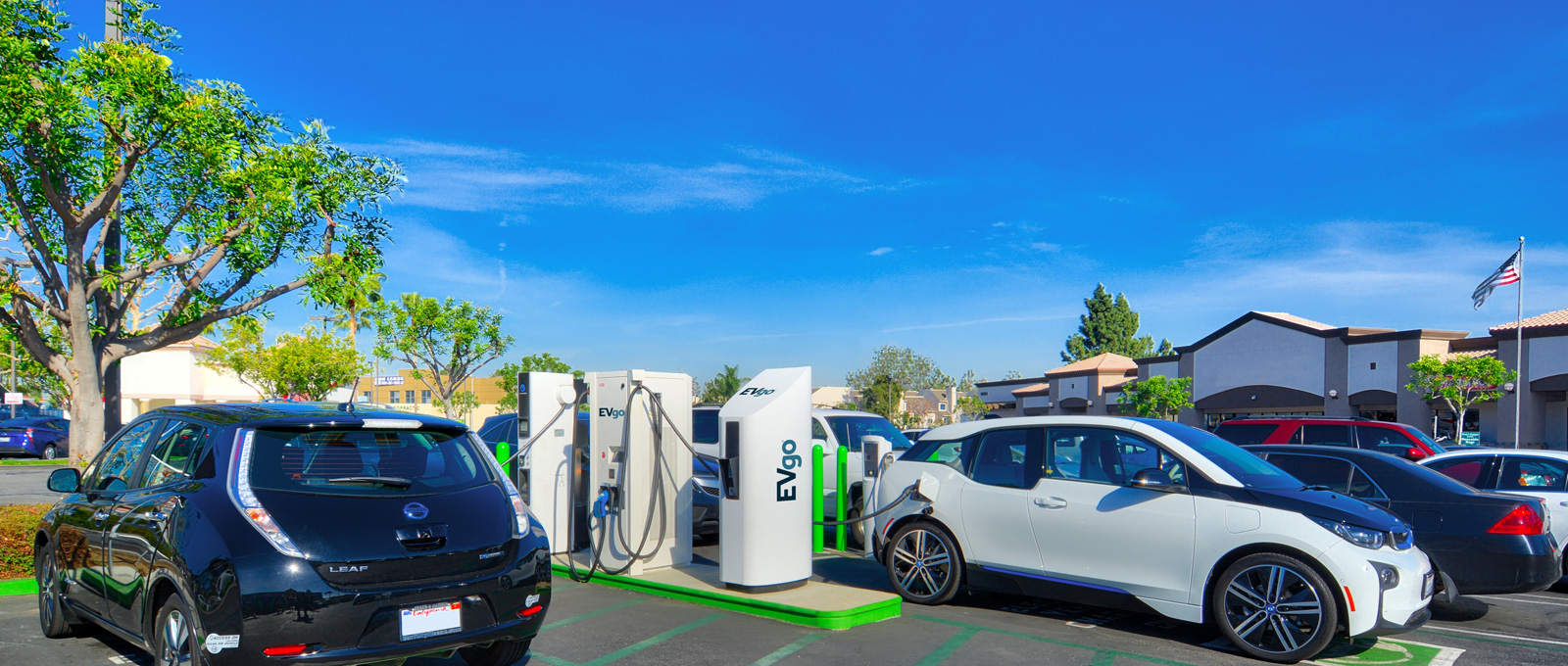
2 H BY MARK KANE Few networks control the majority of the charging network market. The US DOE’s Office of Energy Efficiency & Renewable Energy released an interesting comparison of charging networks by the number of stations (one can be equipped with several charging outlets/chargers). As it turns out, there are well over 22,000 charging stations… Continue reading Four Charging Networks Control Over 60% Of Charging Points In U.S.
Dyson electric car will be built in Singapore in 2021
Dyson is working to produce its cars with solid state battery technology. This advanced battery chemistry, which uses higher energy density cells that are quicker to charge and store more energy than current liquid cells, is predicted to make it to market in time for the brand’s second car, possibly at the start of the next decade. This would… Continue reading Dyson electric car will be built in Singapore in 2021
Tesla Q3 2018 Vehicle Production and Deliveries
PALO ALTO, Calif., Oct. 02, 2018 (GLOBE NEWSWIRE) — In Q3, we produced 80,142 vehicles, 50% more than our prior all-time high in Q2, including: 53,239 Model 3 vehicles, which was in line with our guidance and almost double the volume of Q2. During Q3, we transitioned Model 3 production from entirely rear wheel drive… Continue reading Tesla Q3 2018 Vehicle Production and Deliveries