The Hennessey Venom F5 concept vehicle is displayed during the 2018 Pebble Beach Concours d'Elegance in Pebble Beach, California, U.S., on Sunday, Aug. 26, 2018.David Paul Morris | Bloomberg | Getty ImagesThousands of classic car fans are rolling onto California's Monterey Peninsula for what has become one of the year's most eagerly awaited automotive events.
Centered around Sunday's Pebble Beach Concours d'Elegance, it's a week-long series of car shows, auctions, parties and other events featuring some of the world's rarest and most expensive collector cars.
But what has become known as Pebble Beach car week has also become a major event for new car fans, as well. More than a dozen different luxury brands, including Acura, BMW, Bugatti, Mercedes-Benz and Pininfarina, will be on hand to show off their latest concept and production models, many of them making their world debuts.
Here's an A-to-Z look at some of the more significant introductions that already have been confirmed for Pebble Beach Car Week.
AcuraAcura Type S ConceptSource: AcuraAcura, the luxury arm of Honda, will offer the public debut of the Type S Concept at the Quail, a Motorsports Gathering, on Friday. The Type S badge has been used on a number of limited-run Acuras over the past two decades but will soon become a regular part of the line-up as a challenge to such performance sub-brands as BMW M and Mercedes-AMG. The Type S Concept is based on the next-generation Acura TLX sedan that will come to market next year.
BMWA Vision M Next concept vehicle is revealed during an event of German car producer BMW in Munich, southern Germany, on June 25, 2019.Chirstof Stache | AFP | Getty ImagesBMW is a frequent participant in the Pebble Beach Car Week events and will have a number of different models to show off this year. That includes the North American debut of the Garmisch Concept that won wild acclaim during a debut at the concourse in Villa d'Este, Italy earlier this year.
Also on hand: the Vision M Next Concept which blends a variety of different technologies that could reshape BMW's future product line-up, including battery power and autonomous driving capabilities. The automaker is keeping some secrets, however, hinting that a production version of an older concept – possibly a high-performance 8-Series Gran Coupe – will also debut in Pebble Beach.
BugattiSource: BugattiBugatti will bring the most expensive new car ever sold, the $18.7 million La Voiture Noire, to Pebble Beach. But the ultra-premium arm of the Volkswagen Group has been building suspense by teasing plans to “unveil the next great project for La Marque” at the Friday gathering at the Quail Lodge.
What's in store? Speculation has been rampant, covering everything from a new one-off of Bugatti's only current nameplate, the Chiron, to something entirely new. During an interview with Automobile magazine this month, the brand's CEO Stephan Winkelmann confirmed Bugatti has been working on an ultra-exotic utility vehicle that could top 200 mph and cost as much as $1 million.
De TomasoThe DeTomaso P72 seen at Goodwood Festival of Speed 2019 on July 4th in Chichester, England. The annual automotive event is hosted by Lord March at his Goodwood Estate.Martyn Lucy | Getty Images Sport | Getty ImagesDe Tomaso is a name that delights serious classic car collectors but has been all but forgotten by most luxury buyers. The revived brand is bringing its new P72 supercar to the Monterey Peninsula — along with the only existing version of the old P70 race car developed by namesake Alejandro de Tomaso and the late Carroll Shelby in 1965.
InfinitiA Nissan Motor Co. Infiniti brand QX80 Monograph concept sports utility vehicle (SUV) sits on display during the 2017 New York International Auto Show (NYIAS) in New York, U.S.Andrew Harrer | Bloomberg | Getty ImagesInfiniti comes to Pebble Beach celebrating its 30th anniversary with an array of Edition 30 models. These are specially trimmed-out versions of its most popular product lines, the Q50, Q60, QX50, QX60 and QX80. It also will bring several of its earliest models to the second-annual Japanese Automotive Invitational, one of the many ancillary events that take place during the extended classic car weekend.
KarmaKarma Revero on display at the In goop Health Summit at 3Labs on June 9, 2018 in Culver City, California.Matt Winkelmeyer | Getty ImagesKarma, currently sells the Revero, an updated version of the plug-in hybrid from the old Fisker Automotive it purchased out of bankruptcy.
The now Chinese-owned battery-car brand has promised to expand its single-car line-up over the next few years and will give a hint of what's coming at the Pebble Beach Concours in the form of both the GT and the SC1 concepts. Designed by Italy's Pininfarina, the latter, all-electric model “is a signpost to Karma's future,” according to Karma CEO Lance Zhou.
LotusThe Lotus Evija electric hypercar, manufactured by Group Lotus Plc, a unit of Zhejiang Geely Holding Group Co Ltd., sits on display following its unveiling at the Royal Horticultural Halls in London, U.K., on Tuesday, July 16, 2019.Bloomberg | Bloomberg | Getty ImagesLotus was all but written off for dead a few years ago when its grand expansion plans collapsed. Sold to Geely, the Chinese company that also owns Volvo, it is making a grand entrance at Pebble Beach with the first of what it promises will be an assortment of new sports cars.
The Lotus Evija is an electric hypercar making 1,972 horsepower. That should be good for around 200 mph or, if you prefer, 250 miles per charge. Evija is expected to cost about $2 million.
McLarenThe McLaren GT seen at Goodwood Festival of Speed 2019 on July 4th in Chichester, England. The annual automotive event is hosted by Lord March at his Goodwood Estate. (Photo by Martyn Lucy/Getty Images)Martyn Lucy | Getty Images Sport | Getty ImagesMcLaren will bring to Pebble Beach both the new GT supercar set to go on sale for $210,000 late this year, as well as the McLaren GT by MSO, a heavily customized version of the 612-horsepower grand tourer.
Like several other exotics, the British marque is betting its affluent buyers are willing to reach even deeper into their pockets for bespoke one-offs that will pair unique design features — including custom colors — with performance.
PininfarinaFerrari's Pininfarina BattistaCompany handoutPininfarina is a name that will show up seemingly everywhere during Pebble Beach Car Week. The legendary Italian design house styled a number of classics at shows like the Concours d'Elegance, as well as new models like the Karma SC1 concept.
It's also bringing its own battery hypercar, the Battista, which made its debut at the Geneva Motor Show last March. This updated version now can deliver as much as 300 miles per charge, as well as a top speed of 217 mph and a 0-60 sprint of less than 2 seconds. The price tag? About $2.3 million.
PaganiPagani, the Italian-Argentine supercar company will use Pebble Beach as the stage to debut its own, all-new hypercar, the Huayra Roadster BC. Dubbed a “tribute to scientific research, beauty, and uniqueness,” by the automaker, it is powered by a 750-horsepower Mercedes-AMG V-12. For those who can't wait for the official intro, Pagani loaded a digital version of the Roadster into the CSR Racing 2 videogame. That will be a lot less expensive way to drive the hypercar, of which only 40 will be made – each carrying a $3.4 million price tag.
This is only a partial list of all the brands that will be on hand during the various events over the long week, in one form or another. Indeed, it will be the rare luxury marque that won't host a reception or place one of its concept vehicles on the lawn at the Lodge at Pebble Beach.
Collectors, meanwhile, will have an assortment of auctions to attend where some rare and unusual models will go across the block. Last year generated sales of nearly $120 million, according to McKeel Hagerty, CEO of Hagerty Insurance, which specializes in classic cars.
VIDEO2:0002:00The five hottest rides at this year's Pebble Beach Concours d'EleganceThe Bottom LineDisclosure: Paul Eisenstein is a freelancer for CNBC. His travel and accommodations to Pebble Beach were paid for by Bentley.
Tag: Volvo
Women, men sharply divided on driverless cars – Washington Times
Women are far less enthusiastic about the prospect of driverless cars than men, recent studies show. The latest survey by the AAA car owners club found that 71% of respondents expressed fear about riding in a fully autonomous vehicle. However, a significantly higher percentage of women (79%) than men (62%) said they were fearful of… Continue reading Women, men sharply divided on driverless cars – Washington Times
275-Mile Polestar 2 Makes U.S. Public Debut In San Francisco
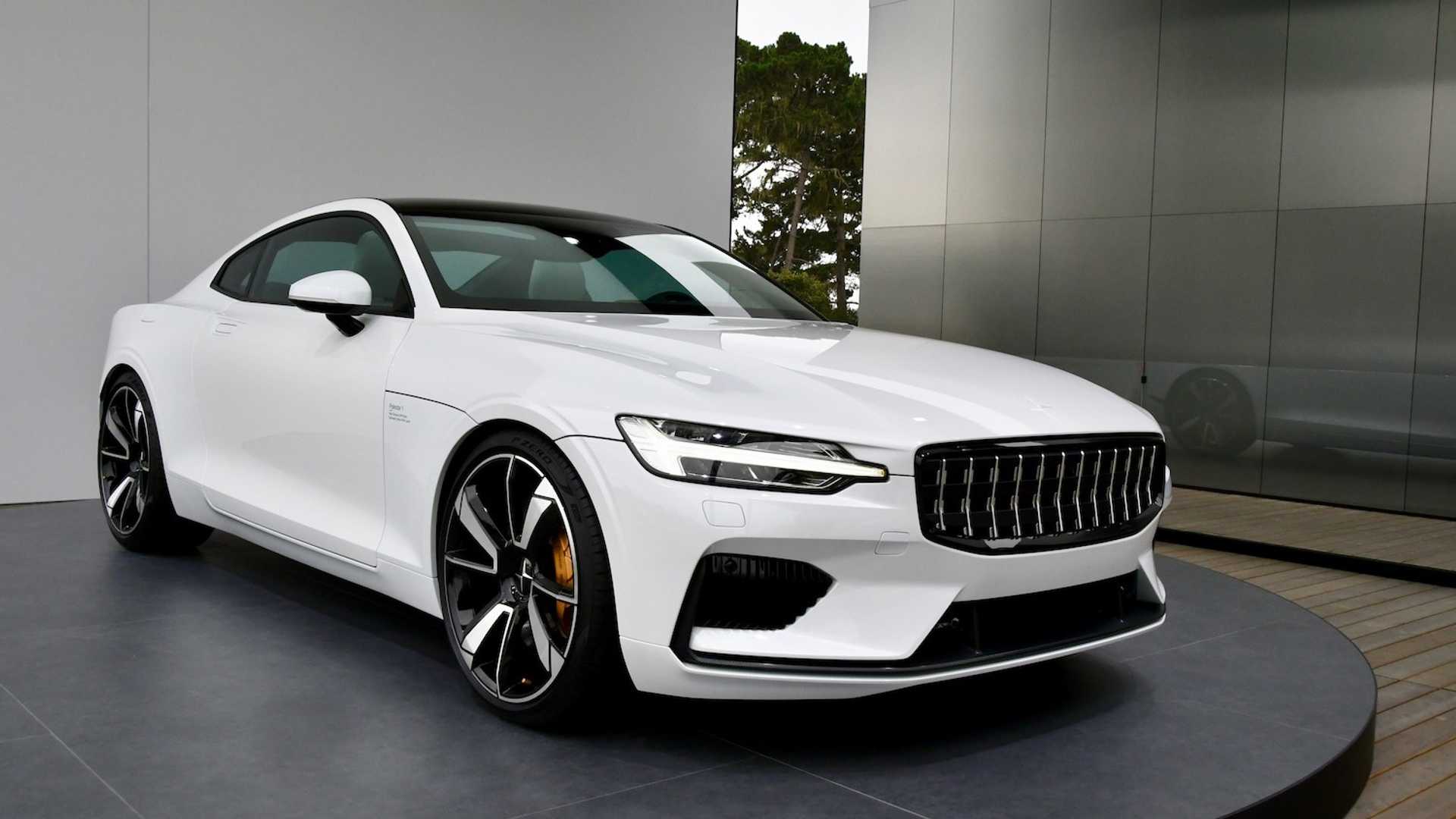
It’s a stunning electric car. Polestar, the electric performance brand from the Volvo and Geely Groups, is moving forward with its North American debut of the Polestar 2. The Polestar 2 is the first fully electric vehicle from Polestar cars. With ongoing launch events in the first seven North American cities that Polestar vehicles will… Continue reading 275-Mile Polestar 2 Makes U.S. Public Debut In San Francisco
Lynk & Co To Produce Plug-In Cars For Europe In China
Lynk & Co still plans to introduce plug-in cars in Europe next year, but the production will take place in China instead of Belgium. Chinese brand Lynk & Co (part of Geely) backed away from its intention of launching plug-in car production for the European market using the Volvo facility in Ghent, Belgium. The reason is reportedly… Continue reading Lynk & Co To Produce Plug-In Cars For Europe In China
Honda drivers can now get Amazon parcels delivered to the trunk of their car
HondaHonda drivers in the U.S. who use the auto firm's “cloud-based connected car system” can now get their Amazon parcels delivered to the trunk of their car.
In a statement earlier this week, Honda said that drivers with a subscription to the HondaLink Remote Services system and a compatible vehicle would be able to use the Key by Amazon app to select an “in-car” delivery option.
On the day of delivery, users of the service must park within two blocks of a selected delivery address. When it's confirmed that the car is in range of the address, a delivery driver will use its GPS location to determine the exact position.
The driver will then scan the package before sending a request for the vehicle to be unlocked so it can be dropped off. The vehicle is then re-locked and the customer is sent a notification to confirm the delivery was made and that their vehicle is secured. Customers need an Amazon Prime subscription to use the service, which is currently available in a select number of cities and surrounding areas.
Honda is the latest car company to utilize the system. Others include GMC and Volvo. The cars have to be 2015 models or newer and need connected service systems.
More broadly, innovation is transforming the way goods and services are delivered. Earlier this month, U.K. supermarket Waitrose announced it would be expanding the trial of its “While You're Away” delivery service.
Yale smart-lock technology gives Waitrose delivery drivers access to a customer's home. The customer sets a temporary access code for their lock, which is sent to Waitrose through a secure app.
This code is in turn sent to a driver's device for the time slot the customer has booked their delivery for and deleted when the delivery is made.
The driver packs refrigerated and frozen goods away and leaves other items on the kitchen counter, or wherever the customer has asked them to be left. A chest-cam worn by the driver records the delivery, with customers able to view the video upon request.
Geely Owned Volvo Unveil Cars Containing Recycled Cobalt Tracked On Blockchain – Coinrevolution.com

The world’s first cars to use recycled cobalt whose supply chain is tracked on Blockchain has been produced by Volvo. The global car maker that is owned by a Chinese firm – Geely used recycled cobalt. This strategy could guarantee the brand a positive reception in a market that is becoming more concerned and involved… Continue reading Geely Owned Volvo Unveil Cars Containing Recycled Cobalt Tracked On Blockchain – Coinrevolution.com
Volvo study shows driver-assistance, self-driving features will make cars more efficient
Self-driving cars are green cars, not just because they are usually electric.
One of the biggest reasons engineers began working on self-driving cars more than a dozen years ago was for their efficiency, reducing stop-and-go driving and eventually even stoplights. (Potential safety improvements are another big motivation.)
Now, a study by the National Renewable Energy Laboratory on behalf of Volvo quantifies that savings. Although fairly rudimentary in its approach, the study is the first that uses real-world driving data to show how much more efficient cars with driver-assistance features can be. The study showed a 5 to 7 percent drop in fuel consumption for the cars driving with adaptive cruise control compared with human drivers.
Cars in the study logged 18,500 trips around Gothenburg. The study, “An Automated Vehicle Fuel Economy Benefits Framework Using Real-World Travel and Traffic Data,” was published in June in IEEE Intelligent Transportation Systems Magazine.
Researchers studied Volvos driven by employees and their families near the company's headquarters in Gothenburg, Sweden, and compared the fuel economy of cars using adaptive cruise control compared with those driven exclusively by human drivers.
Adaptive cruise control is one of the building blocks of self-driving cars, holding a steady speed on the open road, but slowing down gradually if a slower car appears ahead and maintaining a set following distance behind it.
Volvo Drive Me self-driving car project
The study and the parameters aren't perfect. Some of the benefit may come because cars driven with adaptive cruise control tend to travel more slowly as more, slower cars continue to appear in front of them. It also only tests this one aspect of self-driving cars, albeit a fundamental one. Future developments of self-driving cars, such as “platooning” and vehicle-to-vehicle and vehicle-to-infrastructure communications that can smooth traffic flow even further could have even bigger benefits.
“One obstacle to research like this is limited availability of real-world travel data from automated vehicles,” said Lei Zhu, a researcher in NREL’s Mobility, Behavior and Advanced Powertrains Group and lead author of the new paper. “The partnership with Volvo Cars provided a rare opportunity to work with actual vehicle operation and energy consumption data in real traffic.”
The researchers designed the study to provide a basis to simulate benefits from other types of advances in self-driving in the future.
Volvo Cars, China in first blockchain project for recycled cobalt
* Blockchain maps cobalt from recycling plant to finished car * DRC cobalt poses biggest challenge * Volvo also joining DRC cobalt pilot By Barbara Lewis LONDON, Aug 2 (Reuters) – Volvo Cars, owned by China’s Geely , has produced the first cars containing recycled cobalt mapped using a blockchain, and has joined a separate… Continue reading Volvo Cars, China in first blockchain project for recycled cobalt
25 Jul 2019 A milestone in electric mobility: GKN Automotive supplies ONE …
GKN Automotive has five semi-integrated two-in-one and three-in-one eDrive series production projects underway in China and Europe for volume OEMs GKN Automotive boasts 17 years’ experience in eDrive development, integration and global production Integrated eDrive systems manufactured at sites in Europe, China and Japan, with recent investments increasing global capacity The world’s leading supplier of… Continue reading 25 Jul 2019 A milestone in electric mobility: GKN Automotive supplies ONE …
Volvo Cars Recalls 507,000 Vehicles Due to Faulty Engine Part
Swedish auto-maker Volvo Cars is recalling 507,000 vehicles worldwide because of a faulty engine component that could lead to a fire.