
Invers’ operations include carsharing in Dubai, scooter sharing in Madrid, ride pooling in Berlin, and peer-to-peer carsharing in Paris. Photo via Pexels. Germany-based Invers today launched InstaFleet, a modular SaaS offering made to run shared mobility services, such as scooter, kick scooter, or moped sharing. With InstaFleet, mobility companies can start a new service or enrich their… Continue reading Shared Mobility Tech Company Creates Micromobility Software
Tag: Mobility
Embark has disclosed the disengagement stats of its self-driving semi-trucks (GM, GOOGL, DMLRY, TSLA, AMZN)
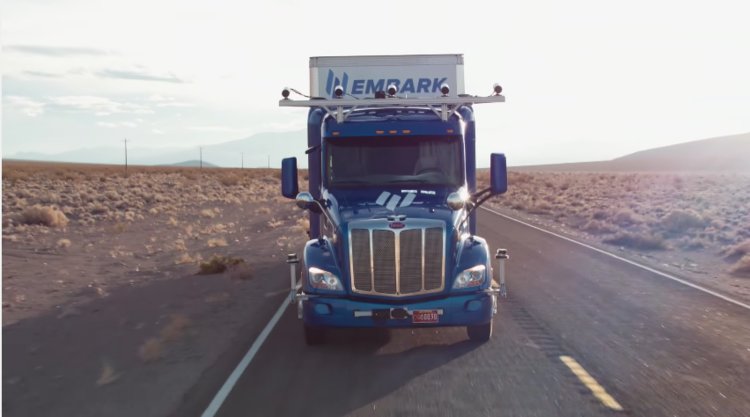
This story was delivered to Business Insider Intelligence Transportation & Logistics Briefing subscribers hours before it appeared on Business Insider. To be the first to know, please click here. Autonomous semi-trucks have long been expected to arrive before self-driving cars. YouTube/Embark However, a new voluntary disclosure of disengagements — the number of times a human… Continue reading Embark has disclosed the disengagement stats of its self-driving semi-trucks (GM, GOOGL, DMLRY, TSLA, AMZN)
How Lidar Revolutionized the Way We See the World
How Lidar Revolutionized the Way We See the WorldFebruary 1, 2019|In Blog|By Albie Jarvis
An Interview with Todd Neff, author of
The Laser That’s Changing the World
Todd Neff’s The Laser That’s Changing the World, tells the story of lidar’s origins, the people who propelled it forward, and its fascinating transitions to the mainstream.
Lidar has a long, rich history with its early concept dating back to the 1930s. The technology was developed in the early 1960s, closely following the invention of the laser. Lidar gained public notice in 1971 when the Apollo 15 mission used the technology to map the moon’s surface. Since then, lidar has been deployed in numerous game-changing applications such as self-driving cars, unmanned aerial vehicles, robotics, security, and more.
Todd Neff is an award-winning science, environment, and healthcare journalist who has written a book that catalogs many of the captivating stories in lidar’s history. The book, called The Laser That’s Changing the World, tells the story of lidar’s origins, the people who propelled it forward, and its fascinating transitions to the mainstream.
We checked in with Todd to hear from him about some of lidar’s early pioneer days, the technology’s road to autonomous vehicles, and where lidar is headed.
Award-winning science, environment, and healthcare journalist, Todd Neff
VL: One of the great strengths of your book is you addressed a complex technology in a way that’s easy to understand. Why do you think it’s important for a non-technical audience to know about lidar?
Todd Neff: People in general should know about lidar because I think lidar is going to be everywhere. Unless someone manages to come up with another technology that can combine with cameras and radar units to instantly provide precise distance measurements millions of times a second, lidar will be as standard on self-driving cars as headlights are on human-driven cars. In not too many years, driving your own car is going to be like churning your own butter or brewing your own beer. People will do it, but when it’s a question of driving in traffic or napping through it, it’s not going to be a hard decision for most of us. Vehicle autonomy depends on a lot of technology, but history shows that lidar has been the key enabler.
Velodyne Lidar’s Alpha Puck, Velarray, and VelaDome
VL: In the book, you called the 2004 DARPA Grand Challenge the “birthplace of the self-driving car industry.” Why was that event so pivotal to the industry?
Neff: The 2004 DARPA Grand Challenge brought together a large group of very smart, not-at-all-risk-averse people – corporate, academic, and independent – who had had, until that point, no sense of the critical mass of talent and interest that had independently accumulated to develop self-driving vehicles. A community was born, in effect. It also showed that the core technologies – particularly computing technologies – had gotten fast enough and solid enough that good engineers could combine them into a package that could do much more than was possible even a few years earlier. The sensors were the weakness, but it wasn’t long before David Hall changed that.
VL: One especially notable outcome of that challenge, you wrote, was David Hall’s invention of the “seminal sensor for self-driving cars.” As you look at lidar’s history, how did David’s invention spur autonomous vehicle development?
Neff: It could be the case, decades from now, that lidar will seem as quaint on autonomous vehicles as hand-crank starters would be on modern cars. But there will be no denying that David Hall’s invention of automotive lidar, which he debuted on a Toyota Tundra in the 2005 DARPA Grand Challenge, marked the moment at which the idea of developing commercially viable self-driving cars became realistic. The ability to identify objects in front of, next to, and behind a vehicle vastly simplified software development (you no longer had to “remember” what you just passed – that it was, say, a guy on a courier bike that would be next to you again at the next stoplight). You could just observe the guy on the bike and plan around it in real time. By the 2007 DARPA Urban Challenge, there were a half dozen finishers in a much more demanding course than those of the desert challenges. Hall’s Velodyne lidar was on five of them, including the winner, Carnegie Mellon’s “Boss.”
VL: Lidar is seen as an essential technology for autonomous vehicles. What did you learn about lidar’s role in other application areas such as 3D mapping, drones, and robots?
Neff: Automotive lidar piqued my initial interest, and it’s a major focus of The Laser That’s Changing the World. But the automotive story doesn’t start until the second half of the book. Like any other reporting effort, you find that there’s a lot more to the story than you first imagined. In this case, I learned that what became lidar was first envisioned by an Irish savant, Edward Hutchinson Synge, 30 years before the invention of the laser, and that the technology’s evolutionary path quickly diverged into two forks – defense (targeting systems) and atmospheric science (spotting pollution plumes at first). Then came bathymetry and land mapping (including land on Mars, Mercury, and the moon); geological and forestry and archeological applications; architectural and construction-related applications, and on and on. Now you’ve got lidar mapping Times Square for Spiderman movies and lidar zapping license plates in the hands of traffic officers; lidar measuring global winds from space; and lidar measuring the altitude of satellites so the same satellites can measure sea levels that are rising based on the mass balance of ice sheets, which other scientists are measuring with lidar. In the time it took to read the above paragraph, someone probably came up with a new application for lidar.
Velodyne Lidar’s HDL 64E, HDL 34E, The Puck, and Ultra Puck
VL: You have called lidar “a really powerful, massively adaptable tool.” It has had dramatic but not very well-known impact in a variety of fields. Can you share one area that you found particularly interesting?
Neff: I found it all interesting, really. There’s been such creativity in the development and application of lidar technology. And it has been organic and unpredictable. Researchers both in the scientific and the defense worlds noted that, with airborne lidar, enough laser light sneaks through a forest canopy that they can make out the ground below. On the defense side, they developed sensors that can see tanks and trucks hidden in jungles. On the science side, they found the long-hidden Seattle Fault on Bainbridge Island, and archaeologists then flew lidar over Central American jungles to completely rewrite the history of Mayan civilization (cities were many times larger than they were believed to be previously, when you had to hack through jungle to survey anything). The history of lidar provides a fascinating look at how a fundamental enabling technology can spill across and ultimately revolutionize radically different fields over time.
VL: You have noted that lidar has a tradition of creativity and innovation reaching back decades. Building on this legacy, what do you see next for lidar?
Neff: The huge amount of brainpower and money pouring into automotive lidar will yield smaller and smaller systems that are easier and easier to program and operate at lower and lower cost. I’d guess lidar will be incorporated into assistive technologies to help the visually impaired safely navigate their worlds, for example. Wheelchairs could well become autonomous. The work happening in automotive lidar today will make such systems technically and economically viable, just as the work done in the telecommunications industry brought lasers to the point that they were inexpensive and reliable enough to incorporate into automotive lidar. But you just can’t predict where a creative scientist or engineer with a problem to solve will take a new enabling technology. The history of lidar demonstrates that in spades.
For Velodyne Lidar Products Click HERE
After challenger banks comes the wave of anti-fraud startups
The sheer scale of global financial crime is not to be underestimated. The U.K.’s National Crime Agency recently observed that it’s “in the hundreds of billions of pounds” annually, and that’s just in the U.K. In the U.S., domestic financial crime, excluding tax evasion, generates approximately $300 billion of proceeds each year for potential laundering.… Continue reading After challenger banks comes the wave of anti-fraud startups
GM’s involuntary layoffs start Monday, at least 4,000 workers expected to lose jobs
America is falling back in love with trucks and SUVs, and that's causing big changes at big car companies
1 Hour Ago | 04:45
General Motors is planning to layoff at least 4,000 salaried workers in North America starting Monday ahead of the company's fourth-quarter earnings report, according to two people briefed on the matter.
The reductions come as the largest U.S. automaker undergoes a massive restructuring announced by CEO Mary Barra in November. GM is halting production at five plants in North America and cutting 14,000 jobs as it realigns its workforce and plants to produce more electric vehicles.
Company executives want to complete as many of the layoffs as possible before the company reports its earnings Wednesday, the people said, asking not to be named because the information isn't public yet.
“We are not confirming timing. Our employees are our priorities and we will communicate with them first,” GM spokesman Pat Morrissey told CNBC Friday.
The involuntary cuts aren't as steep as previously thought.
GM offered buyouts to 17,700 employees in North America with at least 12 years of service in November, according to a document obtained by CNBC at the time. The company was aiming for 8,000 voluntary buyouts, the company previously confirmed. About 2,250 workers accepted severance agreements by Nov. 19, the company previously confirmed. Roughly 1,500 contract jobs have since been eliminated, according to one of the people briefed on the layoffs.
That leaves roughly 4,250 salaried workers and 6,000 hourly employees targeted for layoffs. The company said in November that half of the hourly workers were in Canada with the other half in the U.S.
Many of the cuts are planned at factories in the United States and Canada that make sedans and compact cars — vehicles that have not been selling well in North America, as customers turn toward trucks, sport utility vehicles and crossovers. These vehicles tend to be more profitable for automakers.
As it has been trimming back its sedan lineup and exiting its least lucrative businesses, GM has been pumping cash into new mobility technologies, especially autonomous driving.
GM's reorganization is expected to save the company about $6 billion by 2020, with half of those savings realized by the end of 2019, the company has said.
Executives told investors in mid-January that the company's full-year results for 2018 exceeded the company's expectations, and gave a positive outlook for 2019 as well.
“Mary is bold man. She doesn't mind making a tough decision, which is probably nice to see compared to what GM has been historically. Shes not afraid of a tough decision,” said Sam Huszczo, owner of SGH Wealth Management outside of Detroit. He said he manages money for several clients who work at GM.
This story is developing. Check back for updates.
CNBC contributor Paul Eisenstein assisted with this article.
Hyundai Motor America Reports January 2019 Sales
FOUNTAIN VALLEY, Calif., Feb. 1, 2019 /PRNewswire/ — Hyundai Motor America reported January sales of 40,796 units, a 3 percent increase in comparison with January 2018. Despite a month with many challenges, including the U.S. government shutdown and severe arctic weather across the country, Hyundai was able to achieve increasing sales thanks to strong performances across… Continue reading Hyundai Motor America Reports January 2019 Sales
Atlanta Big Game Amp Contest Winner
The Paint the Town Pink amp contest in Atlanta has a winner! Thomas T. won tickets to the BIG GAME on Sunday 2/3 at Mercedes Benz Stadium. Thomas is thrilled to attend the game, as he is a huge football fan and has ties to the Rams organization. He’s a 5-Star Driver in Atlanta with over… Continue reading Atlanta Big Game Amp Contest Winner
Collaborate Announces New Subscription Service
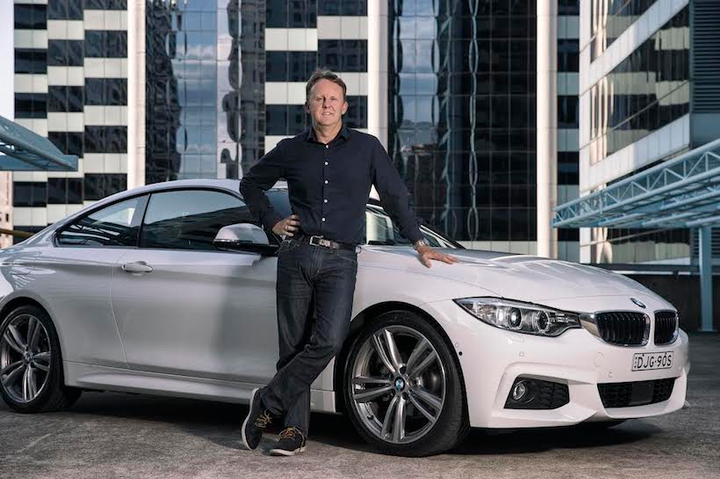
Carly will provide flexibility that many drivers are now seeking by removing the long term financial commitment required to buy or finance a vehicle — removing the need to lock into long-term debt. Photo courtesy of Collaborate. Collaborate, the ASX-listed company behind peer-to-peer car rental platform DriveMyCar, will be launching Carly — Australia’s first flexible car… Continue reading Collaborate Announces New Subscription Service
Toyota Motor North America Reports January 2019 Sales
PLANO, Texas, Feb. 1, 2019 /PRNewswire/ — Toyota Motor North America (TMNA) today reported January 2019 sales of 156,021 vehicles, a decrease of 6.6 percent from January 2018 on a volume basis. With the same number of selling days year over year, sales were down 6.6 percent on a daily selling rate (DSR) basis. Toyota… Continue reading Toyota Motor North America Reports January 2019 Sales
Forget light poles, British firm to build chargers from cable boxes
Ubitricity electric-car charging cord
The future of electric-car charging may be down in the trenches.
At least British broadband provider Liberty Global hopes so. The company, which owns Virgin Media, plans to start a pilot project using Virgin Media's cables and trenches that run to thousands of neighborhoods around Britain. Since they already have power, Liberty Global says they can be used to bring that power to charging stations for electric cars.
The effort could provide a charging solution for city-dwellers, even if they don't have access to a private parking space to install chargers. Finding a way to make it easier for urban apartment and condominium dwellers to charge is considered the next step in opening up the electric-car market to a wider range of buyers.
READ MORE: Ubitricity street lamp socket provides electric-car charging
New chargers could be installed either directly on junction boxes or on dedicated poles with wiring run out of existing Virgin Media trenches along the streets.
Liberty Global plans to have six trials up and running around Britain by Easter, starting in the eastern London community of Southwark.
The company eventually plans to aggregate charging data from self-driving electric car fleets charging on the system to help improve the charging efficiency of autonomous vehicle fleets.
CHECK OUT: UK launches Road to Zero electric car initiatives
The Financial Times first reported the effort.
The move models an effort in Germany that Deutsche Telekom announced in November, which began installing charging stations at 12,000 transformer boxes around that country.
A competing effort in Britain from Ubitricity aims to hang electric-car chargers on street lights around London to give urban electric-car drivers a place to charge.