Top Automotive Industry News for Week of November 5 – November 11, 2018

Here is the most important news associated with the automotive industry
identified by the AEA for the week of November 5, 2018 -November 11, 2018.

We hope it helps you stay up to speed on the key developments in our
industry:

-Automotive Manufacturing News-

First ex-UAW official sentenced in FCA-related scandal; gets 1 year

(Detroit Free Press)

Ford plans construction on Michigan Central Depot by year's end

(Detroit Free Press)

Former Tesla employee charged with embezzling $9.3 million from Elon
Musk's company

(MarketWatch)

Is Toyota Next to Pare Back its Passenger Car Line?

(The Detroit Bureau)

Tesla picks an insider to be chairwoman, fueling doubt Elon Musk will
be reined in

(LA Times)

The gas engine still has a long life to live, Aston Martin CEO says

(CNBC)

VW planning $21K EV to challenge Tesla

(The Detroit News)

VW takes another shot at compact pickup market

(The Detroit News)

White House, California to discuss vehicle emissions rules next week

(autoblog)

Why GM is moving 3,000 workers from Pontiac to Warren

(Detroit Free Press)

-Automotive Evolution News-

8 concept cars that show how technology will dominate the drive of the
future

(CNBC)

Autonomous Cars Face Big Hurdles; They Will Succeed, But When?

(Forbes)

Daimler And Bosch Choose San Jose For Their Silicon Valley Robo-Taxi
Service

(Forbes)

GM's future lineup will run on electricity, drive itself — and fly

(Detroit Free Press)

Mercedes-Benz, Bosch to offer self-driving car rides in San Jose,
California

(USA Today)

Tesla Drivers Report Autopilot Disengaging While Driving Due To
Software Bug

(Forbes)

This Robot Truck Startup May Have An Edge Over Waymo In Bad-Weather
Driving

(Forbes)

Uber rival Taxify says it can grow 100 times bigger in the scooter and
ride-hailing market

(CNBC)

Uber ups its driver perks with 'Pro' program, including free college
education

(USA Today)

-Automotive Retail News-

Better inventory listings, lead management anchor more sales

(Auto Remarketing)

CarGurus Helps Dealerships Solve for Attribution with More Insight

(PR Newswire)

Dealertrack Looks to Speed Car Buying Process

(Auto Finance News)

Jumpstart: Car Buyers Want to Negotiate

(Auto Dealer Monthly)

Lithia and Shift to operate separately and share technology

(Auto Remarketing)

Luxury car owners trade up for American pickups as Ford, GM and Ram
trucks dominate market

(CNBC)

Millennials Spending Big on Cars — With Auto Loans to Match

(The Detroit Bureau)

Used car payments hit record $400 per month as prices top $20,000

(USA Today)

Used-Car Prices Reach 13-Year High in Third Quarter

(Vehicle Remarketing)

Used Vehicle Prices Rising, Pushing Buyers to Look at Leasing

(The Detroit Bureau)

-Automotive Wholesale News-

Compact Van Values Dip at Start of November

(Vehicle Remarketing)

-Automotive Ownership News-

Where your car is most likely to be stolen in every state

(USA Today)

-Automotive Enthusiast News-

Inside the World's Most Valuable Hot Wheels Collection

(Car and Driver)

With millions at stake, car collectors scour Earth for lost classics

(Detroit Free Press)

-Automotive Servicing News-

Mazda to recall 640,000 vehicles globally over diesel engine issue

(Reuters)

Subaru recalls nearly 400K vehicles to fix stalling problems

(Detroit Free Press)

U.S. agency probes 1.7 million GM SUVs over wiper failures

(Reuters)

-General Business & Executive News-

CDK Global Names Brian Krzanich President and Chief Executive Officer

(CDK)

Ford buys electric scooter startup Spin, joining competitors Bird and
Lime

(USA Today)

Harley-Davidson's electric motorcycle signals a big change for the
legendary, but troubled, company

(CNBC)

Tesla’s Booming Model 3 Sales and More This Week In The Future Of Cars

(Wired)

Time Dealer Of The Year

(Automotive News)

VW Considers Investing in Ford-Backed Autonomous Unit Argo

(Bloomberg)

-AEA Reminder-

Did we miss something? Let us know via our

Contact Us Page >>

. If you have specific important news going public soon that you would like
to share with your fellow AEA Members, submit your

PR Distribution Request >>

Have a great week,

Member Services

memberservices@automotiveexecutives.com

Automotive Executives Association

www.automotiveexecutives.com
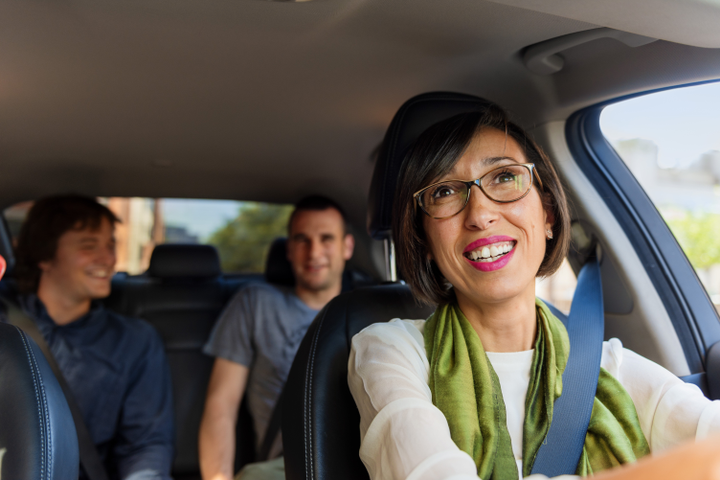
Communauto is enthousiast about the City of Montréal’s position shift concerning free-floating carsharing vehicles

Montréal, March 15th 2018 – Communauto, the largest free-floating carsharing operator in Greater Montréal, salutes the City of Montréal’s new position on free-floating carsharing vehicles.

“Demands for free-floating vehicles are far from being met. Also, the potential is great compared to other Canadian cities. The City’s new policy will allow us to overcome the barriers that have slowed us down in the past. It will also contribute to significantly reduce the circulation of cars and their emissions.” says Mr. Benoît Robert, CEO of Communauto.

The new administration’s initiatives : a positive response to Communauto’s demands:

Enlarging the free-floating service area to include the boroughs of Ahuntsic-Cartierville and Ville-Marie. Note that the free-floating service is already available in Verdun and Outremont. As a result, the City’s new policy will allow us to improve the service coverage in those boroughs ;

Eliminating the cap on the number of permits for hybrid free-floating vehicles and simplifying procedures to obtain them ;

The introduction of incentives for the electrification of the fleet of vehicles, starting by a lower price for the vignettes emitted for those particular vehicles. Communauto already has Canada’s largest carsharing fleet of electric vehicles (120 EV). Most of them are part of its free-floating service.

A positive alternative
“Apprehensions were brought up in the past about the free-floating carsharing service being detrimental to the cab industry, and eventually cannibalizing public transit. After several years of service, it seems obvious to us that there are more opportunities than risks in developing mobility alternatives to the private ownership of cars. Communauto is strongly committed to strengthening the relationship between the actors within this ecosystem”. adds M. Robert.

– 30 –

About Communauto
Communauto is the largest carsharing service in Québec. Founded in 1994, the company with an environmental, social and urbanistic mission has a fleet of over 2000 vehicles in 8 cities: Kingston, Ottawa, Gatineau, Montréal (Laval and Longueuil), Québec, Sherbrooke, Halifax and Paris (France).

In Montréal, Communauto offers to its users a station-bound service with reservation of over 1000 vehicles and a free-floating service, Auto-mobile, that counts 600 vehicles.

Communauto is also the largest operator of shared electric vehicles in Canada. Over the years, it also developed several partnerships with public transportation operators, urban and long distance, taxi companies and bike sharing.

For more information:

Marco Viviani, vice-président

Développement stratégique 1 514 499-2804

mviviani@communauto.ca

AEye Advisory Board Profile: Willie Gault

We sat down with each of our Advisory Board Members to ask them why they’re excited about working with AEye…
Willie Gault is a former NFL wide receiver and Olympic athlete. Gault was an All-American at the University of Tennessee from 1979 to 1982. He played in the National Football League for 11 seasons for the Chicago Bears and Los Angeles Raiders. Considered one of the fastest NFL players of all-time, Gault was a member of the Chicago Bears team that won Super Bowl XX, and was also a participant of both the summer and winter U.S. Olympic teams. Gault is currently an investor, remains active, and holds several world records in masters track and field.

Q: What in your past experience ultimately drew you to the autonomous vehicle arena?
As a professional athlete, I have always been fascinated and amazed by human perception and the role it plays in athletic performance. The brain’s ability to sense the details in the world around you and then accurately calculate where your body needs to be in space and time is remarkable. I have been curious about how these capabilities might be replicated with technology and artificial intelligence. Recently, I have been tracking the application of artificial intelligence in autonomous vehicles which led me to AEye.

Q: Why AEye?
What AEye is doing aligns with my interests in biomimicry, which uses knowledge of natural processes found in humans, plants, and animals to better inform technology and design. After I found out AEye was pursuing research in this field, I knew I had to be part of it.

Q: Where do you see ADAS solutions, autonomous vehicles, and/or artificial perception, heading within the next few years? The next decade? Beyond? How do you see AEye playing a pivotal role in this vision?
I live in Southern California where traffic has a major impact on quality of life. Autonomous vehicles will not only improve safety and efficiency on the roads, but will greatly improve quality of life around the world. I would like to see this technology adopted quickly and widely. However, one of the barriers to its adoption is cost. I believe that AEye’s iDAR system can be manufactured at tremendous scale, efficiently, and at a price point that encourages rapid adoption.

ALL PROFILES
Advisory Board Profile: Elliot Garbus — The Future of Autonomous Vehicles: Part I – Think Like a Robot, Perceive Like a HumanAEye Introduces Groundbreaking iDAR TechnologyThe Future of Autonomous Vehicles: Part II – Blind Technology without Compassion Is RuthlessCB Insights Unveils Second Annual AI 100 Companies at A-ha!Observe, Orient, Decide, Act: How AEye’s iDAR System Adopts Principles of the OODA Loop to Achieve Intelligent, Long-Range DetectionAEye Announces the AE100 Robotic Perception System for Autonomous VehiclesAEye Announces Addition of Aravind Ratnam as Vice President of Product ManagementAEye Introduces Next Generation of Artificial Perception: New Dynamic Vixels™Nate Ramanathan Joins AEye as Vice President of OperationsElon Musk Is Right: LiDAR Is a Crutch (Sort of.)

Elon Musk Is Right: LiDAR Is a Crutch (Sort of.)

By Luis Dussan

Tesla founder Elon Musk recently declared that LiDAR is a “crutch” for autonomous vehicle makers. The comment sparked headlines and raised eyebrows in the industry. Given that this vision technology is the core of many companies’ self-driving car strategies, his view strikes many as anathema or just plain nuts.

But for the moment, let’s ignore the fact that LiDAR is vital to self-driving cars from GM, Toyota and others. Forget that the most advanced autonomous vehicle projects have focused on developing laser-sensing systems.

Even disregard that the alleged theft of LiDAR secrets was at heart of the legal battle between Uber and Alphabet’s Waymo. Waymo claimed that LiDAR is essential technology for autonomous vehicles and won a settlement recently worth about $245 million.

The truth is: Mr. Musk is right. Relying solely on LiDAR can steer autonomous vehicle companies into innovation cul-de-sacs.

LiDAR is not enough. Autonomous vehicles require a rapid, accurate and complete perception system. It is a system-level problem that requires a system-level solution.

My agreement with Mr. Musk may seem surprising given that our company, AEye, sees LiDAR as playing a significant role in making driverless cars a commercial reality.

But we too have realized that if autonomous vehicles are ever going to be capable of avoiding accidents and saving lives, LiDAR is not the answer. At least not by itself.

Not THE answer, but part of the answer…
At Tesla, Mr. Musk is forsaking LiDAR for a 2D camera-based vision system. While Mr. Musk is known for disruptive thinking, it is hard to escape the fact that autonomous vehicles move through a 3D world and successful navigation of that world requires the seamless integration of both 2D and 3D data precisely mapped to both time and space.

At AEye, we believe LiDAR is the foundation of the solution when it seamlessly integrates with a multi-sensor perception system that is truly intelligent and dynamic. Our research has produced an elegant and multi-dimensional visual processing system modeled after the most effective in existence — the human visual cortex.

In fact, AEye’s initial perception system, called iDAR (Intelligent Detection and Ranging), offers a robotic perception system that is more reliable than human vision. LiDAR integrates with a low-light camera, embedded artificial intelligence and at-the-edge processing to enable a car’s vision system to replicate how the human visual cortex quickly interprets a scene.
In short, iDAR enables cars to see like people.

Why this is the superior approach?
In his skepticism of LiDAR, Mr. Musk has curiously bet on a “camera-mostly” strategy when building a vision system for autonomous Tesla vehicles. He has previously made bold (many say unrealistic) predictions that Tesla would achieve full Level 5 autonomous driving with camera-mostly vision in 2019. Navigant Research, in their annual ranking of self-driving vehicle makers, says this is “unlikely to ever be achievable” and rates Tesla at the back of the pack.

The company’s Autopilot system relies on cameras, some radar, and GPS. It has suffered setbacks due to a split with its camera supplier in 2016 after a fatal accident that investigators have blamed partly on Autopilot. Last month, a Tesla smashed into a firetruck in Culver City, California, and the driver said it was “on autopilot.”

The evidence strongly argues against Mr. Musk’s decision to bet on passive optical image processing systems. Existing 2D image processors and 2D to 3D image conversion concepts have serious flaws that can only be addressed with massive computing power and more importantly — algorithms that have not been invented, and are many years away from becoming a reality. This makes this approach too costly, inefficient and cumbersome to achieve Level 5 autonomous driving at commercial scale.

At AEye we know that integrating cameras, agile LiDAR, and AI equals a perception system that is better than the sum of its parts. It surpasses both the human eye and camera alone, which is required if you don’t have the sophistication of the human brain yet replicated.

In his “crutch” comments, Mr. Musk predicted that LiDAR-based systems will make cars “expensive, ugly and unnecessary,” adding: “I think they will find themselves at a competitive disadvantage.” The truth is that size, weight, power, and cost are decreasing for vehicle navigation grade LiDAR. And they will fall further. AEye, and maybe others, will see to that.

We respect Musk’s innovations and are grateful to him shedding light on where LiDAR needs to go to reach full autonomy. But in the end, as we see LiDAR as a lever, rather than a crutch, we can only give him partial credit for his understanding of the way forward.

ALL NEWS & VIEWS
Elon Musk Is Right: LiDAR Is a Crutch (Sort of.) — AEye Introduces Groundbreaking iDAR TechnologyObserve, Orient, Decide, Act: How AEye’s iDAR System Adopts Principles of the OODA Loop to Achieve Intelligent, Long-Range DetectionAEye Introduces Next Generation of Artificial Perception: New Dynamic Vixels™AEye Announces the AE100 Robotic Perception System for Autonomous VehiclesThe Future of Autonomous Vehicles: Part I – Think Like a Robot, Perceive Like a HumanAEye Announces Addition of Aravind Ratnam as Vice President of Product ManagementCB Insights Unveils Second Annual AI 100 Companies at A-ha!AEye Granted Foundational Patents For Core Solid-State MEMs-Based Agile LiDAR And Embedded AI TechnologyGartner Names AEye Cool Vendor in AI for Computer VisionAEye Welcomes James Robnett to Executive Team as Vice President of Automotive Business Development

ChargePoint raises $240 million to serve an anticipated flood of electric vehicles

Electric vehicle charging network ChargePoint has raised $240 million in a Series H funding round that attracted a diverse group of investors from the automotive, energy, financial, venture capital, utilities, and even oil and gas industries. New investors in the round include American Electric Power, Chevron Technology Ventures, Canada Pension Plan Investment Board, Daimler Trucks… Continue reading ChargePoint raises $240 million to serve an anticipated flood of electric vehicles

Uber Ends Rental Car Program for Drivers

The decision to end Uber Rent comes a few weeks after Lime, a scooter-sharing company that partners with Uber, announced that it would start testing a carsharing service in Seattle.  Photo courtesy of Uber.  Uber has ended Uber Rent, its program that lets drivers rent vehicles from within the Uber app, Quartz reports.  The program,… Continue reading Uber Ends Rental Car Program for Drivers

‘Out of control’: Chinese authorities slam ride-hailing giant Didi over safety

BEIJING (Reuters) – Chinese authorities announced a broad crackdown on China’s ride-hailing industry on Wednesday, targeting market-leader Didi Chuxing with fines following the deaths of two passengers in separate incidents earlier this year. FILE PHOTO: The company logo of the Didi ride hailing app is seen on a car door at the IEEV New Energy… Continue reading ‘Out of control’: Chinese authorities slam ride-hailing giant Didi over safety

Edenred acquires UK fuel card business

Global fuel card specialist Edenred has acquired the British business, The Right Fuelcard Company (TRFC) for about £95 million (€107 million), to gain a foothold in the UK market. TRFC has 27,000 corporate customers and 150,000 cardholders in the UK where it claims to be the fourth largest fuel card supplier. Its fuel card is… Continue reading Edenred acquires UK fuel card business

15 Hurdles To The Industrialization Of Driverless Cars (Part 1 Of 3) – Forbes

Photocredit: GettyGetty Will the future of driverless cars rhyme with the history of the Segway? The Segway personal transporter was also predicted to revolutionize transportation. Steve Jobs gushed that cities would be redesigned around the device. John Doerr said it would be bigger than the Internet. The Segway worked technically but never lived up to its backers’ outsized hopes for market… Continue reading 15 Hurdles To The Industrialization Of Driverless Cars (Part 1 Of 3) – Forbes

The building blocks for the future of the BMW Group. The BMW Vision iNEXT celebrates its world premiere in Los Angeles.

Munich. The BMW Vision iNEXT provides an insight into the future of personal mobility. The latest Vision Vehicle from the BMW Group symbolises the dawn of a new era in driving pleasure – and is celebrating its world premiere at the Los Angeles Auto Show. Far more than a vehicle alone, the BMW Vision iNEXT… Continue reading The building blocks for the future of the BMW Group. The BMW Vision iNEXT celebrates its world premiere in Los Angeles.