Rock Carriers An often-overlooked use for autonomous driving technology is in industrial applications, where raw materials have to be shipped from point A to point B. In what automaker Volvo calls its “first commercial autonomous solution transporting limestone from an open pit mine to a nearby port,” six existing autonomous trucks will be upgraded with sophisticated… Continue reading Self-Driving Trucks Will Transport Limestone in a Norwegian Mine
Tag: Mobility
Salaried-worker layoffs will cut deep at GM
Salaried-worker layoffs will cut deep at GMGeneral Motors Co. will likely have to lay off nearly 6,000 salaried workers after roughly 2,250 employees requested to take the buyout the Detroit automaker offered to North American salaried employees and global executives last month.
The number of employees who asked to take the buyout was outlined in a portion of a memo to employees from CEO Mary Barra, obtained by The Detroit News. GM said Monday it was targeting 8,000 jobs with the buyouts, a benchmark the company will now have to meet with about 5,750 layoffs.
Managers from each department were given cost-cutting goals to meet by the end of the year, which could be met by addressing discretionary spending or leveraging buyouts. The managers still have to approve the buyout requests from their employees before GM knows exactly how many employees it needs to lay off.
The automaker offered buyouts to 18,000 salaried workers on Halloween, and the deadline to accept the offer was last week.
Under GM's buyout offer, eligible employees could receive six months' pay and six months' health care coverage starting in February, though on a case-by-case basis some employees could leave before the end of the year to effectively get eight months' compensation.
The expected layoffs come as GM is also planning to stop production at five plants next year, including Detroit-Hamtramck Assembly and Warren Transmission, affecting about 14,300 jobs across the company.
The buyouts and layoffs among GM's salaried workers are part of what the automaker has called a transformation of its workforce. At the same time GM executes some 6,000 layoffs among salaried workers, it is hiring aggressively in emerging automotive disciplines like software development, batter and fuel cell technology and autonomous vehicle development.
GM Cruise LLC, the automaker's self-driving vehicle development arm based in San Francisco, recently surpassing 1,000 workers. A new office in Seattle opening early next year will also add up to 200 new workers.
“We are going to continue to hire,” Barra told reporters Monday. She says GM is focusing harder on the “skillsets of the future”
“You will see us having new employees join the company as others are leaving,” she said. “We still need many technical resources across the company.”
Staff Writer Ian Thibodeau contributed to this report
nnaughton@detroitnews.com
Twitter: @NoraNaughton
Read or Share this story: https://www.detroitnews.com/story/business/autos/general-motors/2018/11/26/gm-needs-lay-off-nearly-6-000-salaried-workers/2115695002/
Elon Musk says Tesla was ‘single-digit weeks’ away from death during Model 3 production
Tesla CEO Elon Musk revealed how close the company came to folding in an Axios interview broadcast on HBO Sunday night. “Tesla really faced a severe threat of death due to the Model 3 production ramp,” said Musk. He added that the company was “bleeding money like crazy,” and the haemorrhaging of cash got to… Continue reading Elon Musk says Tesla was ‘single-digit weeks’ away from death during Model 3 production
Hubject announces partnership with MOEV
Two LA-Based Companies Work to End Electric Vehicle Charging Challenges SANTA MONICA, CALIF. (November 13, 2018) – Hubject, the globally recognized leader in electric vehicle (EV) interoperability, has partnered with MOEV, Inc., an EV charger and cloud-based energy management software provider. The two companies will work together to offer seamless charging to EV drivers. “We… Continue reading Hubject announces partnership with MOEV
VW to invest $50B in electric and autonomous tech
VW to invest $50B in electric and autonomous techFrankfurt, Germany – Volkswagen AG, which is negotiating investments and tie-ups with Ford Motor Co., intends to invest 44 billion euros ($50 billion) in the electric and autonomous car technologies expected to reshape the industry. The German carmaker also said it would make battery-powered vehicles more accessible to mass-market auto buyers by selling its new I.D. compact for about what a Golf diesel costs.
The investment plans for the next five years aim to make Volkswagen “a worldwide supplier of sustainable mobility,” Chairman Hans Dieter Poetsch said Friday. He added that the company is in talks with Ford Motor Co. about possible cooperation in making light commercial vehicles.
The Detroit News has previously reported on those talks on global partnerships between Volkswagen and Ford, as well as negotiations with Volkswagen to invest potentially more than $1 billion in Argo AI, the robotics and technology company majority-owned by Ford. Volkswagen also is considering a separate investment in Ford’s in-house autonomous vehicle business.
Established automakers as well as several U.S. startups are rolling out electric models to compete with Tesla , currently the market leader. Auto companies need electrics to meet new environmental standards in many countries.
In Europe, manufacturers need to sell more battery-powered cars to meet tougher EU limits on carbon dioxide emissions that come into force 2021 and aim to fight global warming. Automakers like Volkswagen, Daimler and BMW risk penalties of thousands of euros per vehicle if they can’t meet requirements for lower average emissions.
Authorities in China, where Volkswagen gets much of its profit, have also mandated a bigger share of electrics and hybrids.
Yet right now, such vehicles remain a niche market due to higher price and lack of places to charge. Battery-only vehicles were only 0.6 percent of the market in the European Union last year. They are running from 1 to 2 percent of U.S. new-vehicle sales so far this year.
Major new models unveiled in recent weeks from Daimler’s Mercedes-Benz and Volkswagen’s Audi brand have been expensive SUVs; Audi’s e-tron starts at a German price of 80,000 euros. The starting price for Tesla’s Model X is around $80,700 while the Model S starts around $74,500.
VW’s upcoming I.D. compact could take mass-market buyers from Tesla’s Model 3, a mass-market car with a base price of $35,000 before tax credits. In reality, though, you can’t order one yet for less than $46,000.
Poetsch said the I.D. compact would be about the cost of a Golf diesel today, which is priced at 23,875 euros in Germany, according to Volkswagen’s website, and goes up as options are added. The next model up the scale starts at 30,625 euros.
General Motors, Nissan and Mitsubishi already are selling mass-market electric vehicles, but they’re still more costly than cars with gasoline engines, and they haven’t sold in great numbers.
Higher cost is one reason consumers are not yet buying purely electric vehicles in large numbers. The lack of charging points is another, leaving many owners of electric vehicles to use them mainly in cities or for shorter trips. Volkswagen and other automakers are working together on building a freeway network of fast-charging stations to enable longer trips with battery powered cars.
Chinese automakers as well as U.S. startup companies also are getting into the electric car market. Rivian, a Detroit-area company, plans to unveil a high-end electric pickup and SUV later this month, to go on sale in late 2020. Lucid Motors, a Newark, California, startup whose leadership includes six former Tesla executives, plans to deliver its first cars in 2020 as well.
The shift to electric cars is a big one for a company the size of Volkswagen, which has over 600,000 employees and makes about 10 million vehicles a year.
It is converting three of its German plants from internal combustion to battery car production as it pivots away from diesel vehicles in the wake of its emissions scandal. It says it will increase the number of electric models from six now to more than 50 by 2025.
Ian Thiboudeau of The Detroit News contributed.
Copyright 2018 The Associated Press. All rights reserved. This material may not be published, broadcast, rewritten or redistributed.
Read or Share this story: https://www.detroitnews.com/story/business/autos/mobility/2018/11/16/vw-invest-electric-autonomous-tech/38545307/
Volvo’s autonomous trucks tackle mining operations
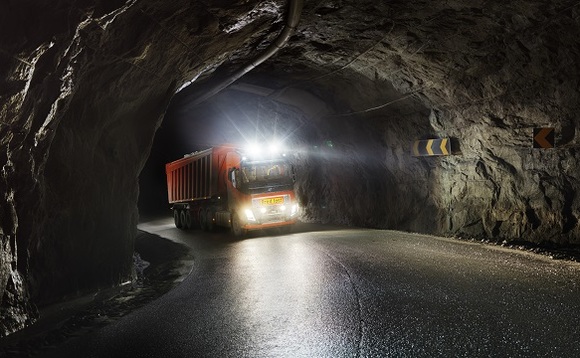
Six autonomous trucks will move limestone about 5km from the pit to the crusher, through outdoor and enclosed spaces It might not be as flashy as a supercharged Tesla racing up the motorway with no hands on the wheel, but Volvo Trucks’ new contract to haul limestone at a mine in Norway could be more impactful.… Continue reading Volvo’s autonomous trucks tackle mining operations
Ghosn’s arrest casts doubt on Renault-Nissan alliance
Ghosn’s arrest casts doubt on Renault-Nissan allianceDetroit – For years, France’s Renault and Japan’s Nissan struggled to make money in the global auto business.
Then came Carlos Ghosn, a Renault executive who helped to orchestrate an unprecedented transcontinental alliance, combining parts of both companies to share engineering and technology costs.
Now Ghosn’s arrest in Japan for alleged financial improprieties at Nissan could put the nearly 20-year-old alliance in jeopardy.
Ghosn, 64, born in Brazil, schooled in France and of Lebanese heritage, is set to be ousted this week from his spot as Nissan chairman. He could also lose his roles as CEO and chairman of Renault, threatening the alliance formed in 1999 that’s now selling more than 10 million automobiles a year.
He’s been “the glue that holds Renault and Nissan together,” Bernstein analyst Max Warburton wrote in a note to investors. “It is hard not to conclude that there may be a gulf opening up between Renault and Nissan.”
Nissan has said it will dismiss Ghosn after he was arrested for allegedly abusing company funds and misreporting his income. That opens up a leadership void at the entire alliance, for which Ghosn officially still serves as CEO and chairman.
Ghosn added Mitsubishi to the alliance two years ago after the tiny automaker was caught in a gas-mileage cheating scandal. He had even floated the idea of a full merger between the three companies.
“Today’s events throw any prospect of that up in the air,” Michael Hewson, chief market analyst at CMC Markets in London, wrote in a note to investors.
Nissan CEO Hiroto Saikawa has publicly resisted the idea of an outright merger. So with Ghosn out at Nissan and probably Renault as well, the companies are unlikely to get any closer.
The companies now share technology, and they save money by jointly purchasing components.
While there could be some scrutiny of the relationships between the companies, they’re so intertwined now that cutting them apart would be difficult, said Kelley Blue Book analyst Michelle Krebs. “I would not predict its demise,” Krebs said of the alliance.
She said she sees further consolidation in an industry that faces unprecedented research costs for autonomous and electric vehicles, while at the same time continuing to develop cars and trucks powered by internal combustion engines.
“The last thing one of the world’s biggest automakers needs is the disruption caused by an investigation into the behavior of a man who has towered over the global auto sector,” said Hewson.
Nissan’s board is to meet Thursday to consider Ghosn’s fate. Renault, where Ghosn is also CEO, said its board will hold an emergency meeting soon, and experts say it is unlikely that he will be able to stay at the company or the broader alliance.
The brash Ghosn was once viewed as a savior in the auto business with the ability to turn around the two struggling companies. In 2006 he even proposed an alliance with global giant General Motors.
Bernstein’s Warburton wrote that Ghosn’s once-mighty reputation has been declining for years, while Krebs said Nissan never could meet Ghosn’s goal of 10 percent U.S. market share even though it has relied on “bad behavior” such as heavy discounts and sales to rental car companies.
Saikawa reiterated Nissan’s commitment to the venture, while a Renault statement expressed “dedication to the defense of Renault’s interest in the alliance.”
––––
Charlton reported from Paris. News Researcher Rhonda Shafner contributed from New York.
Copyright 2018 The Associated Press. All rights reserved. This material may not be published, broadcast, rewritten or redistributed.
Read or Share this story: https://www.detroitnews.com/story/business/autos/foreign/2018/11/20/ghosns-arrest-casts-doubt-renault-nissan-alliance/38570467/
Congress considers extending electric vehicle tax credits, approval of self-driving cars
Congress considers extending electric vehicle tax credits, approval of self-driving carsWashington — With Congress returning to Washington on Tuesday for a flurry of legislative activity before the end of the year, transportation advocates are hoping to win support for pair of measures that would allow carmakers to sell thousands of self-driving cars and extend tax credits for electric vehicles.
Supporters of a U.S. Senate bill championed by U.S. Sen. Gary Peters, D-Bloomfield Township, that would allow automakers to sell more than 80,000 self-driving cars each per year are hoping to finally pass the measure in the upcoming so-called lame duck session after a year-long wait. They note that the current Republican-led House passed a similar measure with relative ease in 2017.
Additionally, General Motors Co., Nissan Motor Co. and Tesla Inc. have joined forces with environmental groups to form a new coalition that is pushing to remove a cap on a federal tax credit that provides up to $7,500 to buyers of electric cars. GM, Nissan and Tesla, makers of the Chevrolet Bolt, Nissan Leaf and Tesla's electric-fleet, are among the biggest electric car producers in the U.S. Current rules allow automakers to offer credits for up to 200,000 electric vehicles per manufacturer.
Republican senators may be more likely to compromise with their Democratic colleagues on the self-driving legislation instead of waiting to have to negotiate a new deal with the House after Democrats take control of that chamber in January.
A spokeswoman for Peters said he “continues to work with his colleagues on both sides of the aisle” to get the bill signed into law before the end of the year, noting that major companies have already begun testing autonomous vehicles at several sites around the U.S., including at the American Center for Mobility in Ypsilanti Township.
“As companies move forward with their self-driving vehicle plans, Sen. Peters is focused on ensuring there is a federal regulatory framework in place to oversee the safe deployment of self-driving vehicles,” Peters' office said.
But critics of the bill argue that not enough attention is being paid to safety concerns, and that there isn't enough oversight on the road-readiness of the technology.
The picture is slightly more complicated for supporters of lifting the cap on electric car tax credits. A measure by U.S. Sen. John Barrasso, R-Wy., would eliminate the tax credit for electric cars and institute a new tax on electric cars and alternative fuel vehicles to boost the coffers of the federal Highway Trust Fund that pays for construction projects.
A separate measure by U.S. Sen. Dean Heller, R-Nev., would keep the electric vehicle tax credit in place and lift the cap. A similar measure was also introduced by U.S. Sen. Dianne Feinstein, D-Calif., Jeff Merkley, D-Ore., Martin Heinrich, D-N.M. and Catherine Cortez Masto, D-Nev.
Heller lost his seat in last week's election to Democratic U.S. Rep. Jackie Rosen, who has also co-sponsored legislation in the House to extend the electric car tax credit for 10 years. Nevada is home to Tesla's Gigafactory 1 lithium-ion battery factory.
When carmakers hit the 200,000-vehicle ceiling, they face a phasing-out process of the $7,500 tax credit offered to buyers of full-electric vehicles — reducing that credit by half every six months. At least one automaker, Tesla, has already hit the limit, and GM is also expected to hit the mark during the fourth quarter of 2018.
GM sold 23,297 all-electric Chevrolet Bolts and 20,349 plug-in hybrid Chevrolet Volts in the U.S. in 2017.
Dan Turton, vice president of public policy at GM, said in announcing a new group known as the EV Drive Coalition that includes GM, Nissan and Tesla: “A federal tax credit to help make electric vehicles more affordable for all consumers is integral to reaching a zero-emissions future and establishing the U.S. as the leader in electrification. We feel that the tax credit should be modified so all customers continue to receive the full benefit going forward.”
Advocates for the self-driving bill are hoping for favorable action. Scott Hall, director of communications and public affairs of the Washington, D.C.-based Alliance for Automobile Manufacturers, which lobbies for major U.S. and foreign-owned automakers, said automakers “remain optimistic the Senate will take action on this bipartisan legislation, given the tremendous promise of this technology to make our roadways safer and provide greater mobility options to persons with disabilities and seniors.”
But critics of the self-driving bill are on high alert.
John Simpson, privacy and technology project director at the Los Angeles-based Consumer Watchdog group, which has raised concerns about the safety of self-driving cars after recent high-profile crashes, said he is “concerned there will be a mad rush to try to slam it through” now that the contentious election season has passed.
“It's simply insanity to rush through a bad bill just to say you've got a bill,” Simpson said, adding that Congress has done little to address concerns that have been raised by safety groups about giving automakers wide latitude to sell self-driving cars.
Groups that represent trial lawyers have complained about a lack of protections that would ensure the right to sue if someone is hurt or killed in a self-driving car.
Peter Knudsen, director of communications for the Washington, D.C-based American Association for Justice, which lobbies for trial lawyers who typically represent plaintiffs, added that his group is also still “strongly opposed” to the Senate's self-driving bill.
“We remain hopeful that proponents of AV START will adopt the vital changes necessary to ensure that the bill brings transparency and accountability to the driverless car industry,” Knudsen said.
The arguments appear to have held sway with some U.S. senators thus far. At least five have publicly expressed concerns about the measure, pointing to accidents this year that involved Uber and Tesla vehicles that were operating autonomously or semi-autonomously. The opposition prevented the self-driving bill from being quickly passed in the notoriously deliberate upper chamber.
klaing@detroitnews.com
(202) 662-8735
Twitter: @Keith_Laing
Read or Share this story: https://www.detroitnews.com/story/business/autos/mobility/2018/11/20/driverless-electric-vehicle-bills-face-lame-duck-rush/1991341002/
Top Automotive Industry News for Week of November 19 – November 25, 2018
Here is the most important news associated with the automotive industry
identified by the AEA for the week of November 19, 2018 -November 25, 2018.
We hope it helps you stay up to speed on the key developments in our
industry:
-Automotive Manufacturing News-
Ford, VW could announce electric, driverless-car collaborations:
analyst
(MarketWatch)
Ford wants to get rid of that new-car smell. Here's why.
(USA Today)
General Motors buyouts likely to fall short and layoffs loom
(USA Today)
German court rules Volkswagen must reimburse owner full price of car
(Reuters)
Ghosn scandal could trigger a series of crises for Nissan, Renault,
Mitsubishi
(CNBC)
GM under investigation for faulty brake vacuum pumps
(Detroit Free Press)
Mazda Toyota Manufacturing kicks off construction on $1.6B Alabama
plant
(Made In Alabama)
Nissan board votes to remove Carlos Ghosn as chairman
(CNBC)
Renault taps interim chairman, COO to replace Ghosn: sources
(Reuters)
Tesla will cut prices in China in response to import tariffs; Reuters
(MarketWatch)
These are the best cars we tested in 2018
(CNBC)
-Automotive Evolution News-
AEye Raises $40M To Build Autonomous Car Sensor That Sees Better Than
Humans
(Forbes)
China Is Leading the World to an Electric Car Future
(Bloomberg)
Congress considers extending electric vehicle tax credits, approval of
self-driving cars
(The Detroit News)
Electric vehicle sales to 'see a big lift' over the next 2 to 3 years,
BlackRock says
(CNBC)
Needing Growth, Uber Returns to Germany. This Time on Best Behavior.
(The New York Times)
-Automotive Retail News-
3 straight quarters of more than 10 million used-car sales
(Auto Remarketing)
Analysts Expect First November Car Sales Slide in 9 Years
(The Detroit Bureau)
AutoNation and Scott Painter patch things up
(Automotive News)
Black Friday is breathing life back into the 0% auto loan
(Automotive News)
Digital Crystal Ball Gives Auto Dealers A View To Future Sales
(Forbes)
Every Plug-In-Hybrid Vehicle Available in America Today
(Car and Driver)
What's the Best New-Car Deal for Black Friday?
(Cars.com)
Where the deals are for Black Friday car shopping
(CNBC)
-Automotive Wholesale News-
J.D. Power’s wholesale price projection through 2019
(Auto Remarketing)
Update on late-model auction volume
(Auto Remarketing)
Used cars with the least depreciation in 2018
(Autoblog)
-Automotive Enthusiast News-
23 hot cars we can't wait to see at the 2018 LA Auto Show
(Business Insider)
-Automotive Servicing News-
Citing Brake Concern, Feds Investigate 2.7M Pickups, Sport Utes
(Forbes)
-General Business & Executive News-
An early holiday gift: Lower gas, oil prices could boost spending,
economy
(USA Today)
Billionaire threatens to tackle the nation’s most expensive auto
insurance
(Insurance Business)
On Black Friday, more U.S. shoppers chose the computer over the mall
(Reuters)
PureCars launches an attribution platform just for car dealerships
(MarTech)
Tesla is turning to partners to help with a growing used-car business
(CNBC)
U.S. retail sales rebound, but consumer spending slowing
(Reuters)
-AEA Reminder-
Did we miss something? Let us know via our
Contact Us Page >>
. If you have specific important news going public soon that you would like
to share with your fellow AEA Members, submit your
PR Distribution Request >>
Have a great week,
Member Services
memberservices@automotiveexecutives.com
Automotive Executives Association
www.automotiveexecutives.com
Mercedes-Benz FutureInsight: “Human first”: empathy as anchor in the digital transformation
Stuttgart/Berlin. What does a desirable future that is worth living look like? How can individuality and digital transformation be reconciled? How can trust be established between humans and machines? A series of “FutureInsight” debates from Mercedes-Benz address questions like these. In these debates, Mercedes-Benz experts discuss such questions around the theme of mobility with academics,… Continue reading Mercedes-Benz FutureInsight: “Human first”: empathy as anchor in the digital transformation