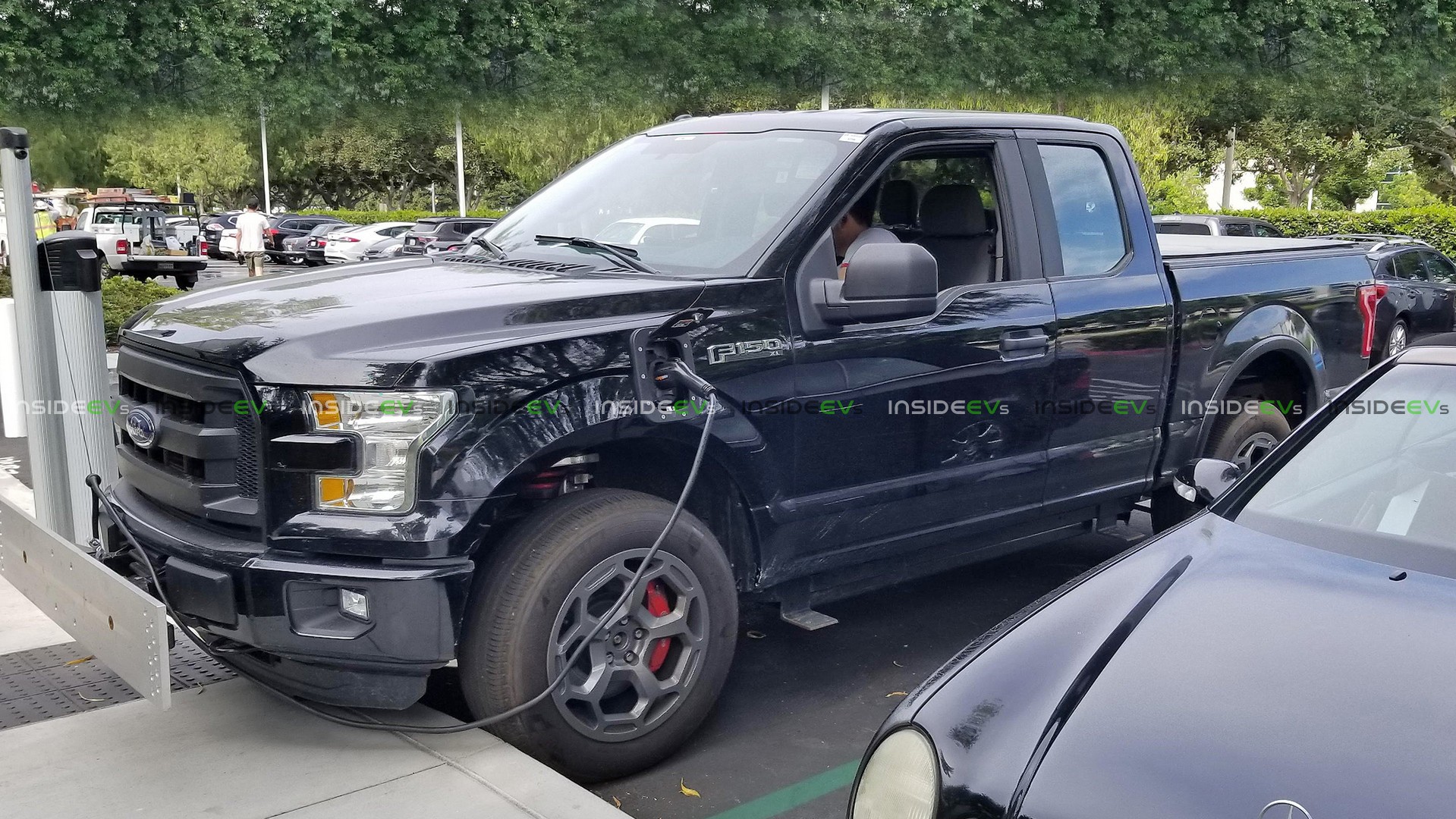
NOV 12 2018 BY MARK KANE GM: No electric and no autonomous pickups. We can sense the teary eyes in all of you already. While the electric car market takes off and people are waiting for the next big thing – literally – a pickup from Tesla, Rivian or even Ford, we hear that General… Continue reading General Motors Says No To Electric Pickup Truck
Tag: Mobility
Communauto receives City of Toronto’s first permit for free-floating car-share pilot
Communauto FLEX Toronto will begin operations in November 2018
Canada’s longest-running car-sharing company Communauto will begin operating Toronto’s first free-floating car-share project under the City of Toronto’s new pilot program. The service, Communauto FLEX, plans to have more than 500 cars on the ground covering 100 square kilometres in Toronto.
During the first phase of the pilot in November 2018, Communauto FLEX will operate in the downtown core. Even more, 200 cars servicing 50 square kilometres will be available. Communauto president M. Benoit Robert received the City’s first permit from the Mayor of Toronto and Barbara Gray, the City of Toronto’s General Manager of Transportation. The event toke place during a press conference on October 9.
“Car-sharing technologies have the power to change how people go about their day-to-day lives and get around this city. I’ve encouraged the introduction of these new technologies and believe that there can be many benefits, including potentially reducing traffic and congestion by removing cars from the road,” said Mayor John Tory. “I’m proud we’ve worked to strike a balance between the benefits of car-sharing and the potential impacts it could have on neighbourhoods. I’m thrilled that the team at Communauto is among the first to join the pilot and operate here within these new regulations.”
Approved in April 2018
The Free-Floating Car-Share pilot project was approved by the City of Toronto in April 2018. Free-floating car-sharing allows members to take one-way trips beginning in one location and ending in another. This service enables drivers to pick up cars from and drop off cars to legal residential parking spaces throughout the city, rather than being confined to a fixed location.
Communauto FLEX has no monthly fees and is free to join, using a pay-as-you-go structure. Daily trips begin at $0.41/minute, $15/hour, $50/day and $35 is charged for any days following. The first 150km is included in the price of each trip.
During launch, users will receive the first 30 minutes of each trip free for one month after joining.
Torontonians can pick up Communauto FLEX cars from and drop them off at legal on-street parking spaces within the service area, and drive anywhere they want to go in between.
CEO Benoit Robert wishes to add to the existing transit options
“As a Canadian company, we’re proud to be the first to bring a free-floating car service to Toronto under this pilot. Our FLEX service will make car-sharing easy and affordable for city residents, and our goal is to work together with Toronto’s existing transit options to provide better solutions to mobility issues,” said Benoit Robert, Communauto president. “Car-sharing offers a number of social and environmental benefits to individuals and businesses. We are looking forward to working with the city, our users and other community partners to create thriving mobility solution.”
Free-float zone
Communauto FLEX will launch in Toronto with 200 Hyundai Accent hatchbacks. The free-floating car-share will service an area that will cover close to 50 square kilometres in the downtown core. It’s parking zone will span to High Park and Runnymede in the west, Dupont and Danforth in the north, and Victoria Park in the east. Excluded from the service area at launch: metered parking spaces and Green P lots.
If the pilot project is approved after the first 18 months of operations, Communauto FLEX will expand to have more than 500 cars on the road and will grow its service area to cover 100 square kilometres, serving residents up to Eglinton Ave.
How it works
Communauto FLEX offers Torontonians 24/7 access to one-way carsharing. Therefor, it is a simple way to improve their mobility inside and outside the city.
Registered users can locate and reserve cars using the Communauto FLEX mobile App. Doors can also be unlocked and locked using a smartphone or a membership card.
The first 30 minutes of booking are free.
This timelaps gives users enough time to reach the vehicle. Even more, drivers can stop and start their journey at any time.
To pre-register for Communauto FLEX, please visit: https://toronto.communauto.com/
More information on Toronto’s Free-Floating Car-Share pilot project is available at http://bit.ly/FFCarSharePilot2018
About Communauto
Founded in Quebec City in 1994, Communauto is the oldest car-sharing service in North America and the one serving the largest number of communities in Canada. With a fleet of more than 2,000 vehicles, the company serves 13 cities each one with a local approach. Among these Edmonton, Waterloo Region, Hamilton, London, Guelph, Kingston, Ottawa, Gatineau, Montréal/Laval/ Longueuil, Quebec City/Lévis, Sherbrooke, Halifax and Paris in France. Communauto group operates gas, hybrids and electric cars and offers both round-trip and free-floating carsharing.
InMotion Ventures announces its investment in world’s most advanced electric motorcycle, Arc Vector
InMotion Ventures announces its investment in world’s most advanced electric motorcycle, Arc Vector
Arc has pioneered Vector, the most efficient, safest and most fulfilling electric motorcycle experience yet
Vector will be revealed in Milan on 6 November
Vector comes with ground breaking haptic ride-wear and connected HUD helmet
LONDON, 07-Nov-2018 — /EuropaWire/ — InMotion Ventures, Jaguar Land Rover’s venture capital fund, today announces its investment in Arc, which today unveils ‘Vector’ – the world’s first fully-electric motorcycle with Human Machine Interface (HMI). Arc Vector is the most advanced electric motorcycle ever brought to market, using exotic materials, thoroughbred componentry and cutting-edge architecture, wrapped in a futuristic body.
InMotion Ventures, Jaguar Land Rover’s venture capital fund, today announces its investment in Arc, which today unveils ‘Vector’ – the world’s first fully-electric motorcycle with Human Machine Interface (HMI). Arc Vector is the most advanced electric motorcycle ever brought to market, using exotic materials, thoroughbred componentry and cutting-edge architecture, wrapped in a futuristic body.
The investment from InMotion Ventures, along with Mercia Fund Managers, the Proof of Concept & Early Stage Fund which is part of the Midlands Engine Investment Fund, and a number of industry specialist angels, will support Arc with its global ambition for Vector to be the cleanest, safest, and most fulfilling motorcycle on the road.
The brand new bike, will be revealed at the Milan Motorcycle Show today. The Arc show stand will showcase the brand, along with the bike itself and its ground breaking intelligent haptic ride-wear and connected Heads-Up Display helmet. A virtual reality ride experience will also be available for attendees.
The Arc team consists of industry-leading professionals, coming together to develop and build an all-new experience on two wheels.
Mark Truman, Founder & CEO, Arc, said: “Our aim has always been to bring technology, performance and safety together to create an entirely new two-wheeled experience. Vector isn’t just a motorbike; it’s the world’s first fully-electric café racer, it’s an innovative heads-up display helmet and it’s a sensory riding suit – all working in unison to create an experience package like no other. We’re delighted to get the support of InMotion for this exciting launch phase. The team shares our vision and we’re looking forward to working together and creating more ground breaking products.”
Sebastian Peck, Managing Director, InMotion Ventures, said: “Electric vehicles are pivotal for the future of urban mobility, helping people travel through cities quickly and cleanly as possible. We want to make sure that we’re not only changing the way people move but delivering unparalleled outdoor experiences while doing so. With Arc’s technology and vision, the Vector is an incredible development in the next generation of motorcycle travel.”
FURTHER INFORMATION
For further information, contact:
Sally Clift
Senior Manager, Corporate Communications
M: +44 7384 430009 | E: sclift2@jaguarlandrover.com
NOTES TO EDITORS
About Arc
Arc is a jump of electricity. Arc is Arc-hitecture. Arcs are structural as is our monocoque philosophy.
Arc is about the journey – every journey on this planet takes an Arc. Mark Truman is the largest shareholder in Arc. The committed environmentalist, designer and engineer won the Society of Automotive Engineers International Young Engineer of the Year Award in 2005 for his experimental work on motorcycle chassis and swing arm flex and design parameters. He’s also a former Data Acquisition Engineer in top-level racing, during 35 years of motorcycling experience, and has built many of his own road and race machines. Visit www.ourroadis.com
Arc is also on social – find us on Twitter, Instagram and Facebook using
@ArcVehicle #OurRoadIs #ADifferentRoad
Tweet
Share
0
+1
0
ZF now offers the broadest range of hybrid and all-electric drive solutions for almost every vehicle segment
ZF now offers the broadest range of hybrid and all-electric drive solutions for almost every vehicle segment
ZF supplies electric drives for all vehicle types, ranging from bicycles to 40-ton trucks
The product portfolio ranges from hybrid solutions to all-electric drives.
Integrated E-system solutions, including electronics and peripheral systems.
Friedrichshafen, Germany, 09-Nov-2018 — /EuropaWire/ — ZF is constantly advancing vehicle electrification and has meanwhile come to be known as the world champion of variation with its many integrated system solutions. In fact, ZF now offers the broadest range of hybrid and all-electric drive solutions for almost every vehicle segment. As one of the early e-mobility pioneers, ZF knows what it takes to convert electricity into efficient and dynamic vehicle propulsion.
In 2008, ZF was the first company in Europe to volume-produce hybrid modules – a technology that reduces CO2 emissions by up to 70 percent compared to vehicles with combustion engines. In the meantime, many manufacturers are now producing a variety of car models equipped with the 8-speed plug-in hybrid transmission (8P) that features a longitudinally-mounted drive. A hybrid module that fits into almost any installation space is integrated in the automatic transmission and helps generate 90 kW and 250 Nm torque. It allows hybrid vehicles to accelerate on all-electric power up to 120 km/h maximum speed and – depending on battery capacity – travel a good 50 km. The separating clutch with low drag loss contributes to efficiency by completely decoupling the combustion engine in E-mode. Thanks to its optimized torsional damper, the 8P harmonizes also with downsizing three-cylinder turbo engines.
The 8-speed dual clutch transmission (8DT) shifts more dynamically as it is designed specifically for sports cars with longitudinal or all-wheel drives. ZF is working with Porsche to develop it as an optional plug-in hybrid system that supplies, all electrically, 100 kW and 400 Nm, thus enabling it to reach speeds of 140 km/h without a combustion engine. Torsional damper, separating clutch including actuators and electric motor are housed directly in the clutch bell housing in the 8DT. The all-wheel distributor system is also integrated into the AWD version of the hybrid transmission. It transfers torque to the front axle as needed.
Hybrid for compact and commercial vehicles
The electric axle drive system from ZF, on the other hand, does not impact the transmission, rather is positioned directly in the middle on the axle. Following the “Plug-and-Drive” principle, it brings together decisive system components in a compact module, including an electric motor, a two-stage single-speed spur gear drive along with differential, parking lock, the housing, the cooling unit as well as the power electronics and control software. Integrating the transmission, electric motor and power electronics into one system represents a key competence that ZF can offer its customers as a single-source supplier. In the process, the electric axle drive generates up to 150 kW and 3,500 Newton meters of axle torque. Installed in the vehicle rear, in the ZF “mSTARS” modular rear axle system (stands for “modular Semi-Trailing Arm Rear Suspension”), for example, it transforms the combustion-engine powered passenger car with front-wheel drive into an axle hybrid and electric all-wheel vehicle. In the ZF “eAMT” concept (stands for “electrified Automated Manual Transmission“), it also compensates for any propulsion breaks that occur when shifting gears with an automated manual transmission. The result is a smooth, punchy acceleration that was so far only able to be achieved with considerably more complex hybrid configurations.
Commercial vehicles are also benefiting from electrification thanks to ZF. The TraXon Hybrid automated transmission system, for example, makes 40-ton trucks and coaches up to seven percent more economical. An electric motor with an integrated transmission ratio – positioned between the combustion engine and transmission – supports a maximum 130 kW and 1,200 Nm output torque. While the TraXon Hybrid works on long-distance travel parallel to the diesel drive, it can also function in the city center as well as when maneuvering around bus depots as a quiet stand-alone zero local emissions drive. In generator mode, the hybrid module can supply power to other power units, for example, during refrigerated transports. ZF will begin supplying the TraXon Hybrid to DAF as early as 2019. The hybrid systems described here combine not only the all-electric operating mode, they also support other essential hybrid functions like recuperation, boosting and start-stop.
100-percent electric
ZF is set up just as broadly and systematically for all-electric drives as it is for hybrids. ZF intends to cover the mini-vehicle sector through a joint venture with Sachs Micro Mobility GmbH. Its compact motor, the Sachs RS for pedal-assisted bikes and e-bikes, for example, can be flexibly integrated into different frame shapes. It features 700 Watt and 110 Nm to deliver a powerful tailwind. Even at a low cadence of 60 pedal strokes per minute, it generates a high torque – and can so long-term thanks to intelligent cooling. If the e-motor is not used, two one-way clutches ensure that it generates no resistance.
At the other end of the speed spectrum – in the Formula E motorsports race series – ZF will supply, for the 2018/19 season, the complete drive system for the Venturi team’s fast race car, which reaches up to 280 km/h. It covers the powerful 200 kW electric motor (power limited by regulations) including power electronics, a new race differential as well as a very efficiently toothed motorsport transmission mounted in bearings. Lastly, based for the first time on a one-speed concept, it is 40% lighter than the transmission from last season. The entire system is the first electric axle drive from ZF that was developed purely for use in motorsports.
Full electric range in the rear
The above-described electric axle drive module featuring a maximum 150 kW and 3,500 Nm axle torque will go into volume production for a European automobile manufacturer in 2019. The system is ideal as an all-electric drive for battery-powered, fuel-cell or hybrid electric vehicles. The drive can be used for both the front as well as for the rear axle. It has already proven itself in the field, for example, in the ZF Vision Zero Vehicle as well as in the forward-looking shuttle e.GO Mover, which will go into volume production in 2019.
ZF’s Advanced Urban Vehicle is yet another example of an all-electric drive for small cars. Its propulsion is powered by the electric Twist Beam (eTB), a twist beam rear axle on whose right and left wheels a compact drive unit is integrated, each one generating 40 kW. In the Advanced Urban Vehicle, the eTB plays a major role in enabling the extreme front axle steering angle of up to 75 degrees to be achieved. The drive then supports the steering movement and allows the vehicle to set off by means of individual power distribution on both rear wheels (torque vectoring).
Clean options for urban transport
In case of the AxTrax AVE electric portal axle, which has already been proven multiple times over and is in volume production for low-floor city buses, ZF relies on the concept of the integrated close-to-the-wheel drive. Both liquid-cooled asynchronous motors deliver 2 x 125 kW and 2 x 11,000 Nm that help it master very challenging urban topologies. For the best-possible efficiency and high electric ranges, ZF is offering the AxTrax AVE in a networked system featuring fully integrated inverters and drive control. The electric portal axle covers series hybrids as well as all-electric drives, whether powered by battery, fuel cell or overhead contact line.
In addition, ZF is offering the CeTrax electric central drive for low-floor and high-floor buses. Generating up to 300 kW and 4,400 Nm, it is designed for challenging applications. Moreover, it is impressive due to its weight and efficiency. Thanks to the “Plug-and-Drive” approach, the CeTrax can be integrated into existing vehicle platforms without having to make major modifications to the chassis, axles, statics or differentials. Electricity-driven versions of originally combustion-engine powered bus platforms can be converted with relative ease. The drive control and inverter are also included in the scope of delivery so that the manufacturer gets an optimally coordinated complete system regarding performance, efficiency and service life.
CeTrax lite is the more compact system variant for vans and light commercial vehicles up to 7.5 tons. Considering it generates 150 kW and 380 Nm, it only weighs 120 kg, including a single-speed transmission ratio. For vehicles up to 19 tons, CeTrax mid is available: its two electric asynchronous traction motors installed in parallel positions supply 300 kW and 760 Nm that a two-stage powershift transmission transmits.
E-traction from the trailer
In off-highway applications, ZF has scored major points in farm and construction machines with its electric eTRAC wheel head. This system consists of a liquid-cooled 3-stage asynchronous motor with high power density, a downstream, two-stage transmission and integrated brakes – electrically driven axle systems for trailers or electrically driven jockey wheels for different attachments are possible applications. The distribution of the drive power to additional wheels has diverse advantages: A controlled traction support, for instance, makes working under difficult conditions easier, enlarging the time available for cultivation even under adverse weather conditions or with sodden soil. Furthermore, the tractor needs less tractive force thanks to the electric traction drive – as a consequence, either more powerful attachments can be moved (thus increasing productivity) or the tractor trucks size can be reduc..
Audi and First Automotive Works (FAW) celebrate the 30th anniversary of their partnership in China; plan to launch more China-specific model variants and digital services
Audi and First Automotive Works (FAW) celebrate the 30th anniversary of their partnership in China; plan to launch more China-specific model variants and digital services
Audi and Chinese partner First Automotive Works are to expand their local portfolio to more than ten models by 2022 and launch their first all-electric cars
2019: Audi Q2 L e-tron is the first electric car specifically for Chinese customers
Herbert Diess, CEO of the Volkswagen Group: “30 years of Audi in China tell a success story of innovation, transformation and friendship”
Alexander Seitz, CFO and Board Member for China at AUDI AG: “We will use our experience to locally develop and produce models specifically for China”
FAW CEO Xu Liuping: “Together, we have achieved pioneering milestones and created a successful win-win cooperation.”
CHANGCHUN, China/ INGOLSTADT, Germany, 20-Nov-2018 — /EuropaWire/ — Audi and First Automotive Works (FAW) are celebrating the 30th anniversary of their partnership this Monday. The approximately 650 guests at the anniversary event at the FAW plant in Changchun include representatives of the province of Jilin, of partner FAW, and of the FAW-Volkswagen joint venture, as well as members of the boards of management of Volkswagen AG and AUDI AG. Audi is further expanding its local research and development competencies in order to launch more China-specific model variants and digital services. The first electric car tailored for Chinese customers, the Audi Q2 L e-tron, will already be launched in 2019. Local production of the Audi e-tron will follow in 2020, one year after its market launch in China.
China has developed into Audi’s strongest growth engine and biggest single market. In the past 30 years, Audi has delivered more than five million automobiles there. Sales volumes have increased more than fivefold in the past ten years. The models Audi A4 L, A6 L and Q5 L are especially popular with Chinese customers, and China is the most important sales market also for the Audi A8 L. The fourth model generation of this luxury sedan is once again the reference for Vorsprung durch Technik. The Audi A8 demonstrates this with style-defining design, innovative chassis solutions, an innovative touch operating concept and consistent electrification of the drive system. The Four Rings were the first automobile brand to launch services developed for China such as 3D maps and Chinese character recognition, in order to respond precisely to the wishes of Chinese customers. China will continue to contribute significantly to Audi’s growth.
Herbert Diess, CEO of Volkswagen Group and Chairman of the Supervisory Board of AUDI AG, says: “30 years of Audi in China tell a success story of innovation, transformation and friendship. I am looking forward to the next 30 years.”
Alexander Seitz, Audi Board of Management Member for Finance, China, Compliance and Integrity, emphasized: “We will use our experience to locally develop and produce even more models specifically for China in the future. We will continue our shared success story with the latest technologies, digital services that focus on market needs, and models like the Audi Q8 and Audi e-tron.” By 2022, Audi aims to increase its local portfolio with FAW-VW to more than ten models. The first all-electric models from Audi will also be sold in China.
Audi currently offers six locally produced model families in China. The Audi A4 L, A6 L, Q3 and Q5 L series are built at the Changchun plant in the north. The Audi A3 Sedan, A3 Sportback and Audi Q2 L drive off the assembly line in Foshan in southern China. A further step in the cooperation between Audi and FAW is the start of Audi production in Tianjin. The Chinese plants are making a significant contribution within the Audi production network. Their flexible structure will allow the ongoing gradual expansion of capacities. In the coming years, capacity with the partner FAW-Volkswagen can be increased to a total of more than 700,000 automobiles, depending on market demand.
Audi was the first premium brand to enter the Chinese market in 1988. As part of a license agreement between Audi and FAW, the Audi 100 was the first model to be produced from parts kits at the FAW plant in Changchun. In 1995, Audi production was integrated into the FAW-Volkswagen joint venture and the cooperation was successively expanded. As a pioneer, Audi put long-wheelbase versions of the Audi A4 and A6 on the road and, with the Audi A6 L e-tron, offered the Volkswagen Group’s first locally produced plug-in hybrid. In 2013, the brand with the Four Rings inaugurated a development center in Beijing, thus paving the way for an innovation boost in Asia. Another important milestone for Audi in China is the assumption of Group-wide development responsibility as a Center of Excellence for high-voltage battery cells.
In addition, the partners are intensifying their cooperation along the entire value chain, with connectivity services and mobility offerings. FAW CEO Xu Liuping: “Together we have achieved numerous pioneering milestones and thus created a successful win-win cooperation.”
SOURCE: Volkswagen AG
MEDIA CONTACT
Dirk Arnold
Head of Communications Audi AG
+49 (0) 841/ 89-92033
Tweet
Share
0
+1
0
BASF and GAC R&D Center unveil co-developed electric concept cars at the 16th Guangzhou International Automobile Exhibition
BASF and GAC R&D Center unveil co-developed electric concept cars at the 16th Guangzhou International Automobile Exhibition
GAC’s new concept cars, made with BASF materials and solutions, debut at the 16th Guangzhou International Automobile Exhibition (booth location: 2B05)
First concept car co-developed by BASF and a Chinese OEM
Solutions to help transform electric concept car from design to reality
Design, style and functionality meet diverse needs of China’s drivers
GUANGZHOU, China, 21-Nov-2018 — /EuropaWire/ — BASF and the Research and Development Center of Guangzhou Automobile Group Co. Ltd. (GAC R&D Center) today introduced three co-developed electric concept cars, featuring futuristic designs that address the diverse needs of China’s drivers.
Debuted at the Auto Guangzhou 2018, the three two-seat concept electric cars are designed by GAC R&D Center, with advanced prototyping support from designfabrik®, BASF’s dedicated touch-point for engaging and inspiring designers. With BASF’s innovative materials and solutions, the new concept cars appeal to, and address the diverse needs of a wide variety of drivers: senior citizens, female drivers, and more. They also address the trend towards car sharing, one of the fastest growing urban mobility concepts worldwide.
“Car sharing and electrification are highly important developments in the world’s largest auto market. Additionally, the needs and individual style preferences of Chinese drivers have become more diverse due to an increasing number of female drivers and senior drivers,” said Zhang Fan, Vice President, GAC R&D Center. “BASF’s innovative materials enable flexible design and extended functionalities that best serve the different styles in our concept vehicles.”
From holistic air cleaning solutions to seat fabrics, as well as materials used to build the body panels and battery pack of the electric vehicles, BASF’s innovative solutions turn ideas into solutions. Exterior auto body paints co-developed by BASF and GAC R&D Center underline a unique personality for each concept vehicle.
“In China, we see strong consumer demand for individualized car experiences and extended functionalities of passenger cars,” said Dr. Zheng Daqing, Senior Vice President, Business and Market Development Greater China, BASF. “This is the first time BASF has cooperated with a Chinese OEM to develop concept vehicles. We are excited to work with GAC R&D Center in shaping future mobility with our sustainable and innovative materials and solutions.”
Details of BASF materials and solutions on the three concept cars exhibited at the 16th Guangzhou International Automobile Exhibition include:
2US: A two-seater electric vehicle designed for senior drivers has a unique design feature of a rotational seat base. It helps elderly drivers and passengers get into and out of the vehicle with ease. The plastic gears made from BASF’s Ultramid® Advanced N ensure a smooth operation of the rotation mechanism, which is designed to rotate 90 degrees horizontally in-and-out of the car cabin.
2U: Designed to appeal to women seeking an automotive look that meets their individual style, this car showcases possibilities including a unique seat design with translucent trim parts made of BASF’s Ultramid® Vision. The fur-like surface of the passenger’s seat design is brought to life with BASF’s Ultrafuse® TPU 3D printing solution.
2ALL: This vehicle features several design elements to address the particular needs of car sharing, including easy operation and low maintenance. For example, the front bumper made from BASF’s Elastollan® HPM, have an outstanding anti-scratch elastomer pad design. The seat back and pan cushion made with BASF’s Infinergy® (E-TPU) particle foams perfectly combine comfort with robustness.
About BASF and the automotive industry
The automotive industry is one of BASF’s key customer industries. In 2017, BASF’s automotive driven sales totaled €11.4 billion – representing approximately 18 percent of BASF Group’s sales. BASF supplies and develops functional materials and solutions that enable vehicles to be built more efficiently and have a lower environmental impact, whatever powertrain technology they use. BASF’s product range includes for example plastics, coatings, catalysts, automotive fluids as well as battery materials. With such an extensive range of products, BASF is the world’s leading chemical supplier to the automotive industry. BASF cooperates closely with customers all over the world through a network embracing Europe, Asia-Pacific, North and South America as well as Africa. Further information on BASF’s solutions for the automotive industry is available at http://www.automotive.basf.com.
About BASF
At BASF, we create chemistry for a sustainable future. We combine economic success with environmental protection and social responsibility. The more than 115,000 employees in the BASF Group work on contributing to the success of our customers in nearly all sectors and almost every country in the world. Our portfolio is organized into four segments: Chemicals, Performance Products, Functional Materials & Solutions and Agricultural Solutions. BASF generated sales of more than €60 billion in 2017. BASF shares are traded on the stock exchanges in Frankfurt (BAS), London (BFA) and Zurich (BAS). Further information at www.basf.com.
About GAC R&D Center
Established in 2006, GAC R&D Center serves as the innovation and technology hub for Guangzhou Automobile Group. The near 4,000 researchers in GAC R&D Center work in 15 laboratories, a trial plant that include painting, assembly and machining, and a test track.
Media contact at BASF:
Beverley Tan
+ 65 6432 328
beverley.tan@basf.comCunyu Ma
+86 21 20395271
Cun-yu.ma@basf.com
Media contact at GAC R&D Center:
Ling Yang
+86 20 22936801
yangling@gacrnd.com
SOURCE: BASF SE
Tweet
Share
0
+1
0
Didi Chuxing Launches DiDi Labs in Toronto

Didi Chuxing, a mobile transportation platform, officially launched its DiDi Labs in Toronto, Canada. This marks the second major research facility founded by DiDi in North America, following the establishment of DiDi Labs in Mountain View, California, in March 2017. Since its inception, DiDi Labs in Mountain View has invested in product development and safety… Continue reading Didi Chuxing Launches DiDi Labs in Toronto
New research and development center for electronics: a milestone for vehicle electrification at MAHLE
Press releases
Press archives
Media service
Publications
Press contact
Home
Press
Press releases
New research and development center for electronics: a milestone for vehicle electrification at MAHLEStuttgart/Germany and Valencia/Spain, November 23, 2018 – MAHLE inaugurated a new research and development center yesterday at its location in Valencia/Spain. In the future, around 250 employees will work on developing new products and solutions for sustainable mobility at this competence center for vehicle electronics.
Press release (english version) [PDF; 36 KB]Press release (spanish version) [PDF; 54 KB] New research and development center for electronics opened in Valencia Location expanded to become a global competence center for electronicsMAHLE strengthens its competence as systems supplier for e-mobilityElectronic systems are becoming increasingly important in modern vehicles. The powertrain of the future is a system consisting of interconnected hardware and software that communicates and interacts intelligently within the vehicle. As a pioneer of future mobility solutions, MAHLE is therefore continuously expanding its activities in the area of electronics, with the company’s new research and development center in Valencia representing a significant element of this approach.
“As a creator of new and climate-friendly mobility solutions, we believe that the ongoing development of e-mobility is crucial. With our new research and development center, we’re strengthening our competence in the area of power electronics and consistently working toward our goal of becoming a holistic systems supplier in this field,” explains Dr. Jörg Stratmann, Chairman of the Management Board and CEO of the MAHLE Group.
In the future, power electronics and software solutions—e.g., for products such as electric drive systems and auxiliary components, charge management systems, or heating and cooling systems—will be developed in Valencia. Another area of focus will be the validation of systems in accordance with the standards of the automotive industry.
To effectively advance the electrification of vehicles, MAHLE has combined its activities relating to electric drives, actuators and auxiliaries, as well as control and power electronics in the Mechatronics division. These products are used in passenger cars, commercial vehicles, and off-highway vehicles.
“With its excellent universities, Valencia is an ideal hub for modern research and development. I’m convinced that our new research and development center will be an asset to the city and become a magnet for electronics development, attracting the next generation of engineers,” says Wilhelm Emperhoff, Member of the Management Board of the MAHLE Group and responsible for the Filtration and Engine Peripherals business unit as well as the Mechatronics division.
MAHLE’s goal is to make individual mobility more climate-friendly and sustainable. To achieve this, the company is pursuing a dual strategy. On the one hand, MAHLE is working intensively on the further optimization of the combustion engine. On the other, the company is developing solutions for the widespread adoption of e-mobility. As a key player in the automotive industry, MAHLE is therefore instrumental in shaping the future of mobility.
About MAHLE MAHLE is a leading international development partner and supplier to the automotive industry as well as a pioneer for the mobility of the future. The MAHLE Group is committed to making transportation more efficient, more environmentally friendly, and more comfortable by continuously optimizing the combustion engine, driving forward the use of alternative fuels, and laying the foundation for the worldwide introduction of e-mobility. The group’s product portfolio addresses all the crucial issues relating to the powertrain and air conditioning technology—both for drives with combustion engines and for e-mobility. MAHLE products are fitted in at least every second vehicle worldwide. Components and systems from MAHLE are also used off the road—in stationary applications, for mobile machinery, rail transport, as well as marine applications.
In 2017, the group generated sales of approximately EUR 12.8 billion with about 78,000 employees and is represented in more than 30 countries with 170 production locations. At 16 major research and development centers in Germany, Great Britain, Luxembourg, Spain, Slovenia, the USA, Brazil, Japan, China, and India, around 6,100 development engineers and technicians are working on innovative solutions for the mobility of the future.
For further information, contact:MAHLE GmbH
Margarete Dinger
Corporate Communications/Public Relations
Pragstraße 26–46
70376 Stuttgart/Germany
Phone: +49 711 501-12369
margarete.dinger@mahle.com
Annual report
This was our year 2017
Download
[PDF; 5087 KB]
Key figures
[PDF; 1464 KB]
Annual report website
Meituan, China’s ‘everything app’, walks away from bike sharing and ride hailing
A major player in the race to transport Chinese people around is losing steam. Meituan Dianping, the Tencent-backed all-encompassing platform for local services, continues to put the brakes on bike-sharing and ride-hailing, the company said on its earnings call on Thursday. The eight-year-old firm is best known for competing with Alibaba-owned Ele.me in food deliveries… Continue reading Meituan, China’s ‘everything app’, walks away from bike sharing and ride hailing
Volkswagen invests in digital specialist diconium
With diconium as a technology partner, Volkswagen is taking the next step in the development of the Volkswagen Auto-motive Cloud. This will link the fully connected vehicle, the cloud-based platform (One Digital Platform) and digital value-added services. The Volkswagen Group is investing in the German digital specialist diconium and acquiring 49 percent of the shares… Continue reading Volkswagen invests in digital specialist diconium