NOT ALL DOOM AND GLOOM. Tesla might be sucking the life force of CEO Elon Musk, but at least the company’s got some some good news to show for it. On Saturday, Electrek tweeted a picture of one of Tesla’s autonomous Semi prototypes at the headquarters of trucking company J.B. Hunt. In response, Musk tweeted, “What’s cool… Continue reading Elon Musk Claims a Tesla Semi Prototype Drove “Across the Country Alone”
Tag: Mobility
Uber ‘to focus on bikes over cars’
Uber says it plans to focus more on its electric scooter and bike business, and less on cars, despite the fact it could hurt profits. Boss Dara Khosrowshahi said that individual modes of transport were better suited to inner city travel. He also forecast users would make more frequent shorter journeys in future. “During rush… Continue reading Uber ‘to focus on bikes over cars’
Rideshare study shows Via drivers earn the most in NYC
Published July 2, 2018 3:00 pm, Via NYC
Rideshare study shows Via drivers earn the most in NYC
With both the highest utilization and highest driver earnings, Via proves their shared rides model works for drivers and for cities
A report released today, commissioned by New York City’s Taxi and Limousine Commission, established Via as the industry leader when it comes to driver earnings and vehicle efficiency in New York City. Via driver partners are on average earning 43% more than Lyft drivers and 35% more than Uber drivers in the New York market. Via is the only rideshare company in the city to already have the vast majority of drivers on its platform earning well above the recommended $17.22 earnings floor, while achieving a record 70% utilization. Via drivers on average take home $21.73 per hour after expenses.
“At Via, we have always believed that our driver partners deserve fair earnings, which is why we are the only company in New York to offer drivers an hourly guarantee earnings model and the lowest commission in the industry. We are very pleased that our driver partners are already earning more than the amount recommended in this report,” said Daniel Ramot, co-founder and CEO of Via. “The Via system is designed to make sharing work; drivers are earning more money, and our highly efficient vehicle utilization helps to reduce congestion and emissions here in New York.”
In addition to leading the pack with regards to driver earnings, the report also highlighted that Via is outperforming competitors when it comes to utilization rates. High utilization means drivers are spending less of their working hours cruising while waiting for rides. This translates to both better earning potential for drivers and reduced congestion and emissions, as fewer empty cars are clogging the streets. Via’s 70% utilization rate demonstrates that when a platform is purpose-built to make shared rides work, everyone benefits.
Via looks forward to working with the TLC to continue to set the standard for FHV operations in New York and to encouraging more New Yorkers to ride responsibly and share.
About Via
Via is re-engineering public transit, from a regulated system of rigid routes and schedules to a fully dynamic, on-demand network. Via’s mobile app connects multiple passengers who are headed the same way, allowing riders to seamlessly share a premium vehicle. First launched in New York City in September 2013, the Via platform currently operates in the United States and in Europe through its joint venture with Mercedes-Benz Vans, ViaVan. Via’s technology is also deployed worldwide through partner projects with public transportation agencies and private transit operators, seamlessly integrating with public transit infrastructure to provide the most cutting edge on-demand mobility innovation. For more information, visit www.ridewithvia.com.
Read more
Via brings on-demand shared mobility to Tokyo, partners with Mori Building to launch dynamic shuttle
Published July 31, 2018 9:00 pm, Via NYC
Via brings on-demand shared mobility to Tokyo, partners with Mori Building to launch dynamic shuttle
The Mori Building Company, a leading Tokyo-based urban developer, has tapped New York startup Via to launch an on-demand transit service in Tokyo, providing an innovative new transportation solution to urban areas.
“We are thrilled to partner with Mori to bring Via’s revolutionary technology to Japan. Via’s vision is to provide cutting-edge mobility solutions that are smart, efficient, and help to reduce congestion and emissions globally,” said Daniel Ramot, co-founder and CEO of Via. “We are excited to introduce this new service which will improve the quality of life for Mori employees.”
Using the Via-powered HillsVia mobile app, Mori Building employees will be able to book a ride in high end V-Class vans provided by Mercedes-Benz. Via’s technology will seamlessly match multiple passengers headed in the same direction, and dynamically direct the vehicle in real time along an optimized, efficient route. The new service will initially be available to approximately 1,300 Mori Building employees.
Mori’s forward-thinking Tokyo service is the first in Japan to introduce Via’s dynamic on-demand shared rides. Via’s revolutionary technology powers transport solutions around the globe with projects throughout the United States, Europe, Australia, New Zealand, Singapore, and beyond. Leveraging its experience providing over 35 million shared rides to date, Via partners with public transportation authorities, transit operators, taxi fleets, and private companies around the world to solve local mobility needs for cities of all sizes.
Via’s technology and operational experience is uniquely suited to the Japanese market, where Via operates through its subsidiary Via Mobility Japan GK. Via is able to seamlessly integrate with existing fixed-route transportation infrastructure, helping to fill in gaps where existing transit isn’t easily accessible with a system that efficiently works to aggregate multiple passengers into shared vehicles, effectively reducing single-occupancy vehicle trips and thus improving traffic congestion and reducing carbon emissions. The easy-to-use mobile interface is suited to riders of all ages, including the elderly.
“Via’s on-demand shuttle services, with their unique and efficient algorithms, will contribute to solving the problems of urban transportation such as traffic congestion and environmental pollution. This service will improve city life by increasing transportation options in urban areas,” said Masahiko Ogasawara, Director and Executive Managing Officer of Mori Building Co., Ltd.
Via’s partnership with Mori was sparked and facilitated by Anchorstar.
About Via
Via is re-engineering public transit, from a regulated system of rigid routes and schedules to a fully dynamic, on-demand network. Via’s mobile app connects multiple passengers who are headed the same way, allowing riders to seamlessly share a premium vehicle. First launched in New York City in September 2013, the Via platform currently operates in the United States, and in Europe through its joint venture with Mercedes-Benz Vans, ViaVan. Via’s technology is also deployed worldwide through partner projects with public transportation agencies, private transit operators, taxi fleets, private companies, and universities, seamlessly integrating with public transit infrastructure to provide the most cutting edge on-demand mobility innovation.
About Mori Building
Mori Building is an innovative urban developer based in Tokyo. The company is committed
to maximizing the magnetic power of cities by creating and nurturing safe, sustainable and
cosmopolitan urban centers based on its unique Vertical Garden City concept of high-rise
centers for business, education, leisure and residence. The concept is applied in the
company’s many leading-edge projects, including ARK Hills, Omotesando Hills, Roppongi Hills and Toranomon Hills in Tokyo and the Shanghai World Financial Center. Mori Building is also engaged in real estate leasing, project management and consultation.
Read more
Elon Musk will sabotage his own plans if he takes Tesla private, Tesla bull says
Tesla investor writes open letter to Elon Musk on keeping Tesla public
5 Hours Ago | 02:43
Tesla CEO Elon Musk will sabotage his own goals for the electric car maker if he takes it private, said ARK Invest CEO Cathie Wood, who predicted Tesla stock could reach $4,000 per share.
“By going private [Musk] would deprive Tesla of reaching his own priorities — mobility as a service, autonomous truck platoons, utility energy storage, even air passenger drones,” Wood said Friday on CNBC's “Closing Bell.” “He's got big plans, and he needs to scale these plans. We don't think that it will happen nearly as effectively in the private markets as in the public.”
Tesla has battled widespread scrutiny, following Musk's Aug. 7 tweet that he was planning to take Tesla private and had “funding secured.” The Securities and Exchange Commission served Tesla with a subpoena last week, as it looks into whether Musk violated securities laws by claiming he had funding for the maneuver. In addition, Musk himself has been criticized for erratic behavior. He confessed in an interview with The New York Times the toll of the “excruciating” year he has had leading Tesla, particularly when crunching to meet Model 3 production goals.
Through it all, Wood, who is CEO of innovation-focused investment service ARK Invest, has remained bullish. Known for making bold calls, the money manager first revealed her $4,000 per share call in February. On Wednesday, she published a letter to Musk and Tesla's board of directors, imploring them not to take the company private. She sees the company trading anywhere from $700 to $4,000 per share within five years if it remains public.
Tesla closed the day up 0.85 percent at $322.82 per share, having gained 5.67 percent on the week.
Central to Wood's argument that Tesla could trade as high as $4,000 per share is the idea that Tesla will orient itself away from the capital-intensive vehicle manufacturing business toward software. And that's where Tesla excels, she said.
“We think he's already way ahead of the game. He's got the data, he's got the chip that's three years ahead of Nvidia's chip … He's got batteries, which are three years ahead of any other company's batteries. And he's had the vision about autonomous taxi networks from the very beginning,” Wood said on Friday.
Pierre Ferragu, head of technology infrastructure research at New Street Research, said, “Tesla will become one of the major premium car manufacturers, like Audi and Jaguar … within the next seven years,” but its success will be from a purely go-to-market perspective, as Tesla has lower costs for marketing and distribution than other automakers.
“Maybe one day mobility-as-a-service will be a thing, but today there is nothing tangible there,” he said.
New Street Research placed a 12-month price target of $530 on Tesla and sees it reaching $1,200 to $2,000 by 2025. It all hinges on production numbers.
“They have seven years to be able to produce 2.5 [million] to 3 million cars a year. As you can imagine, getting to the first couple hundred thousand is the most challenging part,” he said. “Once they are at scale of BMW, they will be significantly more profitable than” BMW.
On production, Wood was bullish, saying Tesla will “iterate and iterate until they get it right, and then, they are going to be able to scale enormously when they get it right.” But Wood's biggest hopes for the company concern software, and she worries those lofty mobility-as-a-service goals won't come to fruition if Tesla goes private.
Musk is “the kind of person you need, one with vision who ends up at times very frustrated with the short time horizon of public markets. But the public markets will reward him handsomely if he just sticks with it and starts performing with the production schedules,” she said.
An Interview With Self-Driving Visionary Larry Burns, Co-Author of ‘Autonomy’
Larry Burns, GM vice president of Research and Development and Planning, gestures during a press conference Thursday, January 27, 2005, in New York. General Motors, along with Shell Hydrogen LLC, announced plans to provide 13 fuel cell-powered vehicles to New York State, and to open New York state’s first hydrogen service station in 2006. Photographer:… Continue reading An Interview With Self-Driving Visionary Larry Burns, Co-Author of ‘Autonomy’
Via to provide its Technology and Support Services for Harvard University’s Evening Van Service
Published August 20, 2018 9:00 am, Via NYC
Via to provide its Technology and Support Services for Harvard University’s Evening Van Service
Via’s first university sector project applies the company’s on-demand rideshare technology to the campus environment
Via’s on-demand mobility solutions announced today that it has entered into a license agreement with Harvard University for the provision of Via’s rideshare technology and support services for the University’s evening van service.
Students, faculty, and staff can now book rides around campus using an intuitive, and fully customized mobile app powered by Via. This mobile technology directs passengers to the proper location for pick-ups and drop-offs, allowing for quick and efficient shared trips without detours that take riders out of their way. An algorithm directs the vehicle in real-time along an optimized route, keeping passenger wait times to a minimum and reducing inefficient detours.
“We are thrilled to work with Harvard University to provide this first of a kind campus-wide service.” said Daniel Ramot, co-founder and CEO of Via.
About Via
Via is re-engineering public transit, from a regulated system of rigid routes and schedules to a fully dynamic, on-demand network. Via’s mobile app connects multiple passengers who are headed the same way, allowing riders to seamlessly share a premium vehicle. First launched in New York City in September 2013, the Via platform currently operates in the United States, and in Europe through its joint venture with Mercedes-Benz Vans, ViaVan. Via’s technology is also deployed worldwide through partner projects with public transportation agencies, private transit operators, taxi fleets, private companies, and universities, seamlessly integrating with public transit infrastructure to provide the most cutting edge on-demand mobility innovation.
Read more
Waymo opens subsidiary in China
Waymo, the former Google self-driving project that spun out to become a business under Alphabet, has opened a subsidiary in China. The unit, called Huimo Business Consulting Co., opened in Shanghai on May 22, according to a filing with China’s National Enterprise Credit Information Publicity System. China Money Network was the first to report on… Continue reading Waymo opens subsidiary in China
UPDATE 1-Waymo sets up subsidiary in Shanghai as Google plans China push
BEIJING/SHANGHAI (Reuters) – Alphabet Inc’s (GOOGL.O) self-driving unit Waymo has set up a subsidiary in Shanghai, according to a business registration filing, the latest sign that the U.S. internet giant is attempting to make new inroads into China. FILE PHOTO: Waymo unveils a self-driving Chrysler Pacifica minivan during the North American International Auto Show in… Continue reading UPDATE 1-Waymo sets up subsidiary in Shanghai as Google plans China push
Audi unleashes 764bhp PB18 e-tron EV supercar concept
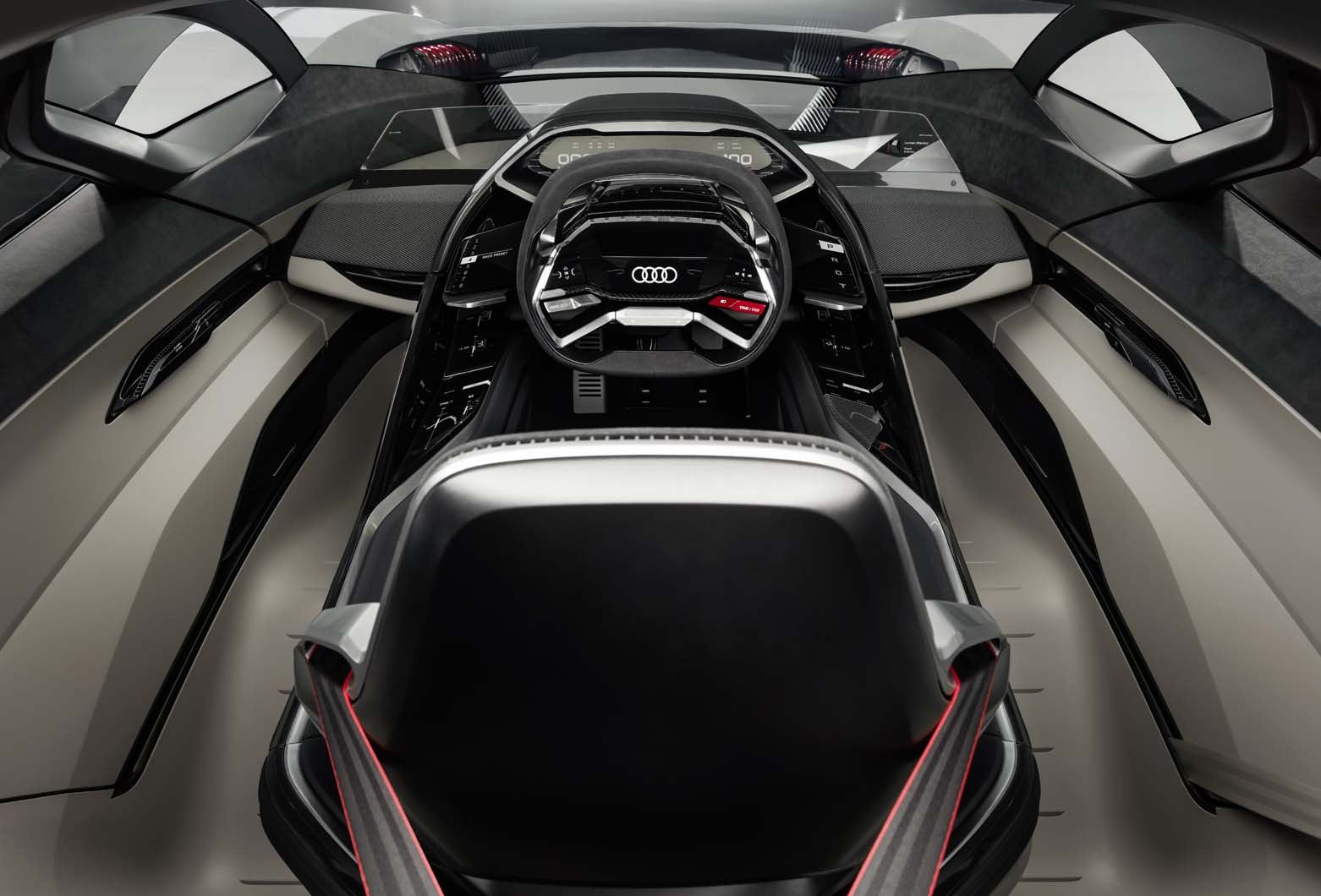
The PB18 e-tron draws on the styling lineage first established on the Audi Aicon concept revealed at the 2017 Frankfurt motor show, albeit with a more dramatic cab-forward silhouette. An extended cockpit incorporates tapered rear side windows and a large rear window that together hint at the look of a modern-day shooting brake. Key elements… Continue reading Audi unleashes 764bhp PB18 e-tron EV supercar concept