BERLIN, Sept. 10 (Xinhua) — Continental is planning to be CO2-neutral “in all of its production processes” by 2040, Elmar Degenhardt, chief executive officer (CEO) of the second largest automotive supplier in Germany, announced at the international motor show IAA in Frankfurt on Tuesday.
In addition, Degenhart was optimistic that the automotive industry would be able to achieve CO2-neutrality “across the entire supply chain” by 2050.
The automotive industry would need to be CO2-neutral by 2050 “at the latest”, which would be “feasible if business and politics tackle it together”, noted Degenhart.
At the IAA, one of the largest automotive trade fairs in the world, Degenhart urged the German government to relieve the tax burden on Germany's automotive industry since “lower taxes and costs allow for higher investments and thus more innovations”.
In order to achieve carbon neutrality, Continental is aiming “in a first step” to solely use electricity from renewable energy sources in a..
Category: Automotive
Press: ZF and Maxion Team up to Present Smart Wheel Connectivity Solution
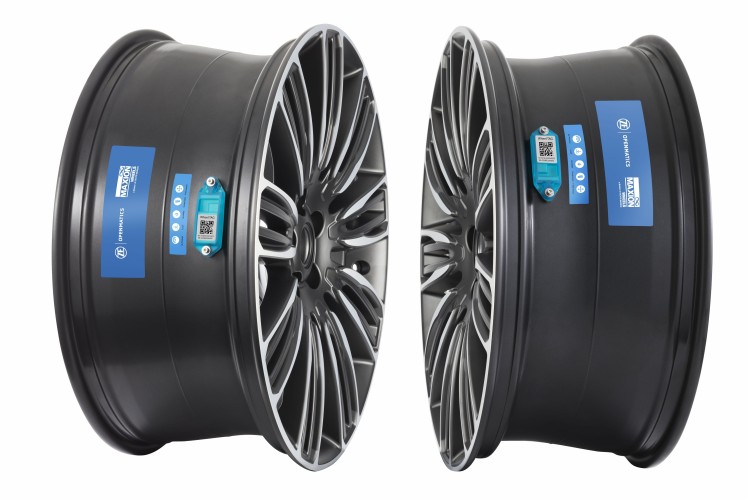
Companies present world’s first fully integrated, multi-service wheel sensor System helps to improve road safety and efficiency while driving down costs for fleet operators and others Smart Wheel Connectivity Solution is suited for heavy commercial vehicles like buses, trucks and agricultural machinery Frankfurt / Friedrichshafen. ZF OPENMATICS and Maxion Wheels announced today the joint development… Continue reading Press: ZF and Maxion Team up to Present Smart Wheel Connectivity Solution
Hyundai and Kia invest in Europe’s high-power fast-charging network
Hyundai and Kia announced Monday that they are investing in Ionity, Europe's 350-kilowatt charging network. They will join BMW Group, Daimler, Ford and Volkswagen/Porsche in expanding charging station availability for vehicles with 800 volt on-board systems.
This partnership gives Hyundai the opportunity to develop vehicles with 800-volt systems that will be able to utilize the 350-kilowatt capacity of Ionity's network, which currently comprises 140 stations. Another 50 are currently under construction and the company plans to expand to an addition 200 sites by 2020.
It's Ionity's goal that its stations be no more than 120 km (75 miles) apart along major highways, guaranteeing that even small city cars will have sufficient range to travel between stations.
“Our participation in this joint venture reaffirms the Group’s commitment to future electromobility. I am confident that our work with Ionity will open a new era of high-power charging experiences, where charging will be seamless and easier than refueling for our customers,” said Hyundai Product VP Thomas Schemera.
Ionity was formed in 2017 with the mission of developing a connected, high-output charging network for European EVs. The coalition was formed with 800-volt systems in mind, allowing for quicker charge times for vehicles like the Porsche Taycan and a forthcoming Hyundai EV.
Europe remains well ahead of the United States with respect to DC fast charging. Tesla's V3 Superchargers charge at up to 250 kw and have recently arrived in some markets. Most U.S. hardware caps at 150 kw.
Volkswagen unveils new brand design and logo
Original Article
Interview: Alain Visser, Chief Executive, Lynk & Co International – Automotive World

The design of an office is usually a good indicator of how a company likes to operate. Many traditional corporate offices resemble the waiting area of a dental practice—clean, traditional and often due a revamp. Despite its business in manufacturing vehicles, Geely subsidiary Lynk & Co is adamant that it is not like the other… Continue reading Interview: Alain Visser, Chief Executive, Lynk & Co International – Automotive World
AEB: a Case Study Using comma.ai Dataset

Features, such as AEB, are meant to improve the safety of the vehicle by reducing both the occurrences and the severity of accidents. Unfortunately, they usually have a long development cycle and effectiveness that is difficult to quantify. Figure 1: Automatic Emergency Braking (AEB) event present in our data set. A precise estimate of the… Continue reading AEB: a Case Study Using comma.ai Dataset
Rivian Announces $350 Million Investment from Cox Automotive
PLYMOUTH, Mich., Sept. 10, 2019 – Rivian today announced an equity investment of $350 million from global automotive services company Cox Automotive. In addition to the investment, the companies will explore partnership opportunities in service operations, logistics, and digital retailing. “We are building a Rivian ownership experience that matches the care and consideration that go into our vehicles,” said RJ Scaringe, founder and… Continue reading Rivian Announces $350 Million Investment from Cox Automotive
It Appears A New Tesla Fremont Assembly Line Is In The Works
Is it an auto assembly line or perhaps that new battery line? Interestingly, the whole entire world follows Tesla‘s every move, large or small. C’mon, there are substantial stock interests at stake here. All vested interests aside, we may never know rather rapidly if there is a fountain going in at the GM Tech Center… Continue reading It Appears A New Tesla Fremont Assembly Line Is In The Works
Reinforcing our commitment to safety
Today, Lyft is expanding our Community Safety Program to bring riders and drivers greater protection and peace of mind By John Zimmer, Lyft president and co-founder Safety is the cornerstone of all healthy communities, and it’s one of the key values Lyft was founded on. We don’t take lightly any instances where someone’s safety is… Continue reading Reinforcing our commitment to safety
Closer ties for British and Korean automotive sectors as SMMT and KAMA sign new agreement
Innovate in Britain: UK government & auto industry have jointly invested more than US$640m (£500m) in CAV R&D and t… https://t.co/AwpNeIdEit