Musk: Singapore government unwelcoming to TeslaElon Musk tweeted that Singapore has been unwelcoming to Tesla Inc., adding to his previous assertions that the government doesn’t support electric vehicles.
The chief executive officer was responding to a tweet inquiring why Tesla wasn’t in the city-state. Musk had said in May that Tesla tried to bring its cars to Singapore but was unsuccessful because the government was “not supportive” of electric vehicles.
In a response to another tweet that Singapore’s economy is reliant on fossil fuels and that it is against electric vehicles, Musk said the Southeast Asian country could switch to solar or battery power.
While Tesla contends a lack of support from Singapore and is establishing a factory in China, Dyson Ltd. said in October it will set up its first electric-car manufacturing facility in the city-state. The plant by the British manufacturer – known for its vacuum cleaners – is expected to be completed by 2020 with a goal of rolling out its first model by 2021 as part of a 2 billion-pound ($2.5 billion) effort to expand into automobiles.
Singapore has said it supports adoption of hybrid buses and electric vehicles, in response to Musk’s earlier statements, the Today newspaper said in June, citing the country’s Land Transport Authority. In 2016, Musk contacted Singapore Prime Minister Lee Hsien Loong over the case of a Tesla sedan that was taxed with a carbon surcharge in the city, the Straits Times reported.
Singapore, a tiny and densely populated nation, restricts the number of vehicles on its roads partly by controlling the number of car-ownership permits, each costing tens of thousands of dollars to bid for.
As the industry moves toward autonomous and alternative-energy vehicles, the nation has focused its efforts on mass transportation. Singapore has built a mini town replicating its public roads that will be used as a trial circuit for driverless electric buses. More than 10 companies are testing vehicles at the facility, and buses from Volvo AB are among those expected to join this year.
–
With assistance from Crystal Chui.
Read or Share this story: https://www.detroitnews.com/story/business/autos/mobility/2019/01/03/musk-singapore-government-unwelcoming-tesla/38840483/
Category: Automotive
Upstream Security partners Arilou to offer cybersecurity solutions for OEMs
Upstream Security partners Arilou to offer cybersecurity solutions for OEMs
Nissan’s new connected car tech to help drivers ‘see the invisible’
Nissan’s new connected car tech to help drivers ‘see the invisible’
1/5 Luxury Cars Sold in USA in 2018 = Tesla Model 3 or Tesla Model S
Electric Cars
Electric Car Benefits
Electric Car Sales
Solar Energy Rocks
RSS
Advertise
Privacy Policy
Cars
Published on January 3rd, 2019 |
by Zachary Shahan
1/5 Luxury Cars Sold in USA in 2018 = Tesla Model 3 or Tesla Model S
Twitter
Google+
LinkedIn
Pinterest
Facebook
January 3rd, 2019 by Zachary Shahan
As I just reported, the Tesla Model 3 was the #11 best selling car in the USA in 2018. As reported earlier today, in December, the Tesla Model 3 was the #1 top selling car in the USA that was produced by an American car company.
But that’s just the beginning of notable Tesla sales results.
In the month of December, Tesla sold more luxury cars than all other automakers. In fact, it accounted for approximately 30% of luxury car sales. Tesla sold more luxury sedans than BMW and Audi combined, more than Mercedes-Benz and Lexus combined. It absolutely crushed the luxury car competition.
Luxury Car Brand
December 2018 US Sales
Segment Share
Acura Cars
3,988
4%
Audi Cars
9,047
10%
BMW Cars
17,428
18%
Buick (est.)
2,388
3%
Cadillac (est.)
2,268
2%
Infiniti Cars
4,681
5%
Jaguar Cars (est.)
1,000
1%
Lexus Cars
9,551
10%
Lincoln Cars
3,044
3%
Mercedes-Benz Cars
15,482
16%
Volvo
966
1%
Tesla Cars (est.)
28,670
30%
TOTAL
94,526
100%
In terms of all luxury vehicles — SUVs and crossovers included — Tesla was #4 in December, just a bit behind Mercedes-Benz, Lexus, and BMW … despite not having a crossover/CUV on the market.
Luxury Auto Brand
December 2018 US Sales
Market Share
Acura
16,774
7%
Audi
22,765
9%
BMW
34,357
14%
Buick (est.)
20,503
8%
Cadillac (est.)
16,585
7%
Infiniti
18,065
7%
Jaguar Land Rover
14,079
6%
Lexus
35,524
14%
Lincoln
11,526
5%
Mercedes-Benz
36,254
14%
Volvo
8,826
4%
Tesla (est.)
31,970
13%
TOTAL
250,454
100%
If you look at the full year, naturally, Tesla didn’t perform as well — it spent most of the year ramping up production. Nonetheless, approximately 1 out of 5 luxury car sales were Teslas (the Model 3 or the Model S).
Luxury Car Brand
2018 US Sales
Segment Share
Acura Cars
43,842
5%
Audi Cars
97,071
11%
BMW Cars
193,465
22%
Buick Cars
33,781
4%
Cadillac Cars
31,746
4%
Infiniti Cars
48,259
5%
Jaguar Cars (est.)
11,000
1%
Lexus Cars
92,660
11%
Lincoln Cars
28,610
3%
Mercedes-Benz Cars
150,147
17%
Volvo Cars
21,456
2%
Tesla Cars (est.)
169,390
19%
TOTAL
877,585
100%
Across all types of luxury vehicles — SUVs and crossovers included — approximately 1 out of 10 sales were Tesla sales (Model 3, Model S, or Model X).
Luxury Auto Brand
2018 US Sales
Market Share
Acura
158,934
7%
Audi
223,323
10%
BMW
311,014
14%
Buick
206,863
9%
Cadillac
154,702
7%
Infiniti
149,280
7%
Jaguar Land Rover
122,626
6%
Lexus
298,310
14%
Lincoln
103,587
5%
Mercedes-Benz
315,959
14%
Volvo
98,263
5%
Tesla (est.)
197,680
9%
TOTAL
2,181,607
100%
This company is 15 years old. The Model S hit the market 6½ years ago.
Can you spell disruption? More importantly, can luxury automaker execs and shareholders spell disruption, and can they see it coming?
The good news is that these competing automakers are getting more serious about electrification — a bit more serious. The bad news (for them as well as humanity) is that they’re still moving too slowly and are years behind Tesla in critical ways.
The other good news is that Tesla is moving down market and is broadening its vehicle offerings into the crossover and pickup categories in order to pull in more buyers. The other bad news is that conventional automakers don’t seem well prepared to compete with their own highly compelling and widely available electric options in those classes. I don’t say this often, but the next few years are going to be interesting. Tesla getting up to 250,000–400,000 sales a year is an explosion, but it’s not putting any competitors into bankruptcy. Reaching 1–2 million thanks to the introduction of an electric crossover (Model Y) and electric pickup could be another story.
If you would like to buy a Tesla and want the benefits that come with a referral, feel free to use my referral code — http://ts.la/tomasz7234 — or not.
Support CleanTechnica’s work by becoming a Member, Supporter, or Ambassador.
Or you can buy a cool t-shirt, cup, baby outfit, bag, or hoodie or make a one-time donation on PayPal to support CleanTechnica’s work.
About the Author
Zachary Shahan Zach is tryin' to help society help itself (and other species). He spends most of his time here on CleanTechnica as its director and chief editor. He's also the president of Important Media and the director/founder of EV Obsession and Solar Love. Zach is recognized globally as an electric vehicle, solar energy, and energy storage expert. He has presented about cleantech at conferences in India, the UAE, Ukraine, Poland, Germany, the Netherlands, the USA, and Canada.
Zach has long-term investments in TSLA, FSLR, SPWR, SEDG, & ABB — after years of covering solar and EVs, he simply has a lot of faith in these particular companies and feels like they are good cleantech companies to invest in. But he offers no professional investment advice and would rather not be responsible for you losing money, so don't jump to conclusions.
Back to Top ↑
Advertisement
Advertise with CleanTechnica to get your company in front of our readers.
CleanTechnica Clothing & Cups
Top News On CleanTechnica
Join CleanTechnica Today!
Advertisement
Advertisement
Follow CleanTechnica Follow @cleantechnica
Our New Electric Car Driver Report
Read & share our new report on “electric car drivers, what they desire, and what the demand.”
The EV Safety Advantage
Read & share our free report on EV safety, “The EV Safety Advantage.”
EV Charging Guidelines for Cities
Share our free report on EV charging guidelines for cities, “Electric Vehicle Charging Infrastructure: Guidelines For Cities.”
30 Electric Car Benefits
Our Electric Vehicle Reviews
Tesla News
Cleantech Press Releases
New Research Shows That Only Two Large Petroleum Companies Have Meaningful Emission Reduction Targets
Koben Announces EVOLVE EVSF —Grid-Friendly Modular EV Store & Forward System
The New Danish Climate Plan — Together For A Greener Future
38 Anti-Cleantech Myths
Wind & Solar Prices Beat Fossils
Cost of Solar Panels Collapses
© 2018 Sustainable Enterprises Media, Inc.
Electric Cars
Electric Car Benefits
Electric Car Sales
Solar Energy Rocks
RSS
Advertise
Privacy Policy
This site uses cookies: Find out more.Okay, thanks
Kia looks to post-autonomous driving era at CES 2019
Searching for your content…
No results found. Please change your search terms and try again.
Cruise and DoorDash to test food delivery using self-driving cars in San Francisco
Cruise is partnering with DoorDash to pilot food and grocery delivery in San Francisco using self-driving vehicles. The companies announced Thursday that the testing program will begin in early 2019 with an initial focus on the San Francisco market. “Delivery is a significant opportunity for Cruise as we prepare to commercialize our autonomous vehicle technology and… Continue reading Cruise and DoorDash to test food delivery using self-driving cars in San Francisco
“Where do you get the hydrogen from to refill your cars?”
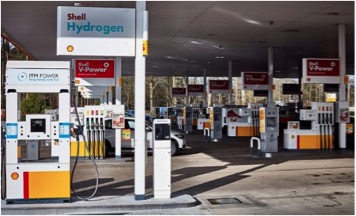
Motorway nodes or local hubs? This blog post has been inspired by the thoughtful input from the Riversimple Design Forum on the topic of refuelling. Having received a plethora of comments and queries from all over the UK and Europe we thought the question of hydrogen infrastructure, often cited as the main barrier to the… Continue reading “Where do you get the hydrogen from to refill your cars?”
New business expansion | Donkervoort enters production of non-automotive products
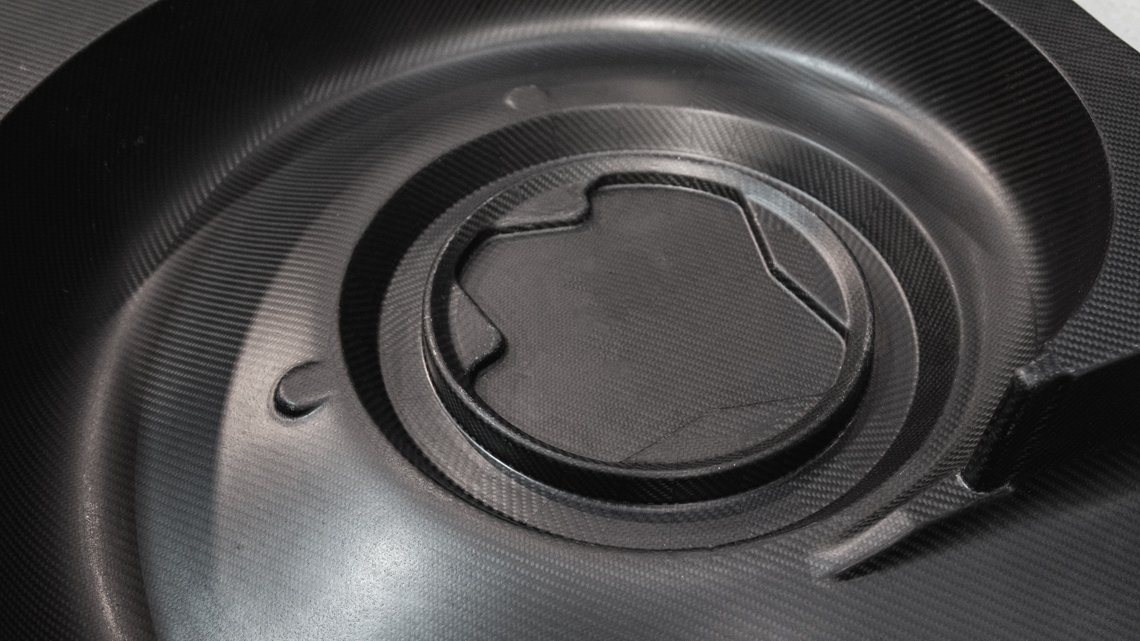
Donkervoort Automobielen B.V. has for the first time in its history started producing carbon-fiber parts for non-automotive products. This business expansion must however be seen next to an even larger development. Within the European Union sponsored SME2 project Donkervoort is now challenged to – in the next two years – develop a mass production method (at… Continue reading New business expansion | Donkervoort enters production of non-automotive products
Phillips 66 Company collaborates with Honda Developer Studio to offer in-vehicle fuel payment
Searching for your content…
No results found. Please change your search terms and try again.
Hyundai Motor America Reports 2018 December and Total Year Sales
Searching for your content…
No results found. Please change your search terms and try again.