Thanks to Volkswagen’s former bad habits, Electrify America has $2-billion to invest in EV infrastructure, $800 of that earmarked for California. In order to future-proof its network, EA has wisely divided its investment into four phases. The company is now beginning to announce plans for its second $200-million round of investment in the Golden State,… Continue reading Electrify America makes second-cycle investment in BTC Power
Category: Automotive
Force Motors’ launches Gurkha Xtreme
Force Motors' launches Gurkha Xtreme
Germany’s Federal Railway Authority (EBA) officially approved the electric multiple unit (EMU) trains built by Siemens Mobility for the Rhine-Ruhr Express (RRX)
Die ersten Züge des Rhein-Ruhr-Express (RRX) nehmen pünktlich zum Fahrplanwechsel am 9. Dezember 2018 den Betrieb auf. Insgesamt liefert Siemens-Mobility 82 neuentwickelte Doppelstock-Züge aus der bewährten Desiro-Zugfamilie. Das neuste Familienmitglied Desiro HC ist auf hohe Kapazitäten ausgelegt. Jede Zugeinheit besteht aus vier Wagen. Auf 105 Metern Länge verteilen sich 400 Sitzplätze. Im Betrieb sollen jeweils zwei Einheiten verbunden werden, damit entsteht ein Acht-Wagen-Express mit rund 800 Sitzplätzen. Zusätzlich übernimmt Siemens Mobility die Wartung und Instandhaltung über 32 Jahre. Hierfür wurde eigens in Dortmund-Eving ein hochmodernes Instandhaltungswerk erreichtet: das modernste der Welt.
The Rhine-Ruhr Express (RRX) will begin operating punctually with the change of the rail system’s timetable on December 9, 2018. Siemens Mobility will be delivering a total of 82 specially developed double-decker trains from the proven Desiro train family. The newest family member, the Desiro HC, is designed for high passenger capacities. Each 105-meter train consists of four cars and has 400 seats. In operation, two train units will be coupled to create an eight-car express with around 800 seats. In addition, Siemens Mobility will be responsible for the service and maintenance of the trains over a period of 32 years. A state-of-the-art maintenance facility, the most modern in the world, was built specifically for this purpose in Dortmund-Eving.
Service to begin when timetable changes on December 9, 2018
Federal Railway Authority approves operation of trains
Approval granted punctually
Increased capacity and passenger comfort
MUNICH, 06-Dec-2018 — /EuropaWire/ — The electric multiple unit (EMU) trains built by Siemens Mobility for the Rhine-Ruhr Express (RRX) will begin operating punctually with the change of the rail system’s timetable on December 9, 2018. Germany’s Federal Railway Authority (EBA) has officially approved the train. The planned deadline was met right on time and commercial operation will begin on Line RE 11 that connects Düsseldorf, Duisburg, Essen, Dortmund, Hamm, Paderborn and Kassel. Up to 43,000 passengers use this route daily. A total of 15 trains will now be entering service. The new Desiro HC trains provide 25 percent more capacity than the trains previously used on this line, and offer significantly enhanced passenger comfort and convenience. The digitalized service and maintenance provided by Siemens Mobility guarantees over 99 percent availability of the new EMUs.
“With the commissioning and series approval of our Desiro HC train for the Rhine-Ruhr Express, we’ve once again demonstrated that we can deliver mega rail projects right on time. This makes us a reliable partner for transport companies worldwide when it comes to handling complex projects throughout their entire lifecycle,” said Sabrina Soussan, CEO of Siemens Mobility.
The Rhine-Ruhr Express is the world’s first series-produced train to feature a new high-frequency window treatment that vastly improves cellphone reception in trains. Researchers at Siemens Mobility developed this special window coating that allows radio signals to pass through the glass unhindered. The solution is a fine pattern that is lasered into the electrically conductive, transparent coating of the window panes. The installed windows allow radio waves to penetrate the glass up to 500 times better than with conventional thermal insulation glazing. With this special solution, passengers can surf in the Internet and phone for the first time without signal disruptions, and there is no need to install special in-train repeaters in the coaches.
Approval of the Federal Rail Authority was granted following the new procedure in Germany which gives train manufacturers and operators planning security. In this procedure, proof and test certificates can be issued by recognized testing centers beginning with the design phase of the train.
In North Rhine-Westphalia (NRW), around 2.4 million people use the regional rail system on a daily basis, and the numbers are growing. The RRX, which is acclaimed as a project of the century for the metropolitan region, will help meet the continually growing transport demands in the Rhine and Ruhr region. When completed, seven rail lines will connect major cities in NRW with important centers such as Kassel and Koblenz in the neighboring states of Rhineland-Palatinate and Hesse. On the core route between Cologne and Dortmund, passengers will be able to use rail services every quarter of an hour once the system’s infrastructure has been expanded and modernized. The system will benefit eight million people living in cities providing RRX service, or around 45 percent of the NRW population.
Siemens Mobility will be delivering a total of 82 specially developed double-decker trains from the proven Desiro train family. The newest family member, the Desiro HC, is designed for high passenger capacities. Each 105-meter train consists of four cars and has 400 seats. In operation, two train units will be coupled to create an eight-car express with around 800 seats. In addition, Siemens Mobility will be responsible for the service and maintenance of the trains over a period of 32 years. A state-of-the-art maintenance facility, the most modern in the world, was built specifically for this purpose in Dortmund-Eving. The RRX contract, with a volume of €1.7 billion, marks the biggest order Siemens Mobility has ever received for Germany’s regional rail transport sector.
This press release, press photos and additional material are available at: www.siemens.com/press/RRX
Siemens Mobility is a separately managed company of Siemens AG. As a leader in transport solutions for more than 160 years, Siemens Mobility is constantly innovating its portfolio in its core areas of rolling stock, rail automation and electrification, turnkey systems, intelligent traffic systems as well as related services. With digitalization, Siemens Mobility is enabling mobility operators worldwide to make infrastructure intelligent, increase value sustainably over the entire lifecycle, enhance passenger experience and guarantee availability. In fiscal year 2018, which ended on September 30, 2018, the former Siemens Mobility Division posted revenue of €8.8 billion and had around 28,400 employees worldwide. Further information is available at: www.siemens.com/mobility.
Contact
Ms. Ellen Schramke
Siemens Mobility GmbH
Nonnendammallee 101
13629 Berlin
Germany
Tel: +49 (30) 386-22370
ellen.schramke@siemens.com
SOURCE: Siemens AG
Tweet
Share
0
+1
0
S Korea to provide $3bn for embattled auto parts sector
Go to Source
GM fights government to retain electric car tax credit
Original Article
UAW grows strike fund, membership as workers head into wage talks
Original Article
High-definition SWIR camera developed by Quantum Imaging
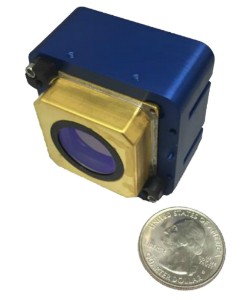
Quantum Imaging at the 2018 AUSA convention in Washington, D.C., USA, introduced the QI-SWIR-HD10 camera. The new SWIR camera features a 1280 x 1024 format InGaAs detector with 10 x 10 µm pixel pitch, programmable on-chip features, read noise of less than 40 rms, and extended spectral range from 0.5 µm to 1,7 µm. [Native… Continue reading High-definition SWIR camera developed by Quantum Imaging
Via Deploys BusGo Service in Singapore with Land Transit Authority
Published December 17, 2018 4:08 pm, Via NYC
Via Deploys BusGo Service in Singapore with Land Transit Authority
The on-demand public bus project is now live for riders through a mobile app
Via, the world’s leading developer of on-demand shared mobility solutions, has announced today the first public-sector deployment of its technology in Asia. Through a partnership with Singapore’s Land Transit Authority (LTA), a new on-demand public bus service, ‘BusGo’, will enable commuters in the Joo Koon area to hail a dynamically-routed LTA bus directly from their smartphone.
“Via’s powerful technology is seamlessly integrating with public transit infrastructure around the globe, from Berlin to New York, redefining the way people get around cities,” said Daniel Ramot, co-founder and CEO of Via. “We have increasingly seen cities and towns ask how they can provide their residents with public transportation that radically improves the customer experience, and yet still achieves the same environmental and congestion-reducing benefits of existing mass transit. Via’s sophisticated on-demand shared transit technology is that solution, and we’re delighted to join forces with the LTA to launch this bold new service in Singapore.”
Riders will select their origins and destinations directly through the BusGo mobile app. Via’s advanced technology will direct passengers to a convenient bus stop for pickup and dropoff, allowing for quick and efficient shared trips without lengthy detours that take riders out of their way. Riders will simply show the mobile boarding passes displayed in the BusGo app to board the bus.
How to Ride in Joo Koon:
Download the BusGo app: Apple or Android
Select a pickup and dropoff location in BusGo’s Joo Koon service area
BusGo will process your booking request in real-time and match an available bus to pick you up or advise if a regular public bus services can serve you better
The BusGo app will provide an accurate estimate of your bus arrival time before booking
Once a ride is selected, BusGo will direct you to the nearest pickup point to meet your bus, and track your bus in real-time
Show the mobile boarding pass displayed in the BusGo app to board the bus
The BusGo service will operate from 11 am-3 pm and 8:30-11:30 pm on weekdays, excluding public holidays. Fares will be equivalent to a fixed bus distance of 3.2 km, regardless of the distance travelled. Distance-fare transfers and concession fares will continue to apply.
About Via
Via is re-engineering public transit, from a regulated system of rigid routes and schedules to a fully dynamic, on-demand network. Via’s mobile app connects multiple passengers who are headed the same way, allowing riders to seamlessly share a premium vehicle. First launched in New York City in September 2013, the Via platform currently operates in the United States, and in Europe through its joint venture with Mercedes-Benz Vans, ViaVan. Via’s technology is also deployed worldwide through partner projects with public transportation agencies, private transit operators, taxi fleets, private companies, and universities, seamlessly integrating with public transit infrastructure to provide the most cutting edge on-demand mobility innovation.
Read more
Toyota recalls 70K vehicles over air bag inflators
Toyota recalls 70K vehicles over air bag inflatorsDetroit – Toyota is recalling about 70,000 Toyota and Lexus brand vehicles in North America to replace air bag inflators that could explode and hurl shrapnel at drivers and passengers.
The recall covers the 2003 to 2005 Corolla, the 2002 to 2005 Sequoia, the 2003 to 2005 Tundra and the 2002 to 2005 Lexus SC.
Takata uses the chemical ammonium nitrate to create a small explosion and inflate the bags. But it can deteriorate and burn too fast, blowing apart a metal canister.
The Toyota and Lexus vehicles were recalled previously and the inflators replaced with new ones that still used ammonium nitrate. In the latest recall, Toyota will use inflators made by another company with a safer chemical.
Owners will be notified early next year. Toyota says it has replacement parts available.
About 65,000 of the recalled vehicles are in the U.S.
Toyota says it’s doing the recall a year ahead of a schedule set by the U.S. National Highway Traffic Safety Administration.
At least 23 people have died worldwide due to the problem caused by inflators made by Takata Corp., resulting in the largest series of auto recalls in U.S. history. They cover 37 million vehicles and about 50 million inflators in the U.S. About 100 million inflators are being recalled worldwide.
The recalls forced Takata of Japan to seek bankruptcy protection.
Read or Share this story: https://www.detroitnews.com/story/business/autos/foreign/2018/12/12/toyota-recall-replace-air-bag-inflators/38723663/
Feds: FCA spent $15K on steak dinners for UAW
Feds: FCA spent $15K on steak dinners for UAWDetroit — Senior United Auto Workers leaders launched 2015 UAW contract negotiations with an $8,494 meal at a Detroit steakhouse paid for by Fiat Chrysler Automobiles, according to a new federal court filing.
And once negotiations with Fiat Chrysler appeared to be wrapped, officials book-ended the talks with a second lavish meal paid for by the carmaker at the same restaurant.
After UAW leaders ate, drank and smoked $15,000 worth of filet, liquor and cigars for the two meals paid for by the rival across the negotiating table, rank-and-file union members at Fiat Chrysler voted down the proposed contract.
Federal officials say the meals are examples of corruption surrounding the 2015 Fiat Chrysler-UAW contract negotiations.
U.S. District Attorneys David Gardey and Erin Shaw wrote in a court filing that spending on meals such as those at the London Chop House in downtown Detroit corrupted the bargaining process, and the “freebies” and “lavish entertainment” UAW officials allowed Fiat Chrysler to pay for were “the rule rather than the exception.”
The UAW officials violated the Labor Management Relations Act of 1947 when they let the automaker pay for those meals, the attorneys wrote.
The details emerged as the UAW and Detroit automakers are poised to negotiate new contracts next year at a time when both General Motors Co. and Ford Motor Co. are pruning excess white-collar workers, and GM is signaling the possibility of closing U.S. plants.
Prosecutors leveled the allegations Wednesday while urging a judge to sentence one of those high-ranking UAW leaders to federal prison for one year. That official, Nancy Adams Johnson, has emerged as a pivotal participant and witness to a years-long conspiracy involving Fiat Chrysler and the UAW, and she has linked former union President Dennis Williams to the scandal.
UAW spokesman Brian Rothenberg said in a statement that the UAW confronted Johnson when they found out she “had stolen thousands of dollars” from the union's National Training Center.
“The UAW also provided information about Ms. Johnson’s illegal conduct to the federal prosecutors at that time,” Rothenberg said. “The money Ms. Johnson stole and misused belonged to the NTC, not to Chrysler — and the NTC has filed papers with the Judge in Ms. Johnson’s case seeking to recover the money she stole from it. The UAW is confident that Ms. Johnson’s misconduct had no effect on the collective bargaining agreement between the UAW and Chrysler – which has numerous checks and balances and requires a vote by the entire membership, among other things.”
Fiat Chrysler did not immediately respond to request for comment.
No Fiat Chrysler officials were present for either meal, according to court documents filed Wednesday in U.S. District Court, and the meal had “nothing to do with the National Training Center.” The UAW had used a National Training Center credit card to pay for the two meals.
“These corrosive and poisoning circumstances are exactly what the Taft-Hartley Act (Labor Management Relations Act of 1947) was intended to avoid,” Assistant U.S. Attorney David Gardey wrote in the court filing.
“Over 45,000 hourly employees for FCA were represented by the UAW during the period of the conspiracy. These men and women believed that their union leaders were looking out for their best interests and negotiating in good faith, not double dealing them for personal gain.”
Adams Johnson was the UAW's No. 2 official in the union's Fiat Chrysler department, serving as the top administrative assistant to UAW Vice President Norwood Jewell.
Jewell tapped a training fund to pay for more than $10,000 worth of golf resort accommodations in Palm Springs, California, and Disney World tickets, a spending spree that is the focus of the ongoing investigation, sources told The Detroit News.
In July, Adams Johnson entered a guilty plea, telling U.S. District Judge Paul Borman she violated a federal law prohibiting labor officials from receiving cash and valuable items from employers. In this case, she received tens of thousands of dollars in illegal payments and benefits from Fiat Chrysler during the conspiracy, including $1,100 designer shoes, first-class flights to California, resort stays and limousine rides, according to federal prosecutors.
Adams Johnson was the seventh person to plead guilty in the widening scandal.
She could be sentenced to as much as 18 months in prison for her role in a widening corruption scandal involving Fiat Chrysler Automobiles and its contract negotiations with the UAW, according to the filing. Johnson's lawyer, Harold Gurewitz, is requesting a lighter “non-custodial” sentence that is not “greater than necessary.”
Adams Johnson, 58, at the direction of more senior UAW officials “directed tens of thousands of dollars of prohibited payments from Fiat Chrysler for the personal benefit of those senior UAW officials and for the personal benefit of other UAW officials,” according to Wednesday's sentencing memorandum.
Gardey writes that Johnson betrayed thousands of UAW members and their families through her actions in 2015, and the “court needs to deter other union officials from engaging in similar misconduct.”
Gardey also requested Johnson's sentence be delayed six months so that she could continue to cooperate in the ongoing federal investigation into the 2015 UAW contract negotiations federal prosecutors have said Fiat Chrysler and the UAW conspired to corrupt.
ithibodeau@detroitnews.com
Twitter: @Ian_Thibodeau
Staff writer Rob Snell contributed.
Read or Share this story: https://www.detroitnews.com/story/business/autos/chrysler/2018/12/12/fiat-chrysler-spent-15-thousand-uaw-steak-dinners/2291277002/