The French, like the Europeans, travel fewer and fewer kilometers with their own cars and buy fewer new vehicles, favoring the second-hand market. This is the consequence of a lack of purchasing power but also a more utilitarian report to the automobile. In the early 1990s, sales to individuals accounted for three quarters of the… Continue reading New cars no longer appeal to French motorists
Tag: PSA
JCB Group rebrands Hidsons dealerships acquired in January

JCB Group has rebranded the Kent-based Hidsons Group dealerships it bought in January this year. The acquired dealerships in Northfleet and Rainham complimented its existing outlets in Ashford, Gillingham, Sittingbourne, Crawley, Worthing, Brighton and Eastbourne. The acquisition meant JCP represented Kia, Citroen, Mitsubishi and SsangYong for the first time. JCB Group managing director Jonathan Bischoff… Continue reading JCB Group rebrands Hidsons dealerships acquired in January
The auto industry’s VHS-or-Betamax moment
5GAA | 5G Automotive Association e.V via AP Images
In this image released July 11, 2018, 5GAA, BMW Group, Ford and Groupe PSA exhibit the first European demonstration of C-V2X direct communication interoperability between multiple automakers.
The auto industry has a choice to make: Which language will cars speak when they talk to one another?
Until a couple of years ago, automakers agreed on one vehicle-to-vehicle communications platform, called dedicated short-range communications, or DSRC, based on the technology used for Wi-Fi. But some car companies have begun to favor a competing protocol, known as Cellular V2X, which is based on a next-generation version of the technology used by your mobile phone.
So far, the federal government has held back on enforcing a standard. A proposed rule mandating deployment of DSRC equipment in new vehicles has languished for nearly two years, and critics say the delay is making motorists less safe. But supporters of the competing standard say something better has come along.
More from The New York Times:
Cars will talk to one another. Exactly how is less certain.
You don't drive a minivan? You should. Here's why.
Motorcycle makers try minting new riders with youth programs
“You've got public agencies who want to deploy, but we don't have a standard, so what do I buy?” asked Kirk Steudle, director of Michigan's Department of Transportation and a supporter of the DSRC standard. “Betamax, or a VHS?”
It is a crucial technological choice: Cars are increasingly connected, and the autonomous vehicles that will arrive in the future must have a way to communicate with each other and surrounding infrastructure. But even before self-driving cars hit the streets en masse, there are enormous benefits to be had. Federal transportation officials estimate that, once widely deployed, such communication systems will prevent or mitigate up to 80 percent of all non-impaired collisions and address thousands of fatal crashes per year in the United States.
The auto industry is divided over the standards.
General Motors has embraced DSRC, and it's already a standard safety feature on Cadillac CTS sedans. Toyota and Volkswagen have also committed to make DSRC systems standard equipment on new cars beginning next year. On the other side are brands, including Ford, BMW and Mercedes-Benz, that have joined the chip maker Qualcomm, cellular providers and others to form the 5G Automotive Association, which is pushing the C-V2X standard.
Regardless of the standard that's settled on, vehicles will be able to directly communicate with one another, allowing them to warn of collisions even when drivers cannot see each other. And such systems will allow valuable safety information to be shared from other sources: Instead of a sign warning that “bridge ices before road,” the bridge can warn drivers when ice has actually formed, and traffic lights will be able to manage traffic to minimize delays and clear the way for emergency vehicles.
But there are important differences.
DSRC has been around much longer, and most car companies have developed and tested systems based on the standard. The Federal Communications Commission ruled that a chunk of the wireless radio spectrum would be restricted to the DSRC standard beginning in 2003, and in 2016 the Obama administration proposed a rule that would mandate phase-in of DSRC in new cars and light trucks starting in 2021. The National Highway Traffic Safety Administration said systems to prevent collisions at intersections alone could save some 1,300 lives a year.
John Kenney, director of the Toyota InfoTechnology Center, said his company was ready to move ahead with the DSRC standard. “G.M. is online, too,” he said. “Now, there's a potential risk that maybe it's not going to be DSRC. That just impedes deployment.”
Supporters of the C-V2X standard contend that DSRC is nearly two decades old, from a time when companies didn't imagine streaming video to children in the back seat of a crossover, or updating vehicle operating systems from the cloud. C-V2X's advocates say it would allow for more features, be more flexible and could use cellular infrastructure.
“People assume that just because something is here now and they've been working on it for 15 or 20 years, it will be here 15 years from now,” said Jovan Zagajac, technology manager in Ford's Connected Vehicle and Services group and a member of the 5G group's board. “Well, the world has changed.”
BMW's engineers, for example, see safety advantages if cars can communicate directly with personal devices like mobile phones.
“This will make it much easier to retrofit vehicles and also give the benefits of C-V2X to other vulnerable road users, such as cyclists and pedestrians,” said Joachim Goethel, the leader of BMW's 5G connectivity initiatives.
The division runs deep. This month, the Eno Center for Transportation, a nonprofit established by William Phelps Eno, the road safety pioneer whose work led to New York City's first traffic plan in 1909, published dueling opinion pieces on the standards. One was from a Toyota official supporting DSRC and the other from a Daimler official favoring C-V2X.
Despite the Obama-era proposal, which would require all new vehicles to include DSRC by 2023, the federal government hasn't moved to enforce a standard.
Heidi King, deputy administrator at the National Highway Traffic Safety Administration, said the Department of Transportation was “technology neutral” on communication protocols.
“While our past research has centered around DSRC — because that was the only technology available — we are also exploring other technologies, including Cellular V2X,” she said in an email.
The federal government also has authority over a crucial element of any system: the radio frequency on which it operates. Two members of the Federal Communications Commission recently informed Toyota that the agency was looking at “newer technology” — such as C-V2X — for the 5.9-gigahertz band that has been allocated to DSRC.
“By taking a modern look at the possibilities for wireless services in the 5.9 GHz band, we can support automobile safety, increase spectrum for Wi-Fi and grow the wireless economy,” they wrote in a letter to the carmaker.
The mention of “the wireless economy” hints at another crucial difference between the standards: DSRC has little possibility for monetization, while a cellular system offers the possibility of revenue streams through additional data services. The 5G Automotive Association suggests that next-generation infotainment services used by C-V2X — such as movie streaming or conference calls — would improve the passenger experience.
Car and equipment makers have conducted trials of C-V2X, but even its proponents acknowledge that it will take time to roll out, while DSRC is market ready. It's not just automakers that now have to wrestle with the choice: State transportation departments and many local authorities have been installing DSRC-compatible roadside infrastructure for almost a decade.
In January, 12 state and regional transportation officials, including Mr. Steudle of Michigan, formed the Coalition for Safety Sooner to advocate the protection of the 5.9 GHz band for DSRC and the acceleration of efforts to deploy it.
The group pressed its case in a letter to Transportation Secretary Elaine Chao; Ajit Pai, the chairman of the Federal Communications Commission; and Mick Mulvaney, the director of the Office of Management and Budget. The signatories had already installed or committed to install more than 1,000 DSRC-equipped intersections and roadside units, and outfitted thousands of their own vehicles with the technology.
“Waiting for the next technology solution to be developed, tested and proven misses a huge opportunity to potentially save tens of thousands of lives throughout the United States each year,” they wrote.
A recent study published by the University of Michigan Transportation Research Institute calculated the cost of waiting to deploy vehicle-to-vehicle systems. A three-year delay will allow the sale of millions of new cars and light trucks without them, and those vehicles will remain on the road for an average of 15 years. During that time, they would have millions of avoidable collisions, according to the study, which was written by James Sayer, the institute's director, and two other researchers.
The institute helped with one of the first and largest tests of DSRC technology in Ann Arbor, Mich., involving some 3,000 vehicles. Based in part on that experience, Michigan officials require DSRC-compatible hardware in every new traffic signal in the state.
Mr. Steudle, the ..
Interview d’Arnaud Belloni, Directeur Marketing de Citroën.
Lorsqu’on parle marketing dans l’automobile, son nom résonne comme une référence. Arnaud Belloni a en effet occupé dans cette industrie de nombreuses fonctions, d’abord chez Renault, ensuite au sein du groupe VW puis plus de onze ans chez Fiat-Chrysler avant d’intégrer le Groupe PSA en tant que Directeur Marketing Monde de Citroën en septembre 2015.… Continue reading Interview d’Arnaud Belloni, Directeur Marketing de Citroën.
French luxury brand DS previews electric DS 3 crossover SUV
[% } %]
Peugeot urges France to revive incentives for hybrids
By Laurence Frost and Gilles Guillaume SOCHAUX: PSA Group is pressing the French government to revive sales incentives on rechargeable hybrid vehicles as it rolls out plug-in versions of its larger models to meet tightening European emissions rules, the carmaker said on Thursday. Automakers are rushing to deploy electric cars and hybrids, which combine battery… Continue reading Peugeot urges France to revive incentives for hybrids
BMW and Daimler submit application to EU Commission: Car2go and DriveNow agree on merger
Getty Images / AFP DriveNow and Car2go: The merger is in the final meters After months of negotiations, they were able to clarify their issues: BMW Show stock market chart and Daimler Show stock market chart have submitted the merger of their car-sharing offers to the EU Commission for approval. In advance, the corporations had… Continue reading BMW and Daimler submit application to EU Commission: Car2go and DriveNow agree on merger
The fulfillment of a dream
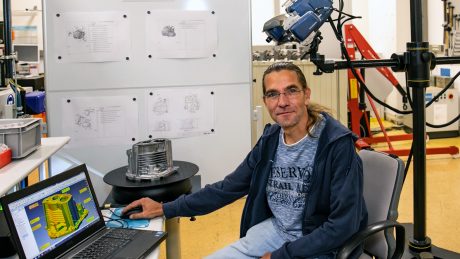
*/ ]]> Günther Lichtl at his measuring activity in the measuring room in Vienna-Aspern. Measurement Technician Günther Lichtl was part of the ten-member Opel Wien employee group, which worked from the beginning of February to the end of July at the Valenciennes PSA plant. And got the opportunity to fulfill a long-cherished wish. This happened… Continue reading The fulfillment of a dream
Groupe PSA and EasyMile trial an autonomous tow tractor in Sochaux
Groupe PSA’s Sochaux plant is trialling automated technology on a portion of its logistics platform The TractEasy autonomous industrial tow tractor can navigate the plant environment without any human intervention A world first in the manufacturing industry, the technology on trial is one illustration of the 4.0 industry solutions that Sochaux plant aims to adopt as… Continue reading Groupe PSA and EasyMile trial an autonomous tow tractor in Sochaux
Peugeot coupé concept to be revealed tomorrow
Peugeot will show a concept coupé tomorrow ahead of an official appearance at next month’s Paris motor show, and it has been previewed in a series of images and clips released by the brand. No details have been given about the car’s powertrain, but some degree of electrification is expected, given the switch to electric mobility… Continue reading Peugeot coupé concept to be revealed tomorrow