German automaker Mercedes-Benz has offered its support with the production of medical equipment. With the aid of 3D printers, individual components can be produced that are urgently needed in medical technology as a result of the current COVID-19 pandemic. “With our highly competent team and years of experience in 3D printing technology, we are ready… Continue reading Mercedes-Benz offers its 3D printing expertise for production of medical equipment
Tag: Daimler
Daimler CEO on ‘balancing act’ to protect company – BBC News
Ola Kallenius, the CEO of Daimler says the health and safety of staff and health of the company are his priorities. He told Hardtalk’s Stephen Sackur: “We are going through a balancing act. We have not turned off the company completely. We have stopped many of our production operations and we have stopped also some… Continue reading Daimler CEO on ‘balancing act’ to protect company – BBC News
@Daimler: Mercedes-Benz offers support with the production of medical equipment
Mercedes-Benz is ready: The COVID-19 pandemic is affecting everyone. Especially in times like these, it is important for Mercedes-Benz to meet its social responsibilities. The Group has therefore offered its support with the production of medical equipment. With the aid of 3D printers, individual components can be produced that are urgently needed in medical technology… Continue reading @Daimler: Mercedes-Benz offers support with the production of medical equipment
Ineos Automotive reveals its Defender-like Grenadier SUV in greater detail – Forma car News
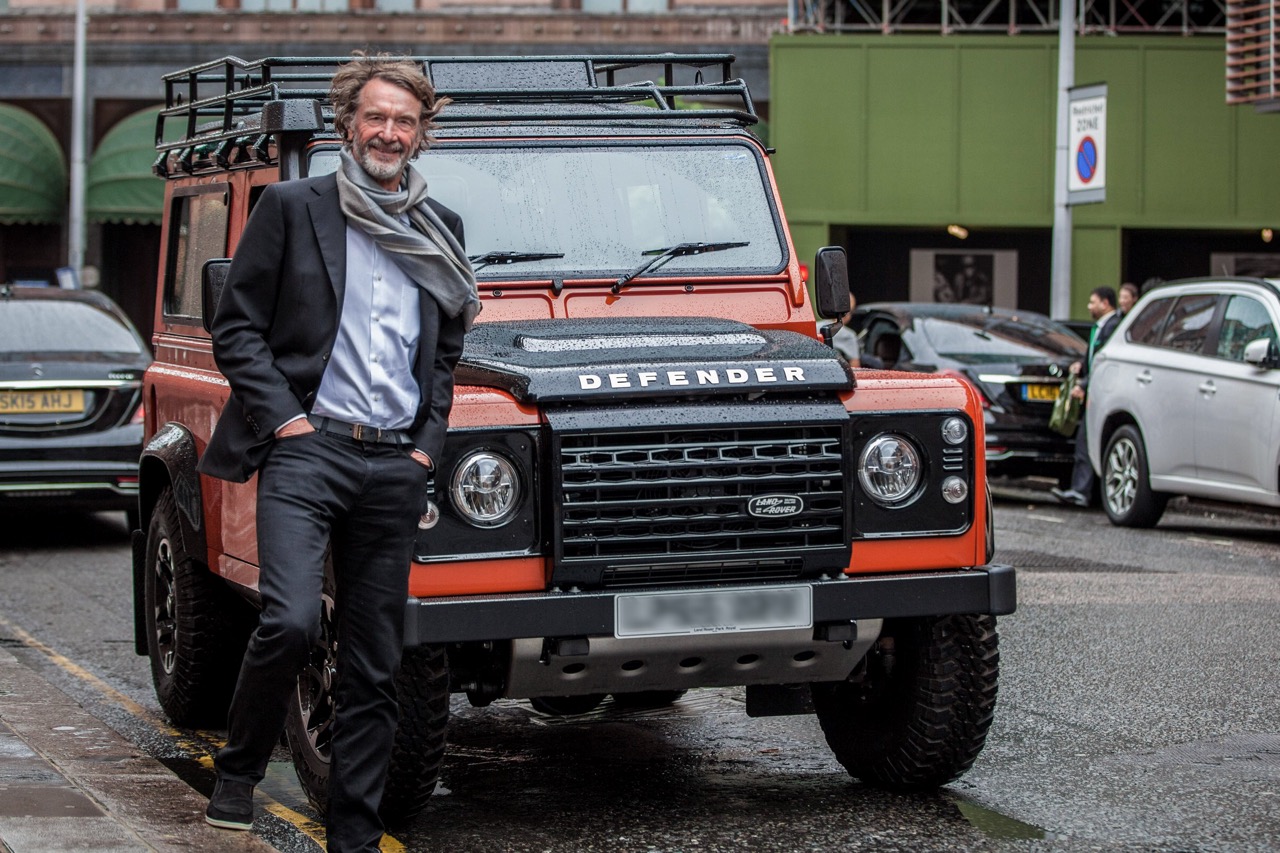
Ineos Automotive has revealed some of the principal specs of its upcoming Grenadier SUV, which openly takes after the Land Rover Defender classics. Four years ago, just as the first-gen Defender went out of production, Ineos CEO Jim Ratcliffe contacted Jaguar Land Rover asking to buy the production rights. Facing refusal, he decided to design… Continue reading Ineos Automotive reveals its Defender-like Grenadier SUV in greater detail – Forma car News
EDAG develops crash proof aluminium alloy for 3D printing
EDAG Group, the leading engineering service provider believes additive production has huge undisputed potential for revolutionising the production of the future and at the same time achieving new dimensions for lightweight construction. At present, the aluminium alloys available do not yet fulfil the high demands required for them to be suitable for use in the… Continue reading EDAG develops crash proof aluminium alloy for 3D printing
Daimler Seeks Over $11 Billion Credit Line to Weather Crisis
Daimler AG is in talks with banks over arranging a new credit facility of at least 10 billion euros ($11 billion) to help it navigate the fallout from the coronavirus pandemic, according to people familiar with the matter.
Daimler CEO Says Automaker Has No Need For State Aid – CarScoops
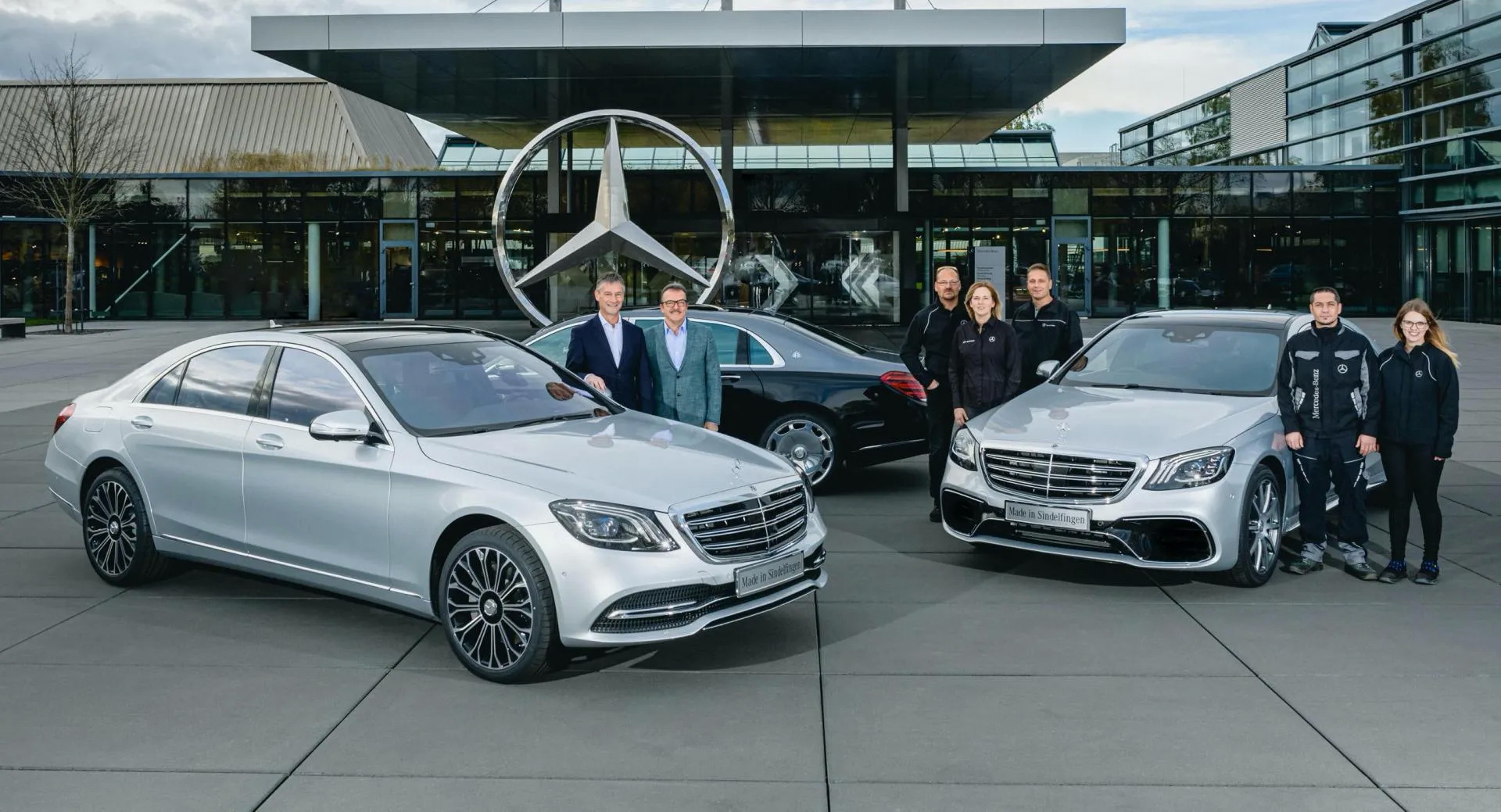
Unlike some carmakers, Daimler is currently not in need of additional funds, and therefore will not apply for state aid, despite having to halt production at its major plants in Europe recently. “Daimler currently has no need for state aid. Generally speaking, the industry had a very good order intake before the crisis,” said company… Continue reading Daimler CEO Says Automaker Has No Need For State Aid – CarScoops
@Daimler: Endurance test in ice and snow: the EQV undergoing winter testing inside the Arctic Circle
Customers, whether private or commercial users, place the same demands on electric vehicles as they do on equivalent vehicles with combustion engines: complete reliability and functionality – even in severe conditions. That was exactly what the winter test of the Mercedes-Benz EQV 300 (combined power consumption: 26.4-26.3 kWh/100 km; combined CO2 emissions: 0 g/km)1 focused on. For several weeks,… Continue reading @Daimler: Endurance test in ice and snow: the EQV undergoing winter testing inside the Arctic Circle
Endurance test in ice and snow: the EQV undergoing winter testing inside the Arctic Circle
24.
March 2020
Arjeplog, Sweden
Customers, whether private or commercial users, place the same demands on electric vehicles as they do on equivalent vehicles with combustion engines: complete reliability and functionality – even in severe conditions. That was exactly what the winter test of the Mercedes-Benz EQV 300 (combined power consumption: 26.4-26.3 kWh/100 km; combined CO2 emissions: 0 g/km)1 focused on. For several weeks, the development team subjected the first purely battery-electric premium MPV from Mercedes-Benz to an endurance test in Arjeplog, Sweden under severe climatic conditions. At temperatures reaching minus 30 degrees with icy roads and deep snow, the EQV proved its operability under extreme conditions. Thus, the vehicle completed one of its last milestones on the way to its market launch in the second half of 2020.
The vehicles were put through numerous complex tests on the test site close to the Arctic Circle. Over 30 engineers, electronics experts and mechanics from Mercedes-Benz Vans were involved: for example, they drove over frozen lakes and measured the effects of extreme cold on handling, ergonomics and comfort, using specialised measuring technology. The starting behaviour and low-temperature resistance of the drive components, software and interfaces, and the thermomanagement of the entire vehicle, were tested in cold cell facilities.
A further important element of the test: charging behaviour. The EQV is equipped with an integrated fast-charging function with which it can recharge from 10 to around 80 percent of its energy in 45 minutes. This is a great advantage, particularly when travelling, but it must function reliably regardless of the temperature.
The advantages of electromobility in cold conditions
The Mercedes-Benz EQV neatly uses the advantages of electromobility in cold conditions: EQV drivers can enter a departure time via the Mercedes me app from the comfort of their home or office, so as to preheat the interior to the desired temperature and melt any snow or ice on the windows. If the EQV is plugged in to a charging point, the required electricity does not reduce the range as it is taken from the mains supply and not from the drive battery. This is a plus in comfort.
Reliable handling in ice and snow is also essential. On the test drives, the EQV showed that the low, central positioning of the lithium-ion battery in the underbody has a positive effect on the vehicle's handling, specifically under winter conditions. The conclusion of the testers was that the EQV is fit for customer operations – even in arctic conditions.
“In this final winter test, we demanded everything of the EQV – and it performed very well. We used these extensive tests for the last milestones on the way to market readiness”, said Benjamin Kaehler, Head of eDrive@VANs at Mercedes-Benz Vans. “Particularly with regard to thermal management, so important to electric vans, we were able to gain insights which will make the EQV safer and more comfortable.”
EQV as the second model of the “EQ” technology brand
The market launch of the EQV will be in the second half of 2020. After the EQC (combined power consumption: 20.8–19.7 kWh/100 km; combined CO2 emissions: 0 g/km)2, this electric MPV is the second model of the Mercedes-Benz “EQ” technology brand. The EQV is available in two wheelbases and with a permissible gross vehicle weight of 3500 kilogrammes. The high-voltage battery is integrated into the underbody so that no space in the interior is sacrificed. By flexible addition of single or bench seats, the six-seater EQV can be converted to seat seven or even eight people.
A further highlight of the EQV is the MBUX multimedia system with touchscreen, intelligent voice control with the key word “Hey Mercedes” and EQ-specific displays and settings. This includes EQ-optimised navigation, for example, which automatically calculates a fast, comfortable route with few charge stops and short charging times. The electric drivetrain of the EQV is located on the front axle. Peak output is 150 kW (204 hp), the Mercedes-Benz EQV achieves a maximum torque of up to 362 newton metres. It can reach a top speed of 160 km/h.
Mercedes-Benz EQV 300: technical data
CO2 emissions
0 g/km
Combined power consumption1
26.4-26.3 kWh/100 km
Combined range1, 2
417-418 km (based on NEDC)
Charging standard
CCS
Minimum charging time at wallbox or public charging station (AC charging, up to 11 kW)
< 10 h (0-100 %)
Minimum charging time at a fast-charging station
DC charging, up to 50 kW standard
DC charging, up to 110 kW (optional)
ca. 80 min. (10-80% SoC)
ca. 45 min (10-80% SoC)
Drive system
Front-wheel drive
Output (peak)
150 kW (204 hp)
Output (steady)
70 kW (95 hp)
Max. torque
362 Nm
Battery
Lithium-ion
Battery capacity (usable)
90 kWh
Battery capacity (installed)
100 kWh
Lengths
5140 mm, 5370 mm
Wheelbases
3200 mm, 3430 mm
Top speed
140 km/h (standard), 160 km/h (optional)
Luggage compartment (max. depending on equipment)
1030 litres, 1410 litres
GVW
3500 kilogrammes
1 Electrical consumption and range have been determined on the basis of Directive 692/2008/EC. Electrical consumption and range are dependent on the vehicle configuration.
2 The actual range is furthermore dependent upon the individual driving style, the road and traffic conditions, outside temperature, use of climate control/heating system, etc. and may differ.
Press Contact
Benjamin Oberkersch
Spokesperson Van Technology Communications – eDrive@Vans
benjamin.oberkersch@daimler.com
Florian Hofmann
Manager Global Technology Communications Mercedes-Benz Vans
florian.hofmann@daimler.com
Tel: +49 160 8693546
Press Contact Overview
Media
Download
Pictures (7)
Documents (1)
Media Contact (2)
Filter
Show thumbnails
Show list
Slideshow
Settings
Preview
Do you really want to delete the data record?
Please wait a moment …
20C0174_01
Legend
:
Winter testing EQV (Combined power consumption: 26.4-26.3 kWh/100 km; combined CO2 emissions: 0 g/km)
20C0174_02
Legend
:
Winter testing EQV (Combined power consumption: 26.4-26.3 kWh/100 km; combined CO2 emissions: 0 g/km)
20C0174_03
Legend
:
Winter testing EQV (Combined power consumption: 26.4-26.3 kWh/100 km; combined CO2 emissions: 0 g/km)
20C0174_04
Legend
:
Winter testing EQV (Combined power consumption: 26.4-26.3 kWh/100 km; combined CO2 emissions: 0 g/km)
20C0174_05
Legend
:
Winter testing EQV (Combined power consumption: 26.4-26.3 kWh/100 km; combined CO2 emissions: 0 g/km)
20C0174_06
Legend
:
Winter testing EQV (Combined power consumption: 26.4-26.3 kWh/100 km; combined CO2 emissions: 0 g/km)
20C0174_07
Legend
:
Winter testing EQV (Combined power consumption: 26.4-26.3 kWh/100 km; combined CO2 emissions: 0 g/km)
Loading
@Daimler: Cameras instead of rearview mirrors – is that at all possible? Everything you always wanted to know about the MirrorCam.
Mercedes-Benz Trucks replaces the conventional rearview mirrors with the MirrorCam camera system What are the advantages of the MirrorCam? How does the whole thing work? What needs to be considered? A dozen questions and answers about the MirrorCam Stuttgart – Cameras on the roof frame and displays at the A-pillars: the new Actros is easy to… Continue reading @Daimler: Cameras instead of rearview mirrors – is that at all possible? Everything you always wanted to know about the MirrorCam.