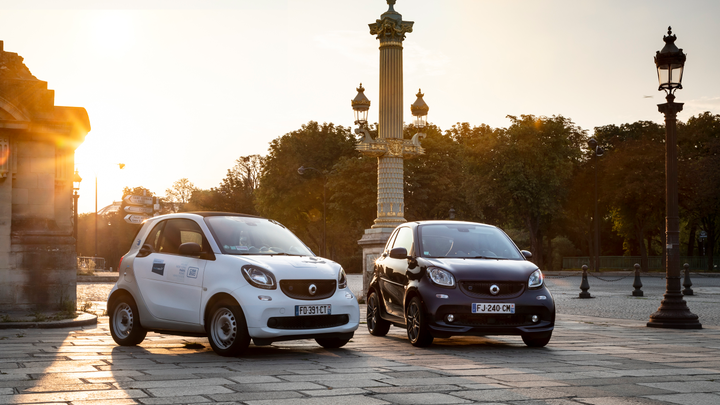
As Daimler celebrates its landmark in carsharing, it looks to focus on future mobility concepts. Photo via Daimler. Beginning in 2009, Daimler established the first fleet for free-floating carsharing in Ulm with 200 smart vehicles. A year before, SHARE NOW, previously known as car2go, started operation as the first location-independent carsharing system worldwide. Today, Daimler… Continue reading Daimler Shares Vision for Share Now, Formerly car2go
Tag: Daimler
Fredrik Wahrolén appointed Sales & Marketing Director for Koenigsegg

Fri, Jun 14, 2019 13:37 CET Koenigsegg Automotive has appointed Fredrik Wahrolén to a newly created position as Sales & Marketing Director. Fredrik comes to Koenigsegg from Mercedes-Benz where he was Head of PR & Communications for the Swedish market from 2014 to 2019. Prior to that, he worked in a variety of senior management… Continue reading Fredrik Wahrolén appointed Sales & Marketing Director for Koenigsegg
(LEAD) Audi Volkswagen Korea to apply lemon laws for cars sold since Jan.

(ATTN: ADDS details in paras 8-9) SEOUL, Aug. 29 (Yonhap) — Audi Volkswagen Korea said Thursday it will retroactively apply lemon laws on its vehicles sold since January in a move to boost declining sales in Asia’s fourth-biggest economy. The decision came as the German carmaker’s four brands — Audi, Volkswagen, Lamborghini and Bentley —… Continue reading (LEAD) Audi Volkswagen Korea to apply lemon laws for cars sold since Jan.
Bloomberg: VW’s Audi Negotiates Battery Supply Agreement With BYD
With Audi as a customer, BYD probably will need to step up its investments in battery production capacity again. According to Bloomberg’s unofficial sources, Audi (part of the Volkswagen Group) is in talks with Chinese BYD about lithium-ion battery supply for new models. Adding BYD to the list of suppliers would be important from the… Continue reading Bloomberg: VW’s Audi Negotiates Battery Supply Agreement With BYD
Successor Of The Mercedes-Benz Citan To Get Electric Version
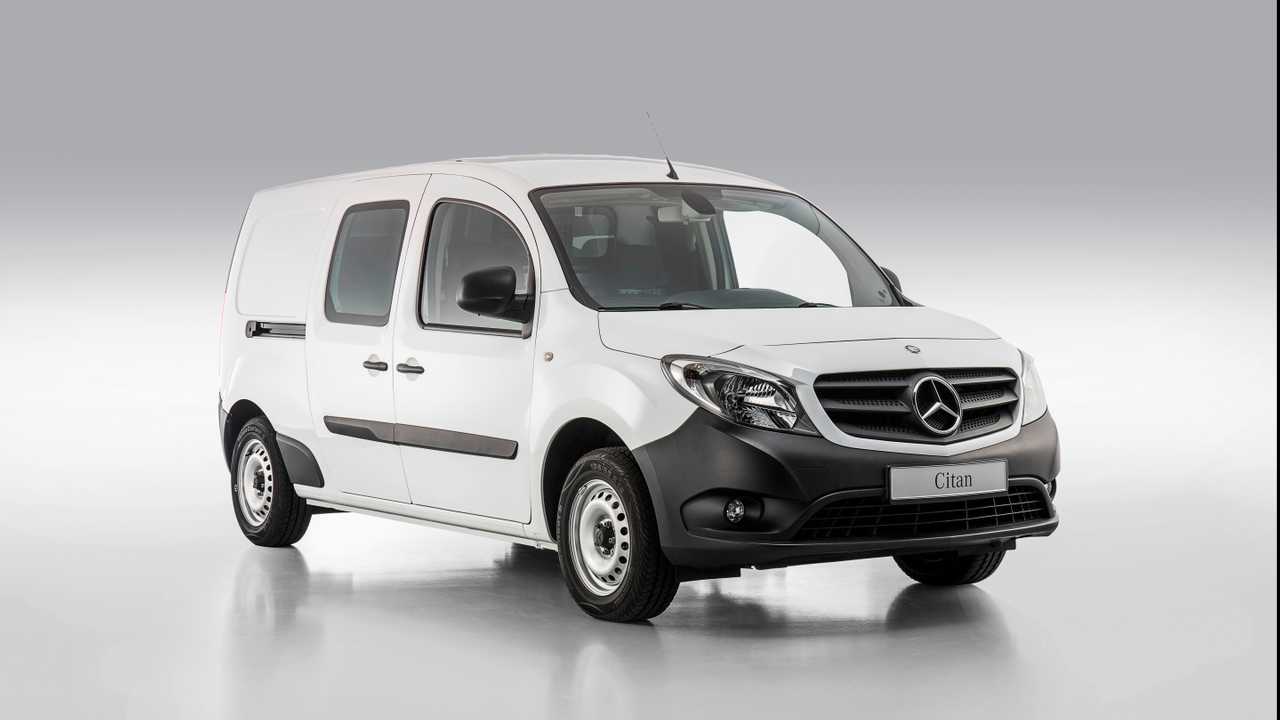
eCitan to be the fourth all-electric model from Mercedes-Benz Vans. Mercedes-Benz has announced that the next-generation Citan small van will be developed again in cooperation with Renault-Nissan-Mitsubishi Alliance and there will be an all-electric version. The first generation, conventional Citan was introduced in 2012 as a fruit of partnership with Renault-Nissan Alliance. “Mercedes-Benz Vans has… Continue reading Successor Of The Mercedes-Benz Citan To Get Electric Version
Ten years of sharing – and many new ideas for the future
Stuttgart/Paris. Daimler was the first manufacturer to put a fleet of 200 smart vehicles on the road for location-independent carsharing in 2009. Ten years later, the sharing economy has grown into a booming industry – with carsharing as one of the most popular business models. The brand celebrated the anniversary together with SHARE NOW in… Continue reading Ten years of sharing – and many new ideas for the future
EV battery suppliers face glut of lithium, tight supply of other materials
Lithium is a critical ingredient for today’s electric-vehicle batteries. Although a host of chemistries show promise—such as sodium-ion, fluoride-ion, or iron-ion—lithium-ion is proven, and the demand for it has been increasing rapidly as electric cars take off.
And yet lithium has become unexpectedly plentiful and a lot cheaper this year. According to the Financial Times [subscription req’d], lithium prices are in a slump—due to a drop in demand from China, as government subsidies expire, combined with a rapid increase of production from new mines in Australia.
Bloomberg noted in July that supplies of lithium from Australia alone are expected to rise by 23 percent in the next two years, and six new mines have been opened there since 2017, partly to accommodate what suppliers, automakers, and the industry anticipate will be about a tenfold increase in lithium demand for batteries.
Flat lithium-ion battery back for next-generation Mercedes-Benz electric cars
Prices for the core raw-material product, lithium carbonate are down 13 percent this year; and the Solactive Global Lithium Index, which tracks the performance of companies active in exploration and mining of lithium, is down more than 50 percent since January. Other major producers are reporting earnings and profits down significantly.
The FT anticipates that in 2021, 56 percent of the world’s lithium-ion battery capacity will be in China, with 19 percent in Europe and 14 percent in the U.S.
Although future innovations pertaining to battery cathodes could help increase energy density—with a different balance of cobalt, nickel, and manganese—lithium will remain the preferred electrolyte. And even in a migration to solid-state cells with a solid electrolyte, lithium is anticipated to be the favored one for many years.
Average li-ion battery price by year – Bloomberg New Energy Finance
Don’t expect complete automotive cells to go way down in price because of the lithium glut. The concerns over cobalt supply (and its troubled sourcing from the Democratic Republic of Congo) haven’t gone away. Nor has the surge in nickel prices this year, which may be linked to battery supply issues seen earlier this year.
Electric vehicles remain on a track toward affordability and cost parity with gasoline cars in the next decade, although Bloomberg New Energy Finance has projected that the rapid affordability gains for batteries in EVs will slow somewhat over the next few years. The average electric-vehicle battery pack price, it has reported, is still falling significantly from today's $176 per kwh, to $94/kwh by 2024 and $62/kwh by 2030.
U.S. to test mirrorless, camera-based systems in autos
WASHINGTON (Reuters) – The U.S. National Highway Traffic Safety Administration plans to test how drivers could use cameras to replace traditional rearview mirrors in automobiles, a technology already allowed in other countries, the agency said on Tuesday. FILE PHOTO: An Audi 55 e-tron is seen ahead of the company’s annual news conference at its headquarters… Continue reading U.S. to test mirrorless, camera-based systems in autos
Via Launches First On-Demand Deployment in Ontario with Sault Ste. Marie Transit Services
Published August 26, 2019 2:35 pm, Via NYC
Via Launches First On-Demand Deployment in Ontario with Sault Ste. Marie Transit Services
Sault Ste. Marie On-Demand aims to overhaul an underutilized fixed-route bus network with on-demand microtransit technology
August 26, 2019 (SAULT STE. MARIE, ON) — Via, the world’s leading provider and developer of on-demand public mobility solutions, today announced a new public transportation deployment in partnership with Sault Ste. Marie Transit Services, a leading transit provider in Ontario, Canada. Starting September 8, passengers will be able to ride Sault Ste. Marie On-Demand, a new dynamically-routed shared transit network aiming to dramatically overhaul the area’s existing fixed-route bus system.
Sault Ste. Marie On-Demand will initially operate on Sundays from 7:15 p.m. to midnight when ridership has historically been low on the existing fixed-route buses. Riders can hail a Sault Ste. Marie On-Demand bus in real-time to their desired stop, which allows more efficient utilization of city buses, rather than continuously driving on fixed-routes with little or no passengers.
“We are thrilled to partner with the innovative team at The City of Sault Ste. Marie to bring Via’s technology to Ontario for the very first time,” said Daniel Ramot, co-founder and CEO of Via. “The new Sault Ste. Marie On-Demand service shows how public transportation and technology can work together to make a city smarter. Residents now have a comfortable, convenient, and affordable way to move around. This is truly a great example of a city embracing the future of mobility.”
Using the Sault Ste. Marie On-Demand app, riders will be able to hail a shuttle directly from their smartphone. Via’s advanced algorithms will enable multiple riders to seamlessly share the vehicle. The powerful technology will direct passengers to a nearby bus stop within a short walking distance for pick up and drop off, allowing for quick and efficient shared trips without lengthy detours, or inconvenient fixed routes and schedules.
Sault Ste. Marie On-Demand allows riders to travel from one pre-existing established stop to another as requested. Once the bus arrives, passengers can proceed onto the bus and pay using their existing transit pass or cash. The app provides riders with notifications and messages, real-time vehicle tracking, and an opportunity for users to provide post-ride feedback.
“This presents an excellent opportunity to run a pilot for on-demand services,” says Brent Lamming, Director of Community Services. “By implementing an on-demand transit technology system, the city intends to reduce the number of buses used to service the routes (presently nine), and improve service delivery by making more efficient use of resources.”
Commuters can use the service by downloading the Sault Ste. Marie On-Demand smartphone app powered by Via, available on iOS and Android, and available for download starting September 1. Users can book rides between the pre-existing Sault Ste. Marie Transit stops.
Via has been tapped by cities and transportation players around the world to help re-engineer public transit from a regulated system of rigid routes and schedules to a fully dynamic, on-demand network. Via now has more than 80 launched and pending deployments in nearly 20 countries, providing more than 60 million rides to date. To learn more about Via, visit www.platform.ridewithvia.com.
About Via
Via is re-engineering public transit, from a regulated system of rigid routes and schedules to a fully dynamic, on-demand network. Via’s mobile app connects multiple passengers who are headed the same way, allowing riders to seamlessly share a premium vehicle. First launched in New York City in September 2013, the Via platform operates in the United States and in Europe through its joint venture with Mercedes-Benz Vans, ViaVan. Via’s technology is also deployed worldwide through dozens of partner projects with public transportation agencies, private transit operators, taxi fleets, private companies, and universities, seamlessly integrating with public transit infrastructure to power cutting-edge on-demand mobility. For more information, visit www.platform.ridewithvia.com.
Read more
Can power napping solve electric car charging challenge?
STUTTGART, Germany (Reuters) – Automakers around the world are pushing hard for new networks that can charge electric cars fast. In Europe, some power companies and grid operators are testing whether it might be smarter and cheaper to move into the slow lane. An electric car parks next to a charging station in Ostfildern near… Continue reading Can power napping solve electric car charging challenge?