Via and LA Metro Launch Pilot Program to Evolve Public Transit in Los Angeles

Published January 28, 2019 1:30 pm, Via NYC
Via and LA Metro Launch Pilot Program to Evolve Public Transit in Los Angeles
Via’s shared ride technology will provide first-and-last mile solutions for three key LA areas

Via, the world’s leading developer of on-demand shared transit solutions, and the Los Angeles County Metropolitan Transportation Authority (Metro), launch today a pilot program that provides first-and-last mile solutions for public transportation in Los Angeles County. The service utilizes Via’s sophisticated algorithm to dynamically route shared vehicles to-and-from three busy Metro stations– Compton (Artesia), El Monte and North Hollywood. The value of the year-long pilot between Via and Metro is $2.5M, which is funded in part by a $1.35M grant from the Federal Transit Administration.

“Via’s technology is redefining mobility across the globe, and we are thrilled to partner with LA Metro, an innovation-forward agency, to provide residents with a convenient, affordable, and congestion-reducing dynamic transportation alternative,” said Daniel Ramot, CEO and co-founder of Via. “Via’s powerful passenger matching and vehicle routing algorithm is the solution to solving the first-and-last mile challenge, seamlessly integrating into the existing public transit infrastructure to connect residents to transit hubs in their communities.”

“This innovative pilot program will give riders another glimpse into LA’s comprehensive future transportation system. Many Metro users face a challenge getting from home to station and vice versa,” said L.A. County Supervisor and Metro Board Chair Sheila Kuehl. “They need a quick, easy, and inexpensive door-to-door solution and this new pilot is one to consider.”

How it works:

Using the Via app, or a dedicated phone line for users without access to a smartphone, passengers in the three pilot zones will select their pickup and drop-off locations and confirm their ride. All trips must start or end at the Metro station in the zone. Via’s smart algorithm enables multiple riders to seamlessly share a single vehicle by directing passengers to a nearby corner – a virtual bus stop – allowing for quick and efficient shared trips without lengthy detours that take riders out of their way. This enables Via’s system to transport a high volume of passengers while using a fraction of the number of vehicles utilized by taxis or on-demand car services. A standard trip costs just $1.75 for riders with a TAP card. LIFE participants– Metro’s low-income fare subsidy program– will ride for free. Those who do not provide a TAP number during account registration will ride for $3.75.

Metro designed the pilot to explore how dynamic, on-demand transportation technology can solve a range of mobility challenges. The main goal of the pilot is to extend the benefits of traditional on-demand services to a wider audience by making the service affordable, equitable and accessible. Via accepts by credit, debit or pre-paid cards for unbanked riders. Rides can be booked through Via’s app or call center for riders without smartphones, also providing translation services for non-English speakers. Passengers with additional mobility needs will be able to request an accessible vehicle.

The partnership with Metro follows on the heels of several new deployments of Via’s technology around the world. From Singapore, where Via recently launched a dynamic, on-demand public bus service in partnership with the Land Transportation Authority (LTA) to Arlington, TX where the city replaced its fixed bus line with a fleet of Via’s vehicles, Via now powers on-demand mobility in more than 30 markets around the globe.

“Our goal at Metro, as part of our Vision 2028 plan, is to provide high-quality mobility options for all riders, regardless of socioeconomic status or disability,” said Metro CEO Phillip A. Washington. “This is an exciting partnership and we believe Mobility on Demand will offer a truly innovative, affordable and accessible service to L.A. County to better serve Metro riders’ first/last-mile needs.”

About Via:

Via is re-engineering public transit, from a regulated system of rigid routes and schedules to a fully dynamic, on-demand network. Via’s mobile app connects multiple passengers who are headed the same way, allowing riders to seamlessly share a premium vehicle. First launched in New York City in September 2013, the Via platform currently operates in the United States, and in Europe through its joint venture with Mercedes-Benz Vans, ViaVan. Via’s technology is also deployed worldwide through partner projects with public transportation agencies, private transit operators, taxi fleets, private companies, and universities, seamlessly integrating with public transit infrastructure to provide the most cutting edge on-demand mobility innovation.

About LA Metro:

The Los Angeles County Metropolitan Transportation Authority (Metro) is unique among the nation’s transportation agencies. Created in 1993, Metro is a multimodal transportation agency that transports about 1.3 million passengers daily on a fleet of 2,200 clean air buses and six rail lines. The agency also oversees bus, rail, highway and other mobility-related building projects and leads transportation planning and programming for Los Angeles County.

Stay informed by following Metro on The Source and El Pasajero at metro.net, facebook.com/losangelesmetro, twitter.com/metrolosangeles and twitter.com/metroLAalerts and instagram.com/metrolosangeles.

Read more
Ola Källenius new CEO of Mercedes-Benz – Fleet Europe

Ola Källenius (picture) will become the new CEO of Mercedes-Benz Cars in 2019. He will succeed Dr Dieter Zetsche, who will be proposed becoming the new Chairman of the Supervisory Board at Daimler. In 2021 the mandate of Dr. Manfred Bischoff as Chairman of the Supervisory Board of Daimler will come to an end. In… Continue reading Ola Källenius new CEO of Mercedes-Benz – Fleet Europe

Mercedes-AMG C 63 S Coupé: Driving fun.

Recommended Kraftstoffverbrauch kombiniert  CO₂-Emissionen kombiniert  Stromverbrauch im kombinierten Testzyklus Product may vary after press date on 28.01.2019. 1 Die angegebenen Werte wurden nach dem vorgeschriebenen Messverfahren ermittelt. Es handelt sich um die „NEFZ-CO₂-Werte“ i. S. v. Art. 2 Nr. 1 Durchführungsverordnung (EU) 2017/1153. Die Kraftstoffverbrauchswerte wurden auf Basis dieser Werte errechnet. Der Stromverbrauch wurde auf der Grundlage der VO 692/2008/EG ermittelt.… Continue reading Mercedes-AMG C 63 S Coupé: Driving fun.

Apple’s dismissal of 200 self-driving car employees points to a shift in its AI strategy

Bloomberg | Getty Images
John Giannandrea, senior vice president of artificial intelligence and machine learning strategy at Apple, speaks at the TechCrunch Disrupt 2017.

It's not often you hear about layoffs at Apple.

So it came as a surprise Wednesday when CNBC learned that Apple was removing 200 employees from its self-driving car unit. Apple confirmed the staffing change, but reading between the lines of a spokesperson's statement, it sounds like the move is the latest in the company's broader goal to improve its artificial intelligence and machine learning capabilities as it faces increased competition from rivals Google and Amazon.

“As the team focuses their work on several key areas for 2019, some groups are being moved to projects in other parts of the company, where they will support machine learning and other initiatives, across all of Apple,” the company spokesperson said in a statement to CNBC Wednesday.

Self-driving car technology may still be an important initiative at Apple. But reading between the lines, it looks like it's taking a back seat a Apple beefs up its general AI staff.

“I think they're making the decision that, at least in the near term, it's better to have these people doing AI in other projects,” said Gene Munster, a venture capitalist and analyst at Loup Ventures.

Apple's self-driving car project, called Titan internally, started out with the desire to create an Apple-branded electric car, The Wall Street Journal reported in 2015. But over the last few years, Apple has scaled back its ambition and lost leaders and other employees in the process. Today, the unit mostly explores the underlying technology that makes self-driving cars possible. CEO Tim Cook has repeatedly called self-driving “the mother of all AI projects.”

Since Apple started its self-driving division, the consumer AI space has exploded through the rise of digital assistants like Amazon Alexa and Google Assistant and devices like Amazon's Echo. Apple's own digital Assistant, Siri, had a head start when it launched on the iPhone 4S back in 2011, but has not kept up with the competition.

To address the shortfall, Applehired Google's head of AI John Giannandrea away from the search giant in April. Within a few months, Apple had reorganized its entire AI and machine learning teams under Giannandrea, the company announced to TechCrunch. And just last month, Giannandrea was promoted to Apple's executive team as vice president of machine learning and artificial intelligence strategy.

Self-driving may still be an important piece to Apple's AI research. The company said in its statement Wednesday: “We continue to believe there is a huge opportunity with autonomous systems, that Apple has unique capabilities to contribute, and that this is the most ambitious machine learning project ever.”

But as far as products go, competition in self-driving and electric vehicles has grown dramatically in the last four years.

Waymo, Alphabet's self-driving car company, recently opened up its self-driving car service to the public in Phoenix, Ariz., and is widely considered to be the leaders in self driving. Legacy car companies like GM working on self-driving technology. And it's not just Tesla making electric cars. Porsche, Audi, Mercedes and other legacy car companies have all announced electric vehicles. It's hard to imagine how Apple would stand out.

“The sense that I had is they're not as far along as I had hoped,” Munster said of Apple's decision to remove the 200 employees out of its car division. “But they still have initiative there.”

Giannandrea's rapid rise at Apple is the biggest signal yet that Apple intends to invest a lot of time, money and talent in improving AI. Plus, according to leaked comments from Cook at a recent company all-hands meeting reported by Bloomberg, Apple plans to continue hiring in AI “at a strong pace” even as it slows down hiring in other divisions.

In short, we're seeing Apple eliminate jobs in self-driving and increase the number of people working more broadly on AI.

It may already be paying off. Late last year, a study from Munster's company, Loup Ventures, showed Siri vastly improved its ability to correctly answer a series of 800 questions. The Loup study said Siri answered 74.6 percent of the questions correctly, up 22 percentage points from just nine months earlier. By comparison, Google Assistant answered 87.9 percent of the questions correctly. Alexa got 72.5 percent of the questions right.

It's not just about getting questions right, though. The messier problem for Apple is training its AI while convincing users that it's keeping their data secure.

Google trains its AI systems in part using the massive amounts of public data available on YouTube and the Google search engine. (It's also started using a program that strives to protect users' data.)

But Apple has taken a hard stance against unfettered data collection, and promotes its concern over user privacy as a reason to buy its products. In a speech in Brussels last year, Cook called the privacy practices of companies like Google “surveillance,” for example. It also put up a giant ad about its privacy stance in in Las Vegas during CES earlier this month.

So Apple will have to continue to improve its AI while sticking to its goal of keeping people's personal information private.

“I think it's very clear Apple is a believer in AI and most of the products will be very subtle about how AI is used,” Munster said.

WATCH: Apple CEO Tim Cook writes op-ed calling for tech privacy regulation

Apple CEO Tim Cook writes op-ed calling for tech privacy regulation
6:11 PM ET Thu, 17 Jan 2019 | 01:30

Strike at Audi Hungary plant continues, hits production in Germany

BUDAPEST (Reuters) – Support for a strike that last week shut Audi’s massive Hungarian plant increased over the weekend, the union said on Monday, and the disruption in supplies has led to a halt in production at the carmaker’s home factory in Germany. FILE PHOTO: The logo of Audi is seen during the first press… Continue reading Strike at Audi Hungary plant continues, hits production in Germany

Car manufacturers: Daimler fears stricter EU climate protection – truck boss writes letter to Altmaier

Brussels, Munich market leader Daimler seeks the help of the Federal Government. In a letter to economics minister Peter Altmaier (CDU) asks the boss of Mercedes Benz Truck, Stefan Buchner, for assistance in the ongoing negotiations: “We would be very grateful if you advocate a compromise in the European Council, which also takes appropriate account… Continue reading Car manufacturers: Daimler fears stricter EU climate protection – truck boss writes letter to Altmaier

Parking robot at Gatwick airport

At Gatwick Airport, from April on, a robot called Stan is being tested for parking. First, a test should be carried out to see if the project is workable. But then it should soon become a reality. It’s about Stan, a robot that parks cars. Stan, the name of the robot vehicle, consists of a… Continue reading Parking robot at Gatwick airport

Mercedes-Benz MPV presented in India: The V-Class wins over a new market: debut in India

24.

January 2019

Stuttgart/Mumbai

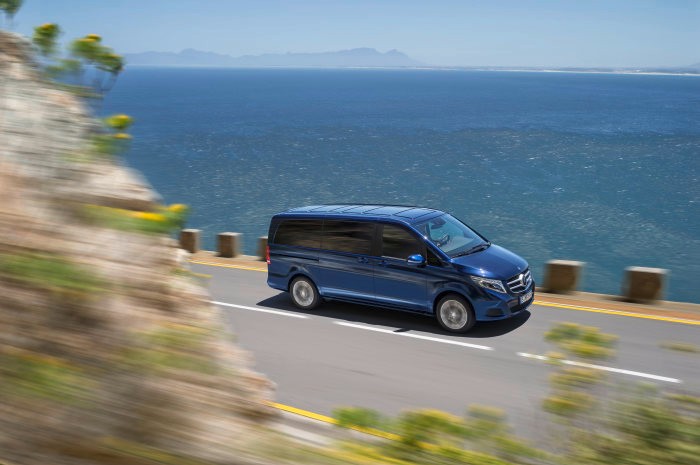
Stuttgart/Mumbai – Today, the Mercedes-Benz V-Class celebrated its market launch in India accompanied by around 100 media representatives and other guests. It is available to order there immediately. After Japan in 2015 and China in 2016, the MPV with the three-pointed star has thus entered another major Asian market and is becoming an increasingly important component of the international “Mercedes-Benz Vans goes global” growth strategy.

About the V-Class
The V-Class combines the functionality of a classic van with the typical strengths of a Mercedes-Benz passenger car. It does not just offer space for up to eight people and an intelligent stowage space concept, it also distinguishes itself from other vehicles with its stylish design and its manifold personalisation options resulting from the various equipment lines and design packages. Plus there is a multitude of other pleasant options, including the biggest panoramic sliding sunroof in the segment, the wide centre console with integrated coolbox and the temperature-controlled cupholders with LED illumination or even the discreet ambient lighting which offers three colours and five dimming levels. With this concept, the V-Class has already managed to impress customers in more than 90 countries around the world.
About Mercedes-Benz Vans goes global
With its “Mercedes-Benz Vans goes global” strategy, Mercedes-Benz Vans is following a three-part approach. Outside of the European core markets, it seeks to tap into growth potential, broaden and differentiate the product portfolio, as well as driving forward the business unit's position as a technological leader.
The latter will be achieved by the future-oriented adVANce initiative, as well as through the development and commercialisation of comprehensive, customer-oriented transport and mobility solutions.

Press Contact

Diana Boch

Product Communications Mercedes-Benz V-Class and Travel Vans

diana.boch@daimler.com

Tel: +49 711 17-52406

Fax: +49 711 17-52030

Press Contact Overview

Media

Download

Pictures (1)

Documents (1)

Media Contact (1)

Filter

Show thumbnails
Show list
Slideshow

Zoom

Preview

Details

Do you really want to delete the data record?

Please wait a moment …

Please wait a moment …

Please wait a moment …

Please wait a moment …

19C0067_01

Loading

Fast Charging Comparison: Audi e-tron, Mercedes EQC, Jaguar I-PACE

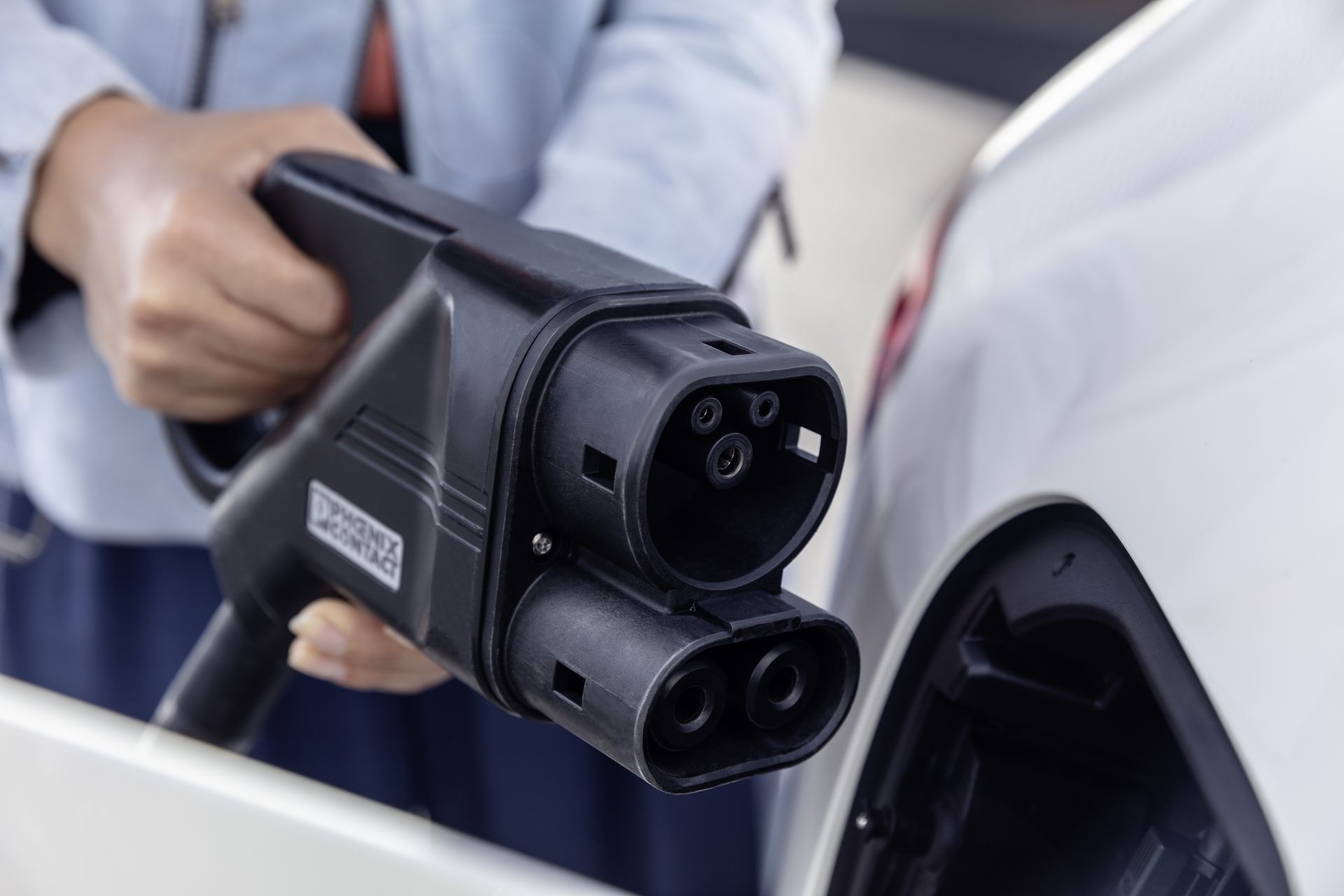
58 M BY MARK KANE Audi sets the bar for fast charging at 150 kW and there is no contender The three latest premium all-electric SUVs/crossovers – Jaguar I-PACE, Audi e-tron (sales to begin imminently) and Mercedes-Benz EQC (technically pre-production version) showed interesting differences at the 175 kW fast charger tests performed by Fastned. The… Continue reading Fast Charging Comparison: Audi e-tron, Mercedes EQC, Jaguar I-PACE

IONITY Installs First 50 Ultra Fast Charging Stations

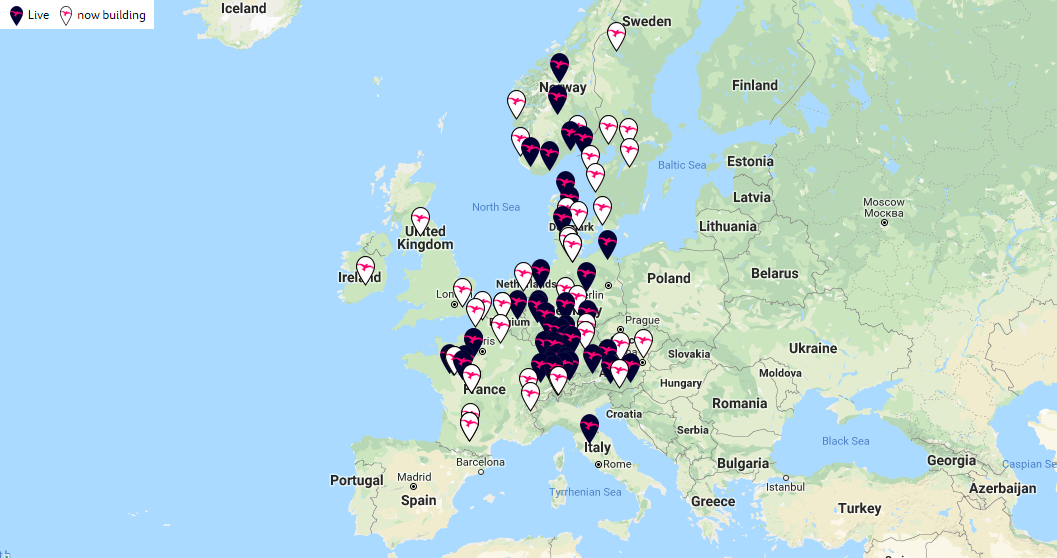
3 H BY MARK KANE Within 8 months, IONITY installed 50 stations The installations of IONITY fast charging infrastructure accelerated and the number of stations increased to 51 out of 400 planned in Europe. Interestingly, another 43 stations are at various stages of construction. The pace of installations is very important as several manufacturers are… Continue reading IONITY Installs First 50 Ultra Fast Charging Stations