Waymo is making its ride-hailing app more widely available by putting it on the Google Play store as the self-driving car company prepares to open its service to more Phoenix residents. The company, which spun out to become a business under Alphabet, launched a limited commercial robotaxi service called Waymo One in the Phoenix area… Continue reading Waymo launches robotaxi app on Google Play
Tag: Autonomous
16.04.2019 Gestamp announces in Auto Shanghai 2019 a deeper cooperation with BHAP …
Gestamp, the multinational company specialized in the design, development and manufacture of highly engineered metal components for the automotive industry, signed an strategic Memorandum of Understanding (MoU) today with Beijing Hainachuan Automotive Parts Co. Ltd. (BHAP). The agreement with BHAP aims to increase cooperation in areas such as the electric vehicle as well as to… Continue reading 16.04.2019 Gestamp announces in Auto Shanghai 2019 a deeper cooperation with BHAP …
Scaling Lidar Production to Address Growing Global Demand
April 16, 2019 The Alpha Puck, Ultra Puck, and Puck by Velodyne Lidar Advanced manufacturing techniques are needed to build automotive-grade lidar sensors at mass production levels. An Automotive News story by Jack Walsworth called “Velodyne rethinks Alpha Puck factory” explored how Velodyne developed an innovative manufacturing system in order to offer the Alpha Puck™… Continue reading Scaling Lidar Production to Address Growing Global Demand
Continental MK C1 Brake System Reduces CO2 Emissions of Hybrid Vehicles
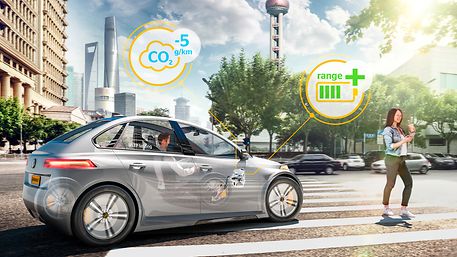
Regenerative energy savings due to improved utilization of achievable recuperation potential Tests of the CO2 savings potential of the MK C1 electrohydraulic brake system in a plug-in hybrid TÜV confirms in a certified test: MK C1 reduces the amount of CO2 emitted in the WLTP by around 8 g/mi on average compared with a conventional… Continue reading Continental MK C1 Brake System Reduces CO2 Emissions of Hybrid Vehicles
Byton M-Byte SUV gearing up for production
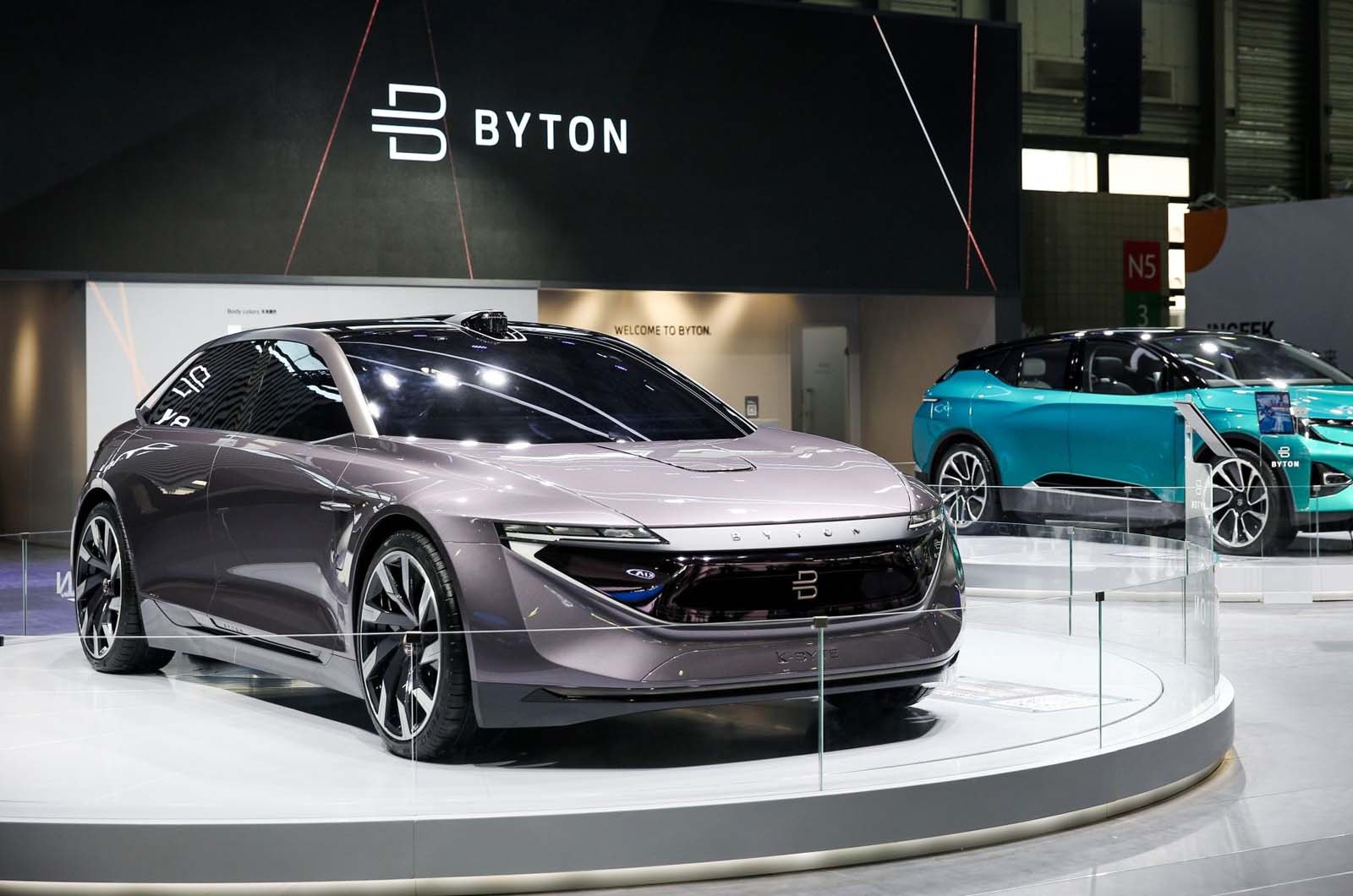
Byton’s chief vehicle engineer is Irishman David Twohig, who formerly worked for the Renault-Nissan Alliance and won the Mundy Award for Engineering at the 2018 Autocar Awards for his work on the Alpine A110. We caught up with Twohig at the Pebble Beach Concours event to find out more about Byton’s ambitious plans. Where is Byton… Continue reading Byton M-Byte SUV gearing up for production
Daimler Teams Up with Sila Nanotechnologies on Next Generation Lithium-ion Battery Materials
ALAMEDA, Calif. and STUTTGART, Germany, April 16, 2019 /PRNewswire/ — Daimler accelerates the development and commercialization of Li-Ion battery technologies together with Sila Nanotechnologies Inc. Strategic partnership with leading U.S. battery material specialist to pave the way for the next generation of powerful electric Mercedes-Benz Cars Innovative chemistry promises higher performance, faster charging and longer… Continue reading Daimler Teams Up with Sila Nanotechnologies on Next Generation Lithium-ion Battery Materials
O2’s 5G network to power autonomous vehicle testing
O2 announces that it will be the public and private network provider of 5G connectivity for the testing and development of CAV technology at Millbrook Proving Ground in Bedfordshire. O2 will enable 5G connectivity to Millbrook testing facilities from June 2019, using its 2.3 GHz and 3.4GHz spectrum in advance of the first phase of… Continue reading O2’s 5G network to power autonomous vehicle testing
The Alliance establishes joint innovation hub in China to accelerate technology development for new mobility
Renault and Nissan have established a new Research & Development hub in China,complementing their joint innovation labs in Silicon Valley, USA and Tel Aviv, Israel The new lab in Shanghai is focused on developing technology for autonomous drive,connected and electric vehicles The facility will enable the companies to leverage open innovation opportunities withChinese start-ups and… Continue reading The Alliance establishes joint innovation hub in China to accelerate technology development for new mobility
AEye Team Profile: Dr. Allan Steinhardt
We sat down with AEye’s Chief Scientist, Dr. Allan Steinhardt, to learn about the challenges of using publicly available defense technologies in autonomous vehicles, the current state of automotive LiDAR, and the technology that most excites him today…
An IEEE fellow, Dr. Allan Steinhardt is a sought-after expert on radar, missile defense, GMTI and space surveillance. He was Chief Scientist for DARPA, co-author of a book on adaptive radar, and assistant professor in Electrical Engineering and Applied Mathematics at Cornell University, where he performed funded research on sensor arrays and optimal detection capabilities. Dr. Steinhardt is a member of the national academy of Science Naval Studies Board, and recipient of the US Defense Medal for Exceptional Public Service. He has also served as chief scientist at Booz Allen, the radar project lead at MIT Lincoln Laboratory, and director of signal processing for the defense Industry with BAE/Alphatech.
Q: What technologies developed by DARPA, and other agencies, have been adapted for autonomous vehicle use?
The technologies developed by DARPA that have been of value to both LiDAR and other kinds of sensors for autonomous vehicles are: the solid-state laser, Micro-Electro-Mechanical Systems (MEMS), and the computer chips that are able to do all the processing. So, all the building blocks required for the development of autonomous vehicles have their humble beginnings at DARPA. But there’s the system point of view as well. Many of the systems that are being developed now were started by the government. Biomimicry was also a big investment at DARPA. When I was there, we went on to create a separate office on biomimicry, looking at different biological systems and emulating them for various purposes.
However, LiDAR actually has its origins in the relatively distant past. When I first began working for AEye as a consultant, some of the best papers I came across about LiDAR were written in the early 1960s. And this research has really not been improved upon since then in terms of the basic science. The actual concept of the laser was first developed by Albert Einstein, so it has been around for a lot longer than people realize.
Q: What challenges have we faced trying to adapt defense technology for autonomous vehicle use?
One obvious challenge the industry currently faces is bringing down the cost of these technologies for commercial use. Another is miniaturizing these technologies to fit inside a vehicle, as opposed to a fighter jet or tank. However, one issue that we never really considered in the government that is coming to the fore today is the amount of power it takes to do the processing. We generally weren’t thinking about green vehicles that don’t use a lot of gasoline. But nowadays, the processing is becoming so sophisticated in autonomous vehicles that it’s literally eating into fuel efficiency.
Another one, surprisingly, is the whole issue of cyber security. Back when we were beginning these projects, we never imagined that there would be such deep connections between the Internet and wireless systems and lasers. Back in the early 80’s, there was no worry about a potential external entity accessing the internals of a laser system.
Q: How are we mitigating these challenges?
AEye has a perspective that we hope the industry will adopt more widely, which is to use biomimicry to focus energy on things that matter, which is how most biological systems operate. AEye also creatively adopts off-the-shelf technology and uses them to optimize for size, weight, power, and cost. However, cyber security is still very much an open issue and hasn’t, in my opinion, been adequately addressed yet.
Q: Is automotive LiDAR where you thought it would be today?
I’m surprised at how far along we are. Yet, we are still less developed than I would have thought. I am surprised at how much advancement has taken place in the actual sensor itself (i.e., how well can we sense light, the efficiency of the lasers). On the other hand, I think we are way behind in terms of understanding and addressing what to do with the information gathered. So, I find that where we are today is surprisingly primitive in that sense.
Q: What new technology are you most excited about?
There are the obvious candidates: A.I., silicon technology, and basic laser components. And then there are the less obvious, more interesting candidates, such as the way the medical/biological research communities are looking for ways to adopt how biological systems sense and respond to various stimuli. There’s also a telecommunications revolution currently taking place. I’d call it “the next wave in fiber optic communications”, where the bandwidths are going to be even higher and efficiencies even better. There’s a lot of interesting and non-obvious ways that we can leverage these technologies in autonomous vehicle development.
Q: What have you seen as the biggest difference between working in Silicon Valley and a US Defense Agency?
I thought DARPA was fast paced, but that’s nothing compared to Silicon Valley. The velocity of innovation happening is truly breathtaking. It’s very satisfying to be here. I can’t wait to see what’s next.
Join us on April 18, 2019, when AEye’s Chief Scientist, Dr. Allan Steinhardt, gives a keynote address entitled “Life in the Fast Lane: What’s different about transportation AI?” at Bootstraps Labs Applied Artificial Intelligence Conference in San Francisco. Learn more here.
AEye Team Profile: Dr. Allan Steinhardt — AEye Introduces Advanced Mobility Product for the Autonomous Vehicle MarketAEye Granted Foundational Patents For Core Solid-State MEMs-Based Agile LiDAR And Embedded AI TechnologyBlair LaCorte Named President of AEyeAEye’s iDAR Shatters Both Range and Scan Rate Performance Records for Automotive Grade LiDARThe Future of Autonomous Vehicles: Part I – Think Like a Robot, Perceive Like a HumanAEye Introduces Next Generation of Artificial Perception: New Dynamic Vixels™Deconstructing Two Conventional LiDAR MetricsAEye Announces Industry Leading Family of Perception Sensors for ADAS SolutionsAEye Team Profile: Indu VijayanAEye Announces Addition of Aravind Ratnam as Vice President of Product Management
Electric car startup Byton loses co-founder and former CEO, reported $500M Series C to close this summer
The race is on for building and shipping more cost-effective electric cars, but today one of more ambitious startups in the field announced some significant changes that underscore some of the challenges in making that a reality. Byton, the Chinese electric car startup, today announced that Carsten Breitfeld, the former BMW executive and Byton co-founder… Continue reading Electric car startup Byton loses co-founder and former CEO, reported $500M Series C to close this summer