WOLFSBURG, Germany (Reuters) – If Volkswagen realizes its ambition of becoming the global leader in electric cars, it will be thanks to a radical and risky bet born out of the biggest calamity in its history. FILE PHOTO: An autonomous Volkswagen I.D. Crozz concept vehicle is shown at the Los Angeles Auto Show in Los… Continue reading Bet everything on electric: Inside Volkswagen’s radical strategy shift
Tag: Autonomous
Renault-Nissan to work with Google’s Waymo on driverless cars
TOKYO: The three-way alliance of Renault, Nissan and Mitsubishi Motors is planning a deal to work with Google’s Waymo to jointly develop self-driving taxis, Japan’s Nikkei said Tuesday. The three automakers are finalising tie-up negotiations with Waymo, a Google-affiliated developer of self-driving car technology, the business daily said on its website. The two sides are… Continue reading Renault-Nissan to work with Google’s Waymo on driverless cars
Renault-Nissan-Mitsubishi studies a possible partnership with Google to develop autonomous taxis
Posted 05/02/2019 17: 06: 45CET TOKYO, Feb. 5 (EUROPA PRESS) – The Renault-Nissan-Mitsubishi automotive alliance is studying a possible partnership with Google for the development of autonomous taxis and other services that use autonomous driving vehicles. According to the Japanese publication ‘Nikkei’, under the agreement, car manufacturers will work with Waymo, the autonomous driving technology… Continue reading Renault-Nissan-Mitsubishi studies a possible partnership with Google to develop autonomous taxis
Waymo may team up with Renault-Nissan on self-driving taxis
AP Photo/Jeff Chiu Waymo might not be done courting the automotive world after working with the likes of Fiat Chrysler and Jaguar Land Rover. Nikkei claims the Alphabet-owned company is in the “final phase” of talks to partner with the Renault-Nissan-Mitsubishi alliance on self-driving car services. While there aren’t too many specifics, one project would… Continue reading Waymo may team up with Renault-Nissan on self-driving taxis
Self-driving truck startup Ike raises $52 million
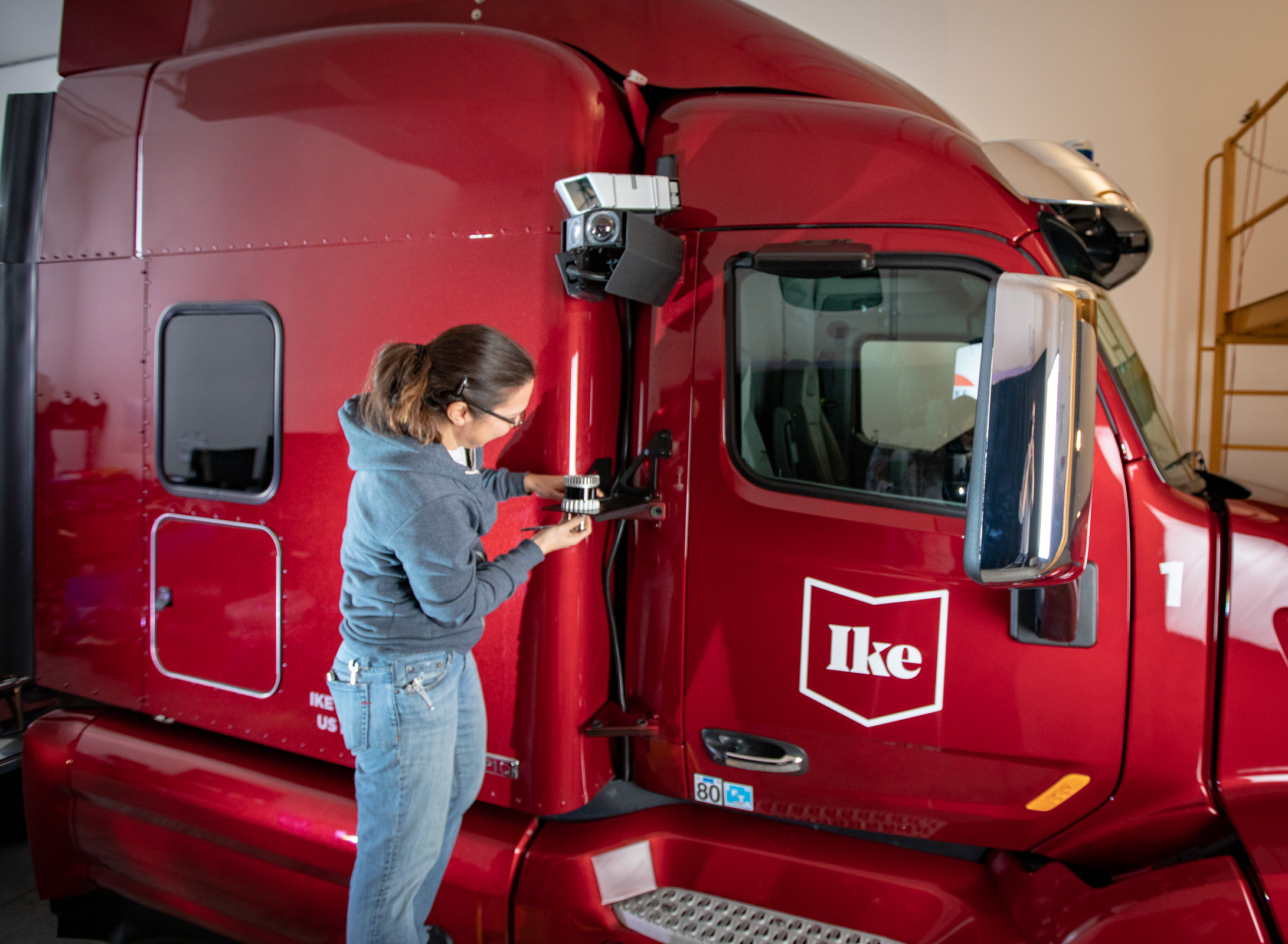
Ike, the autonomous trucking startup founded by veterans of Apple, Google, and Uber Advanced Technologies Group’s self-driving truck program, has raised $52 million in a Series A funding round led by Bain Capital Ventures. Redpoint Ventures, Fontinalis Partners, Basis Set Ventures, and Neo also participated in the round. Bain Capital Ventures partner Ajay Agarwal has joined… Continue reading Self-driving truck startup Ike raises $52 million
UPDATE 1-Renault-Nissan alliance, Google to partner on self-driving cars – Nikkei
The Google logo is pictured at the entrance to the Google offices in London, Britain January 18, 2019. REUTERS/Hannah McKay (Reuters) – The Renault-Nissan-Mitsubishi alliance will tie up with Alphabet Inc’s Google to develop autonomous taxis and other services using self-driving vehicles, the Nikkei reported on Tuesday. Google’s self-driving car company Waymo will work with… Continue reading UPDATE 1-Renault-Nissan alliance, Google to partner on self-driving cars – Nikkei
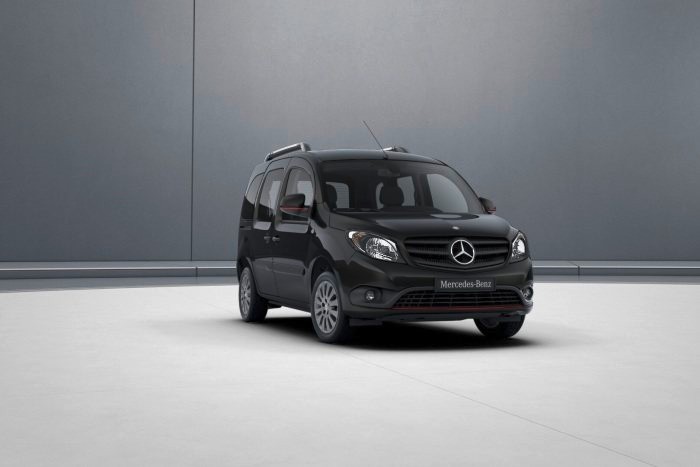
All-rounder with new power: Mercedes-Benz Citan Tourer now with new engine generation and sporty design package
05.
February 2019
Stuttgart
fuel consumption combined 4.8-4.6 l/100 km, CO2 emissions combined 127-121 g/km* Well-established small people carrier with powerful four-cylinder diesel engine OM 608 engine generation: quiet, low-emission and powerful Sporty visual features for a more dynamic look The Citan Tourer as a compact, safe van for passenger transport Stuttgart – Mercedes-Benz Vans has been offering the Citan since 2012. This small people carrier with compact dimensions and a large load compartment is ideal for the wide range of challenges encountered about town and in leisure time. The main foundations for its success were laid by the combination of high functionality and economy, its extensive safety systems and high ride comfort. It is now being significantly enhanced by a new engine generation. With immediate effect, the Citan Tourer can be ordered with a high-torque four-cylinder diesel engine with a displacement of 1.5 litres, new 6-speed manual transmission and SCR technology. The engine family (OM 608) complies with the current emission class Euro 6d-TEMP and is available in three output categories for the Citan. The new RED Design Package also enhances the dynamic appearance of the small van.
The OM 608 engine generation: quiet, low-emission and powerful
The technical highlights of the OM 608 engine generation are a close-coupled exhaust gas aftertreatment system with AdBlue® technology, an electrically controlled exhaust gas turbocharger with a variable nozzle turbine for optimised response time, and a common rail injection system with an injection pressure of 2000 bar. The OM 608 is 4 kW more powerful than its predecessor (OM 607) and fulfils Euro 6d-TEMP, including the new requirements concerning Real Driving Emissions – RDE. The following specific measures were implemented in this regard:
Use of a combination of high-pressure and cooled low-pressure exhaust gas recirculation to optimise the untreated emissions. To this end the entire cooling system was revised, including the use of a water-cooled charge air cooler with significantly enhanced efficiency. For exhaust gas aftertreatment, SCR catalytic converters with AdBlue® metering are being used for the first time alongside the oxidation catalytic converter and the soot particle filter.
The cast-iron engine block is now lighter, whilst its rigidity has increased. Weight-optimised steel pistons are used, as before. The construction height of the new aluminium cylinder head has been lowered, and the moved masses of the valve train reduced. The intake manifold is now integrated into the cylinder head cover.
The common rail injection system's pressure was increased to 2000 bar (previously: 1600 bar). The electromagnetically controlled injectors have eight injection orifices. This facilitates precise combustion control through up to six injections per work cycle. Double preinjection is used to optimise the combustion noise in wide characteristics map ranges.
In the Citan Tourer the OM 608 is offered in combination with new 6-speed manual transmission. This small van boasts impressively comfortable gearshifting and reduced fuel consumption with a wider gear spread.
Three output categories are available: Citan Tourer 108 CDI (59 kW/80 hp, 210 Nm), Citan Tourer 109 CDI (70 kW/95 hp, 230 Nm) and Citan Tourer 111 CDI (85 kW/116 hp, 260 Nm), fuel consumption combined 4.8-4.6 l/100 km, CO2 emissions combined 127-121 g/km[1]. Following in the footsteps of the Tourer, in summer 2019 the Citan Panel Van will also be offered with the OM 608 diesel engine.
Sporty visual features for a more dynamic look
The Citan boosts its autonomous and attractive look with a new equipment line available with immediate effect. The RED Design Package enhances the exterior with highlights in colour and gives the small van a sportier character. The new package includes red decorative strips beneath the front radiator grille and on the mirror housings, and grey sports strips running beneath the sliding doors to the rear wheel arch. There is also a chromed radiator trim and a chrome trim strip on the tailgate. The package is available both for the Citan Tourer and for the Citan Panel Van.
The interior is also showcased with colour highlights as part of the RED Design Package. There are two styling packages to choose from here. The Colour Interior Design Package includes red trim rings on the ventilation rings and speakers as well as red topstitching on the front seats and on all head restraints. The second styling package, the Chrome Interior, features numerous chrome elements in the interior of the Citan, as per the red highlights.
The RED Design Package was unveiled for the first time on a concept vehicle at the 2018 International Commercial Vehicle Show in Hanover, to garner initial feedback from customers during the trade fair. As a result of the thoroughly positive reception, Mercedes-Benz Vans decided to include the RED Design Package in the range and make it available to customers straight away.
The Citan Tourer as a compact, safe van for passenger transport
The Citan Tourer wins points with its comfortable and back-friendly seats, secure lateral support and breathable and robust fabric covers. A functional interior with various stowage facilities plus optional floor compartments increase comfort. And thanks to a folding rear bench seat, in a few simple steps the passenger compartment can be transformed into a virtually level load compartment for transporting goods.
Like every Mercedes-Benz the Citan is extensively equipped with safety systems. These include the Electronic Stability Program ADAPTIVE ESP®, which is standard for all variants and takes into account the vehicle's load
status, as well as Brake Assist. In addition, assistance systems such as the light and rain sensor, tyre pressure monitoring and a reversing camera with display in the rear-view mirror which shows the direct surroundings of the rear of the vehicle, are available as options.
[1] The stated figures were obtained in accordance with the prescribed measuring process. They constitute the “NEDC CO2 figures” pursuant to Art. 2 no. 1 Implementing Regulation (EU) 2017/1153. Fuel consumption figures have been calculated on this basis.
Press Contact
Peter Feneberg
Product Communications Mercedes-Benz Vans
peter.feneberg@daimler.com
Tel: +49 711 17-47117
Fax: +49 711 17-79057555
Albrecht Eckl
Product Communications Mercedes-Benz Citan, Vito, Sprinter
albrecht.eckl@daimler.com
Tel: +49 711 17-52131
Fax: +49 711 17-52038
Press Contact Overview
Media
Download
Pictures (3)
Documents (1)
Media Contact (2)
Filter
Show thumbnails
Show list
Slideshow
Zoom
Preview
Details
Do you really want to delete the data record?
Please wait a moment …
Please wait a moment …
Please wait a moment …
Please wait a moment …
19C0102_02
19C0102_01
19C0102_03
Loading
Carlos Ghosn: I’m the victim of a Nissan plot – CNN
In his first media interview since his stunning arrest more than two months ago, Ghosn told Japanese news organization Nikkei that he had “no doubt” that the allegations against him are the result of “plot and treason” by Nissan (NSANF) executives who opposed his plan to deepen the automaker’s integration with its French partner Renault… Continue reading Carlos Ghosn: I’m the victim of a Nissan plot – CNN
Mercedes-Benz Could Partner With Tesla Again, Says Daimler CEO In Wake Of Failed Electric Strategy – Forbes
Nine years ago, in May 2009, Daimler, the parent company of Mercedes-Benz, and Tesla signed a partnership and began working closely together on electric vehicles.Mercedes-Benz On Monday, Polish newspaper Rzeczpospolita published an interview of Dieter Zetsche in which the Daimler CEO didn’t rule out a future partnership with Tesla, weeks only after the American automaker outsold Mercedes-Benz… Continue reading Mercedes-Benz Could Partner With Tesla Again, Says Daimler CEO In Wake Of Failed Electric Strategy – Forbes
Handelsblatt Interview: The World According to Zetsche – Handelsblatt Global Edition
Daimler CEO Dieter Zetsche talks to Handelsblatt. Dieter Zetsche, chief executive of Germany’s largest luxury carmaker, spent an hour reflecting on where he and the company are heading in an interview in Stuttgart’s Mercedes-Benz museum. With two million cars sold, countless ideas about the future of mobility and his own new, more casual image, Mr.… Continue reading Handelsblatt Interview: The World According to Zetsche – Handelsblatt Global Edition