David Hall Honored as “2018 Inventor of the Year” by Intellectual Property Owners Education Foundation

David Hall Honored as “2018 Inventor of the Year” by Intellectual Property Owners Education FoundationDecember 12, 2018|In Press Releases|By Albie Jarvis
Genius behind the Autonomous Vehicle revolution celebrated at Foundation Awards Dinner in Washington, D.C.

David Hall Honored as “2018 Inventor of the Year” by Intellectual Property Owners Education Foundation

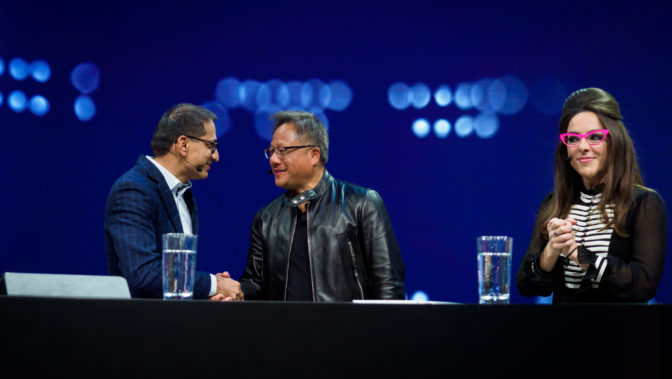
The Intellectual Property Owners Education Foundation honored David Hall, chief executive officer and founder of Velodyne Lidar, Inc., as the 2018 Inventor of the Year at the Foundation’s awards dinner held at the National Building Museum in Washington, D.C. last night. Hall was recognized for creating the groundbreaking lidar sensor technology that is the essential component for fully autonomous vehicles and enables the most sophisticated advanced driver assistance systems (ADAS). Each year, the Foundation recognizes outstanding inventors for their contributions to the economy and overall quality of life.

“Inventing is my passion and I like to imagine building something that nobody’s built before”Tweet this

“Inventing is my passion and I like to imagine building something that nobody’s built before,” Hall said. “I amuse myself by innovating. It’s what I do. What I’m looking for is the smile on someone else’s face when they use my product and get joy out of it. I invent for the love of inventing and it was an honor to be recognized by the Intellectual Property Owners Education Foundation. Intellectual property protection is imperative to fostering innovation and is a valuable asset to new technology.”

The idea of leveraging lidar technology for autonomous driving came to Hall after competing as one of the original entrants in the DARPA Grand Challenge. In 2005, he invented lidar to give autonomous vehicles real-time, 360-degree vision that then set the stage for revolutionizing the automobile industry. Velodyne Lidar is the industry leader, supplying virtually all of the top automakers and autonomous vehicle developers globally with the smartest, most powerful lidar sensors. In addition to their wide application in self-driving cars, Velodyne’s versatile lidar sensors are now utilized in myriad trailblazing applications, including unmanned aerial vehicles, mapping, industrial safety, security, and more.

Hall is a technology visionary whose more than 30 U.S. patents cover a variety of applications. He founded Velodyne Acoustics in 1983 as an audio company specializing in low-frequency sound and subwoofer technology. In 2011, he launched Velodyne Marine and debuted its first self-stabilizing craft, the Martini, at the 2013 Miami boat show. This prototype was the world’s first sea-faring vessel with an active suspension. More recently, at the US Chamber of Commerce’s inaugural LAUNCH event, Hall presented his vision of a magnet-based propulsion system that would revolutionize space exploration and settlement.

MEDIA PLEASE NOTE: To learn more about IPO and the Inventor of the Year Award, please contact Nyree Berry at IPO (202) 507-4514; nberry@ipo.org. To schedule an interview with David Hall or to request images, please contact Robin Carr at Landis Communications Inc. (415) 561-0888; velodyne@landispr.com.

About IPO and IPO Education Foundation

Intellectual Property Owners Association (IPO), established in 1972, is a 501(c)6 trade association for owners of patents, trademarks, copyrights and trade secrets. IPO serves all intellectual property owners in all industries and all fields of technology. IPO advocates for effective and affordable IP ownership rights and provides a wide array of services to members, including: supporting member interests relating to legislative and international issues; analyzing current IP issues; information and educational services and disseminating information to the public on the importance of intellectual property rights.

IPO has a related 501(c)3 foundation, the IPO Education Foundation. The IPO Education Foundation is devoted to educational and charitable activities designed to promote the value of intellectual property rights. IPO and the IPO Education Foundation share the same office location and IPO staff also support the Foundation.

About Velodyne Lidar, Inc.

Velodyne provides the smartest, most powerful lidar solutions for autonomy and driver assistance. Founded in 1983 and headquartered in San Jose, Calif., Velodyne is known worldwide for its portfolio of breakthrough lidar sensor technologies. In 2005, Velodyne’s Founder and CEO, David Hall, invented real-time surround view lidar systems, revolutionizing perception and autonomy in a variety of industries including automotive, new mobility, mapping, robotics, and security. Velodyne’s established high-performance product line includes the cost-effective VLP-16 Puck™, the versatile VLP-32 Ultra-Puck™, the perfect for L4-L5 autonomy VLS-128™, and the directional view Velarray™. For more information, please visit www.velodynelidar.com.

Blockchain: the key technology of tomorrow

Ten years on, the money market revolution has manifested itself as an ATM in Germany. After the Berlin Court of Appeal ruled, at the end of September 2018, that bitcoin is not a financial instrument and therefore can be traded privately, a Munich-based entrepreneur quickly responded by setting up a bitcoin ATM at the end… Continue reading Blockchain: the key technology of tomorrow

World’s most valuable AI startup SenseTime unveils self-driving center in Japan

The world’s highest-valued artificial intelligence startup SenseTime has set foot in Japan. The Beijing-based firm announced on Friday that it just opened a self-driving facility in Joso, a historic city 50 kilometers away from Tokyo where it plans to conduct R&D and road test driverless vehicles. The initiative follows its agreement with Japanese auto giant Honda in… Continue reading World’s most valuable AI startup SenseTime unveils self-driving center in Japan

Ford values VW's scale, Mahindra's efficiency in tie-ups

Ford values VW's scale, Mahindra's efficiency in tie-upsIn intensifying alliance talks with Germany's largest automaker, Ford Motor Co. is eyeing Volkswagen AG's available manufacturing capacity to help the Blue Oval revive its money-losing European business.
“We believe that if we can form this alliance with VW … it would give us the benefit of the increased scale of their business,” Steven Armstrong, president of Ford's operations in Europe, Middle East and Africa, said Thursday. He added that an alliance with VW could “broaden” Ford's “product range.”
Details on the Volkswagen deal could come as soon as Tuesday at the Detroit auto show pending a scheduled meeting Friday of VW's governing supervisory board, according to a source with knowledge of the situation.
Under pressure to dramatically improve the financial performance of its regional businesses, Ford is seriously exploring sweeping automotive partnerships to help fix long-standing issues in Europe, South America and India, now on track to become one of the world's largest markets.
In Europe, Volkswagen would help Ford amplify its already-strong commercial vehicle business, and a successful partnership could bolster Ford's reputation and market share outside its U.S. stronghold, one sourcewith knowledge of the situation told The Detroit News.
Jim Farley, Ford president of global markets, said Wednesday evening in Detroit that ongoing discussions with the Mumbai-based Mahindra Group could unlock cost-savings for Ford as it attempts to get the proper products into the growing Indian auto market.
“Partnering, we explained about a year ago, was going to be a key part of Ford's future,” Farley said. “Boy, has it been eye-opening to work with Mahindra. The way they look at costs… It's an extremely fit company. They have real capabilities when it comes to reuse. We offer a lot. Emission certification, because emissions are getting real complicated in places like India.”
Negotiations with Mahindra to partner on SUVs and a small electric vehicle began in March following a series of memorandums of understanding and collaborations on other, smaller products. Details of the Mahindra partnership should become clear by the middle of this year,a source said Friday.
Partnering with largest SUV manufacturer in India could also help Ford sell a product that better fits the Indian market. Ford vehicles are currently too big and too expensive for the cost-focused Indian market.
Details on potential alliance with VW could come soon. Steven Armstrong, Ford president of Europe, Middle East and Africa, said Thursday Volkswagen's manufacturing scale in Europe could be a boon for the company. Ford is the leading commercial light vehicle seller in Europe, but has only the fourth-best manufacturing scale.
“Quantifying potential synergies for Ford from a partnership with VW is tricky,” Deutsche Bank wrote in a note Thursday. “But between the large combined spend on autonomous and electrification, and the potential for better capacity utilization in Europe or South America, we feel that Ford savings could ultimately amount to several billion dollars in case of a broad partnership.”
The automakers have for most of the past year been in broad-ranging discussions about partnering on everything from light commercial vehicles to electrification and autonomous vehicles. Both Ford and Volkswagen have repeatedly declined to comment about the nature of the partnership discussions, or when details might be announced.
Ford on Thursday announced it would cut thousands of jobs in Europe as part of an ongoing effort to turn the business around there. The Volkswagen partnership would be a vital part of Ford's future plans for Europe. Armstrong said Ford wouldn't have continued to sell in Europe if the strong commercial vehicles business — which it hopes to grow with Volkswagen's help — didn't have a future.
The companies have also discussed partnering on the more futuristic and expensive side of the business. The News reported in November that as part of the partnership talks, Volkswagen was considering a $1 billion-plus investment in Argo AI, the robotics and technology company majority-owned by Ford.
The potential investment in Argo was being considered as Ford and Volkswagen continue months-long talks on global partnerships, according to two sources with knowledge of the situation. Volkswagen also was considering a separate investment in Ford's in-house autonomous vehicle business, The News has previously reported.
The potential deals could result in both Ford and Volkswagen saving massive amounts of money as they invest in self-driving vehicles, aligning two of the world's largest automakers behind one of the biggest bets on the future of the auto industry. The companies could co-develop hardware and software for robotic vehicles, widen global market penetration and save money on software and licensing as a result of the partnership after the vehicles launch in 2021, the year Ford is targeting to put the vehicles on roads.
Ford and Volkswagen have also focused, among other things, on globally co-developing light-commercial vehicles. The two automakers and Argo hope to have some part of the autonomous vehicle deals finalized before the end of 2018, sources told The News in November.
VW CEO Herbert Diess said after a White House meeting in December that he might used Ford plant capacity in the U.S. to build cars. Ford executive chairman Bill Ford Jr. said then that the discussions were progressing well.
“Although there's been a lot of news about Volkswagen and Ford, Mahindra and Ford is also a very important opportunity,” Farley said. “There's a lot of potential.”
ithibodeau@detroitnews.com
Twitter: @Ian_Thibodeau
Read or Share this story: https://www.detroitnews.com/story/business/autos/ford/2019/01/11/ford-values-vws-scale-mahindras-efficiency-partnership-talks/2535790002/

Hyundai Motor Group Unveils Innovative Electric Vehicle Charging and Automated Parking Systems Concept

The System to enable smoother EV charging experience with autonomous feature  Hyundai Motor Company and Kia Motors Corporation unveiled a video featuring the concept of electric vehicle wireless charging system with the Automated Valet Parking System (AVPS).  The system will offer a convenience to drivers who are faced with an overcrowding of both parking and… Continue reading Hyundai Motor Group Unveils Innovative Electric Vehicle Charging and Automated Parking Systems Concept

Velodyne Lidar’s Smart, Powerful Sensors Enable New Postmates Autonomous Delivery Rover

Velodyne Lidar’s Smart, Powerful Sensors Enable New Postmates Autonomous Delivery RoverDecember 13, 2018|In Press Releases|By Albie Jarvis
On-demand delivery solution utilizes lidar that provides 360-degree visibility of surroundings

Postmates ServeHero Autonomous Robot equipped with a Velodyne Lidar VLP-16 sensor

Velodyne Lidar, Inc. today announced Postmates has included Velodyne’s intelligent, versatile lidar technology in its innovative self-driving rovers for short-distance deliveries, Postmates Serve. Equipped with Velodyne’s compact, powerful lidar sensor, Serve combines autonomy and emission-free robotics for efficient, sustainable movement of goods in cities.

Serve’s elegant architecture includes Velodyne’s market-leading VLP-16 Puck™ sensor, which has been seamlessly designed into the rover. The VLP-16 Puck™ is strategically built into the top of the rover for a high-performance surround view, enabling Serve to detect people and objects as it completes local deliveries.

VLP-16 sensor

“At Postmates, we’ve spent the last couple of years researching and ultimately developing a rover that we feel works the best for on-demand delivery. When we set out to build Serve, we wanted a mature lidar sensor that we could trust, one that’s reliable and proven in the industry,” said Ali Kashani, head of Postmates R&D. “Velodyne is a great collaborator and the company’s manufacturing capacity can support the growth of this program.”

Serve enhances the company’s existing fleet, which is currently completing over four million deliveries monthly, allowing for increased capacity and efficiency. Velodyne sensors provide the high-resolution, real-time surround view data required for Serve to safely navigate local delivery routes.

“With the Serve rover, Postmates has created a groundbreaking mobility solution that will transform how we move goods and make it easier for merchants to connect with their local communities,” said Mike Jellen, President and CCO, Velodyne Lidar. “Postmates provides a leading example of how companies are using the power of Velodyne lidar to fulfill the creativity of innovators, changing the world with autonomous products and services.”

About Velodyne Lidar

Velodyne provides the smartest, most powerful lidar solutions for autonomy and driver assistance. Founded in 1983 and headquartered in San Jose, Calif., Velodyne is known worldwide for its portfolio of breakthrough lidar sensor technologies. In 2005, Velodyne’s Founder and CEO, David Hall, invented real-time surround view lidar systems, revolutionizing perception and autonomy in a variety of industries including automotive, new mobility, mapping, robotics, and security. Velodyne’s established high-performance product line includes the cost-effective VLP-16 Puck™, the versatile VLP-32 Ultra-Puck™, the perfect for L4-L5 autonomy VLS-128™, and the directional view Velarray™.

_____________________________________________________________________________

Contact:

David Cumpston

Landis Communications for Velodyne Lidar, Inc.

(415) 902-4461 velodyne@landispr.com

Tesla Autopilot Miles Soaring

Electric Cars
Electric Car Benefits
Electric Car Sales
Solar Energy Rocks
RSS
Advertise
Privacy Policy

Autonomous Vehicles

Published on January 5th, 2019 |

by Zachary Shahan

Tesla Autopilot Miles Soaring

Twitter
Google+
LinkedIn
Pinterest
Facebook

January 5th, 2019 by Zachary Shahan

Tesla Autopilot miles have been soaring as the company has scored insane sales growth in recent quarters. None of those Autopilot miles have been fully autonomous, of course. However, what many Tesla enthusiasts have learned — yet much of the market seems to discount or not know at all — is that Tesla vehicles with Autopilot hardware (which is all new Teslas in recent years) are learning with every tire rotation. The ones with the software enabled must be a learning a bit more, since they are processing how Autopilot thinks it should drive and where and how drivers occasionally correct it, but I’m sure the vehicles with Autopilot latent are still gathering important data.

It is the deep learning aspect of Tesla vehicles that makes Tesla’s move toward autonomy seem so formidable. Sure, Waymo uses deep learning as well and has a compelling approach to autonomy that is moving forward and even, within the limits the technology can operate, trialling full self-driving without a human technician onboard. But Waymo’s system is built around limited geographical areas, a very limited vehicle fleet, and more limited learning. Tesla has a fleet of hundreds of thousands that is growing by ~90,000 vehicles per quarter at the moment and is not built around a dependency on super precise maps.

As Mike Barnard, using his robotics background, explained extremely well in 2015 (republished recently) and Paul Fosse put into other words two months ago, Tesla’s Autopilot software is a deep learning animal. Tesla Autopilot, like a young human with a voracious appetite for improvement, is getting closer and closer to some human-level driving abilities every day while already having superhuman abilities in vision, data processing, and attention span.

With all of that in mind, the below update from Lex Fridman of MIT is all the more exciting.

We have a Tesla Model S with Autopilot 1 hardware. Admittedly, I haven’t driven it in many months and there have been some software updates related to Autopilot since I have used it (it’s in our Tesla Shuttle fleet in Europe), but either way, I was struck by how much better Autopilot was in the first Tesla Model 3 I drove last year. I was again struck by how much it had improved months later in another Model 3 test drive. The technology is improving continuously, and with big step changes improvements supposed to roll out in coming months, I can hardly fathom where Tesla Autopilot will be in a year or two.

Well, actually, I can fathom it. I expect the cars will be capable of driving me from point to point without making me sweat for a second. And perhaps then charging itself with a robotic snake charger.

Technically, according to Elon Musk in 2016, Autopilot may now be out of beta mode. Though, that’s not guaranteed. 1 billion miles was considered a minimum amount of experience for the tech, but I’m not sure what other parameters graduate Autopilot from beta mode. Perhaps it is when Tesla feels comfortable releasing Full Self Driving capability to the public?

f you would like to buy a Tesla and want the benefits that come with a referral, feel free to use my referral code — http://ts.la/tomasz7234. Or not.

About the Author

Zachary Shahan Zach is tryin' to help society help itself (and other species). He spends most of his time here on CleanTechnica as its director and chief editor. He's also the president of Important Media and the director/founder of EV Obsession and Solar Love. Zach is recognized globally as an electric vehicle, solar energy, and energy storage expert. He has presented about cleantech at conferences in India, the UAE, Ukraine, Poland, Germany, the Netherlands, the USA, and Canada.

Zach has long-term investments in TSLA, FSLR, SPWR, SEDG, & ABB — after years of covering solar and EVs, he simply has a lot of faith in these particular companies and feels like they are good cleantech companies to invest in. But he offers no professional investment advice and would rather not be responsible for you losing money, so don't jump to conclusions.

Back to Top ↑

Advertisement

Advertise with CleanTechnica to get your company in front of our readers.

CleanTechnica Clothing & Cups

Top News On CleanTechnica

Join CleanTechnica Today!

Advertisement

Advertisement

Follow CleanTechnica Follow @cleantechnica

Our New Electric Car Driver Report

Read & share our new report on “electric car drivers, what they desire, and what the demand.”

The EV Safety Advantage

Read & share our free report on EV safety, “The EV Safety Advantage.”
EV Charging Guidelines for Cities

Share our free report on EV charging guidelines for cities, “Electric Vehicle Charging Infrastructure: Guidelines For Cities.”

30 Electric Car Benefits

Our Electric Vehicle Reviews

Tesla News

Cleantech Press Releases

New Research Shows That Only Two Large Petroleum Companies Have Meaningful Emission Reduction Targets

Koben Announces EVOLVE EVSF —Grid-Friendly Modular EV Store & Forward System

The New Danish Climate Plan — Together For A Greener Future

38 Anti-Cleantech Myths

Wind & Solar Prices Beat Fossils

Cost of Solar Panels Collapses

© 2018 Sustainable Enterprises Media, Inc.

Electric Cars
Electric Car Benefits
Electric Car Sales
Solar Energy Rocks
RSS
Advertise
Privacy Policy

This site uses cookies: Find out more.Okay, thanks

Leading the way in digitalisation: World Economic Forum in Davos names BMW Group Plant Regensburg ‘Lighthouse of the Fourth Industrial Revolution’

Munich/Regensburg. The World Economic Forum (WEF) has today named BMW Group Plant Regensburg a ‘Lighthouse of the Fourth Industrial Revolution’, acknowledging its pioneering role in the digitalisation of industrial production. The honour was bestowed after an in-depth selection process which saw the WEF examine around 1,000 production facilities in various industry sectors. A total of… Continue reading Leading the way in digitalisation: World Economic Forum in Davos names BMW Group Plant Regensburg ‘Lighthouse of the Fourth Industrial Revolution’

Volkswagen sets new delivery record in 2018

Most successful year in company’s history with global deliveries of 6.24 million vehicles (+0.2 percent)  Growth in South America, USA and Europe offsets situation in China and adverse effects due to WLTP SUV offensive and numerous other new products were key growth drivers Sales Board Member Jürgen Stackmann: “2018 was characterized by considerable uncertainty in some… Continue reading Volkswagen sets new delivery record in 2018

Velodyne Lidar Discusses the Future of Self-Driving Cars with Next-Generation Engineers

Velodyne Lidar Discusses the Future of Self-Driving Cars with Next-Generation EngineersDecember 19, 2018|In Press Releases|By Albie Jarvis
Student Engineers Participating in 3-Year AutoDrive Challenge Are Working to Invent Autonomous Vehicle Future

Karreem Hogan of North Carolina A&T State University, participant in the AutoDrive Challenge.

Educational initiatives, such as the AutoDrive Challenge, enable next-generation engineers to deepen their knowledge and gain hands-on experience with autonomous vehicle technology. The AutoDrive Challenge, organized by General Motors and SAE International, is a three-year competition in which student engineering teams from eight university programs are tasked with developing and demonstrating a fully autonomous passenger vehicle.

AutoDrive Challenge training workshop hosted by Velodyne Lidar, Inc.

“It is a privilege to be a part of the AutoDrive Challenge and engage with these students as they work with cutting-edge technology to tackle one of the top engineering challenges of today”

Eight university programs participating in the AutoDrive Challenge.

Velodyne Lidar, Inc. is a key AutoDrive Challenge sponsor and core technology provider, supplying lidar sensors to the university teams along with technical support from Velodyne engineers.

“It is a privilege to be a part of the AutoDrive Challenge and engage with these students as they work with cutting-edge technology to tackle one of the top engineering challenges of today,” said Marta Hall, President and Chief Business Development Officer, Velodyne Lidar. “Everyone at Velodyne who interacts with the competition’s participants walks away impressed. These up-and-coming engineers inspire confidence that our future is in good hands.”

The University of Toronto team participating in the AutoDrive Challenge.

Personal Road to Autonomous Vehicle Technology

To provide a glimpse into the extraordinary talent participating in the AutoDrive Challenge, Velodyne invited two students – Karreem Hogan of North Carolina A&T State University and Robert Adragna from University of Toronto – to share their backgrounds and perspectives.

Curiosity is often said to be an engineer’s best asset, and that spirit of inquiry has fueled Hogan and Adragna in their engineering pursuits. “Curiosity drives me to want to know how things work so I can figure out how to make them better. With autonomous driving, how they work includes challenges from the technical implementation, the social impact, and the new laws and regulations needed to share the road with humans. Understanding these challenges will enable engineers to design better autonomous vehicles,” said Hogan.

Robert Adragna (left) and teammate, both from University of Toronto, participants in the AutoDrive Challenge

Autonomous vehicles are the latest technology to captivate Hogan, with his work as a co-captain on the North Carolina A&T team providing the subject for his dissertation as he completes a Ph.D. in electrical engineering.

For Adragna, it was the combination of a high school course in theoretical physics that challenged him to understand how the world works, coupled with his passion for environmental sustainability, that provided the foundation for his interest in autonomous vehicle technology.

“Autonomous cars offer a perfect mix for me. There’s the opportunity to be among the founding people involved in building a new industry and the need to engage with communities and regulators to ensure that its potential for improving the environment and safety is realized,” said Adragna.

AutoDrive Challenge Experience

With the AutoDrive Challenge in its second year, both Hogan and Adragna said the strong bonds built within their respective teams as they work to create systems of the future have been special.

Hogan worked in technology before returning to college to pursue his second master’s degree and now doctorate. He observed, “This type of project demonstrates how society and companies can take advantage of the intellectual assets we have in students to solve our problems. The intellectual energy we are bringing to this program is outstanding. Our mission is to put this technology in the hands of an average family.”

Adragna, who is his team’s director of social responsibility, sees the same motivation in his team, which won the overall competition in year one of the Challenge. “We are proud to work on our team and passionate about achieving our goal. Our culture is one of grit and hard work. It’s not uncommon to see team members working late at night and on the weekends.”

The North Carolina A&T State University team participating in the AutoDrive Challenge

Societal Impact of Autonomous Vehicles

Learning about the social responsibility aspects of self-driving vehicles is an important part of the AutoDrive Challenge. Both Adragna and Hogan participated in the Velodyne-sponsored World Safety Summit on Autonomous Technology, a recent event which brought together business, government, community leaders, and the public to address the implementation of autonomous technology to increase roadway safety.

Hogan’s key takeaway from the World Safety Summit was the imperative for the autonomous vehicle industry to educate the public about this new form of mobility. “The fear that comes from not knowing the technology and understanding the safety benefits that can be achieved must be addressed,” said Hogan.

Hogan meets with “anyone who will listen” in the Greensboro community where North Carolina A&T is located. This outreach extends to elementary, middle, and high schools, where Hogan is frequently surprised by the questions and ideas from students. “The beauty is they don’t have the engineering constructs of what should work or not. They are unrestrained about the possibilities,” said Hogan.

For Adragna, the most impactful outcome of the World Safety Summit was the commitment to collaboration expressed by the diverse group of attendees, whom Adragna saw as “like-minded people looking to create a better future.”

“Societal challenges can be corrected with autonomous vehicle technology and infrastructure. We can address our safety problems by reducing vehicle accidents and offer mobility opportunities to people who would otherwise be confined to their local environments,” Adragna explained. “We can improve the quality of life.”

About Velodyne Lidar

Velodyne provides the smartest, most powerful lidar solutions for autonomy and driver assistance. Founded in 1983 and headquartered in San Jose, Calif., Velodyne is known worldwide for its portfolio of breakthrough lidar sensor technologies. In 2005, Velodyne’s Founder and CEO, David Hall, invented real-time surround view lidar systems, revolutionizing perception and autonomy for automotive, new mobility, mapping, robotics, and security. Velodyne’s high-performance product line includes a broad range of sensing solutions, including the cost-effective Puck™, the versatile Ultra Puck™, the perfect for L4-L5 autonomy Alpha Puck™, and the directional view Velarray™.