Justice Department investigating Ford emissions certifications

2017 Ford GT originally commissioned by John Cena – Image via Mecum Auctions
Some 2017 and newer Ford vehicles may have illegally polluted more than the company claimed during emissions certifications, and the company admitted Friday that criminal investigators were looking into the matter.

The disclosure that the U.S. Department of Justice began investigating the Ford vehicles in February was made during the company's routine report to securities officials Thursday. In February, Ford told environmental officials about the irregularities.

“(Ford) has become aware of a potential concern involving its U.S. emissions certification process. This matter currently focuses on issues relating to road load estimations, including analytical modeling and coastdown testing. The potential concern does not involve the use of defeat devices…” the company wrote in its quarterly filing to the SEC. “We voluntarily disclosed this matter to the U.S. Environmental Protection Agency and the California Air Resources Board on February 18, 2019 and February 21, 2019, respectively. Subsequently, the U.S. Department of Justice opened a criminal investigation into the matter. In addition, we have notified a number of other state and federal agencies. We are fully cooperating with all government agencies.”

In February, Ford said it was investigating emissions certifications for cars, trucks, and SUVs that it submitted to the EPA. It said it would begin a new certification procedure with the Ranger pickup, which went on sale earlier this year.

DON'T MISS: Ford invests $500M in Rivian to tackle Tesla, future electric vehicles

Kim Pittel, Ford's VP of environmental and safety engineering, said the company was made aware of the emissions issues in September 2018 via an employee tip line.

“In September, a handful of employees raised a concern through our Speak Up employee reporting channel regarding the analytical modeling that is part of our U.S. fuel economy and emissions compliance process,” she said.

As a result, the company hired an outside agency to investigate the claims.

Thursday's admission by Ford was the first time that the company acknowledged that federal justice officials were also looking into the issue.

In the past, Ford has made similar missteps regarding fuel consumption and efficiency. In 2014, the automaker paid millions to Ford and Lincoln vehicle owners for misstated fuel economy ratings, mostly for hybrid vehicles.

Since then, federal regulators have cracked down on automakers who misstate or falsify emissions information.

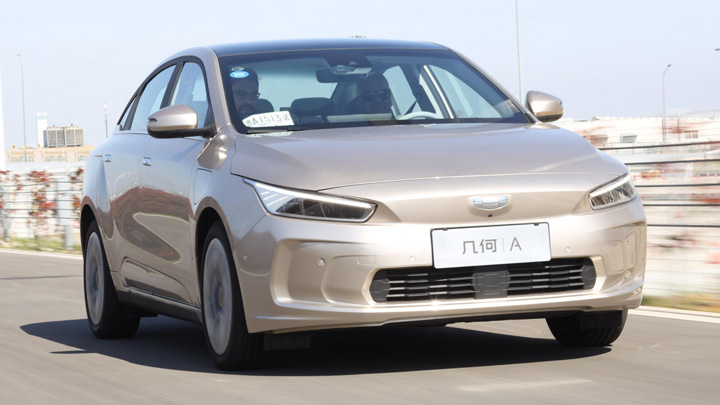
Testing Geely’s Geometry A electric vehicle – Top Gear Philippines

What is that? ‘That’ is a new electric car. A sentence you’ll likely be hearing many times over from here on in, as China—and indeed The World—increases its grip on the increasingly diversified (or homogenous? You choose) playground of battery-powered automobiles. This one however, is aiming its lithium-ion battery packs squarely at That Electric Car Brand In… Continue reading Testing Geely’s Geometry A electric vehicle – Top Gear Philippines

Elon Musk and SEC again ask for more time to reach deal over Twitter dispute

Elon Musk, chief executive officer of Tesla Inc., smiles while speaking to members of the media outside federal court in New York, U.S., on Thursday, April 4, 2019.Natan Dvir | Bloomberg | Getty ImagesTesla Chief Executive Elon Musk and the U.S. Securities and Exchange Commission on Thursday sought a second delay and requested to provide the court another joint submission on or before April 30, indicating whether they have reached an agreement to settle a dispute over Musk's use of Twitter, both parties said in a court filing.
The SEC in February sought to have Musk found in contempt of a fraud settlement last year after the CEO tweeted details about Tesla production numbers that were not vetted by the electric vehicle company's attorneys.
Instead, U.S. District Court Judge Alison Nathan in Manhattan ordered Musk and the SEC to try to resolve the dispute on their own. The parties have already requested one extension.
The SEC sued Musk last year for making fraudulent statements after he tweeted on Aug. 7 that he had “funding secured” to take Tesla private at $420 per share. The parties later settled and Musk agreed to step down as chairman and have the company's lawyers pre-approve written communications, including tweets with material information about the company. Musk's lawyers have argued that the February tweet did not contain new information that was material to investors.

Fiat Chrysler CEO Mike Manley ‘100% Sure’ Carmaker Can Survive Tech Disruption – Transport Topics Online

Fiat Chrysler Automobiles NV is a “house of brands,” and that ensures it will be one of the few traditional automakers to survive the disruption the car industry is facing from the rise of electric and self-driving cars, according to CEO Mike Manley. Manley’s vision, like that of his iconic predecessor Sergio Marchionne, is based… Continue reading Fiat Chrysler CEO Mike Manley ‘100% Sure’ Carmaker Can Survive Tech Disruption – Transport Topics Online

Elon Musk emailed employees about how great Tesla’s autonomy day was, but the plan has lots of holes

Tesla CEO Elon Musk views the new Tesla Model Y at its unveiling in Hawthorne, California on March 14, 2019.Frederic J. Brown | AFP | Getty ImagesTesla CEO Elon Musk did what he does best on Monday when he presented bold, visionary promises that only his most loyal followers would take at face value.
Specifically, Musk gave guidance that Tesla will have a million “robotaxis” on the road next year, meaning a million truly driverless cars that can operate commercially in a ride-hailing network, generating passive income for their owners.
Musk celebrated the day in an email to all employees on Monday afternoon.
Subj. Great day for Tesla!
The Autonomy Day was extremely well-received. Feedback has been incredible. [Smiling emoji here.]
Awesome result of extremely intense effort by the Autopilot Team!
[two clapping emoji]
Elon
Promising safe, driverless cars within a year is already exceedingly optimistic. But Musk went further to say that each Tesla — equipped with some future version of its Autopilot and Full Self-Driving software — could generate $30,000 in gross income for owners each year if operated as a robotaxi.
VIDEO1:2601:26Elon Musk says Tesla will have 'robotaxis' on the road by 2020That's not realistic, considering Tesla's production numbers to date and the average salary of a ride-hailing driver in the US today.
The event served as a distraction from Tesla's recent operational, regulatory and financial troubles, which will be in full focus during the company's first-quarter earnings report on Wednesday.
Among some of its recent challenges, Tesla slowed production of its Model S and X vehicles in recent quarters and recently closed stores and laid off thousands of employees. Plus, Musk remains locked in a battle with the SEC over his use of social media to disseminate material business information. Tesla had around $180 million in debt coming due this month. And sales of its Model 3 slowed down in the first quarter.
A history of self-driving promisesIn 2018, ride-hailing trade publication Ridester found that human drivers working 40 hours a week for the likes of Uber or Lyft make annual salaries of about $31,000 before vehicle expenses, and about $20,000 after expenses but before taxes in the US.
Those people are driving cars already deemed street legal, and picking up fares in major cities and at airports where local laws have been, for the most part, hashed out authorizing them to drive there.
Meanwhile, the company has produced only about 600,000 cars to date. Not all of them are still on the road.
Tesla said in its fourth-quarter earnings release that it was aiming to deliver 360,000 to 400,000 vehicles in 2019, about 45 percent to 65 percent more than its deliveries last year.
VIDEO8:0508:05Tesla loses $2.90/share, revenue light, as wellTo reach a million robotaxis in 2020, Tesla would have to continue producing cars near the high-end of its previous guidance. Then, the majority of those cars would have to get the necessary software updates to reach Full Self-Driving status, which currently costs $5,000 when customers order the car or $7,000 as an upgrade if added after delivery, although these prices could change over time. Finally, owners would have to agree to let their cars participate in a Tesla robotaxi network.
Meanwhile, truly driverless vehicles do not yet exist. Tesla doesn't sell one. Neither does any other company.
Deutsche Bank analyst Emmanual Rosner, who took a test drive of the vehicles Tesla showed on Tuesday, was skeptical, writing, “Throughout the ride, the car performed relatively well but experienced a few rough maneuvers and had one disengagement where it failed to recognize cones blocking off some parked vehicles on the side of the road.”
He continued, “Given our own test ride still faced issues despite being on a pre-planned course and under relatively simple road conditions, we believe the company's targeted timeline for both full self-driving and its robotaxi service is at the very least aggressive. Ultimately, we still wonder whether Tesla can even solve the large challenges of fully autonomous driving with its vision-based approach alone.”
Musk has made grandiose promises about self-driving before.
In October 2016, Musk touted Tesla's second-generation autonomous driving hardware, saying that system could power full level 5 autonomy in his company's cars — that means the car could drive in all conditions with zero human attention. Musk said the company expected that a Tesla would be able to complete a hands-free trip across the US by late 2017. As of April 2019, Tesla has not demonstrated any of its vehicles completing such a trip, although self-driving pioneer Anthony Levandowski says a car from his new start-up accomplished the task last December.
Analysts were generally skeptical. Cowen analysts wrote, “The Tesla Network robotaxi plans seemed half baked, with the company appearing toeither not have answers to or not even considered pretty basic question on the pricing,insurance liability, or regulatory and legal requirements.”
Even some historical Tesla bulls were not swayed by the presentation.
Dan Ives, Managing Director of Wedbush Securities said, “The presentation was more visionary and lacked the details the Street wants to know which is key to credibility. It was more geared to the autonomy world as Musk is telling technologists 'don't forget about Tesla,' with Waymo and Uber getting a ton of credit.”
Tesla stock traded down about 4% on Monday, and ticked up by less than a point in mid-day trading on Tuesday. The stock is down about 30% from its most recent peak in December, and down about 9% from a year ago.
VIDEO2:3902:39Tesla's Elon Musk promises 'robotaxis' by 2020

Ford electric vehicles and hybrids: Here are some of the many models arriving soon

Follow Bengt

2013 Ford Focus Electric
With last week’s announcement of a strategic partnership with electric truckmaker hopeful Rivian, cemented by a pending $500 million equity investment, Ford Motor Company is covering the bases for how the market might evolve and assuring multiple paths toward a future where vehicles with charge ports are the norm.

“Across the world, we're fortifying our franchise strengths in trucks, commercial vehicles, and performance vehicles and bolstering our SUV franchise, executing the unique approach to electric vehicles that takes advantage of our strongest nameplates,” said Ford CEO Jim Hackett on Ford’s Q1 earnings call, the day after the Rivian announcement.

In Ford’s business update the company noted its strengthened electric vehicle plan, which includes a future vehicle developed with Rivian.

Ford said in March 2018 that globally it will be creating 16 fully electric vehicles and 40 electrified vehicles through 2022. Everything the company has said since then about electrification fit neatly into that frame—except for one other thing, autonomous vehicles, which we’ll get to.

THE ELECTRIC CARS

Here, rounded up, are at least some of the fully electric vehicles that Ford has in the works:

2020 Ford electric SUV teaser

Mustang-influenced electric crossover. Ford has been pushing ahead with its plan to build this much-anticipated alternative to the Tesla Model Y. To make sure that the vision doesn’t become too diluted (or convoluted) along the way, it’s been focusing those efforts through a focused electric-vehicle team (Team Edison) that will guide it though all the way to production, delivery, and support.

Although Ford has dodged recent questions about pricing and position for this vehicle, which has been referred to as Mach 1 and Mach E, executives have at several points stressed the importance of affordability and noted that it’s one of the main targets for the project. The electric SUV will land in a middle ground between small EVs like the Hyundai Kona Electric and Chevrolet Bolt EV, and larger premium ones like the Audi E-tron and Tesla Model X. Based on comments from several company officials, expect it to start around $45,000 (or even less) when it arrives, in the second half of 2020.

Fully electric Lincoln crossover. As Ford’s North American president, Kumar Galhotra, said earlier this year, it will emphasize “understated, quiet luxury.” It could arrive as soon as 2021, which would beat the Cadillac EV we’re expecting to be a top alternative.

Other future “C-EV” vehicles—maybe even a sedan. The Ford (and Lincoln) electric vehicles are expected to be just the first two to be conceived on what Ford has described is a scalable electric vehicle platform. This platform, which was conceived to be in what’s called the C-segment globally, is intended to spawn an entire suite of electric-car variants. Although Ford is exiting the traditional, mainstream sedan fold, for instance, company officials have hinted to Green Car Reports that we may see the sedan form factor again in a niche—as a Lincoln EV, perhaps.

Fully electric luxury SUV. The Michigan-based company Rivian plans to introduce its R1T and R1S in the U.S. in late 2020. With last week’s announcement, the two companies will “work together to develop an all-new, next-generation battery electric vehicle for Ford’s growing EV portfolio using Rivian’s skateboard platform.” Rivian has already teased a tow rating of up to 11,000 pounds and a range of up to 400 miles, aided by battery packs of up to 180 kwh.

2019 Ford F-150 RTR

Fully electric F-150. Ford has confirmed it’s a project, but that’s about it. Since the F-150 is at the core of Ford’s heritage and profitability, you can bet it’s moving along, Rivian venture or not. Just don’t expect it to arrive quite as soon. But with continued U.S. demand for the Ford Expedition and Lincoln Navigator, which are based on the F-150, we could see this paying off in broader scope.

THE HYBRIDS (SOME PLUG-IN)

Unlike GM, which discontinued the Chevrolet Volt and sees electric as a near-term future for the company, Ford aims to push full hybrids and plug-in hybrids out in more of its next-generation vehicles:

2020 Ford F-150 hybrid. Separate from the fully electric F-150 project, Ford is producing an F-150 hybrid, and it’s due soon—as a 2020 model. The F-150 hybrid is expected to use a 10-speed automatic transmission, as part of a hybrid system that should still allow a wider range of engine-off coasting and idling without sacrificing much if any towing or hauling ability. Ford has teased that the F-150 will have a power takeoff for tools and worksites—a feature that would be even more useful with a charge port, if that’s a hint.

2020 Lincoln Aviator plug-in hybrid

2020 Lincoln Aviator plug-in hybrid. The Aviator plug-in hybrid will come with a version of Ford’s soon-to-be-ubiquitous 10-speed modular-hybrid transmission. It will be the top-performing version in the Aviator lineup as well, with a projected 450 horsepower and 600 pound-feet of torque. The Ford Explorer on which it’s based is (in the U.S.) only available as a hybrid, with the Explorer plug-in hybrid saved for Europe for now.

2020 Lincoln Corsair, 2019 New York International Auto Show

2020 Ford Escape plug-in hybrid and 2020 Lincoln Corsair plug-in hybrid. These models arrive later in 2019 and employ a revised version of the variable-ratio/planetary hybrid system Ford has used in a number of other hybrid products, including the C-Max Energi and going back to the previous Escape Hybrid.

2020 Ford Mustang hybrid. A hybridized version of Ford’s 10-speed automatic transmission is also going to be the basis for the Hybrid Mustang. The hybrid pony car is likely to gallop to the performance potential of hybrid tech rather than eke out every possible mpg—possibly with a V-8 still a part of the presentation.

New Ford Bronco

2021 Ford Bronco hybrid. Ford still hasn’t confirmed final specs for its much-anticipated Bronco—or even revealed its production form—yet the company long ago confirmed that it would arrive in leaner shape, with a hybrid version.

Behind The Scenes At Tesla’s Seat Factory — #CleanTechnica Field Trip

Invest
Electric Cars
Electric Car Benefits
Electric Car Sales
Solar Energy Rocks
RSS
Advertise
Privacy Policy

Autonomous Vehicles

Published on April 27th, 2019 |

by Kyle Field

Behind The Scenes At Tesla’s Seat Factory — #CleanTechnica Field Trip

Twitter
LinkedIn
Facebook

April 27th, 2019 by Kyle Field

Tesla invited CleanTechnica to its Fremont Factory and snuck in some time at its seat factory. Zach Shahan wrote up a beautiful article about Tesla’s seat factory and Chanan Bos put together a fantastic video documenting the happenings inside the factory for CleanTechnica TV. That’s all for your viewing pleasure, of course.

The factory where Tesla builds its seats may not sound exciting, but as probably the only automotive manufacturer that builds its own seats, we were enthused about our exclusive look into what is a very unique factory in the automotive industry. Tesla has not only brought seat manufacturing in-house. It has also applied the automation it has become known for in the industry to its seat factory. This automation has resulted in the most highly automated lower seat assembly in the automotive world, which you can see in our video below.

Tesla was kind to pull back the curtain on its seat manufacturing operations, where we were able to get an inside look at the careful balance of automation and human-supported manufacturing that goes into the seats for its vehicles.

The seats that go into Tesla’s vehicles are not just any seats — they are world-class automotive seats that are assembled with vegan fabric that’s not only an adequate substitute for leather, but is actually superior in every noteworthy way. Tesla’s vegan leather seats, aesthetically beautiful (that’s a fact), are admirably durable, highly stain resistant, super soft, and (of course) greener than the norm.

Our video above provides a unique insight into the technology Tesla applies to the seats that it puts into its vehicles. That said, while the seats are important to a select few parts of your body, they are not even close to the most technologically advanced parts of the car. Just wait until we dig into Tesla’s Autopilot hardware and battery management systems. That’s when it gets really exciting. You can start to see the future through the possibilities of each technology individually and more so collectively as part of the whole car.

About the Author

Kyle Field I'm a tech geek passionately in search of actionable ways to reduce the negative impact my life has on the planet, save money and reduce stress. Live intentionally, make conscious decisions, love more, act responsibly, play. The more you know, the less you need. TSLA investor.

Back to Top ↑

Advertisement

Advertise with CleanTechnica to get your company in front of millions of monthly readers.

CleanTechnica Clothing & Cups

Top News On CleanTechnica

Join CleanTechnica Today!

Advertisement

Advertisement

Follow CleanTechnica Follow @cleantechnica

Our Electric Car Driver Report

Read & share our new report on “electric car drivers, what they desire, and what the demand.”

The EV Safety Advantage

Read & share our free report on EV safety, “The EV Safety Advantage.”
EV Charging Guidelines for Cities

Share our free report on EV charging guidelines for cities, “Electric Vehicle Charging Infrastructure: Guidelines For Cities.”

30 Electric Car Benefits

Our Electric Vehicle Reviews

Tesla News

Cleantech Press Releases

Wiesbaden Orders 56 Electric Buses From Mercedes-Benz

Volkswagen Group Secures Lithium Supplies From Ganfeng Lithium

New Flyer Infrastructure Solutions Completes New York’s 1st Interoperable, On-Route Charger Solution For Transit Buses

38 Anti-Cleantech Myths

Wind & Solar Prices Beat Fossils

Cost of Solar Panels Collapses

© 2018 Sustainable Enterprises Media, Inc.

Invest
Electric Cars
Electric Car Benefits
Electric Car Sales
Solar Energy Rocks
RSS
Advertise
Privacy Policy

This site uses cookies: Find out more.Okay, thanks

Ride to future: Auto firms are crafting new strategies to stay on track

In this digital era, disruptions have become routine. But not many disruptions are as deep and comprehensive as those facing the automobile industry. With 3% of global car sales today, India is expected to drive half the additional global demand. To be sure, these upheavals have been in the works for a decade now. In… Continue reading Ride to future: Auto firms are crafting new strategies to stay on track

Elon Musk and S.E.C. Reach New Accord, Lifting Cloud Over Tesla

If it was not already clear, securities regulators are giving Elon Musk, the chief executive of Tesla, a laundry list of things he cannot riff about on Twitter. A revised agreement between Mr. Musk and the Securities and Exchange Commission, filed in federal court in Manhattan on Friday, spells out just when Mr. Musk must… Continue reading Elon Musk and S.E.C. Reach New Accord, Lifting Cloud Over Tesla

Tesla Nevada Gigafactory — Something Strange Is Going On, But It’s Not What You Think

Invest
Electric Cars
Electric Car Benefits
Electric Car Sales
Solar Energy Rocks
RSS
Advertise
Privacy Policy

Batteries

Published on April 20th, 2019 |

by Chanan Bos

Tesla Nevada Gigafactory — Something Strange Is Going On, But It’s Not What You Think

Twitter
LinkedIn
Facebook

April 20th, 2019 by Chanan Bos

The Tesla Gigafactory is a technological marvel, is largely a mystery, and also happens to be the world’s biggest battery manufacturing facility. This article was originally going to be about the financing “freeze” and what might actually be going on, but now it will also straighten out some new Panasonic lithium waste that just hit the fan.

Most people see the Gigafactory as one whole factory operated by Tesla and Panasonic to manufacture batteries with a new chemistry that was jointly developed by the two. All of that sounds very harmonious, but in reality, it really isn’t.

Panasonic is responsible for creating the battery cell, while Tesla is responsible for making the battery pack. These are in fact two very separate operations. Most Tesla employees have never seen the Panasonic side of the factory and most Panasonic employees have never seen the Tesla side of the factory. Imagine it like a takeout restaurant — the kitchen makes and packs the food, opens a hatch, pushes it through, and closes it again. Only, instead of food, we have batteries.

When we hear crazy stories about Elon sleeping in the factory, or stories of Elon getting his hands dirty working on some machine in the factory, it may very well be that this is only on Tesla’s side of the factory.

Missing Its Targets
At the end of August 2018, the Gigafactory reached 20 GWh/year output. This in itself is quite an achievement. Emboldened by it, Tesla decreed that it would hit the factory’s original output of 35 GWh by the end of the year. However, we found out that as of right now (April 2019), Gigafactory output has only reached ~24 GWh. This means that that, within the last 7–9 months, the Gigafactory has only gone from 19% complete (20 GWh) to 23% complete (24 GWh) rather than reaching 33% complete (35 GWh).

When we take into account when the factory was built and when it reached other milestones, what this translates into is not an exponential progress equation but rather a linear equation, and a slowing one at that. A word of caution, though, any line will look different depending on the scales used, and wild fluctuations can always cancel each other out in the longer term.

Panasonic’s Hopes, Failures, & Pleas
Panasonic is one of the best and biggest battery manufacturers in the world. Nonetheless, it is extremely lucky to have gotten its current arrangement with Tesla, which craves and is willing to invest in batteries beyond your wildest corporate dreams. Presumably, this means that Panasonic will go to great lengths to maintain its relationship with Tesla.

As was made clear in recent news, Panasonic’s side of the factory has been a bit of a mess. From that same news, we heard some disturbing but unconfirmed rumors that employees made mistakes there and are afraid to speak up. Yet again, this shows how different Tesla’s and Panasonic’s management strategies are. At Tesla, as we know from first-hand experience at the Fremont factory, the workers are pushed to not fear failures. Rather, they are discouraged from a lack of trying or saying the “forbidden words,” which are “that’s impossible.”

To us westerners, the Japanese culture can sometimes seem strict, which quite likely also translates at least in some fashion to Japanese facilities abroad. Otherwise, they’d risk looking pretty bad on audits. It must seem like quite a dilemma for Panasonic. From one side, the team there is expected by Tesla to rapidly increase its output (but they are unable to meet their goals). The result of such pressure? Probably more mistakes, lots of fear, and the things we have seen in the news recently about the Gigafactory, as well as other consequences.

Another desperate solution Panasonic had for solving the problem was throwing more money at the problem. In July and again in October, the Gigafactory was in the news spotlight when Panasonic commented on its willingness to commit additional investments to the Gigafactory. These investments were supposedly for growth beyond 35 GWh, but when we look at the current situation, it’s probably a bit more complex than that.

Additional lines will help reach the 35 GWh short-term goal, and in the long term, when the S-curve is ramped, could help go beyond 35 GWh. Tesla, however, was probably more worried about facing the same issue at a later date, once a lot more money was invested. Elon must be very frustrated by this since he can’t just use his usual mad engineering skills and tactics to go wild and experiment on Panasonic’s lines to help them ramp.

Maxwell
The story of Tesla buying Maxwell is extremely complicated. Long story short, it seems Maxwell was not doing so well but had upcoming technology that could change its financial predicament. Although this new technology would probably not come in time to save the company, investors were probably in denial about that. Maxwell wanted to sell the promise of future technology for a huge sum that Tesla didn’t feel like forking over. Word is Maxwell desperately tried to contact everyone in the industry to see if someone would offer more or place any bid at all to see if the investors could squeeze more out of Tesla. That is most likely when Panasonic got word of Tesla’s intention to buy a “battery component manufacturer.” Panasonic, knowing how much Tesla loves vertical integration, probably feared that Tesla was about to cheat on their currently exclusive relationship.

So, when Toyota came knocking, finally looking for a battery supplier, Panasonic, probably at its most vulnerable moment, felt like it could definitely use a new partner in case Tesla decided to do some more vertical integration. The timing of all of this is very suspect — the Toyota–Panasonic partnership was announced exactly two weeks prior to Tesla announcing its intent to buy Maxwell. Although, to be fair Toyota and Panasonic, they had already been flirting since at least 2017, and Toyota is interested in prismatic cell batteries rather than cylindrical ones.

The Ever-Changing Blueprints of the Gigafactory
Tesla is also in quite a predicament. On one hand, it has Panasonic struggling to meet its goals at the Gigafactory. On another hand, it doesn’t want to upset China by bringing Panasonic to GF3. On a third hand (just go with it), Maxwell’s technology might significantly improve Tesla’s batteries without having to wait or invest in the solid-state battery epiphany that a lot of car manufacturers are holding their breath for.

We know for a fact from multiple sources, including a company spokesperson, that the Gigafactory is completely packed. There’s no more room for anything without expanding the structure. The Model Y is supposed to be built there, perhaps other models, like the Roadster and Semi, as well. Tesla, however, has not yet broken ground to expand the exterior structure. This has puzzled a lot of people for quite a while. From what we can gather, Tesla itself doesn’t know when it will expand the structure. While there is no official reason for this, there is a theory that would explain quite a lot.

Tesla loves efficiency, so building the factory and then having to rebuild it due to changing plans is not something it would find acceptable. Right now, there are at least two sets of GF1 blueprints, maybe more. One set of blueprints has Maxwell dry-cell technology that might take more or less space, and one set doesn’t have that tech. The Maxwell option is probably not even a blueprint yet, just the understanding that the current blueprint would have to be updated.

Another matter is Panasonic’s inability to ramp production. Theoretically, Panasonic should be able to hit 35 GWh, but if it can’t or this takes much longer than planned, Tesla may have to consider changing the building blueprints to accommodate additional lines to meet long-term goals.

Finance Freezes
The mysterious financial freezes are just further confirmation of something strange going on, which quite possibly relates to a huge distrust issue. The bottom-line issue seems to be that more output is needed from existing equipment. With Panasonic as the reported bottleneck (according to Elon Musk), there’s no point in Tesla investing more at the moment, and it seems Panasonic is intent on getting more out of the current equipment before investing more, but calling it a financing freeze sounds controversial or even combative.

And it seems Panasonic was previously intent on investing in more lines to achieve 35 GWh, yet for some reason now prefers to first get more out of the current equipment. It’s just unclear what triggered that change — or if the money was invested but without reaping the expected fruits.

What’s Elon Up To?
One very big question remained when contemplating the lack of progress the Gigafactory has shown. Where is Elon currently focusing his attention? Autopilot? Fremont? Is he helping ramp the Gigafactory S-curve? Did he switch his focus to SpaceX now that the company is no longer drowning in production hell lava? Could he in fact have bought “Battery Manufacturing for Dummies” volumes 1 to 600 and be absorbing new knowledge to help him vertically integrate battery production? Who knows, but a very important unanswered question is: on the couch (or under the desk) of which facility is Elon spending his nights right now?

The Gigafactory 3 Shanghai Wild Card
One area teeming with activity, however, is GF3 in Shanghai, China. Gigafactory 3 will have its own battery production and could help pick up the slack for GF1 in Nevada. While we have now seen a preview of what GF3 will look like (during the Model Y event), we have yet to get any numbers from Tesla on its plans for battery produc..