On the occasion of the annual commitment by SEAT to biodiversity preservation, company employees planted 414 trees and set up nest boxes for the protection of birds in the Llobregat Delta. The initiative is framed within the biodiversity preservation project in the Llobregat Delta Natural Park, a location which is close to two of SEAT’s… Continue reading SEAT employees plant 414 trees in the Llobregat Delta
Tag: VW
Group deliveries fall in August
In August, there was a drop of 3.1 percent in deliveries by the Volkswagen Group compared with August 2018 to 848,600 vehicles. …
BMW engine development expert Duesmann set to become Audi chief in April: report
FILE PHOTO – Markus Duesmann, board member of German luxury carmaker BMW attends the company’s annual news conference in Munich, Germany, March 21, 2018. REUTERS/Michael Dalder BERLIN (Reuters) – BMW’s (BMWG.DE) engine development and purchasing expert, Markus Duesmann, is set to become the CEO of Volkswagen’s (VOWG.DE) Audi premium brand, after BMW dropped its opposition… Continue reading BMW engine development expert Duesmann set to become Audi chief in April: report
Speechless in Frankfurt
‘,e.appendChild(e.resizeSensor),e.resizeSensor.offsetParent!==e&&(e.style.position=”relative”);var r,s,d,a,l=e.resizeSensor.childNodes[0],c=l.childNodes[0],u=e.resizeSensor.childNodes[1],h=e.offsetWidth,f=e.offsetHeight,m=function(){c.style.width=”100000px”,c.style.height=”100000px”,l.scrollLeft=1e5,l.scrollTop=1e5,u.scrollLeft=1e5,u.scrollTop=1e5};m();var p=function(){s=0,r&&(h=d,f=a,e.resizedAttached&&e.resizedAttached.call())},v=function(){d=e.offsetWidth,a=e.offsetHeight,(r=d!=h||a!=f)&&!s&&(s=t(p)),m()},y=function(e,t,n){e.attachEvent?e.attachEvent(“on”+t,n):e.addEventListener(t,n)};y(l,”scroll”,v),y(u,”scroll”,v)}}(e,o)}),this.detach=function(e){n.detach(i,e)}};return n.detach=function(t,n){e(t,function(e){e&&(e.resizedAttached&&”function”==typeof n&&(e.resizedAttached.remove(n),e.resizedAttached.length())||e.resizeSensor&&(e.contains(e.resizeSensor)&&e.removeChild(e.resizeSensor),delete e.resizeSensor,delete e.resizedAttached))})},n}),function(e,t){“function”==typeof define&&define.amd?define([“./ResizeSensor.js”],t):”object”==typeof exports?module.exports=t(require(“./ResizeSensor.js”)):(e.ElementQueries=t(e.ResizeSensor),e.ElementQueries.listen())}(“undefined”!=typeof window?window:this,function(e){var t=function(){function n(e){e||(e=document.documentElement);var t=window.getComputedStyle(e,null).fontSize;return parseFloat(t)||16}function i(e,t){var i=t.split(/d/),o=i[i.length-1];switch(t=parseFloat(t),o){case”px”:return t;case”em”:return t*n(e);case”rem”:return t*n();case”vw”:return t*document.documentElement.clientWidth/100;case”vh”:return t*document.documentElement.clientHeight/100;case”vmin”:case”vmax”:var r=document.documentElement.clientWidth/100,s=document.documentElement.clientHeight/100;return t*(0,Math[“vmin”===o?”min”:”max”])(r,s);default:return t}}function o(t,n){t.elementQueriesSetupInformation?t.elementQueriesSetupInformation.addOption(n):(t.elementQueriesSetupInformation=new function(e){this.element=e,this.options={};var t,n,o,r,s,d,a,l=0,c=0;this.addOption=function(e){var t=[e.mode,e.property,e.value].join(“,”);this.options[t]=e};var u=[“min-width”,”min-height”,”max-width”,”max-height”];this.call=function(){for(t in l=this.element.offsetWidth,c=this.element.offsetHeight,s={},this.options)this.options.hasOwnProperty(t)&&(n=this.options[t],o=i(this.element,n.value),r=”width”==n.property?l:c,a=n.mode+”-“+n.property,d=””,”min”!=n.mode||o>r||(d+=n.value),”max”!=n.mode||r>o||(d+=n.value),s[a]||(s[a]=””),d&&-1===(” “+s[a]+” “).indexOf(” “+d+” “)&&(s[a]+=” “+d));for(var e in u)u.hasOwnProperty(e)&&(s[u[e]]?this.element.setAttribute(u[e],s[u[e]].substr(1)):this.element.removeAttribute(u[e]))}}(t),t.elementQueriesSetupInformation.addOption(n),t.elementQueriesSensor=new e(t,function(){t.elementQueriesSetupInformation.call()})),t.elementQueriesSetupInformation.call(),l&&c.indexOf(t)o[e].minWidth&&(n=e);if(n||(n=s),d!=n)if(a[n])i[d].style.display=”none”,i[n].style.display=”block”,d=n;else{var l=new Image;l.onload=function(){i[n].src=r[n],i[d].style.display=”none”,i[n].style.display=”block”,a[n]=!0,d=n},l.src=r[n]}else i[n].src=r[n]}var i=[],o=[],r=[],s=0,d=-1,a=[];for(var u in t.children)if(t.children.hasOwnProperty(u)&&t.children[u].tagName&&”img”===t.children[u].tagName.toLowerCase()){i.push(t.children[u]);var h=t.children[u].getAttribute(“min-width”)||t.children[u].getAttribute(“data-min-width”),f=t.children[u].getAttribute(“data-src”)||t.children[u].getAttribute(“url”);r.push(f);var m={minWidth:h};o.push(m),h?t.children[u].style.display=”none”:(s=i.length-1,t.children[u].style.display=”block”)}d=s,t.resizeSensor=new e(t,n),n(),l&&c.push(t)}function d(e){var t,n,i,o,r,s;for(e=e.replace(/’/g,’”‘);null!==(t=h.exec(e));)for(n=t[1]+t[3],attrs=t[2];null!==(attrMatch=f.exec(attrs));)i=n,o=attrMatch[1],r=attrMatch[2],s=attrMatch[3],void 0===u[o]&&(u[o]={}),void 0===u[o][r]&&(u[o][r]={}),void 0===u[o][r][s]?u[o][r][s]=i:u[o][r][s]+=”,”+i}function… Continue reading Speechless in Frankfurt
China’s CATL unveils cell-to-pack battery platform
FUZHOU, Sept. 13 (Xinhua) — Contemporary Amperex Technology Co., Ltd. (CATL), China's largest automotive lithium-ion battery maker, unveiled its focus on the development of cell-to-pack (CTP) batteries to improve efficiency and lower costs.
To safely and efficiently manage the battery cells mounted in an electric vehicle (EV), battery cells are installed in modules and packs. Generally, a cluster of cells make up a module and a cluster of modules make up a pack. Ultimately, each electric vehicle is installed with one pack.
CTP, the company's latest product platform, skips the process of battery modules and allows cells to be directly integrated into packs.
Using the CTP technology, which includes more than 70 core patents, CATL can increase mass-energy density by 10 to 15 percent, improve volume utilization efficiency by 15 to 20 percent and reduce the amount of parts for battery packs by 40 percent.
A CTP battery can increase the system energy density from 180 Wh/kg to more..
VW CEO shifts strategy from empire building to efficiency
FRANKFURT (Reuters) – Volkswagen (VOWG_p.DE) has abandoned its decades-old obsession with empire building and no-expense-spared engineering to free up resources for the development and mass production of electric cars, its CEO Herbert Diess told Reuters. FILE PHOTO: Herbert Diess, CEO of German carmaker Volkswagen AG, gestures in front of an ID.3 pre-production prototype during the… Continue reading VW CEO shifts strategy from empire building to efficiency
Audi AI:Trail concept splices trail-ready with autonomous-ready
Earlier this week at the Frankfurt auto show, Audi revealed a strikingly different adventure-vehicle concept car that’s designed to show, according to the brand, “a comprehensive concept for sustainable mobility off the beaten track.”
The AI:Trail completes a quartet of concepts with similarly colon-punctuated names—the AI:Con, AI:Me, and AI:Race—that show how the German luxury brand can pull autonomous-driving modes and all-electric powertrains into vehicles for almost any kind of automotive lifestyle.
It’s an important issue to address. With just a few exceptions, the electric cars of the past decade conform into a surprisingly homogenous set. They’re far from representative of the real potential of going fully electric—that it allows a lot more flexibility for vehicles to be strikingly different and varied in design versus models with a combustion engine.
The AI:Trail has four electric motors—not in-wheel motors—summing to 435 horsepower and 738 pound-feet of torque, and what it calls “ample battery capacity” bringing a driving range of up to 311 miles based on the European WLTP cycle.
For on-road driving, the AI:Trail has level 4 automated driving capability—meaning that it has traditional controls but in specific conditions can take over responsibility from the driver.
Audi promises confident crawling up off-road trails, and its gearing of the motor systems was chosen to deliver strong wheel torque in off-roading. It underscores that its development “was not about achieving remarkably quick acceleration or hitting breathtaking speeds on the autobahn.”
The AI:Trail, with its huge 22-inch wheels and 33.5-inch big-sidewall tires, is limited to 81 mph. But it can ford up to 19 inches of water and has a ground clearance of 13.4 inches.
Green Car Reports walked around the concept at the show and found that Audi’s own released pictures didn’t entirely do the design justice, especially from the rear. The concept is exceptionally tall—5.5 feet overall—and the “one-box” passenger-cell design and especially sharp creasing around the cabin give it the look of a sci-fi truck brought to life. Its design looks influenced by lunar-rover designs, with a passenger pod over huge wheels.
The concept has a lot of glass around and overhead, allowing an impressive view out for off-roading. Retractable running boards help with access, while an optical-sensor system reads the surface and adjusts the tire pressure accordingly.
The driver interface consists of a yoke instead of a steering wheel, plus a minimal set of buttons. Interior materials include recycled textiles, reprocessed wool, and recycled leather. Second-row seats follow a hammock-like design that helps save weight.
With a mix of high-strength steel, aluminum, and carbon fiber, the AI:Trail weighs less than 3,900 pounds despite what Audi calls a high-capacity battery.
The headlights themselves are actually drones that can detach from the vehicle and go airborne, helping illuminate the way ahead of the vehicle when off-roading, or a surrounding area when parked. While that seems like a silly use of energy and effort, it’s exactly the kind of feature we’d expect to see in an innovation-focused concept vehicle—and it’s cool.
Perhaps the most puzzling piece to ponder now is how all of these concepts fit together into Audi’s future, which so far has been mostly in the form of electric versions of pre-existing formats (like the production E-tron SUV, the upcoming Q4 e-tron, and the e-tron GT sport sedan). The future, if this is any hint, could get a lot more interesting.
SAIC Volkswagen to expand production at Xinjiang plant
URUMQI, Sept. 12 (Xinhua) — SAIC Volkswagen's plant in China's far west Xinjiang Uygur Autonomous Region is scheduled to increase production by mass-producing an SUV model in mid-2020.
The SUV production line has been installed and is expected to start mass production of the Tharu SUV model in July next year, said Fu Xuejun, general manager of the SAIC Volkswagen (Xinjiang) Automotive Co., Ltd.
The Xinjiang subsidiary previously only produced the new Santana sedan model, with the output exceeding 20,000 units last year.
After the mass production of the SUV model, total production at the Xinjiang plant is expected to increase to 50,000 units.
The subsidiary, based in Urumqi, capital of Xinjiang, is SAIC Volkswagen's first production facility in western China and also Xinjiang's first passenger vehicle assembly plant.
The history: Porsche, the electrical pioneer
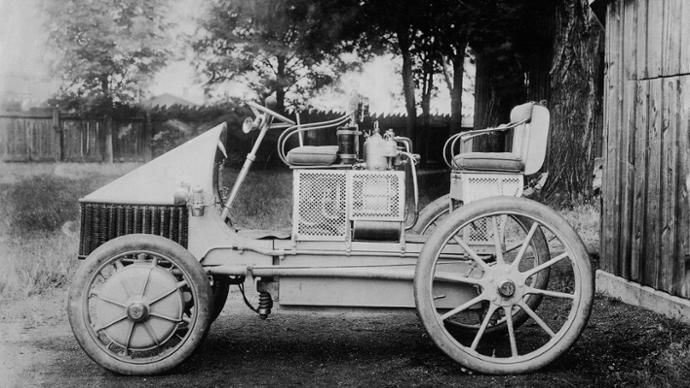
Ferdinand Porsche, later the founder of the company of the same name, was fascinated by electricity even as a teenager. As early as 1893, the 18-year-old installed an electric lighting system in his parents’ house. In the same year Porsche joined Vereinigte Elektrizitäts-AG Béla Egger in Vienna. After four years there, he progressed from mechanic… Continue reading The history: Porsche, the electrical pioneer
White House moving forward to strip California of vehicle authority -sources
WASHINGTON (Reuters) – The Trump administration is moving forward with a plan to revoke California’s authority to set its own vehicle greenhouse gas standards and declare that states are pre-empted from setting their own vehicle rules, three people briefed on the matter said on Thursday. FILE PHOTO: Morning commuters travel in rush hour traffic towards… Continue reading White House moving forward to strip California of vehicle authority -sources