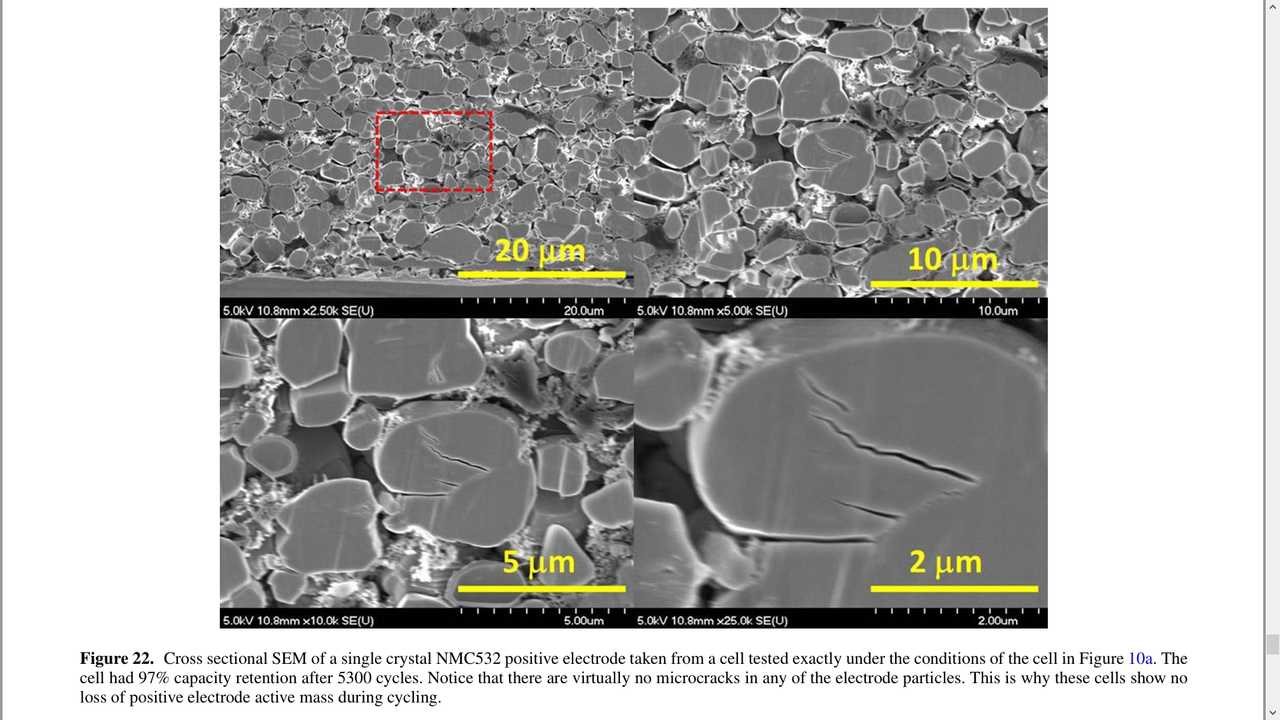
It seems that Maxwell and Jeff Dahn were only part of the strategy. Tesla is clearly pushing to produce its own batteries. The company has always tried to control all aspects of its production. After buying Maxwell Technologies and making a research partnership with Jeff Dahn for a 1-million miles battery, it has reportedly bought… Continue reading Tesla Buys Hibar Systems In Another Effort To Make Its Own Batteries
Tag: Mobility
Groupe Renault creates RENAULT M.A.I. (Mobility as an Industry) to accelerate its development in new mobility services and build strategic partnerships
Boulogne-Billancourt – October 9th, 2019. To anticipate and support the deep changes in lifestyles and consumption patterns, Groupe Renault has been involved in new mobility services for the past four years by developing car services with or without drivers (Renault MOBILITY, Zity in Madrid, Moov’in.Paris, Marcel) and by making highly targeted acquisitions and equity investments… Continue reading Groupe Renault creates RENAULT M.A.I. (Mobility as an Industry) to accelerate its development in new mobility services and build strategic partnerships
Tesla-Panasonic relationship hits hard times as Tesla moves to make its own batteries
A new report paints the Tesla-Panasonic relationship as hitting some hard times and it happens just as Tesla is moving to manufacture its own battery cells. A new Wall Street Journal report is citing sources within Panasonic that describe a tumultuous relationship with Tesla, which has become an important partner for the battery manufacturer. Over the… Continue reading Tesla-Panasonic relationship hits hard times as Tesla moves to make its own batteries
Specially-Designed Toyota “Tokyo 2020 Version” e-Palette to Provide Automated Mobility to Athletes
Oct. 09, 2019
Specially-Designed Toyota “Tokyo 2020 Version” e-Palette to Provide Automated Mobility to Athletes
Vitesco Technologies Supplies Electric Drive for New Volume-Production Models of Groupe PSA and Hyundai
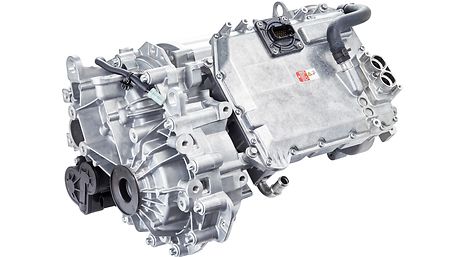
First fully integrated electric axle drive system enters volume production in China and Europe Innovative third-generation electric drive system offers outstanding power density Vitesco Technologies’ portfolio focused strongly on electrification and electric mobility Regensburg, October 9, 2019. Vitesco Technologies, the former Powertrain division of Continental, today announced it has signed agreements with Groupe PSA and… Continue reading Vitesco Technologies Supplies Electric Drive for New Volume-Production Models of Groupe PSA and Hyundai
Tesla Vehicle Efficiency Leads Industry Thanks To Tesla Vehicle Design Culture
Invest
Electric Cars
Electric Car Benefits
Electric Car Sales
Solar Energy Rocks
RSS
Advertise
Privacy Policy
Autonomous Vehicles
Published on October 5th, 2019 |
by Guest Contributor
Tesla Vehicle Efficiency Leads Industry Thanks To Tesla Vehicle Design Culture
Twitter
LinkedIn
Facebook
October 5th, 2019 by Guest Contributor
Originally posted on EVANNEX.
By Charles Morris
More range! More range! That’s the mantra that has replaced the “More power!” of the internal combustion engine (ICE) era. How much range is enough? All we know at this point is that car buyers want more. Tesla, always attuned to consumer desires, upped the stakes once again in April, increasing the range of Model S to what Road & Track colorfully calls “a bladder-busting 370 miles.” The interesting thing is that the company achieved this 35-mile increase without increasing the size of the battery.
Tesla’s Model S charging at a GreenWay charging station in Wroclaw, Poland. Photo by Zach Shahan | CleanTechnica | Tesla Shuttle
As Tesla explains, its engineers were able to boost range by making incremental improvements to several parts of the powertrain: “All Model S and X vehicles now benefit from Tesla’s latest generation of drive unit technology, which combines an optimized permanent magnet synchronous reluctance motor, silicon carbide power electronics, and improved lubrication, cooling, bearings, and gear designs to achieve greater than 93% efficiency. Pairing a permanent magnet motor in the front with an induction motor in the rear enables unparalleled range and performance at all times. The net effect is a more than 10% improvement in range, with efficiency improvements in both directions as energy flows out of the battery during acceleration and back into the battery through regenerative braking.”
More range is bound to make the appeal of Tesla’s world-leading electric vehicles even greater. However, the real story here is not about range, but efficiency. At the moment, EV designers are focused on maximizing range, but if at some point the market decides that there’s such a thing as “enough range,” designers could leverage greater efficiency in the powertrain to make battery packs smaller, giving their vehicles more space, better performance, and/or lower prices. Efficiency also offers a direct benefit for consumers — it translates into lower electric bills.
Tesla Model X Powerwall in a garage, via Tesla.
Tesla’s EVs are some of the most efficient on the market — to give one example, the Model S Performance full-size sedan is substantially more efficient than the tiny smart EQ fortwo. When it comes to the vaunted “Tesla killers” — Audi’s e-tron and Jaguar’s I-PACE — the larger Tesla Model X simply blows them away on efficiency. As Road & Track explained in a recent article, Model X is so much more efficient that it offers 91 more miles of range than the Audi and 121 more than the Jag, even though the Tesla’s battery pack is only slightly larger.
As R&T sees it, the reason the legacy automakers’ latest and greatest EVs can’t match Tesla’s aging models comes down to inefficiency, not only in their powertrains, but in their corporate cultures. Tesla’s culture is one of continuous improvement — in the eight years that Model S has been on the market, its efficiency has increased by 25 percent, from 89 MPGe (miles per gallon equivalent) to 111 MPGe. Tesla has improved the vehicle’s motors, air suspension, tires, and even its wheel bearings.
Tesla Model S Supercharging, by Zach Shahan | CleanTechnica.
Another policy prized at Tesla is open communication between departments, in contrast to the “silos” that so many employees of traditional corporations complain of. As R&T explains, Tesla’s newer wheel bearings are more expensive than the old ones, but they may have added as much as 15 miles of range at far less cost than adding battery capacity. The newer Teslas also use Brembo monobloc brake calipers. “Because they can be made to retract the pads from the spinning rotors faster and more reliably than sliding calipers, monoblocs reduce friction — enough to provide up to 20 miles of increased range,” writes Road & Track’s Jason Cammisa. “The additional stopping power, credibility, and better pedal feel are just added bonuses.” Are the Brembos expensive? Very — but on a per-mile-of-range basis, they’re still cheaper than batteries, and Tesla figured that out because the brake team communicates with the battery engineers, and they cooperate to continuously improve the company’s vehicles.
Related: Our Interview With Tesla President Jerome Guillen, Part Deux
Featured image: Tesla Model 3 deliveries in Tampa, Florida. Photo by Zach Shahan | CleanTechnica.
About the Author
Guest Contributor is many, many people. We publish a number of guest posts from experts in a large variety of fields. This is our contributor account for those special people. 😀
Back to Top ↑
Advertisement
Advertise with CleanTechnica to get your company in front of millions of monthly readers.
Top News On CleanTechnica
CleanTechnica Clothing & Cups
Join CleanTechnica Today!
Listen to CleanTech TalkAdvertisement
Advertisement
Follow CleanTechnica Follow @cleantechnica
Our Electric Car Driver Report
Read & share our new report on “electric car drivers, what they desire, and what they demand.”
The EV Safety Advantage
Read & share our free report on EV safety, “The EV Safety Advantage.”
EV Charging Guidelines for Cities
Share our free report on EV charging guidelines for cities, “Electric Vehicle Charging Infrastructure: Guidelines For Cities.”
30 Electric Car Benefits
Our Electric Vehicle Reviews
38 Anti-Cleantech Myths
Tesla News
© 2018 Sustainable Enterprises Media, Inc.
Invest
Electric Cars
Electric Car Benefits
Electric Car Sales
Solar Energy Rocks
RSS
Advertise
Privacy Policy
This site uses cookies: Find out more.Okay, thanks
Russia’s Disinformation War Is Just Getting Started
The disinformation wars are only just getting started, warns a new report on Russian social media interference released by the Senate Select Committee on Intelligence. Published Tuesday, the report offers the most comprehensive look at the efforts of the now-infamous Russian propaganda factory known as the Internet Research Agency to divide Americans, undermine public faith… Continue reading Russia’s Disinformation War Is Just Getting Started
PG&E’s Power Shutoffs Can’t Save California From Wildfire Hell
On Wednesday and Thursday, high seasonal winds will tear through California, drying out vegetation and fanning wildfires. The conditions could easily spell a devastating, deadly conflagration. In preparation, early Wednesday morning the utility PG&E—whose equipment sparked last year’s Camp Fire, which killed 86 people and destroyed the town of Paradise—will begin preemptively shutting off power… Continue reading PG&E’s Power Shutoffs Can’t Save California From Wildfire Hell
Ravens Official Partner
Football season is in full swing and Lyft is here to get you to and from Ravens Home games! Whether you prefer to cheer on your team at the stadium, or you’re all about a true Ravens Game day tailgate, riding with Lyft will make your game day a win! Lyft is proud to be… Continue reading Ravens Official Partner
Bosch poised for leap in e-mobility technology
Reutlingen and Dresden, Germany – Nowadays, all cars feature semiconductors. There are more than 50 of them in every vehicle that rolls off the production line. The new microchips made of silicon carbide (SiC) that Bosch has developed will now help electromobility make a great leap forward. In the future, the chips made of this… Continue reading Bosch poised for leap in e-mobility technology