Wed 11 Apr 2018

Shell to further power progress on the Global Vehicle Trust OX: the inventive flatpack truck
Shell is collaborating with Gordon Murray Design to make this mission happen

Shell has announced that it will commission a pre-production prototype of the world’s first flat-pack truck and it will take this truck to India, which is home to almost 18% of the world’s population1. The ‘OX to India’ mission will showcase the capabilities of the vehicle for bringing low-cost all-terrain mobility to rural communities in developing countries.

The ‘OX to India’ mission is a partnership between Shell and Gordon Murray Design (GMD), working in close alignment with the Global Vehicle Trust (GVT). This represents a crucial development stage of the vehicle, which was officially launched in 2016.

Shell will fund a bespoke prototype OX to take to India and will set up an outreach programme once the vehicle is in India. The vehicle will be re-engineered and built by GMD, and flat-packed for shipment to India in the later part of 2018.

The OX, based on GMD’s flexible iStream® technology, will run exclusively on Shell fluids including Shell Rimula, a hard-working and high-performing diesel engine oil designed to help heavy duty and light duty engines to run efficiently in demanding conditions.

“Shell is eager to play a role alongside others in developing and promoting mobility solutions in developing regions. The OX to India demonstration will see the concept validated and discussed on the ground in a real world setting. We know limited mobility in hard-to-reach communities in developing economies can restrict access to basic services, and can limit the effectiveness of efforts to improve the quality of life. The OX has the potential to broaden access to transport possibilities and all the resulting benefits that come with this,” said Huibert Vigeveno, Executive Vice President, Shell Global Commercial.

The OX is designed to carry a payload of 1,900kg (approximately twice the capacity of most current pickups), which could include everyday necessities, medical supplies, building and agriculture materials. It can seat up to 13 people. The vehicle was envisioned by entrepreneur and philanthropist Sir Torquil Norman and designed by renowned automotive engineer Professor Gordon Murray.

Other innovative features of the OX include:

Lightweight, rugged and durable design to maximise payload for goods and people

Low cost, simple maintenance through accessible components and fewer parts

Designed for self-assembly, supplied fully assembled or flat-packed for easy shipping and local assembly

Sir Torquil Norman, founder of GVT said: “I’m so pleased to welcome Shell aboard the OX project and for sharing GVT's vision that this remarkable and versatile vehicle will provide a transformation in affordable mobility for so many people where the need is most acute. With Shell taking the OX to India we can demonstrate its capability in a key market, which will help attract long-term production partners.”

Professor Gordan Murray, Executive Chairman, GMD said: “After our highly successful co-engineering Shell Concept Car programme with Shell, it is exciting to be once again working with Shell on the next phase of this extremely important and ground-breaking project.The OX is one of our most important engineering designs and it is certainly the vehicle of which I am most proud of, as its disruptive design has the potential to change the current mobility model and with Shell’s vision this vehicle could go on to improve so many people’s lives.”

Recognising the need for sustainable, cleaner and more energy efficient transportation solutions, Shell is collaborating and co-engineering a number of projects. In 2016, Shell partnered with Gordon Murray to coengineer the Shell Concept Car – an ultra-efficient city vehicle that, compared to a typical city car, uses 34% less primary energy over its entire lifetime. Shell is also partnering with AirFlow Truck Company to develop a new hyper-fuel mileage Class 8 truck known as the Starship. Its aerodynamic design will seek to demonstrate improvements in fuel economy for while lowering CO2 emissions.

-End-

ENQUIRIES:
Shell Lubricants Global:
Mary B. Walsh, +32478402938, mary.walsh@shell.com
Yashidha Kumari, +65 6390 7345, y.sevakumar@shell.com

Gordon Murray Design Limited:
Sarah Smith, +44 (0) 1483 484700, sarah.smith@gordonmurraydesign.com

Global Vehicle Trust:
Ed Callow, PFPR Communications, +44 (0)1622 766520, ed.callow@pfpr.com

Notes to Editors:

1Source: United Nations, World Population Prospects: The 2017 Revision

Link to images of OX: https://www.flickr.com/photos/royaldutchshell/albums/72157671223809135

The OX’s revolutionary nature extends beyond the vehicle design because, uniquely, it is capable of being flat-packed within itself, enabling it to be transported more efficiently around the world. It takes three people less than six hours to create the flat pack in the UK prior to shipping, and six of these flat packs can be shipped within a 40ft high-cube container. Assembly labour is transferred to the importing country, where local professional companies will be employed to assemble and maintain the finished vehicles. Three skilled people can put an OX together in approximately 12 hours.

The overall vehicle length is far shorter than a large SUV, and yet it can carry a payload of 1900kg (approximately twice the capacity of most current pick-ups) with a load volume of 9.0 m3. Based on EU size guidelines, it can seat up to 13 people or carry eight 44-gallon drums or three Euro-pallets.Figures are based upon production targets.

For more information visit: http://oxgvt.com/

Royal Dutch Shell plc
Royal Dutch Shell plcis incorporated in England and Wales, has its headquarters in The Hague and is listed on the London, Amsterdam, and New York stock exchanges.Shell companies have operations in more than 70 countries and territories with businesses including oil and gas exploration and production; production and marketing of liquefied natural gas and gas to liquids; manufacturing, marketing and shipping of oil products and chemicals and renewable energy projects. For further information, visit www.shell.com.

About Gordon Murray Design Limited
Gordon Murray Design Limitedis a British company operating from Shalford, Surrey. The Company is recognised as a world leader in automotive design and reverses the current industry trend for sub-contracting by having a complete in-house capability for design, engineering, prototyping and development. The Company is compact and focused and undertakes automotive and other engineering programmes in an efficient and innovative way. For more information please visit www.gordonmurraydesign.com.

The iStream® technology is a complete rethink and redesign of the traditional automotive manufacturing process and could potentially be the biggest revolution in high volume manufacture since the Model T. Development. The process began over 15 years ago and it has already won the prestigious ‘Idea of the Year’ award from Autocar who were given privileged access in order to make their assessment. The simplified assembly process means that the manufacturing plant can be designed to be 20% of the size of a conventional factory. This could reduce capital investment in the assembly plant by approximately 80%. Yet the flexibility of this assembly process means that the same factory could be used to manufacture different variants. The iStream® design process is a complete re-think on high volume materials, as well as the manufacturing process and will lead to a significant reduction in full lifecycle CO2. For more information please visit www.istreamtechnology.co.uk

About the Global Vehicle Trust
In 2010, Sir Torquil Norman founded the Global Vehicle Trust (GVT) to pursue his ambition to help people in the developing world by providing cost-effective mobility for all. The GVT subsequently briefed renowned automotive designer Professor Gordon Murray on a unique humanitarian programme to create a revolutionary lightweight truck. As part of an aid programme, the Global Vehicle Trust OX could provide an essential element of infrastructure to enable the local population to raise the community’s standard of living, and to assert its independence by gaining control of its transportation needs and costs.

Sir Torquil Norman is a former pilot, banker, company executive and toy manufacturing entrepreneur. He is a passionate philanthropist, and is chiefly responsible for the rescue and renovation of The Roundhouse in Camden, north London.

Cautionary note
The companies in which Royal Dutch Shell plc directly and indirectly owns investments are separate legal entities. In this press release “Shell”, “Shell group” and “Royal Dutch Shell” are sometimes used for convenience where references are made to Royal Dutch Shell plc and its subsidiaries in general. Likewise, the words “we”, “us” and “our” are also used to refer to Royal Dutch Shell plc and subsidiaries in general or to those who work for them. These terms are also used where no useful purpose is served by identifying the particular entity or entities. ‘‘Subsidiaries’’, “Shell subsidiaries” and “Shell companies” as used in this press release refer to entities over which Royal Dutch Shell plc either directly or indirectly has control. Entities and unincorporated arrangements over which Shell has joint control are generally referred to as “joint ventures” and “joint operations”, respectively.Entities over which Shell has significant influence but neither control nor joint control are referred to as “associates”. The term “Shell interest” is used for convenience to indicate the direct and/or indirect ownership interest held by Shell in an entity or unincorporated joint arrangement, after exclusion of all third-party interest.

This press release contains forward-looking ..
Wed 18 Jul 2018

SUCCESSFUL BIDDERS IN THE 14TH INTEGRATED DELIVERY PROGRAMME: PROJECT ‘PARADIGM_SHIFT’: ACCELERATING THE TRANSITION TO ZERO EMISSION VEHICLES

Office for Low Emission Vehicles (OLEV) and Innovate UK via the Faraday Battery Challenge (part of the Industrial Strategy Challenge Fund) invest a total of £20 million to successful competition winners of the 14th Integrated Delivery Programme. The winning projects will develop low-cost, highly integrated systems to enable zero emission capable journeys for cars, vans and heavy goods vehicles.

Paradigm_Shift is a 16 month project led by Gordon Murray Design (GMD) – an iconic automotive design and engineering company, Delta Motorsport – electrification, hybridisation, and vehicle dynamics specialists, and aiPod – the company that designs city-integrated autonomous mobility systems. The vehicle platform will deliver dramatically lower mass (450 kg), high levels of safety, lower energy, and drive-by-wire capabilities in a small footprint, making zero-emission transport options available more rapidly to the entire population.

Responding to the urgent need for a low-cost, ultra-lightweight vehicle platform, using GMD's iStream superlight® technology suitable for mass-production, the consortium will incorporate a breakthrough level of integrated design and safety performance and ensure the platform is ready for the new era of autonomous driving.

The consortium will design and engineer a ground up small footprint demonstrator vehicle to demonstrate the integrated technology approach that will be available at the end of 2019. The project aim is to deliver a sub 450 kg vehicle to meet M1 levels of safety performance whilst reducing cost and investment to enable development of flexible and affordable electric vehicles. The platform will address traditional driven vehicle requirements alongside the rapidly growing requirement for MAAS autonomous transportation and last mile logistics. The combination of affordable EV in a small footprint offers a solution to the growing emissions, congestion and parking crisis currently experienced in urban environments globally.

Editors Notes

Gordon Murray Design Limited is a British company operating from Shalford, Surrey. The Company is recognised as a world leader in automotive design and reverses the current industry trend for sub-contracting by having a complete in-house capability for design, prototyping and development. The Company is compact and focused and undertakes automotive and other engineering programmes in an efficient and innovative way. For more information please visit www.gordonmurraydesign.com.
Gordon Murray Design’s patented iStream® technology process is a complete rethink and redesign of the traditional automotive manufacturing process and could potentially be the biggest revolution in high volume manufacture since the Model T. Development. The process began over 15 years ago and it has already won the prestigious ‘Idea of the Year’ award from Autocar who were given privileged access in order to make their assessment. The simplified assembly process means that the manufacturing plant can be designed to be 20% of the size of a conventional factory. This could reduce capital investment in the assembly plant by approximately 80%. Yet the flexibility of this assembly process means that the same factory could be used to manufacture different variants. The iStream® design process is a complete re-think on high volume materials, as well as the manufacturing process and will lead to a significant reduction in full lifecycle CO2. For more information please visit www.istreamtechnology.co.uk.

Silverstone-based Delta Motorsport Limited is engineering for the future (www.delta-motorsport.com). Its background is deeply rooted in high-performance engineering, and it has over 10 years of experience developing technologies through innovation and continuous improvement that enable electrification; for passenger cars and beyond. Delta now has three main business streams.
Powertrain integration and development of a novel microturbine range extender, “MiTRE”, that delivers freedom from range anxiety in a small and light-weight package whilst also achieving extremely low emissions (particularly NOx and particulate).
Delta’s battery systems experience spans 48V to 800V, and it has developed a highly flexible, modular approach to battery system manufacture. These systems can be liquid cooled (using Delta’s patented low cost and light-weight approach), air cooled or uncooled, depending on the application.
Delta launched its in-house EV – the Delta E-4 Coupe – in 2011, and since this time it has been developing strategies to control any actuators fitted to the vehicle that deliver the longitudinal and lateral dynamics requirements, such as traction motors, brakes and steering. In PARADIGM_SHIFT, this control will be completely “by wire”, with no input from the occupant.

aiPod designs and builds systems that enable smart cities to manage the impact of rapidly approaching waves of innovation in sensors and computational technologies and their interaction with rapidly evolving mobility-focused business models. aiPod's vision is to build urban mobility traffic control systems for autonomous vehicles that will help cities transition from individually-owned automobiles to Integrated Mobility-as-a-Service enabled by AVs. To learn more about aiPod, please visit www.aipod.com.

For more information please contact:
Sarah Smith, Communications Officer at Gordon Murray Design on +44 (0)1483 484700 or via email at sarah.smith@gordonmurraydesign.com.

DOWNLOADSDownload Release

Aston Martin recreates iconic James Bond ‘Goldfinger’ DB5

Aston Martin recreates iconic James Bond 'Goldfinger' DB5

Published: Aug 19, 2018

Tags:

by
Neil Allison

20 August 2018, Gaydon: The iconic Aston Martin DB5 is back, thanks to a unique collaboration between Aston Martin and EON Productions, the company that produces the James Bond films.
Following the successful DB4 G.T. continuation project, a series of 25 Goldfinger DB5 continuation editions*, will be created for customers by Aston Martin Works and EON Productions. The Goldfinger DB5 continuation will be based on James Bond’s legendary car from 1964 and built by Aston Martin Works at Newport Pagnell – the original home of the DB5. They will be authentic reproductions of the DB5 seen on screen, with some sympathetic modifications to ensure the highest levels of build quality and reliability.
This authenticity will extend to include functioning gadgets such as revolving number plates and more, which were made famous in Goldfinger. The gadgetswill be co-developed with Oscar®-winner Chris Corbould, special effects supervisor from the James Bond films. Officially sanctioned by Aston Martin and EON Productions, all the Goldfinger edition cars will be produced to one specification – Silver Birch paint – just like the original.
The most instantly recognisable car of all-time, the DB5 made its first appearance in the third James Bond movie, Goldfinger, alongside Sean Connery as James Bond. Laden with gadgets and armaments installed by Q Branch, the secret agent’s Aston Martin became an instant hit with moviegoers.
Since its seminal appearance in Goldfinger the DB5 has featured in a further six James Bond movies: Thunderball (1965), again with Connery; GoldenEye (1995) and Tomorrow Never Dies (1997) with Pierce Brosnan and three appearances alongside Daniel Craig in Casino Royale (2006), Skyfall (2012) and Spectre (2015). James Bond and his DB5 have become two icons of popular culture and one of the most successful and enduring movie partnerships of all-time.
Such was its popularity, the DB5’s movie debut even spawned a Corgi die-cast model, an astonishing 2.5m of which were sold in its first year of production (1965). No wonder an entire generation of children grew-up aspiring to own an Aston Martin. Now, thanks to the remarkable Goldfinger DB5 continuation project, a fortunate 25 of them can now own a faithful and authentic tribute to that original car. A further three cars will be built – one each for EON and Aston Martin, plus another to be auctioned for charity.
Andy Palmer, President and Chief Executive Officer, Aston Martin, said: “The connection between Aston Martin and James Bond is something of which we are very proud and it is remarkable that the DB5 remains the definitive James Bond car after so many years. To own an Aston Martin has long been an aspiration for James Bond fans, but to own a Silver Birch DB5, complete with gadgets and built to the highest standards in the very same factory as the original James Bond cars? Well, that is surely the ultimate collectors’ fantasy. The skilled craftspeople at Aston Martin Works and the expert special effects team from the James Bond films are about to make this fantasy real for 25 very lucky customers.”
Paul Spires, Managing Director at Aston Martin Works, added of the Goldfinger DB5 continuationeditions: “The connection between Aston Martin and James Bond originated more than half a century ago. Creating 25 Goldfinger DB5continuations and working with EON Productions and special effects supervisor, Chris Corbould, is something truly unique and a real career highlight for everyone involved here at Aston Martin Works.”
Each Goldfinger DB5 continuation car will be priced at £2.75m plus taxes. First deliveries to customers will commence in 2020.

Featured Articles

Aston Martin embarks on landmark world championship motorsport programme

Lagonda Vision Concept – A new kind of luxury mobility

Aston Martin Valkyrie AMR Pro makes world debut at Geneva Show

Loading…

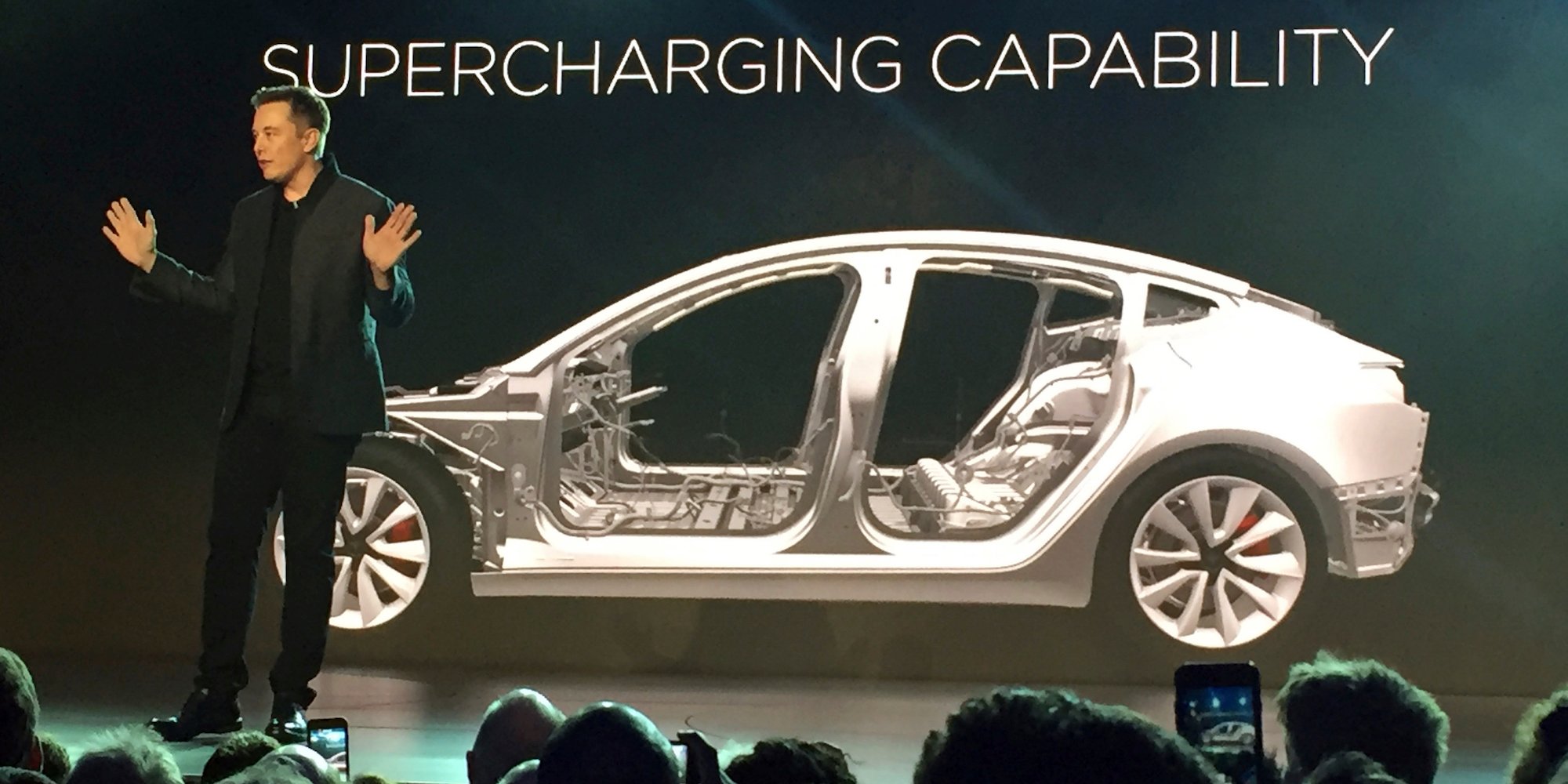
Wall Street analysts were blown away by the Tesla Model 3’s ‘next-gen, military-grade’ tech — and say that’s why the base model will never turn a profit (TSLA)

Justin Pritchard / Associated Press UBS analysts disassembled a Tesla Model 3 to compare it with other electric vehicles. “Tesla delivered the best powertrain at the lowest cost,” the investment bank told clients.  But the car’s “next-gen, military-grade” tech is the reason the base model will never turn a profit.  Tesla has struggled to ramp… Continue reading Wall Street analysts were blown away by the Tesla Model 3’s ‘next-gen, military-grade’ tech — and say that’s why the base model will never turn a profit (TSLA)

Study: States should require licensed drivers for robot cars

Study: States should require licensed drivers for robot carsWashington — A group that represents state highway safety offices is urging states like Michigan to consider requiring licenses for self-driving cars operators because they likely are decades away from being fully automated.
The Washington-based Governors Highway Safety Association says in a study released Wednesday that states should prepare themselves for establishing licensing requirements for self-driving cars because autonomous vehicles “for the foreseeable future will share driving responsibility with humans, and are likely do so for many decades.”
The findings represent an injection of regulatory reality into the race for autonomous leadership. The battle for next-generation leadership is pitting Detroit’s automakers and their global rivals against a deep-pocketed tech industry based in China and, especially, Silicon Valley.
The study recommends that states “consider laws requiring or assuming that a licensed driver is present in each vehicle, especially for AVs (autonomous vehicles) in which a licensed driver may be called upon to take control.” It also suggests that states “update traffic laws to accommodate AVs and help to prepare state driver licensing agencies to identify and register AVs” and “establish law enforcement policies and procedures regarding AV operations and train all patrol officers in these policies and procedures.
Federal regulators have thus far shied away from the notion of craft rules for self-driving car operators, focusing instead on testing and regulation of the autonomous vehicles. They argue states are best equipped to continued setting rules for road as they do now.
“States need to consider a number of new issues related to the practical deployment of this technology,” Jim Hedlund, a former senior official with the National Highway Traffic Safety Administration who authored the study, said in a statement. “One of the most important goals should be to educate the public about the benefits and risks of this technology, how to use it safely, and drive near AVs in traffic.”
Congress is working to craft rules that would govern the testing and eventual sale for mass consumption of self-driving cars. The Senate is debating a new law that would allow each automaker to sell more than 80,000 self-driving cars per year, but the measure has been held up for nearly a year amid concerns about the liability rules that would govern crashes involving self-driving cars and the vulnerability of driverless systems to potential hackers.
A similar self-driving measure sailed through the House of Representatives with relatively ease last year.
The U.S. Department of Transportation also has proposed self-driving rules that focus on a set of 15 guidelines calling for automakers and technology companies to voluntarily report on their testing and safety of autonomous cars to the National Highway Traffic Safety Administration before the cars are used by the public.
Under the DOT proposal, before self-driving cars are allowed to roll on U.S. roads, automakers would be required to report how they were tested, how the systems work and what happens if those systems fail.
The Trump administration has said it is working on what would be a third set of voluntary guidelines for self-driving cars issued by the federal government since 2016.
Both sets of proposed rules call for states and other local jurisdictions to defer to the federal government on regulations related to self-driving cars’ design, construction, software or communication. Under both proposals, states still would be allowed to regulate registration, licensing, liability, education and training, insurance or traffic laws.
Jonathan Adkins, GHSA Executive Director, said states will likely have to continue to play a role in self-driving car regulation for long after the technology is initially rolled out.
“Imperfect human drivers aren’t disappearing anytime soon and even with self-driving technology, they will still be in a position to cause crashes, deaths, and injuries on our roads,” Adkins said. “As autonomous vehicle technology advances, states still must invest in programs to prioritize safe travel behavior.”
Ryan Gammelgard, counsel at State Farm, which funded the self-driving study, said in an interview with The Detroit News that the insurance industry agrees it is “very important to not lose sight of the role that humans are going to have in this.
“We worked really hard over the last year to make sure insurance is at the table as some of these issues are being discussed,” he said. “We can’t ignore reality that automakers and tech companies are spending $80 to $100 billion in order to implement this technology.”
klaing@detroitnews.com
(202) 662-8735
Twitter: @Keith_Laing
Read or Share this story: https://detne.ws/2vELQer

Ford’s Corktown campus cost: $740M

Ford’s Corktown campus cost: $740MFord's new beginning for the old train station FullscreenPosted!A link has been posted to your Facebook feed.
Buy PhotoFord Executive Chairman Bill Ford Jr. stands in the lobby of the former Michigan Central Depot train station in Detroit, June 14, 2018. Ford Motor Co.'s purchase of the building and several others in Corktown will allow the automaker to build a new mobility corridor along Michigan Avenue, from Corktown to its facilities in Dearborn, Willow Run and the University of Michigan campus.Buy PhotoFullscreenBuy Photo”It's not just a building,” Ford Executive Chairman Bill Ford Jr. told The Detroit News in an interview. “It's an amazing building, but it's about all the connections to Detroit, to the suburbs, and the vision around developing the next generation of transportation.”Buy PhotoFullscreenBuy PhotoMichigan Central Depot would attract new employees to develop the mobility, autonomy and electrification technologies billed as the biggest disruptors to the auto industry since Henry Ford began making Model T's for the masses. A view of the Detroit skyline from the top floor of the Michigan Central Depot train station.Buy PhotoFullscreenBuy PhotoThe Corktown outpost is meant to supplement Ford's work on its Dearborn campus, and it will use a portion of the undisclosed dollar amount Ford set aside in 2016 to accomplish that redesign. The lobby of the Michigan Central Depot train station.Buy PhotoFullscreenBuy Photo”It's not just a building,” said Ford Executive Chairman Bill Ford Jr., standing in the depot's atrium. “It's an amazing building, but it's about all the connections to Detroit, to the suburbs, and the vision around developing the next generation of transportation.”Buy PhotoFullscreenBuy PhotoA hallway leads to the lobby. Ford expects the building to attract new employees to develop the mobility, autonomy and electrification technologies important for its future.Buy PhotoFullscreenAn artist's rendering shows a market for fresh produce in the atrium space.FullscreenBuy PhotoThe ground floor lobby of the 18-story, 500,000-square-foot building would be open to the public. That space could house markets, coffee shops, restaurants, retail and gathering spaces. A hotel or residential component also is being considered.Buy PhotoFullscreenBuy PhotoFord's plan for the depot is currently an outline. Bill Ford Jr. envisions a bustling public space akin to San Francisco's Ferry Building Marketplace.Buy PhotoFullscreenIn addition to the train station, above, Ford has purchased these Corktown properties: The Factory, 1907 Michigan Ave.; the old book depository, 2231 Dalzelle St.; and vacant land adjacent to PAL complex.FullscreenA rendering imagines the ground floor of the old Michigan Central Depot as a public space with retail, restaurants and gathering spaces.FullscreenBuy Photo”One thing I don't want to do is take a beautiful building and put something that's garish on there,” Bill Ford Jr. said. ”
“We don't want to be isolated and we don't want to be seen as taking over the community by any means.”Buy PhotoFullscreenBuy PhotoA small fraction of the company's Dearborn workforce would move into the station, with all but Ford's electrification and autonomous driving teams remaining in Dearborn to occupy the sprawling, estimated $1 billion campus redesign there slated for completion in the mid-2020s.Buy PhotoFullscreenBuy PhotoRoughly a third of the renovation cost would be comped by tax breaks for the historic restoration of the depot. Ford, the city, and the former owners of the building have declined comment on the purchase price or how much Ford will spend on the renovation.Buy PhotoFullscreenBuy PhotoA small fraction of the company's Dearborn workforce would move into the station, with all but Ford's electrification and autonomous driving teams remaining in Dearborn to occupy the sprawling, estimated $1 billion campus redesign there slated for completion in the mid-2020s.Buy PhotoFullscreenBuy PhotoWhile the public space would occupy the 300,000 square feet on the ground floor of the station and other Corktown properties, 2,500 Ford employees and 2,500 partner employees would occupy the remaining 900,000 square feet come 2022. This is the top floor.Buy PhotoFullscreenBuy PhotoFord CEO Jim Hackett said the Corktown outpost will give Ford's teams access to a true urban landscape in which to test autonomous technology and how those vehicles will need to communicate with traffic systems, delivery destinations and other infrastructure.Buy PhotoFullscreenBuy PhotoHackett said the Corktown project won't cost Ford any more than the estimated $1 billion it budgeted for the Dearborn transformation plan. Money for the Corktown outpost came out of that original budget. Above, a stairwell on the top floor of the Michigan Central Depot.Buy PhotoFullscreenBuy PhotoThe ticket booths used to occupy this space in the Michigan Central Depot.Buy PhotoFullscreenBuy PhotoFord will announce officially on June 19 its plans for the building, followed by a party in Roosevelt Park in front of the long-vacant building.Buy PhotoFullscreenBuy PhotoWorkers prepare for Ford's press conference Tuesday, June 19, to talk about their purchase of the train station.Buy PhotoFullscreenBuy PhotoLighting crews work in the lobby to prepare for the Tuesday, June 19 press conference.Buy PhotoFullscreenBuy Photo”This is our home,” Bill Ford Jr. said during an interview in Ford World Headquarters in Dearborn. “We're not leaving by any means. By the end of this we'll have a large multiple of employees in Dearborn versus Detroit.” Bill Ford Jr., chairman of Ford Motor Company, speaks about the purchase of the Michigan Train from the Moroun family during an interview from Ford World Headquarters in Dearborn on Thursday, June 14, 2018.Buy PhotoFullscreenBuy PhotoReviving the depot and establishing Corktown on that mobility corridor will require tax incentives to renovate the building at its heart, according to Bill Ford Jr. A stairwell on the top floor.Buy PhotoFullscreenBuy PhotoBill Ford said the depot restoration price “dwarfs the purchase price.” Workers prepare for Ford's press conference to celebrate their purchase of the train station.Buy PhotoFullscreenBuy Photo”This is an exclamation point” for Detroit's resurgence,” Bill Ford Jr. said. “Ford and Detroit have seen good times, we've seen bad times, and this is a tough region. We've been through it together. This is an authentic move for the city and for us. Frankly, it's where it all began.”Buy PhotoFullscreenReplay1 of 262 of 263 of 264 of 265 of 266 of 267 of 268 of 269 of 2610 of 2611 of 2612 of 2613 of 2614 of 2615 of 2616 of 2617 of 2618 of 2619 of 2620 of 2621 of 2622 of 2623 of 2624 of 2625 of 2626 of 26AutoplayShow ThumbnailsShow CaptionsFord Motor Co. plans to spend as much as $740 million on its planned 1.2 million-square-foot Corktown campus, company officials announced Tuesday night.
The automaker said it expects to seek $250 million over 34 years through local, state, federal tax incentives to offset the cost, a representative said, as it launches its ambitious plan to revitalize the area, including the derelict Michigan Central Depot.
“We are excited by the opportunities that Ford’s investment in the train station and other key Corktown sites will bring, not only for the larger resurgence of the neighborhood but all of Southeast Michigan, including economic growth, attracting world-class talent and leading the development for the next generation of the automotive industry,” Ford Land said in a statement.
“Given Ford’s investment in the Corktown projects, we are actively working with federal, state and local officials for tax and other incentives to support the development.”
The investment involves five Corktown neighborhood sites, including the building and land purchase as well as expected building exterior and infrastructure rehabilitation costs over the next four years, Ford Land said Tuesday.
The cost estimate was unveiled during a neighborhood advisory council meeting at the International Brotherhood of Electrical Workers No. 58 in Detroit on Tuesday. The panel is slated to work with Ford to create a community benefits agreement.
The city recently released the complete list of area residents appointed to serve on the nine-member neighborhood advisory council. The advisory council members are:
— David Esparza, Nicole Rittenouer, Mike Ransom and Ken Jameson appointed by Planning and Development Department Director Maurice Cox.
— Robin Ussery appointed by Detroit City Council member Raquel Castañeda-López. Previously, City Council President Brenda Jones selected Hubbard-Richard resident Aliyah Sabree, a judge in the 36th District Court.
— Councilwoman Janee Ayers chose Sheila Cockrel, a Corktown resident and former member of the city council.
–The community voted for Jerry Paffendorf, co-owner of Loveland Technologies, and Heather McKeon, an interior designer with Patrick Thompson Design.
Upcoming advisory council meetings are scheduled for Aug. 27, Sept. 10 and Sept. 17.
Ford has been working to collect comments on its plans restore the iconic Michigan Central Station building, which the company expects to occupy by 2022, as well as parts of the surrounding Corktown neighborhood.
Ford said the 500,000-square-foot, 18-story train station will anchor a campus for the company's self-driving, electric car and alternative transportation teams, as well as the automaker's partners.
The Dearborn automaker is bringing 2,500 people from its autonomous technology and electrification departments to Corktown; another 2,500 employees are arriving from startups and other partner companies.
The company expects to occupy the long-vacant depot by 2022.
During a community meeting l..

Elon Musk says he works 120 hours a week and isn’t searching for new execs, and it looks like he’s falling into a common management trap (TSLA)

Elon Musk’s bombshell interview with The New York Times revealed a number of worrying details about the famous businessman and his companies. One striking anecdote: Musk has been working up to 120 hours a week, spending nights and days in Tesla factories in an attempt to meet demanding production targets. “There were times when I… Continue reading Elon Musk says he works 120 hours a week and isn’t searching for new execs, and it looks like he’s falling into a common management trap (TSLA)

From a valuation of $1.8 to $30 billion in just eight years – Volvo Cars’ IPO plan looks like a spectacular success story …

The IPO plans for Volvo Cars are moving ahead as the valuation indicated by investors reaches Zhejiang Geely’s target level, according to the Financial Times. In July, Bloomberg reported that Geely was planning a stock-market listing of Volvo Cars as early as fall 2018, but initial feedback from institutional investors fell short of the Chinese… Continue reading From a valuation of $1.8 to $30 billion in just eight years – Volvo Cars’ IPO plan looks like a spectacular success story …

‘All night — no friends, nothing:’ Elon Musk describes the lonely 24 hours he spent working at Tesla on his 47th birthday

The growing production pressures and increased scrutiny on Tesla seem to be taking an emotional toll on the company’s CEO, Elon Musk. In an interview with the New York Times, Musk said he typically works as many as 120 hours a week, and that it’s been nearly 20 years since he took a week-long vacation.… Continue reading ‘All night — no friends, nothing:’ Elon Musk describes the lonely 24 hours he spent working at Tesla on his 47th birthday

Cox Automotive forms new business division after acquiring tech platform

By Eric Mandel  – Digital Producer , Atlanta Business Chronicle Aug 13, 2018, 11:11am EDT Cox Enterprises Inc. is speeding into another venture, with the formation of a new business division inside its automotive subsidiary. The Atlanta-based company said Monday that Cox Automotive is leveraging its recent acquisition of Clutch Technologies to create Mobility Solutions Group,… Continue reading Cox Automotive forms new business division after acquiring tech platform