Sales at the largest domestic carmaker, Geely Automobile Holdings, and China’s No. 1 electrified vehicle manufacturer, BYD Co., fell again in September, amid an ongoing decline in volume across the country’s auto industry. Geely Auto deliveries dropped 8.5 percent to 113,832 last month, the company said. Volume at the Geely mass-market brand and premium Lynk… Continue reading Geely, BYD post lower Sept. deliveries – Automotive News
Tag: Geely
Kandi Technologies Announces Change of Independent Accounting Firm to Marcum Bernstein & Pinchuk LLP
JINHUA, China, Oct. 11, 2019 (GLOBE NEWSWIRE) — Kandi Technologies Group, Inc. (the “Company,” “we” or “Kandi”) (NASDAQ GS: KNDI), announced today that in order to have an audit firm more accessible to PCAOB inspections, the Company has appointed Marcum Bernstein & Pinchuk LLP (“MBP”) as the Company’s new independent registered public accounting firm effective… Continue reading Kandi Technologies Announces Change of Independent Accounting Firm to Marcum Bernstein & Pinchuk LLP
Press Releases – Fuel cell vehicles: EU must act to build up much-needed hydrogen infrastructure
Brussels, 10 October 2019 – The European Automobile Manufacturers’ Association (ACEA), Hydrogen Europe and the International Road Transport Union (IRU) are jointly calling on European policy makers to ramp up investments in EU-wide hydrogen refuelling infrastructure for fuel cell electric vehicles. Fuel cell vehicles can contribute positively to the overall decarbonisation agenda of the EU.… Continue reading Press Releases – Fuel cell vehicles: EU must act to build up much-needed hydrogen infrastructure
VW signals with light, Lexus teases EV, Volvo delegates engine development: Today’s Car News
Volvo is done developing internal-combustion engines. Well, almost; it’s delegating them to a new joint venture with parent Geely. Electrify Canada is pushing out some very high-power fast-charging hardware. Lexus will show the new iteration of an electric city car that’s likely production-bound. And VW is using light to send messages. This and more today at Green Car Reports.
Volkswagen is introducing a new light-based communication feature in its ID 3 electric car—and potentially all ID models—that helps the driver understand alerts and status updates without chimes and warnings.
Electrify Canada is pushing ahead with plans to install 32 high-power DC fast-charging stations by the end of 2020. On Thursday it mapped out more than 20 of those—all 350-kw-enabled—to be installed at Canadian Tire locations starting this year.
Lexus has teased the design of its production-bound all-electric city car, potentially to be shown in concept or prototype form at this month’s upcoming Tokyo Motor Show.
By 2025, half of all Volvos by sales volume are to be battery-electric. But for the other half, which will be hybrids in some form, Volvo still needs internal combustion engines—and this week it merged engine-development operations with its parent Geely.
And car-to-infrastructure technology, or C2X, is being tested in Germany as a way of directing road-maintenance crews to respond quicker to road conditions like ice and snow on roadways—one of many potential important steps toward autonomous-vehicle tech becoming viable.
_______________________________________
Follow Green Car Reports on Facebook and Twitter
Volvo and Geely merging development for engines, still needed in hybrids
Volvo will offload its development of internal combustion engines to a new joint project with parent company Geely, the two companies announced Monday, allowing Volvo's in-house propulsion engineers to concentrate exclusively on electric powertrains.
While Volvo says it believes ICEs are here to stay for the foreseeable future, it is in the early stages of phasing out cars powered exclusively by fossil fuels. Hybrids will remain a part of Volvo's lineup, which means ICE development is still critical to the company's product plans, but that work doesn't necessarily need to be done by Volvo's engineers.
By the middle of the next decade, Volvo expects half its global sales to be EVs and the other half hybrids, the announcement said, and those hybrid engines will be supplied by the new joint operation. Both companies have already begun to spin off their ICE programs from their core operations in preparation for the merger, the announcement said.
This new business will bring roughly 3,000 employees from the Volvo side and 6,000 from Geely, the two automakers anticipate. Neither company plans to cut overall employment figures at all.
“Hybrid cars need the best internal combustion engines. This new unit will have the resources, scale and expertise to develop these powertrains cost efficiently,” said Volvo CEO Håkan Samuelsson, in the announcement.
Volvo's electrification push is well underway. The company already offers several plug-in hybrid models (though not all are sold in the United States just yet) and its first dedicated EV model, based on the new XC40 crossover, will make its formal debut later this month.
Geely is also pursuing electric cars; the company announced its first BEV for global distribution, the GE11 fastback, earlier in 2019.
Geely Automobile Holdings Sales Volume For September 2019 Was 113,832 Units

10 October 2019, Hong Kong. Geely Automobile Holding Limited (Group) announced that the total sales volume of the Group (including the sales volume of LYNK & CO-branded vehicles sold by the Group’s 50%-owned joint venture) for the month of September 2019 was 113,832 units, a decrease of approximately 9% from the same period last year,… Continue reading Geely Automobile Holdings Sales Volume For September 2019 Was 113,832 Units
Geely and Volvo Cars to merge engine operations
Combined they have 8,000 people working on combustion engine operations including research and development, procurement, manufacturing, IT and finance functions.Geely and Volvo already have some joint ventures, including the Lynk & Co brand and a technology company, both of which were established in the second half of 2017.Polestar, an electrified performance vehicle brand jointly owned by Volvo and Geely, has also started production of its models in China.
Pricing and more details for Polestar 2, Performance Pack version
Volvo's high-performance subsidiary confirmed more about pricing for the Polestar 2 this week, setting the stage for a showdown with the Tesla Model 3.
The all-electric Polestar 2 has its sights set on the Long Range variants of the smaller Tesla sedan, and thanks to this week's announcement, we now know they'll be very similarly priced in Europe, where the Polestar 2 is now available for order.
The biggest divide in EU pricing is in Germany, where the Polestar 2 will start at 58,800 euros (vs. 54,800 euros for the Model 3 Long Range AWD); the gap in The Netherlands and Belgium is a bit smaller (around 1,000 euros). In the UK, Polestar's 49,900-British-pound price tag is 2,000 pounds dearer than the Tesla's.
Those prices equate to $64,600 in Germany and $61,000 in the UK. That's not far from what Polestar has said about U.S. pricing—that it will cost $63,000 for the first year’s Launch Edition of the model, which will be eligible for the full $7,500 federal plug-in tax credit.
Some time after that, a base version is expected to join the lineup at $43k to $45k, or about $45,400 (39,900 euros) in Europe—or be available by subscription—but both of those things are more than a year out.
Polestar 2
The Polestar 2 will boast more than 400 horsepower and do 0-60 mph in less than five seconds. Those specs fall short compared to the Tesla Model 3 Long Range AWD Performance, which offers more than 450 hp and accelerates to 60 mph in just 3.3 seconds.
While potential buyers may be disappointed by these shortcomings, it's important to note that the Polestar 2 is pretty much a by-the-numbers match for the Long-Range AWD variant of Tesla's small sedan, which offers a little over 400 horsepower and does 0-60 in 4.4 seconds. Both Tesla variants pack a 75-kwh battery pack, which yields a sliver of capacity to the Polestar 2's 78 kwh.
Polestar bundles three years of service and maintenance as part of its out-the-door pricing, which should provide peace of mind for early adopters. The launch markets for Polestar 2 will be Norway, Sweden, Germany, The Netherlands, Belgium and the UK. We won't see any versions of the Polestar 2 in the United States until late in 2020.
Polestar also outlined the new sedan's available Performance Pack, which includes 4-piston Brembo brakes, an adjustable suspension and 20-inch forged alloy wheels. The result, its engineers say, is “a car that wants to be driven.”
“We spent a lot of time obsessing over the finest details of the Performance Pack chassis set-up to find the car’s sweet spot; we call it the 'Golden Ride,'” said Chassis engineer Joakim Rydholm.
Polestar 2 pricing, Tata EV for India, commute times: Today’s Car News
India has a new domestic-brand electric vehicle on the way. The Polestar 2 electric car is priced for Europe, and we have a few more details about its Performance Pack. Commute times surge. And Spain claims what might be the speediest fast charger for cars—if only there were a car that could use it at its potential. This and more, today at Green Car Reports.
American commute times reached another record high in 2018. Although our cars might have become cleaner and more efficient, it’s a dark cloud that hangs over those gains.
Polestar, the electric-car brand that taps into resources from Volvo and Geely, has announced European pricing for its upcoming Polestar 2, which is shaping up to be the closest potential rival to the Tesla Model 3 yet. It’s also revealed pricing and more details regarding the Polestar 2 Performance Pack version.
India will soon have a home-grown affordable electric car: the Tata Nexon EV. With the same parent company as Jaguar and, likely, some technology-sharing between the companies, it could mean serious competition for other brands setting India as the next big market for electric vehicles.
Spain has hardly been a hub for DC fast charging and electric vehicles, however a charging network there is claiming the highest-power DC charging station—intended for cars and passenger vehicles—anywhere in Europe.
And Waymo is laying out the foundation for sending its self-driving cars out to the busy streets of Los Angeles—by having human drivers map out the streets of some portions of the city.
_______________________________________
Follow Green Car Reports on Facebook and Twitter
Polestar 2 Adds Performance Pack For A Slight Price Premium
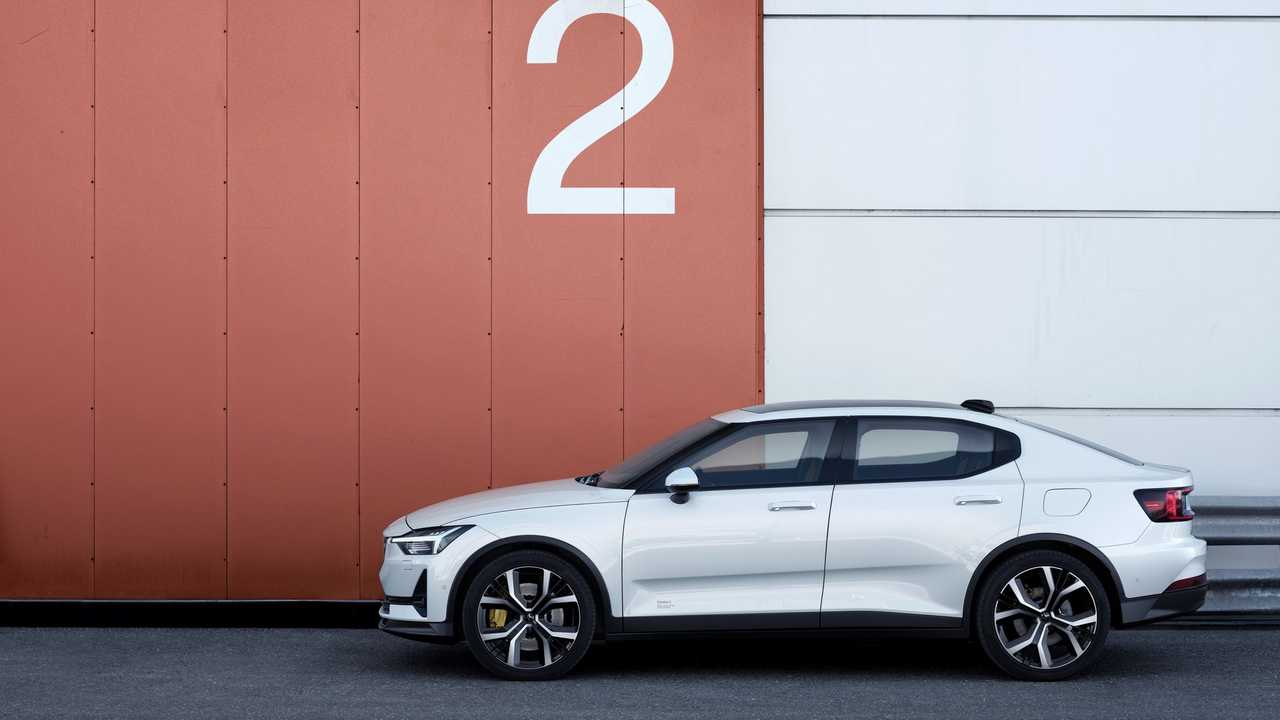
The brand returns to the hot car arena with the electric Polestar 2 with a performance pack. Once upon a time, long before it was a producer of electric luxury cars, Polestar was the performance and racing division of Swedish carmarker Volvo. Now in a move reminiscent of its old days Polestar has announced the… Continue reading Polestar 2 Adds Performance Pack For A Slight Price Premium