James DysonLarry Busacca | WireImage | Getty ImagesDyson, a British manufacturer best known for vacuums, fans, air purifiers and hand dryers, could add electric vehicles to its product portfolio, the company confirmed this week, releasing images of new patents it has received.
“We've been researching motors, batteries, aerodynamics, vision systems and robotics for 22 years. Now the time is right to bring all our knowledge and experience together into one big project – an electric car,” founder and CEO Sir James Dyson said in a statement on the company's website.
The UK firm has been dropping hints of its interest in electric vehicles since mid-decade, last November revealing plans to set up an assembly line in Singapore, with Dyson indicating the project will cost around $2.7 billion to bring to market.
The patent images, among other things, show what looks like a three-row crossover-utility vehicle that follows the latest industry approach to electric vehicle design, with its battery pack and motors mounted below the floorboards. But while the patents “provide a glimpse” of what the company is working on, the Dyson founder wrote that they “don't reveal what our vehicle will really look like or give any specifics around what it will do.”
Launched in 1991, Dyson Ltd. today offers a broad array of products, mostly consumer household goods like the vacuums and fans that are widely advertised. But Dyson has done little to hide his interest in getting into the auto industry.
In 2015, he underscored his commitment with the purchase of Michigan-based Sakti3, a start-up that was developing a new type of battery known as solid state. Proponents contend the technology could offer significant advantages over the more familiar lithium-ion technology in widespread use today by boosting range and reducing charge times, particular pluses for electric vehicles, but also useful for the cordless appliances Dyson has been shifting towards.
Questions about the vehicle program cropped up last year when Dyson wrote off £46 million, or about $60 million, of its £58 million investment in the University of Michigan spin-off due to problems with the technology. But it subsequently announced new details that made it clear the automotive venture was moving forward. That included word that it would build an assembly plant in Singapore, which the company now says will be complete next year.
“Singapore has a comparatively high cost base, but also great technology expertise and focus,” CEO Jim Rowan told employees in a letter last November. “It is therefore the right place to make high quality technology loaded machines, and the right place to make our electric vehicle.”
The founder's latest e-mail revealed that the project is centered at the old RAF base at Hullavington Airport, 2.5 hours west of London and employees about 500 workers, though with testing set to accelerate next month, that job count is expected to grow.
“Our bespoke automotive development site at Hullavington, UK is a £200m investment in the Dyson electric car. It's 517 acres house restored hangars, with some of the most advanced Research, Design and Development (RDD) labs in the world,” the company says on its website.
Dyson said the patent filings reveal an “androgynous vehicle,” rather than a specific product under development. But he did offer a few hints at what is coming.
“Significantly, many of our competitors base their electric vehicles on existing formats and adapt them for electric propulsion systems,” Dyson wrote in an email to employees. “Such an approach is cost effective, however, it tends to miss opportunities for mass-reduction and aerodynamic improvements which would improve the energy efficiency of the vehicle. Another approach has been to focus on smaller vehicles, as this generally keeps the mass of the vehicle low which can extend driving range. However, the size and ride comfort of such vehicles tends to limit their attractiveness and utility.”
Referencing the patent renderings, Dyson did note that the basic shape, a bit lower than today's typical SUV and CUV, would reduce aerodynamic drag while “the long wheel base could be employed, increasing the driving range and enabling a larger cabin capacity.”
Based on comments James Dyson has made over the last year and reports in various news outlets, the expectation is that three vehicles are in various stages of development, company officials indicating production should launch by 2021. They have offered no details on pricing nor where they plan to launch the product line, though Dyson is expected to set up its own dealer network.
The outspoken company founder has, meanwhile, taken a publicly proactive position in support of a proposal now being studied by Britain's government that would eliminate the sale of all new gas and diesel vehicles. The original concept set a target date of 2040 but British regulators have begun considering the option of pushing that up to 2035. Dyson, for his part, would like the ban to go into effect in 2030.
Similar measures are under study in a number of countries, including China, India, Germany and France. In Norway, where electric vehicles currently account for more than half of the new car market, a ban has already been approved.
Such a move would improve the odds that start-ups like Dyson could carve out a market niche, though traditional automakers like Daimler AG, General Motors and Volkswagen, are intent on reclaiming market dominance. That said, the arrival of upstart Tesla has shown the potential for new entrants, of which plenty more are looking to launch, such as Rivian and Faraday Future. There is also Apple, the technology giant working on its own vehicle program, though it has sent a number of conflicting signals about what it is developing in recent years.
Category: News Site
Analysis: What Maruti Suzuki’s departure from diesel means for the carmaker
Analysis: What Maruti Suzuki's departure from diesel means for the carmaker
The Hyundai Ioniq Electric Offers Serene Simplicity

There’s an elegance in simplicity and luxury in refined minimalism. The Hyundai Ioniq Electric Limited may at first seem like an exercise in Marie Kondo–style automaking, but after spending several days with Hyundai’s compact EV, I found joy in a well-executed electric runabout. The Ioniq looks and functions very much like a normal and only… Continue reading The Hyundai Ioniq Electric Offers Serene Simplicity
Biodegradable Seat Covers: Lenzing on the Latest in Circular Auto Parts – Sustainable Brands
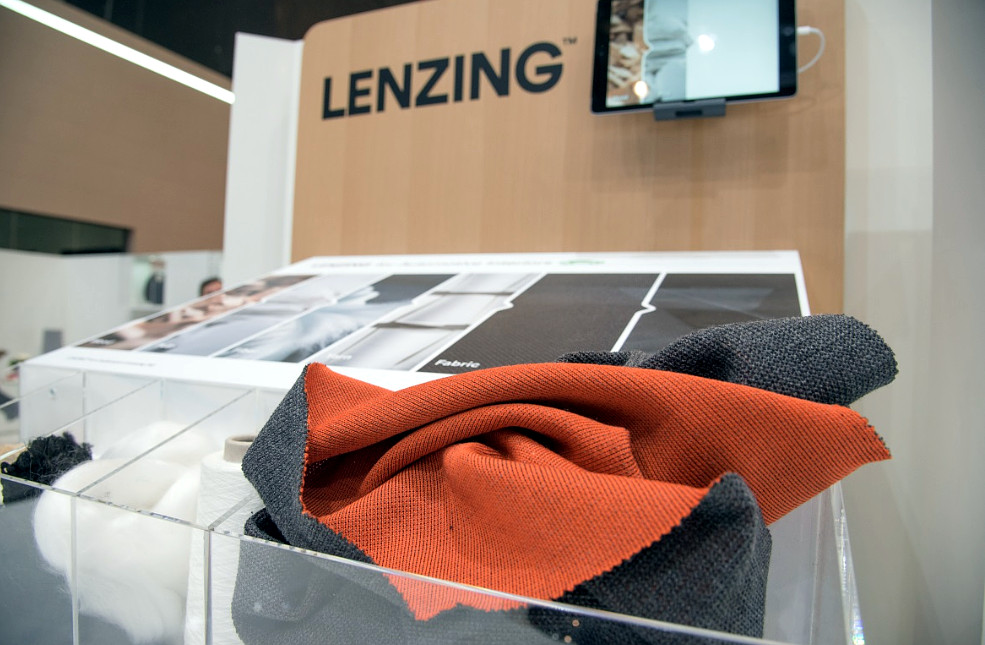
Through a partnership with Swiss automaker Rinspeed, textile giant Lenzing is expanding into auto upholstery — and changing what it feels like to sit on wood. Wood is one of our most versatile natural materials. We use it for everything from paper, packaging and furniture to houses — and wood-based textiles such as lyocell and… Continue reading Biodegradable Seat Covers: Lenzing on the Latest in Circular Auto Parts – Sustainable Brands
Dyson patents show possible Tesla Model X competitor
Patent drawing for Dyson electric car due in 2021
Dyson, the maker of snazzy, high-tech vacuum cleaners, has said for two years that it will build electric cars starting in 2020.
Now the company has released patent drawings that give a hint of what at least the first one may look like.
READ THIS: Dyson plans to build its electric car in Singapore
The drawings show a long, low crossover SUV—call it a wagon if you must—reminiscent of the former Mercedes-Benz R-Class or the original version of the Chrysler Pacifica.
It shows three rows of forward facing seats in a relatively low-slung body that should allow it to move plenty of passengers relatively efficiently, within its sleek shape.
CHECK OUT: Dyson plans to build electric-car test track in Britain
That sounds a lot like the mission of the Tesla Model X.
Patent drawing for Dyson electric car due in 2021
James Dyson, the company's namesake founder, sent a memo to staff, obtained by Bloomberg, saying that the patents, “don't reveal what our vehicle will really look like or give any specifics around what it will do.” It went on to say, they do “provide a glimpse of some of the inventive steps,” the company is considering.
The patent shows a battery under the floor and large, relatively narrow tires that could be used to reduce rolling resistance.
READ MORE: Battery tech may be getting a big solid-state boost soon
Dyson, known as a somewhat eccentric inventor, has also said that the company will build a range of new models in the coming years.
Last year, Dyson acquired land in Britain to set up a test track at a former British air force base and announced it would build its new electric cars in Singapore at a new factory to be constructed by 2020, and start production in 2021. The company has committed to spending $2.6 billion to launch its automotive business and plans to hire 500 staff members.
In January, it hired former Infiniti executive Roland Krueger to head up its automotive operations and moved its automotive headquarters to Singapore.
Maserati joins ranks of EV holdouts among exotic automakers
Teaser for Maserati Alfieri sports car
Although it announced the end of using Ferrari engines in its cars last week, Italian luxury-carmaker Maserati won't be going all-electric any time soon.
“This is a brand that needs combustion engines,” Maserati's North American chief, Al Gardner, told Motor Trend in an interview earlier this month. “It needs that raw emotion,” he said.
As if electric cars can't deliver raw emotion. Just ask any Tesla Model S P100D or original Roadster owner.
And Tesla's electric cars have been running over the rest of the luxury passenger-car sector in sales, to become the top selling car in both the luxury sedan and premium sedan markets.
READ THIS: Jeep Grand Commander EV leads FCA electrification push
Gardner is adding Maserati's voice to a chorus of classic sports-car makers saying electric is not for them. Although Porsche's parent, the VW Group is going all-in on electric cars and has said that it will transition to an all-electric automaker and is currently developing its last combustion engine, Porsche CEO Oliver Blume said last November that the 911 would never become an EV. (Although two hybrid variants of the 911 are reportedly under development.)
And Gardner made his statement in the face of Fiat Chrysler's business plan announced last June, showing that Maserati planned to launch eight new plug-in hybrids and four new battery electric vehicles by 2022, and that those vehicles would cover 68 percent of the company's lineup.
Maserati 2022 roadmap
At least some of the electric models would use 800-volt battery architecture for the fastest possible charging—up to 350 kilowatts, or an 80 percent, or bulk, charge in less than 10 minutes.
The company at the time said that the electric models would use three motors to provide torque-vectoring control, and have 50 percent more power than today's models.
Those plans aren't necessarily off the table, but according to Gardner, it won't be enough for the brand.
Just as Tesla wanted to stand out from the mass of internal-combustion cars when the company launched the Model S, Maserati and others are counting on the individualized character of internal combustion engines to stand out from the nearly silent crowd in the mainly-electric future.
EVgo fast-charge network commits to 100 percent renewable power
2019 Jaguar I-Pace at EVgo charger
If electric cars are supposed to clean up the environment and reduce global warming—and they are—EV drivers would like to rely on 100 percent renewable energy to do charge. And charging networks are striving to provide it.
Many, including Tesla with its Supercharger stations, are building new charging stations with solar canopies or stations with battery storage, or both.
READ MORE: Charging network EVgo goes tagless, tests battery buffers at stations
But there's more than one way to deliver clean power. Charging network EVgo announced last week that it signed contracts with all its power providers to deliver clean energy to all its chargers.
The company claims it will be the first charging network in the U.S. to provide 100 percent renewable electricity, and that it already receives all its electricity in California from wind and solar power. It did not specify whether all the new renewable power it will buy elsewhere will come only from wind and solar or whether it could include energy from other renewable sources such as hydro power or biomass.
CHECK OUT: EVgo launches first curbside fast chargers
Of course, that doesn't mean that every electron that flows into the battery came only from a windmill or solar panel. It only means that the money drivers pay to charge flows back to support such endeavors. As such systems expand, though, it pumps larger buckets of funding to building new renewable energy sources.
EVgo has also installed a variety of types of battery backups at several of its California stations to test what types of systems remain the most cost effective over the long run. It installed its first fast-charging solar-array canopy at a fast-charge station in Baker, California, in the desert between Los Angeles and Las Vegas last year.
Dyson EV takes form, Maserati keeps engines, EVgo going all-renewable: Today’s Car News
2020 Opel Grandland X Hybrid4
British vacuum-cleaner maker Dyson patents some designs for a future electric car. Maserati boss says not all carmakers will go all-electric. EVgo commits to all-renewable energy sources. And an annual AAA survey on electric cars shows that more Americans think cars will drive themselves in 2030 than will be all-electric. All this and more on Green Car Reports.
New patent filings from electric-car hopeful and famous British vacuum maker Dyson show its first electric car could be an efficient crossover people-mover to compete with the Tesla Model X.
Maserati's North American boss says the brand won't go all electric, but will retain some gas engines to give its cars “character.”
EVgo, the largest network of fast-charge stations for electric cars, will commit to buying all renewable power for its chargers, going forward.
A new AAA survey shows that 40 percent of Americans think all cars will be electric by 2030—and 50 percent think they will be self-driving by then.
Rich Benoit, who became famous on YouTube for rebuilding a flooded, salvage Tesla and helping others with their Tesla problems, plans to expand his service by building his own shop.
Opel introduces its first extended-range electric vehicle in Europe, the Granland X Hybrid4 SUV.
Finally, BMW is teaming up with Microsoft to develop the next-generation voice assistant for cars. The two plan to develop an open-source voice recognition system that others could build on.
_______________________________________
Follow Green Car Reports on Facebook and Twitter
Fiat Chrysler completes $6.5B sale of Magneti Marelli, which has Michigan operations
Original Article
GM CEO Barra Confirms Electric Pickups Are Coming

General Motors will have a complete line of electric vehicles and that includes pickup trucks, CEO Mary Barra confirmed today. GM will not cede leadership in trucks or electric vehicles, Barra told investors on a call to discuss first-quarter earnings. Barra said further details on the development of its electric trucks will come later, but… Continue reading GM CEO Barra Confirms Electric Pickups Are Coming