
By: Raj Kapoor, Chief Strategy Officer; and Luc Vincent, EVP Autonomous Driving In conversations about self-driving cars, people often talk about the rush to full autonomy like they’re commentators on a race — tracking new developments in technology, analyzing the strategic moves of the companies hurrying to be first. It’s easy to get caught up… Continue reading Self-Driving Requires Unprecedented Collaboration
Tag: Daimler
Benz joins mobility trend with new Mercedes-Benz Mobility Korea
Daimler Mobility AG — a subsidiary of Daimler AG, which owns Mercedes-Benz — has established Mercedes-Benz Mobility Korea to offer mobility solutions in Korea, the firm said Tuesday.One can get a quotation for the rental service at MBMK’s website www.mercedes-benz.co.kr/mobility.
Car2Go leaving Portland, Denver, other US cities due to “highly volatile” market
Portland, Oregon is one of many larger cities in the U.S. currently undergoing a transportation shakeup that’s still confusing even to some transportation groups and policy wonks.
It certainly seems puzzling as well to Share Now—that’s the combined company formed by BMW and Daimler, from their car-sharing operations that has been called ReachNow and Car2Go, respectively.
“Since launching in North America in 2009, transportation has changed drastically and mostly for the better,” Share Now said, pointing to all the transportation alternatives that didn’t exist before.
Car2Go Mercedes-Benz GLA250
That said, the company will be exiting Portland, as well as Austin, Calgary, and Denver by October 31 and Chicago by December 31.
“This decision was not made lightly,” the company said in a prepared statement provided to Green Car Reports. “We have had to face the hard reality that despite our efforts, we underestimated the investment and resources that are truly necessary to make our service successful in these complex transportation markets amid a quickly-changing mobility landscape.”
In 2012, when Car2Go was expanding rapidly, it called Portland one of its strongest markets.
If Portland is any such example, it’s gone through a confusing mobility landscape, indeed. In the past 10 years, public-transit ridership is down about five percent, despite a rising population. And yet over this time per capita car ownership has dropped by at least five percent. The percentage of bike commuters looks nearly level and has started to trend downward in the past couple of years. However by some measures Portland road congestion has decreased recently.
In the midst of many of these trends, the city has seen a flood of electric scooter-sharing (hauled off in diesel trucks to be charged each night, in at least one much-maligned case), several bike-sharing schemes, and like every other urban landscape in the U.S., an invasion of cars with Uber and Lyft placards shortcutting down quiet side streets never before used by cabs.
Car2Go Smart Fortwo, in Portland
Seven years ago in Portland, austerity-special Smart Fortwo hatchbacks with steel wheels and stipped-down fleet interiors were suddenly seemingly everywhere around town. It was also a darling with the city, in a place where Smart’s parent company Daimler has its North American headquarters for its commercial-truck arm.
Their reign wasn’t all that long-lived, it seemed, as after making much ado about “emissions-free carsharing” the company stalled on plans to put more Smart Electric Drive versions in the fleet. Another noteworthy point when the relationship started to sour was when Car2Go greatly cut its coverage area in the city—essentially cutting out more racially diverse areas underserved by public transportation.
BMW’s ReachNow was even shorter-lived. It had a more glamorous existence, wooing 20- and 30-something professionals from the start with Mini and BMW models—including some i3 electric cars—and launching with promotions that clearly targeted those with a lot of disposable income. Despite earlier declarations that it was profitable, and plenty of signs of marketing savvy Car2Go hadn't always exhibited, it pulled its operations in Portland and Seattle in July.
The irony is that Car2Go displaced the car-sharing operation Zipcar, which has a strong base in the city but simply cost more (it’s now owned by Hertz and has a very different model than it used to).
Car2Go offering bike racks in Portland
Ride Now isn’t going away. It says that it’s “refocusing its efforts and resources on the cities that present the clearest path to free-floating carshare success.” Those cities are New York City, Washington D.C., Montreal, Vancouver, and Seattle.
The new company called the whole transportation market “highly volatile,” but wasn’t ready to talk details about how exactly that penciled out or what it means for car-sharing looking forward.
“Ultimately, we know that in order to ensure the future of our business in North America, we have to think differently about where and how we operate,” said Share Now.
In the interest of survival, this time around car-sharing needs to be less about skipping car ownership and more about giving users something they won’t find with Lyft and Uber.
New Aston Martin Vantage Roadster set for 2020 arrival
Aston Martin has revealed the first official images of the new Vantage Roadster. The latest open-top Aston will go toe-to-toe with the Porsche 911 Cabriolet and the Audi R8 Spyder when it’s released in spring 2020. Ditching the coupe’s metal roof has altered the Vantage’s shape quite dramatically. Gone is the long, gentle slope of… Continue reading New Aston Martin Vantage Roadster set for 2020 arrival
Iberdrola and Mercedes-Benz reach an agreement to promote sustainable mobility
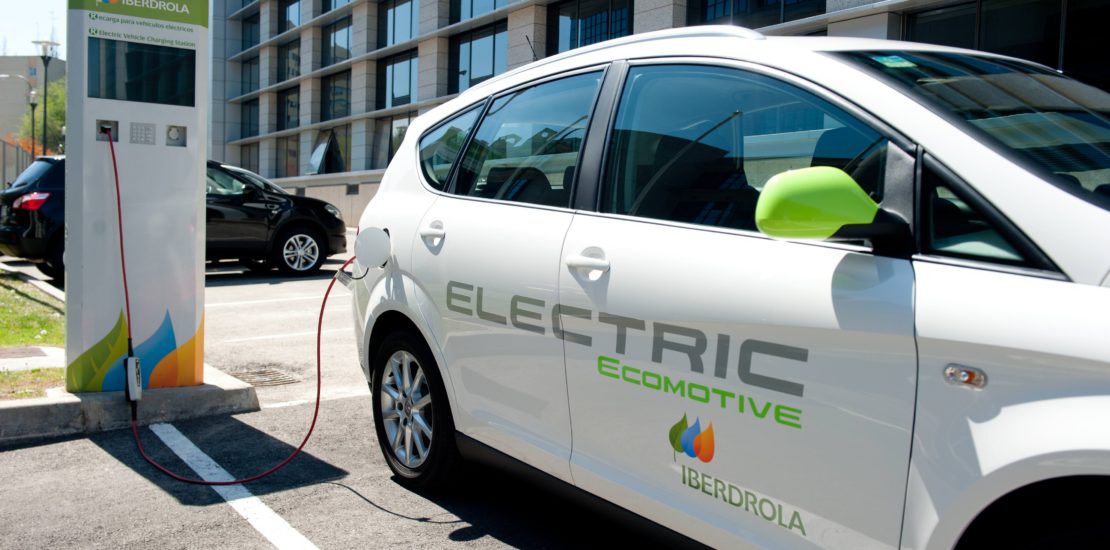
October 14, 2019 Category: Faconauto News, partners With the signing of this alliance, the vehicle manufacturer will have Iberdrola electric mobility solutions. Electric mobility is increasingly present in the Spanish and European automobile landscape. Despite having been positioned as one of the main ways to accelerate the ecological transition, it still has different obstacles for… Continue reading Iberdrola and Mercedes-Benz reach an agreement to promote sustainable mobility
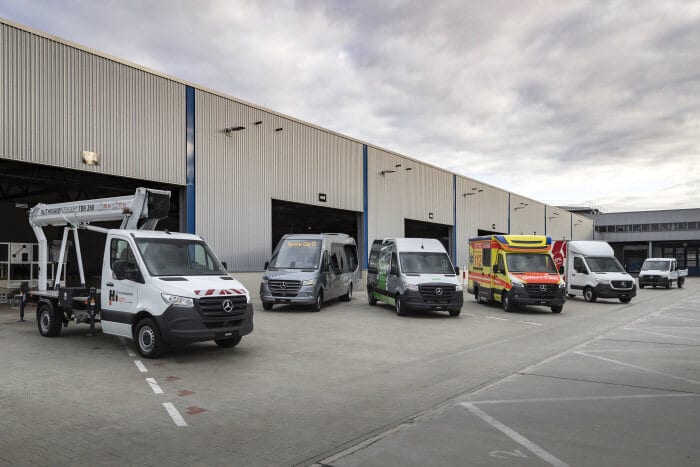
Mercedes-Benz Vans: Clever Bodybuilder Solutions 2019: digital, electric, sustainable
10.
October 2019
Stuttgart
Press Contact (2)
Albrecht Eckl
Spokesperson Product Communications Sprinter
albrecht.eckl@daimler.com
Tel: +49 (0)711 17-52131
Fax: +49 (0)711 17-52030
Andrea Eberhardt
Head Product and Corporate Communications Vans
andrea.eberhardt@daimler.com
Tel: +49 (0)711 17-84020
Fax: +49 (0)711 17-52030
Download
Filter
Settings
Do you really want to delete the data record?
Please wait a moment …
Please wait a moment …
Please wait a moment …
Please wait a moment …
Clever Bodybuilder Solutions 2019: digital, electric, sustainable
Stuttgart, Oct 10, 2019
Trade and eGrocery: Fresh, healthy – and delivered with a low carbon footprint
Stuttgart, Oct 10, 2019
Service and Crafts: New options beyond the classic usage models
Stuttgart, Oct 10, 2019
People Mover: Comfortable for passengers, cost-effective for operators
Stuttgart, Oct 10, 2019
Restricted Mobility: Independence and self-reliance through mobility
Stuttgart, Oct 10, 2019
Camper Van: Sprinter – the perfect base for motorhomes
Stuttgart, Oct 10, 2019
CEP and Logistics: Participation in a booming market
Stuttgart, Oct 10, 2019
Construction: Getting the job done under the toughest conditions
Stuttgart, Oct 10, 2019
Emergency, Rescue and Municipal: From rescue services to police vehicles
Stuttgart, Oct 10, 2019
Further Industries
Stuttgart, Oct 10, 2019
Loading
Cheap taxi: Railway subsidiary Clever Shuttle capitulated before authorities and VW
Clever shuttle vehicles The shared taxi no longer runs through Hamburg, Frankfurt and Stuttgart. (Photo: imago / Action Pictures) Hamburg The railway subsidiary Clever Shuttle withdraws from three German cities: The shared taxi no longer runs through Hamburg, Frankfurt and Stuttgart. 330 drivers lose their jobs, but should be offered a retraining to work at… Continue reading Cheap taxi: Railway subsidiary Clever Shuttle capitulated before authorities and VW
Mobility: Railway subsidiary CleverShuttle surrenders to authorities and VW
Clever shuttle vehicles The shared taxi no longer runs through Hamburg, Frankfurt and Stuttgart. (Photo: imago / Action Pictures) Hamburg The railway subsidiary CleverShuttle withdraws from three German cities: The shared taxi no longer runs through Hamburg, Frankfurt and Stuttgart. 330 drivers lose their jobs, but should be offered a retraining to work at the… Continue reading Mobility: Railway subsidiary CleverShuttle surrenders to authorities and VW
‘Link On Demand’ Popularity Surges as Colorado Commuters Turn to On-Demand Public Transit
Published September 17, 2019 5:03 pm, Via NYC
‘Link On Demand’ Popularity Surges as Colorado Commuters Turn to On-Demand Public Transit
The on-demand service draws hundreds of customers every week, letting riders leave their cars at home during daily commutes.
September 17, 2019 (LONE TREE, COLORADO) — Via, the world’s leading provider and developer of on-demand public mobility solutions, today released milestone metrics for the City of Lone Tree’s Link On Demand transportation system, which launched in partnership with Via in February 2019. In the last six months, residents and area commuters have taken tens of thousands of rides, with vehicle utilization well beyond projected goals.
“Expanded transportation options and congestion relief are top priorities for Lone Tree residents and businesses. Link On Demand allowed the City to optimize its transportation infrastructure investments and improve access and mobility throughout Lone Tree,” said Lone Tree Mayor Jackie Millet. “Demand for the service continues to grow and our partnership with Via has resulted in improved customer service, ridership and data collection.”
The City of Lone Tree originally piloted Link On Demand in 2018 and transitioned to its current partnership with Via earlier this year. The on-demand transportation system serves as a free shuttle anywhere within the city limits, providing riders with a convenient and comfortable way to access anything in Lone Tree while reducing traffic congestion and carbon emissions caused by single-occupancy vehicles.
Since partnering with Via, however, residents have proved their eagerness to leave their private vehicles at home and take public transportation. Riders took more than 28,000 trips on Link On Demand in less than six months, with ridership demand actually increasing after the Regional Transportation District’s (RTD) southeast rail extension in Lone Tree in May 2019. It now averages more than 1,000 rides per week in a city with fewer than 15,000 residents.
And while Link On Demand serves as a connection to anywhere within the city limits, the service is most popular with daily commuters getting to and from the office. In fact, the Charles Schwab and Kaiser Permanente’s corporate campuses account for 25 percent of all pick-ups since launching in February, and 24.8 percent of all drop-offs.
What’s more is that ridership to and from those corporate campuses actually increased in the 12 weeks after the RTD extended its E, F and R light-rail service into Lone Tree. The volume of pick-ups increased by 18.2% and drop-offs by 15.2%, with Link On Demand likely acting as a first- and last-mile connection for the increasing volume of commuters taking the train.
This all accounts for the on-demand network’s significant utilization rate, as the number of people requesting rides more than triples during the morning and evening commuting hours. Because of its high utilization rate, Link On Demand has now saved nearly 35,000 vehicle miles by sharing a ride compared to driving a private vehicle, equivalent to eliminating more than 11 tons of CO2 vehicle emissions.
“Via’s technology is redefining mobility across the globe, and we’re thrilled to see such a positive reaction from Lone Tree Link riders since launching the new on-demand service,” Daniel Ramot, co-founder and CEO of Via, said. “This project proves that the easier it is to take public transport, the more people will reliably choose it over their private vehicle.”
To date, the Link On Demand app has been downloaded more than 3,400 times. This equates to nearly a quarter of Lone Tree’s population having the app.
Commuters can use the service by downloading the Link On Demand smartphone app powered by Via, available on iOS and Android. Link On Demand operates Monday to Thursday from 7 a.m. until 7 p.m.; Friday from 7 a.m. – 10 p.m.; and Saturday from 10 a.m. – 10 p.m.
About Via
Via is re-engineering public transit, from a regulated system of rigid routes and schedules to a fully dynamic, on-demand network. Via’s mobile app connects multiple passengers who are headed the same way, allowing riders to seamlessly share a premium vehicle. First launched in New York City in September 2013, the Via platform operates in the United States and in Europe through its joint venture with Mercedes-Benz Vans, ViaVan. Via’s technology is also deployed worldwide through dozens of partner projects with public transportation agencies, private transit operators, taxi fleets, private companies, and universities, seamlessly integrating with public transit infrastructure to power cutting-edge on-demand mobility. For more information, visit www.platform.ridewithvia.com.
Read more
What BS-6 means for auto buyers – BusinessLine
The automotive industry, which has been reeling under the impact of a host of adverse factors and one of the worst slowdowns ever, is set to transition to BS-VI emission standards on April 1, 2020, a fact which was reiterated by the government two days ago. This transition has been the talk of motown ever… Continue reading What BS-6 means for auto buyers – BusinessLine