FILE PHOTO: Fiat Chrysler Automobiles (FCA) unveils the 2019 RAM Power Wagon pick up truck at the North American International Auto Show in Detroit, Michigan, U.S., January 14, 2019. REUTERS/Rebecca Cook/File Photo MILAN (Reuters) – Fiat Chrysler (FCHA.MI) (FCAU.N) stuck to its full-year profit guidance on Wednesday after operating profits topped expectations in the second… Continue reading UPDATE 1-Fiat Chrysler maintains guidance thanks to strong North America performance
Tag: Daimler
Via and HP Transportes Expand CityBus 2.0 to 13 New Neighborhoods of Goiânia, Brazil
Published July 11, 2019 7:20 pm, Via NYC
Via and HP Transportes Expand CityBus 2.0 to 13 New Neighborhoods of Goiânia, Brazil
In a response to growing demand, CityBus 2.0 will soon span more than 25 square miles and service approximately 340,000 residents.
July 11, 2019 (Goiânia, Brazil) — Via, the world’s leading developer of on-demand shared mobility solutions, today announced an expansion of its CityBus 2.0 on-demand transportation deployment in partnership with HP Transportes Coletivos to cover 13 new neighborhoods in Goiânia, Brazil. Starting July 20, the expanded service zone will encompass more than 25 square miles and approximately 340,000 residents.
The move comes after growing demand from residents to increase the service zone over the last five months. Via and HP Transportes partnered to launch CityBus 2.0 in February, first covering 11 key neighborhoods. Starting July 20, the on-demand network will extend to serve passengers in districts like Parque Amazônia, Pedro Ludovico and Jardim América.
“We are delighted by the success of CityBus 2.0 and are thrilled to see the service expand,” said Daniel Ramot, co-founder and CEO of Via. “In just a few short months, CityBus 2.0 has quickly become one of Via’s fastest growing on-demand transport deployments around the globe. As demand grows, we continue to learn more about riders and their needs. We look forward to bringing CityBus 2.0 to vast new areas of Goiânia that need on-demand public transport the most.”
In just five months, more than 38,000 users registered for accounts to ride CityBus 2.0, with research by HP Transportes revealing almost all of which migrated from using single-occupancy vehicles as their primary mode of transportation. In addition, more than 55 percent of the time, a CityBus 2.0 vehicle is transporting more than one passenger, helping to reduce traffic congestion and carbon emissions in Goiânia.
“In order to carry out the expansion, we implemented detailed studies and planning,” said Transport Director of HP Transportes, Hugo Santana. “The new areas have large population concentrations, with many buildings, condominiums and colleges. As the zone expands to service more universities, parks and malls, we believe the volume of aggregate travel will increase even more.”
CityBus 2.0 operates from Monday to Saturday, from 6 a.m. to 11 p.m., and now runs through more than 20 neighborhoods, including the Central, South, University, West Sectors, Airport sector, Marista, Bueno, Bela Vista, Serrinha, Pedro Ludovico , New Switzerland, Jardim Goiás, Alto da Glória, Vila Redenção, Jardim América, Parque Amazônia, Jardim Atlântico and Vila Rosa.
Users can download the CityBus 2.0 app for iOS and Android devices.
Via now has more than 80 launched and pending deployments nearly 20 countries, providing more than sixty million rides to date. Via has partnered with some of the world’s largest public transit agencies to solve pressing transportation needs including the Los Angeles Metro, Transport for London (TfL), Sydney’s Transport for New South Wales (TfNSW), and Berlin’s Berliner Verkehrsbetriebe (BVG). To learn more, visit www.platform.ridewithvia.com.
About Via
Via is re-engineering public transit, from a regulated system of rigid routes and schedules to a fully dynamic, on-demand network. Via’s mobile app connects multiple passengers who are headed the same way, allowing riders to seamlessly share a premium vehicle. First launched in New York City in September 2013, the Via platform operates in the United States and in Europe through its joint venture with Mercedes-Benz Vans, ViaVan. Via’s technology is also deployed worldwide through dozens of partner projects with public transportation agencies, private transit operators, taxi fleets, private companies, and universities, seamlessly integrating with public transit infrastructure to power cutting-edge on-demand mobility. For more information, visit www.platform.ridewithvia.com.
Read more
China’s BAIC buys 5% Daimler stake to cement alliance
View photosThe logo of Beijing Automotive Group (BAIC) is pictured at its booth during the Auto China 2016 auto show in BeijingMore By Edward Taylor and Yilei Sun FRANKFURT/BEIJING (Reuters) – China’s Beijing Automotive Group Co Ltd (BAIC) has bought a 5% stake in Daimler, cementing their long-standing alliance after China’s Geely emerged as a… Continue reading China’s BAIC buys 5% Daimler stake to cement alliance
Auto supplier: Schaeffler’s profit warning is not an isolated case
Schaeffler The profit warning is the result of the problems of the entire car industry. (Photo: AP) Munich SchaefflerChief Klaus Rosenfeld summoned his executives to a telephone conference on Tuesday afternoon. There was a need for explanation: For the umpteenth time since the IPO four years ago, the automotive supplier had set its forecasts down.… Continue reading Auto supplier: Schaeffler’s profit warning is not an isolated case
Interview: former Mercedes boss Dieter Zetsche – Top Gear
Few people have had as much influence on the cars we drive as Dieter Zetsche. He was chief engineer at Mercedes from the early-1990s, responsible for a rapid expansion in the model range. He was made boss of the merged DaimlerChrysler organisation, and boss of the Daimler Group since the two split. A quarter century. We… Continue reading Interview: former Mercedes boss Dieter Zetsche – Top Gear
Ex-Daimler Boss Says A Car’s Engine Is Not A Differentiator Anymore – Motor1.com
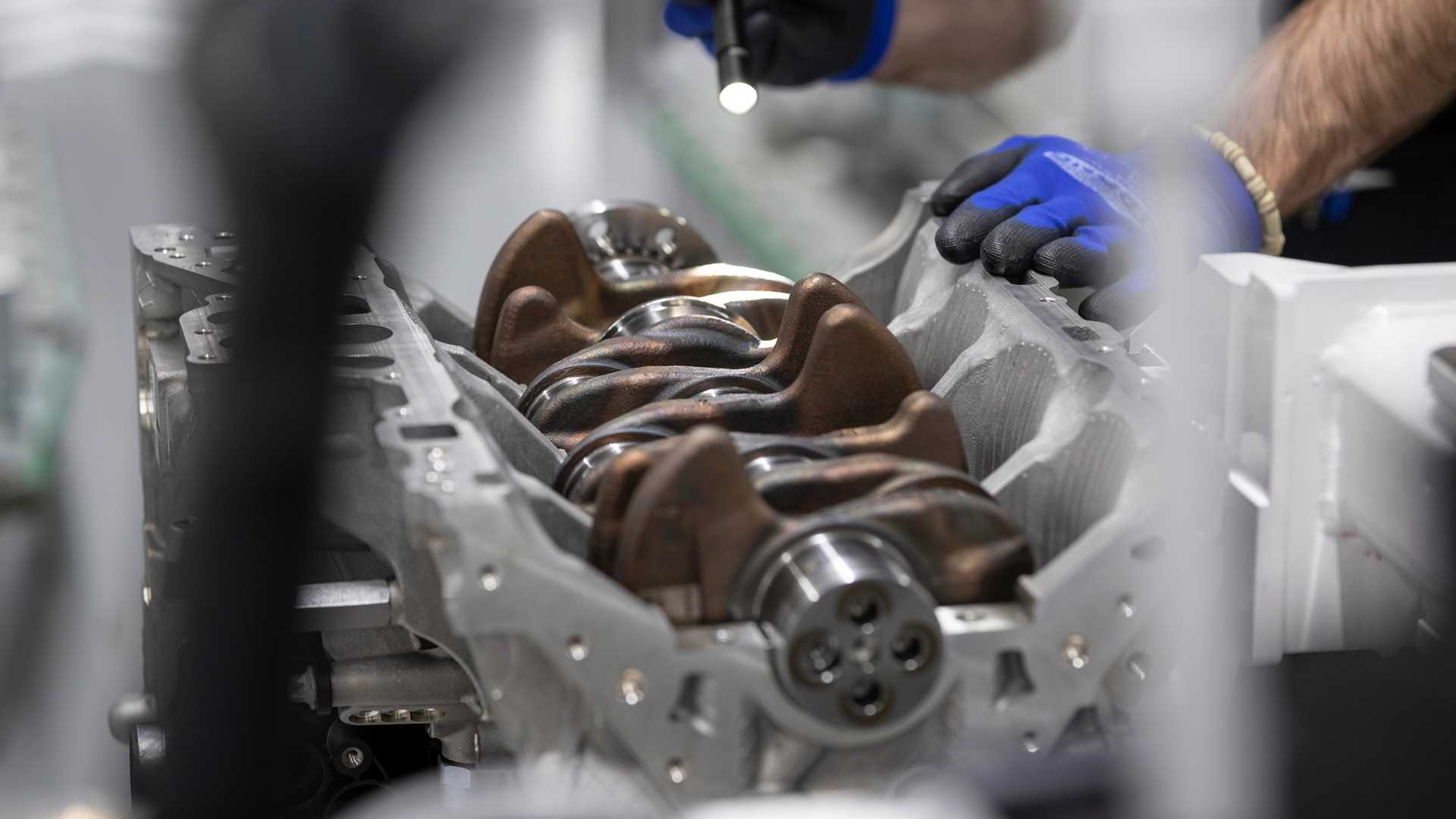
Mercedes is now using Renault engines in some models. Daimler CEO Dieter Zetsche stepped down earlier this year, departing after more than 40 years at the company, 13 of which were at Daimler’s helm. In a wide-ranging post-employment interview with Top Gear, Zetsche makes a bold assertion that’ll undoubtedly ruffle the feathers of enthusiasts –… Continue reading Ex-Daimler Boss Says A Car’s Engine Is Not A Differentiator Anymore – Motor1.com
Jaguar Land Rover looks to forge “strategic, tactical partnerships” to be future-ready
Luxury car and SUV manufacturer Jaguar Land Rover, which has weighed heavy on owner Tata Motors’ Q1 FY2020 numbers, is making moves to better its performance. As it advances on a major cost-cutting drive, it also recognises the need to be future-ready. Towards that objective, the Tata Motors-owned company is looking at striking new partnerships even as it faces some major headwinds.
Speaking at Tata Motors’ annual general meeting in Mumbai today, chairman N Chandrasekaran said: “The only way to handle this need for capex is additional investment through partnerships, because we want to spread the investment. There are many discussions underway from tactical to strategic.”
This could mean the company could forge new connections with established automotive players globally or even with start-ups. Something similar to what global automakers like Daimler and the BMW Group are doing.
Addressing shareholders, Chandrasekaran also said that Jaguar Land Rover witnessed growth in China during July 2019, for the first time in a year. The market slowdown in China meant a sizeable drop in JLR’s volumes, between 40-50 percent. “But I'm hopeful because for the first time in 12 months, we are seeing a positive volume growth in China in July. Last month it recovered and this month it looks good. But we need to wait for a couple of more months to see whether there's a trend,” said Chandrasekharan.
Brexit impacting JLR's supply chain
Another issue impacting the luxury carmaker's future growth is Brexit. The danger and impact felt by automakers in Britain in leaving the European Union without a trade deal in place will be much more of Jaguar Land Rover than any other company.
“The real concern is if Brexit were to happen with a deal or no deal, what will be the impact on our supply chain? Jaguar imports millions of components from other parts of the world, particularly Europe into UK. In the situation of Brexit, there's a possibility of a supply chain breakdown which essentially means production cannot happen, inventories are to be maintained and some of the losses that we are seeing is also because we have to calibrate the supply chain,” said Chandrasekaran.
“Like any other auto company, JLR has to invest in future technologies to address the move away from ICE to hybrid and electric. It also has to invest in future models, make necessary investments in areas like shared mobility, and also beyond that. That's very important to stay alive in this ecosystem. All this means is there is a need for capital investment if you want to be future-ready.”
“During the past 12-18 months, we have cut down capex from around £4.5 billion (Rs 34,483 crore) to £3.98 billion (Rs 30,499 crore) last year. We are working towards cutting down further but we can't take a very drastic cut. These opportunities keep coming and we keep evaluating every one of these opportunities and as long as it is in the interest of Tata Motors, we will forge such partnerships so that we are able to address the capex,” said Chandrasekaran.
It may be recollected that Jaguar Land Rover’s CEO, Ralf Speth, has repeatedly warned of the damage a No-Deal Brexit could cause if cars made in the UK but exported to Europe carry a tariff, or if parts required to build cars in the UK are required to undergo border checks. He has estimated the potential cost to the firm to be up to £60m (Rs 510 crore) per day.
Also read: Toyota commits $600m in new JV with China's DiDi
Daimler sees investment by long-term ally BAIC Group
Daimler and BMW join forces to develop SAE Level 4 automated driving vehicles
Hyundai and Rimac upbeat on electric sports car and high-performance FCEV plan
Proposed FCA, Renault merger will create world's third largest OEM
Mahindra and Ford to jointly develop midsize SUV for India and emerging markets
German auto supplier Eisenmann files for insolvency
FRANKFURT (Reuters) – German auto supplier Eisenmann, which supplied Tesla (TSLA.O) in 2015 with a new paint shop at its Freemont plant in California, filed for insolvency late on Monday, in a sign of the growing economic problems crushing profits in the auto sector. Eisenmann, which has 3,000 employees and generated annual revenues of 723… Continue reading German auto supplier Eisenmann files for insolvency
Via and Trinity Metro Launch ZIPZONE, Connecting Fort Worth Residents to Public Transit
Published July 22, 2019 3:26 pm, Via NYC
Via and Trinity Metro Launch ZIPZONE, Connecting Fort Worth Residents to Public Transit
The new first- and last-mile service will support connections to the Mercantile Center Station
July 22, 2019 (FORT WORTH, TX) — Via, the world’s leading provider and developer of on-demand public mobility solutions, today announced a new public transportation deployment in partnership with Trinity Metro, a leading Texas public transit provider. Called Mercantile ZIPZONE, the new on-demand shared transit network brings TEXRail and bus commuters first- and last-mile connections to the Mercantile Center Station.
ZIPZONE marks Via’s third on-demand public transportation deployment in Texas, joining successful shared transit deployments in the neighboring cities of Arlington and Austin. More than 175,000 trips have been taken with Via’s Arlington service since the city’s pilot program launched in December 2017, earning a 97 percent approval rating from users.
“We are thrilled to partner with the innovative team at Trinity Metro to bring Via’s technology to Fort Worth,” said Daniel Ramot, co-founder and CEO of Via. “The new ZIPZONE service a great example of how public transportation and technology can work together to make a city smarter, building on key learnings from our successful neighboring mobility deployments in Arlington and Austin. Residents just north of Fort Worth now have a comfortable, convenient, and affordable way to move around. This is truly a great example of a city embracing the future of mobility.”
Using the Trinity Metro ZIPZONE app, riders are able to hail a shuttle directly from their smartphone. Via’s advanced algorithms will enable multiple riders to seamlessly share the vehicle. The powerful technology will direct passengers to a nearby virtual bus stop within a short walking distance for pick up and drop off, allowing for quick and efficient shared trips without lengthy detours, or inconvenient fixed routes and schedules.
ZIPZONE will operate 7 a.m. to 7 p.m., Monday through Friday. There will be no charge to use the service at launch. After the free period, rides will vary $1 to $3.
“Mercantile ZIPZONE expands the range of options offered by Trinity Metro to ease the burden of commuters who want and need to connect to this live, work and play destination,” said Wayne Gensler, Trinity Metro vice president and chief operating officer for bus and paratransit. “We are proud to work with the City of Fort Worth while we look at innovative ways to solve the first mile-last mile challenges in our area.
The project will operate in partnership with Avis Budget Group, who will provide the vehicles, as well as turnkey fleet management services, including maintaining the vehicles to ensure they are ready to hit the road.
Commuters in Fort Worth can use the new ZIPZONE service by downloading the Trinity Metro ZIPZONE smartphone app powered by Via, available on iOS and Android. Users can book rides between the Mercantile Center Station and anywhere within Mercantile ZIPZONE boundaries.
Via has been tapped by cities and transportation players around the world to help re-engineer public transit from a regulated system of rigid routes and schedules to a fully dynamic, on-demand network. Via now has more than 80 launched and pending deployments in nearly 20 countries, providing more than 60 million rides to date. To learn more about Via, visit www.platform.ridewithvia.com.
About Via
Via is re-engineering public transit, from a regulated system of rigid routes and schedules to a fully dynamic, on-demand network. Via’s mobile app connects multiple passengers who are headed the same way, allowing riders to seamlessly share a premium vehicle. First launched in New York City in September 2013, the Via platform operates in the United States and in Europe through its joint venture with Mercedes-Benz Vans, ViaVan. Via’s technology is also deployed worldwide through dozens of partner projects with public transportation agencies, private transit operators, taxi fleets, private companies, and universities, seamlessly integrating with public transit infrastructure to power cutting-edge on-demand mobility. For more information, visit www.platform.ridewithvia.com.
Read more
An Interview with Atlis Motor Vehicle CEO Mark Hanchett and Lead Designer Ross Compton – Core77.com
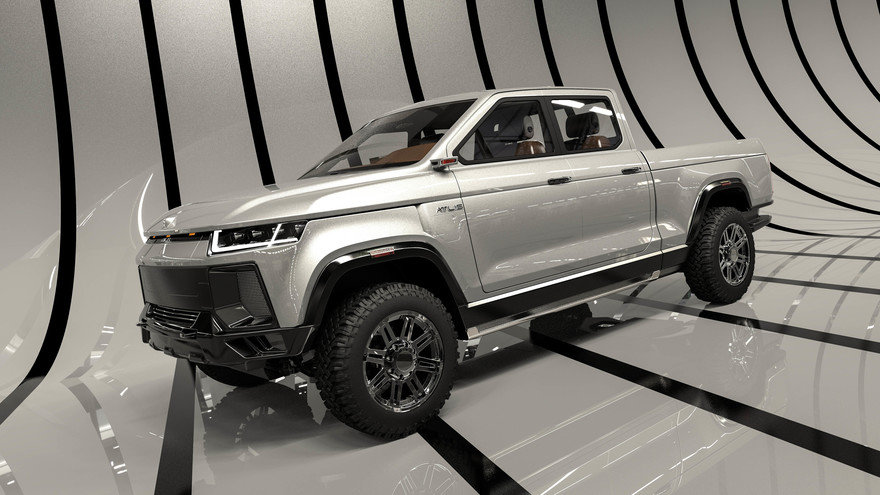
Electric vehicles, you’ve heard they’re going to be everywhere soon. That’s a realistic forecast for dealer lots at least, as most manufacturers are ready or close to introducing new all-electric models. Watch out for VW’s launch of the ID hatchback later in 2019, the first EV of an 8 model lineup. Porsche is close to… Continue reading An Interview with Atlis Motor Vehicle CEO Mark Hanchett and Lead Designer Ross Compton – Core77.com