
Our New York bureau chief Jamie Kitman recently sat down with the CEO of French automaker PSA Carlos Tavares to further discuss the company’s future in North America and across the globe. Note: This interview, which took place before the recent Carlos Ghosn scandal, has been edited for clarity. Automobile Magazine: Why come back to… Continue reading PSA’s CEO on What It Will Take to Re-Enter the U.S. – Automobile
Tag: Mobility
VW Unveils New 360-kWh Mobile Charging Station
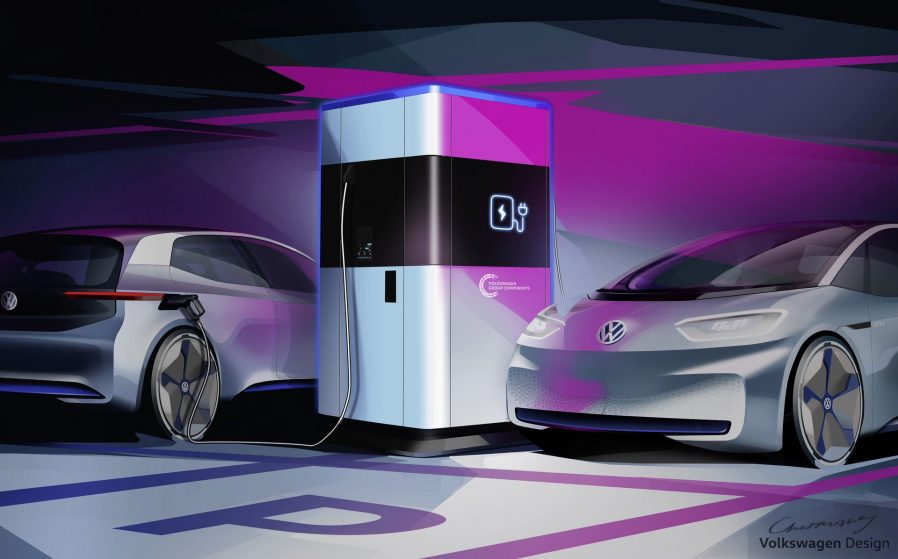
2 H BY MARK KANE To charge where there is no power Volkswagen presents at the turn of the year its new Mobile Charging Station, which is basically a fast charger with 360 kWh energy storage system. Development of such stations was announced earlier this year by the way of 80th anniversary of Wolfsburg, which will… Continue reading VW Unveils New 360-kWh Mobile Charging Station
Reframing AI Levels for Self-Driving Cars: Bifurcation of Autonomy
December 27, 2018 At the recently undertaken World Safety Summit on Autonomous Technology there was some concerted deliberations and debate about Level 3. Indeed, a white paper by the company Velodyne LiDAR entitled “A Safety-First Approach to Developing and Marketing Driver Assistance Methodology” was distributed at the Summit and it essentially asserted that it might… Continue reading Reframing AI Levels for Self-Driving Cars: Bifurcation of Autonomy
No car keys? No problem. Hyundai rolls out fingerprint technology that makes keys obsolete
Source: Hyundai
Hyundai Smart Fingerprint technology
If you're prone to losing car keys, the latest-generation Hyundai Santa Fe just going on sale in China is for you.
It offers buyers the option of using a fingerprint detector that can open the vehicle and turn on its engine, rendering car keys as necessary as a landline. Touch one of the SUV's biometric sensors and it will even adjust such things as seat position and sideview mirrors to the settings preferred by individual drivers in its database.
The oldest known locks were found in the ruins of the ancient Syrian capital of Nineveh and date back thousands and thousands of years. Today, keys are an accessory to just about everything we do, giving us access to our homes, offices, gym lockers and, of course, our cars. For motorists, however, keys could soon go the way of the crank starter, rumble seat and running board.
It's already rare to find a car that still uses a conventional metal key. They've largely been replaced by wireless key fobs on all but a handful of base models. But manufacturers are looking at a variety of alternative technologies, much like those replacing traditional keys in homes and workplaces — and, of course, to unlock smartphones, where biometric sensors let users forget those complicated and often forgettable passcodes.
Volvo's key app
“Mobility needs are evolving and so are our customers' expectation to access cars in an uncomplicated way,” said Henrik Green, vice president of product strategy and vehicle line management at Volvo Car Group.
Volvo's S90 makes even a key fob an option, the big sedan otherwise relying on the owner's smartphone to serve as a key, at least as long as the motorist has downloaded the necessary app. Approach the car and it links up to the phone by Bluetooth, unlocking its doors when the motorist touches one of the handles.
BMW, meanwhile, uses a similar approach with the newly redesigned 2019 3 Series. In this case, however, it uses near-field communications, or NFC, technology, similar to what underlies smartphone-based financial transaction services like Apple Pay. The system can be shared with as many as five different drivers.
BMW isn't ready to abandon keys, or at least key fobs, entirely. The latest version of its flagship 7 Series sedan features an oversized key fob that incorporates a reconfigurable display that allows an owner to control a wide range of vehicle functions that couldn't be incorporated into a traditional fob with hard buttons.
The push to move away from conventional car keys comes at the same time automakers are loading up vehicles with all sorts of digitally controlled technologies. Wireless fobs, smartphone apps and biometric sensors can all tell the vehicle precisely which motorist is going to be driving, adjusting such things as seats, mirrors, climate control and even which radio station to tune to.
Defective switches
Smartphone apps are particularly useful for new battery-powered vehicles, allowing a driver to check how much range is left and, if it's plugged in, to control when the vehicle begins charging. Vehicles like the Nissan Leaf and Jaguar I-Pace also allow a motorist to remotely turn on the climate control while the vehicle is plugged in so that the cabin is comfy when it's time to drive off. That also has the advantage of requiring less range-sapping energy when the vehicle is unplugged.
There are other reasons why automakers want to abandon conventional keys, as General Motors learned earlier in the decade. A poor ignition switch design made it possible to inadvertently shut off the engine on a number of models. It didn't help, of course, that GM delayed fixing the problem for close to a decade. Ultimately, 2.4 million vehicles equipped with the defective switches were recalled. And, with more than 120 deaths connected to the problem, GM paid out more than $1 billion in fines and settlements to victims and their families.
Switching to digital keys offers a number of new opportunities for carmakers, car owners and even retailers. Last April, Amazon partnered up with General Motors and Volvo on a service that can allow it to place packages in the trunk of a vehicle, rather than leaving goods on a porch where they might get stolen. The service is available to Amazon Prime customers who have GM vehicles newer than 2015 and equipped with the GM OnStar or Volvo on Call telematics services.
Cloning signals
GM's car-sharing service, Maven, also makes use of the OnStar service to allow customers to open a vehicle they are renting without having to first get the key — which the owner stores inside in a locked box.
That's not to say that digital alternatives don't have their own problems. Several recent news reports have alleged that thieves have been able to make off with Tesla vehicles by cloning signals from their key fobs — something captured on video during one robbery in the U.K. Tesla has told media outlets that it isn't the only automaker that is vulnerable to these types of hacks into passive entry systems, and says it has rolled out a number of security enhancements to assist customers in decreasing the likelihood of such security breaches.
Some cybersecurity experts warn that even when they're not in use, digital key fob codes can be cloned, and some have suggested storing the devices in metal coffee cans, much like chipped credit cards can be stored inside special sleeves designed to prevent their code from being read and cloned by hackers.
“We think it is becoming the new way of stealing cars,” Roger Morris, a vice president at the National Insurance Crime Bureau, told The Wall Street Journal, after several vehicles were stolen in Houston two years ago, with video of one theft appearing to show how the thieves used cloned keys. “The public, law enforcement and the manufacturers need to be aware.”
There's also a cost issue. A motorist who needs a spare metal key can get one for a dollar or two at most hardware stores — unless it's a more secure key with a digital chip built in. But the price for a replacement wireless key fob can run anywhere from $200 up to more than $500 for one of the smart fobs used on the BMW 7 Series.
Alternative 'keys'
Despite such concerns, expect to see the industry to continue the shift to alternative “keys,” if for no other reason than convenience. Several Jaguar models, such as the E-Pace SUV, feature “activity keys,” little more than waterproof wristbands with built-in NFC chips. Someone who is going swimming or hiking, Jaguar says, doesn't have to carry and risk losing a conventional key or fob. Instead, they lock the regular fob in the car and wear the band. When it's time to open the vehicle up again they simply touch the activity key to a reader on the back logo.
Digital alternatives actually aren't entirely new. Various Ford designs for decades have allowed motorists to access the vehicle using a keypad on the car's center pillar. The motorist still has to keep a conventional key or fob hidden inside the vehicle, however, to start the engine. And similar keypads may be needed on future vehicles to make it possible for a motorist to get into a vehicle should their smartphone run out of battery life or other new systems fail.
Biometric sensors could make the process even easier, since there's no need to carry or wear anything. There are, however, other challenges. Hyundai had to make sure its fingerprint sensor could work under all weather conditions and not be foiled if the car was dirty – something that can be expected of an SUV. The automaker claims the system can distinguish one person's fingerprint from another with an error rate of about 1 in 50,000, which is along the lines of what Apple claims for its own touch-based system.
For the moment, Hyundai will be offering the fingerprint system only in China versions of the Santa Fe. But if it works as expected and generates strong consumer demand it can be expected to start offering the technology in other markets, as well.
Source: Hyundai
Hyundai Smart Fingerprint technology
To adopt ‘One Tata’ approach to develop electric vehicle ecosystem says Natrajan Chandrasekaran, chairman of Tata Group
As part of the plan, Tata Motors is to offer the car while Tata Power will be setting up the charging stations. Mumbai: Natarajan Chandrasekaran, the chairman of $103 billion salt to software Tata Group has spoken about adopting ‘One Tata’ approach to build an electric vehicle ecosystem led by Tata Motors to participate in… Continue reading To adopt ‘One Tata’ approach to develop electric vehicle ecosystem says Natrajan Chandrasekaran, chairman of Tata Group
Volkswagen sold 5.7 million vehicles between January and November 2018
SUV in small format: the new T-Cross
Electric offensive: ID.1, ID. VIZZION1 and ID. R Pikes Peak provided important impetus on the threshold of a new epoch
SUV offensive: With nine new models, Volkswagen has expanded its efficient SUV fleet more than ever before
More 2018 news: the up! GTI2 makes for fun in Europe, Jetta3 No. 7 launched in the USA, and the new Virtus3 is inspiring South America
WOLFSBURG, 27-Dec-2019 — /EuropaWire/ — Volkswagen has set an important course for the future in 2018: As the first model of the future ID. family, the zero-emission compact ID. has reached the final phase of series development. In addition, with the avant-garde ID. VIZZION saloon and the racing car ID. R Pikes Peak, Volkswagen demonstrated two more fascinating facets of electric mobility. SUVs are booming worldwide: Volkswagen followed this trend in 2018 with nine new Sport Utility Vehicles (SUV) – from the urban T-Cross4 to the Touareg brand flagship. Various models of different segments like the new Virtus (South America), the attractive up! GTI (Europe) or the Jetta (North America), however, made it clear that Volkswagen serves every region of the world with specific cars. This has resulted in great success: Between January and November, unit sales rose by around 280,000 year-on-year to 5.7 million Volkswagen vehicles.
Electric offensive: In March, with the ID. VIZZION, Volkswagen presented a completely automated driving saloon of the future: emission-free, range of up to 665 kilometres, can be operated via voice and gesture control and able to learn thanks to artificial intelligence. A car as a portal to the future. Three months later, with the ID. R Pikes Peak, Volkswagen revealed the purely dynamic side of electric mobility: on 24 June it pulverised the all-time record at the Pikes Peak International Hill Climb – the legendary Race to The Clouds (Colorado/USA). It also overtook all racing cars with combustion engines ever to have started. In December, the first media representatives were able to experience live what the future of production vehicles feels like: they accompanied Volkswagen engineers on board the ID. during test drives in South Africa. The ID. is scheduled to be launched on the market in 2020.
SUV offensive: Charismatic Sport Utility Vehicles enjoy worldwide success. At the same time, Volkswagen further expanded its range of these all-rounders. The third generation of the Volkswagen brand flagship Touareg made its international debut in March with numerous technical highlights. Specially designed for China, Volkswagen also presented the particularly spacious Tharu3 (Chinese compact class), which is tailored to families, and the Tayron3 (Chinese intermediate class), which is positioned above it. The large Teramont3 and an extended and specified version of the T-Roc for the Chinese market also celebrated their debuts in China in 2018. Below the T-Roc, the new T-Cross, the first small-vehicle SUV from Volkswagen to date, was launched on an international scale in November.
As a sister model to the Teramont, the seven-seater Atlas3) is built in the USA. On this basis, Volkswagen presented the new Atlas Cross Sport1 at the New York International Auto Show (March) – a dynamic five-seater with a hybrid drive for the metropolises of North America. The series version is scheduled to be launched on the American market in 2019. The Atlas Tanoak1 – the first pickup to be based on the innovative modular transverse matrix (MQB) – presented at the same time has been part of a trial to date. As the second MQB pickup, the Tarok Concept1 presented at the São Paulo International Motor Show caused a sensation in November.It has a loading area that can be extended into the vehicle interior and is scheduled to be launched on the Brazilian market first in the foreseeable future.
Specialities for the world: With the up! GTI, a sporty vehicle in the original GTI format was launched in 2018. 85 kW/115 PS and low weight provide a lot of driving fun. This means that the GTI family comprising Golf GTI5, Polo GTI6 and up! GTI is now complete. The Jetta, which has been produced 17.5 million times, is one of the most successful compact saloons ever. Volkswagen presented the seventh generation in Detroit this year. It is now based on the MQB and was specially developed for the US market. The new Virtus is even more compact. This MQB saloon is similar to the Polo, is produced in Brazil and was launched there first.
MEDIA CONTACT
Christian Buhlmann
Head of Product Line Communications
Tel. +49 (0) 5361 / 9-87584
Send Email
SOURCE: Volkswagen AG
Tweet
Share
0
+1
0
Many executives had to leave already

In the car industry, there is no stone unturned; e-mobility and digitization are turning the entire industry around. The change does not stop even at the executive level of VW. Volkswagen plant in Wolfsburg Thursday, 27.12.2018 13:36 clock The change in Volkswagen meanwhile has also captured large parts of the management team. In 2018, around… Continue reading Many executives had to leave already
Self-driving Engineer Training Base: Get hands On Real Self-driving Vehicles, Cohort II

Self-driving Engineer Training Base: Get hands On Real Self-driving Vehicles, Cohort II Nancy LeeBlockedUnblockFollowFollowingDec 27 Self-driving Engineer Training Base greeted its second cohort of participating engineers this week: attending course lecture about Autoware, finishing traffic lights recognition challenge, getting hands on the real self-driving car, debugging the codes and moving the car, eating, sharing and having… Continue reading Self-driving Engineer Training Base: Get hands On Real Self-driving Vehicles, Cohort II
Seat extends its ‘Easy Mobility’ program to eight Renfe stations
Posted 12/27/2018 11:44:35 PM MADRID, Dec. 27 (EUROPA PRESS) – The Spanish company Seat will offer its ‘Easy Mobiliy’ program to improve the experience of Renfe travelers to the stations of Alicante, Bilbao, Cordoba, Malaga, Seville, Valencia, Valladolid and Zaragoza, as reported in a statement. This program, which was inaugurated a year ago at the… Continue reading Seat extends its ‘Easy Mobility’ program to eight Renfe stations
Volkswagen will install the first mobile charging stations in early 2019 in Wolfsburg
Published 12/27/2018 11:38:00 CET WOLFSBURG (GERMANY), 27 Dec. (EUROPA PRESS) – Volkswagen has presented the first mobile charging stations for electric vehicles, which will begin to be installed during the first half of 2019 in the German city of Wolfsburg as part of a pilot project and, from 2020 in other cities, as reported by… Continue reading Volkswagen will install the first mobile charging stations in early 2019 in Wolfsburg